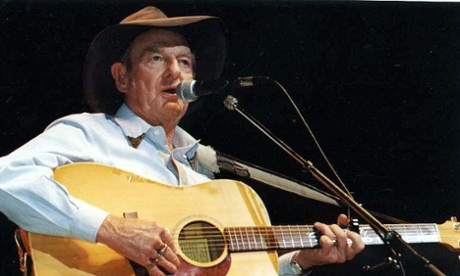
Contemporary Slovenian psycho-philosopher Slavoj Žižek and the late outback balladeer Slim Dusty may not, at first glance, appear to be kindred spirits. But is not all Slavoj Žižek talk about the symbolism of coffee without caffeine, cream without fat and beer without alcohol just another version of A Pub With No Beer?
For Žižek, decaffeinated coffee, fat-free dairy and the like are metaphoric of our times. Like a product derived of its malignant properties, so in modern life we see culture, warfare and much in between defanged, detoxified and hollowed out.
“Everything is permitted,”, he writes, just so long as it’s “deprived of its substance which makes it dangerous”.
It’s a versatile analogy. At Occupy Wall Street, he urged participants not to let the movement be turned into a “harmless moralistic gesture”, a protest without demands for real change. Think Earth Hour. He applies it to Colin Powell’s marketing of Gulf War 2.0 as a supposed war without (American) casualties and notes how reality TV only works because it is anything but.
And so we come, like Dusty’s dry-throated stockman, to our mythical beerless pub. What a terrible place indeed! With the malignant property removed, the place has lost all its vitality. Nearly everyone is anxious, cranky or acting queer (in the traditional sense of the word). People are going home in tears. Even the cops are upset.
When it comes to drinking, Australia is not actually a high-ranked nation, but alcohol has always fuelled a massive part our frontier identity and folklore. “None of the men who in this country have left footprints behind them have been cold water men,” said Sir John Robertson, a man who was premier of the colony of New South Wales on no less than five separate occasions.
Case in point: Bob Hawke, the only world leader in the Guinness Book of Records for his dexterity with a yard glass. He reckons it was the secret to his political success. No wonder he came to be immortalised as a wine dispenser.
But it’s a love-hate relationship we have with the drink. Which is why Dusty’s classic should perhaps be read as a warning about wowserism, that hangover from our penal roots and precursor to today’s nanny state, where nothing even slightly dangerous can ever be permitted to happen.
“Historically jarring though it seems to crack down on alcohol consumption at Sydney Cove, the site of modern Australia’s inaugural booze-up following the arrival of the First Fleet, it is also historically faithful,” writes BBC correspondent Nick Bryant of the harbour city’s annual New Year’s Eve fireworks.
No wonder Bryant calls us a nation with an “inclination towards order and over-regulation”. If you don’t believe him, go to Germany. It’s (relatively) loose as.
Pubs without beers do exist. They are called cafes. These days, cafes have come to fill a large social space pubs once held. They are, essentially, public houses sans booze; the modern meeting spot of choice, but one where there’s little chance you’ll end up leaving with some total random after one soy latte too many.
Which is not to condone alcohol abuse, but how much fun can you really have in a cafe? Certainly the Town & Country, that well-stocked watering hole featured in another Dusty classic, sounds a lot more fun than, say, the Tom’s Diner made famous by Suzanne Vega. They are having such a hoot at Dusty’s joint that “it wouldn’t really matter if the beer was flat”.
Maybe Dusty, even as far back as 1957, foresaw a danger in Australia’s increasingly cosmopolitan ways. After all, his pub has not been shut down; it has, by stealth, become a wine bar. “The boss is inside drinking wine with his mates,” he laments. “I know they’re sincere, when they say they don’t care if the pub’s got no beer.”
It’s a place that brings no joy to the working man or woman. Not to the stockman, the swaggie, the blacksmith, the maid or the cook. There’s even “a faraway look on the face of the bum”.
In a career that saw Dusty win dozens of Golden Guitars, perform at the Olympics and become the first singer to have their voice beamed back to Earth from space, A Pub With No Beer was a high point. It resonated with drinkers around the world and was recorded in many different tongues, particularly in the Germanic countries, where it became the much darker tale of a drunk with no money. Even Johnny Cash gave it a crack.
It’s said to have had a big impact in Ontario, Canada, where it became something of an unofficial anthem to the 1958 beer strike. No doubt it was on high rotation in late-70s Melbourne too, where the annual Christmas beer strikes taught Victorians to master their gag reflexes as they supped on imported beers like XXXX, Tooheys and even Swan.
Yet A Pub With No Beer started life as B-side, and was not written by Dusty but by fellow New South Welshman Gordon Parsons, who’d tweaked a wartime poem by a Queenslander called Dan Sheahan, in turn inspired by the US servicemen who drank their way through his local’s rations of beer.
In returning to Žižek, as a devotee of Lacanian psychoanalysis he might look at the big, unasked and most obvious question: what the hell happened to all the beer? It’s perhaps a mistake to presume the delivery truck is late, as Dusty did in his sequel to the song. And the answer may lie in the song’s image of all those toffee-nosed drinkers sipping wine Animal Farm-style.
Alas, Parsons delivers no sweet relief and leaves the question hanging.