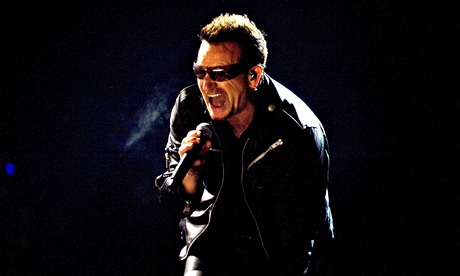
Last year Alan Milburn’s Social Mobility and Child Poverty Commission memorably told us that the odds of a child on free school meals getting into Oxbridge was 2,000-1. To put this in context, the odds offered on Bono becoming the last Pope were 1,000-1. This year’s report, out last month, reminded us that Britain’s elite culture is alive and well: around 75% of senior judges, 59% of the cabinet, 50% of diplomats, 38% of the House of Lords, 33% of the shadow cabinet and 24% of MPs hold Oxbridge degrees, yet only 1% of the population are Oxbridge graduates.
Access to selective institutions outside Oxbridge also remains difficult for those from disadvantaged backgrounds despite considerable financial investment in access by such institutions over several years. In 2012-13 the Russell Group in England spent £24.6m on outreach activities recognised by the Office for Fair Access (Offa), equating to around £1.2m per institution, plus £128m of their extra fee income on bursaries. But participation rates seem stubbornly reluctant to budge. According to Offa in its 2014 report, the most advantaged 20% of young people are still over six times more likely to attend a selective institution than the most disadvantaged 40% – and this at a time when Oxbridge are increasing A-level tariffs in some areas.
Research such as that from the Centre for Analysis of Youth Transitions (Cayt) at York University, for the Department for Education, published alongside the Milburn report, also continues to indicate that early intervention to boost key stage 4 achievement (GCSE level) is crucial, and certainly before key stage 5, where much of the Offa-monitored expenditure has historically been targeted. Additional research by Cayt indicates however that support between KS2 (years 3 to 6) and KS4 is crucial in ensuring that higher-achieving pupils from poor backgrounds remain on a rising trajectory if they do achieve that early success, as they are more likely to slip back than their richer peers. This research highlights how bright children from poorer backgrounds are not necessarily on a gradual and inevitable arc of achievement, but that it is a dynamic process, requiring recurrent support. There is interesting follow-up work to be done here on teachers’, parents’ and peers’ responses to poorer children achieving grades above expectations, and indeed how this plays out across gender, ethnicity and for pupils with additional needs.
The research also finds that compared to individuals with similar levels of attainment, pupils from independent and selective state schools, and those with fewer pupils eligible for free school meals are significantly more likely to drop out, less likely to complete their degree and less likely to graduate with a first or a 2:1 than their disadvantaged counterparts. This, they argue, is where lower offers could be made to these pupils by universities. Russell Group universities have resisted the idea of algorithms for making lower offers since they say “a ‘systematic’ or ‘blanket’ approach to the use of contextual information can rely too heavily on data that is limited in how far it can reveal a true picture of the candidate’s background”. Underlying this is a concern, not wholly ill-founded, that any “mechanistic” approach to admissions will undermine institutions’ autonomy, and invite in more interventionist measures by Offa.
But there is more to social mobility than “selective” universities. For one thing, every university is selective on at least some courses. Enabling millions of students, young and old, full-time and part-time, undergraduate and postgraduate, to benefit from higher education is where the heavy lifting of social mobility is carried out, up and down the country and across the whole sector, not just in a small part of it for a small fraction of the population.
But no door should be barred, so what changes could improve access to selective institutions? I get a sense that some selective universities now more than ever want to find new ways forward.
We need more research on the impact of radical approaches. For example, at postgraduate level we could assess a pilot scheme whereby every graduate with a first who had previously been in receipt of free school meals would get a full scholarship – fees and maintenance – to any postgraduate degree, including doctorate, at any institution, providing they meet the academic and other criteria. This would at a stroke increase the diversity of intake across all our institutions. Second, we could have more part-time science courses at selective universities: currently we are excluding mature students in this area from achieving their potential. Third, with the lifting of the cap on student numbers in 2015, now is a perfect chance for all institutions to be flexible. They should be bold enough to introduce contextual data into admissions – driven by research evidence, and not just abstract principle. Universities effectively use contextual data for many of their decisions in research, enterprise and investment; why not do it for recruiting students? This is not to judge disadvantaged students by a different standard; but by the same standard, just through intelligent use of data to drive lower offers rather than merely “flagging” a candidate for closer assessment.
Contextual data aids our interpretation of everything, from understanding why we know a 2000-1 chance of getting to Oxbridge just isn’t right, to understanding why Bono will never be Pope, whatever the odds.
Professor Patrick McGhee is assistant vice-chancellor at the University of Bolton and writes here in a personal capacity






.png?w=600)