
Pilates is a very accessible form of movement. It’s low-impact, so it doesn’t put pressure on your joints, and requires very little equipment.
But while a lot of the exercises are beginner-friendly, it’s important to execute each move with the right form.
Doing so can transform how your body responds to the movement, making it more challenging while also lowering your risk of injury.
“Pilates was originally called Contrology, so we want to focus on controlling the body while we're moving,” says Rebecca Daodun, a Pilates instructor and founder of workout app Pilates Prescription.
She explains that executing a Pilates move correctly often requires you to hold one part of the body still while moving another.
To help beginners master this, Daodun gets them to practice something she calls limb dissociation, which involves holding the torso steady while moving the arms and legs.
Below, the instructor has shared two exercises she recommends for all Pilates newcomers.
Two limb dissociation exercises all Pilates beginners should try
1. Clamshell
Reps: 8 each side
- Lie on your side with your legs and feet together, and your knees bent.
- Engage your core and inhale.
- Exhale as you rotate your hip to raise your top knee.
- Inhale as you lower the knee.
- Do all your reps on one side, then switch sides.
Form tips: Only lift your knee as far as you can without rolling your pelvis backwards. You can place your top hand behind your lower back to make sure you're not rolling back.
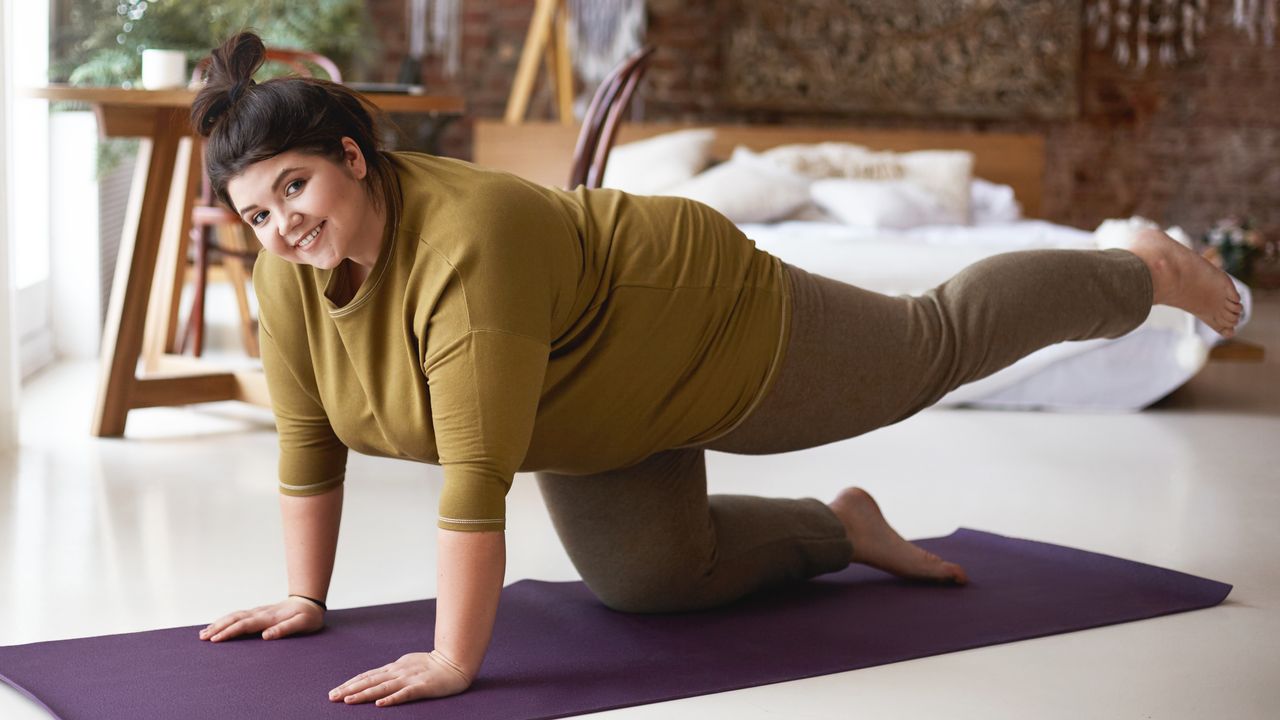
2. Four-point kneeling leg lift
Reps: 8 each side
- Get on your hands and knees, with your hands directly under your shoulders and knees directly under your hips.
- Draw your belly button in so that you're not arching your lower back.
- Lift and extend your left leg behind you, so that it's in line with your torso.
- Lift your left leg a couple of inches higher, ensuring that you’re not arching your lower back and keeping the rest of your body still.
- Lower your left leg to tap the floor with your left toes.