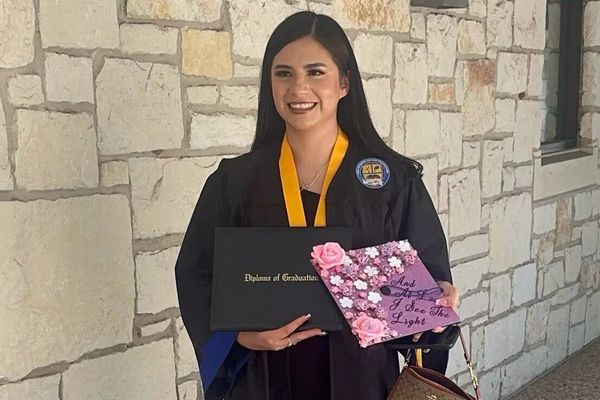
Investing in high-quality photographs can help raise the profile of your personal brand and your business. A potential client faced with photos of poor quality is likely to think that the owner doesn’t value their business enough to make the investment. They might assume that if the owner can’t be bothered with their own business, are they going to make an effort with mine?
Whether it’s swapping the poorly cropped photo you use on your social media profiles for a professional headshot or having a bank of press images ready if your enterprise is ever featured in the media, here are five ways you can help make your business picture perfect.
Learn to take a good headshot
If you’re choosing an existing photo, pick a recent one that shows your whole face and has a neutral background.
It’s best if you’re looking straight into the camera and smiling as that will catch people’s eye – we are naturally drawn to a smiling face over a blank or miserable one.

If a friend or colleague is taking a new headshot for you, ask them to focus close-up on your head and shoulders, centring them in the frame. Practise smiling in front of a mirror beforehand to find out what looks most natural and professional for you.
Those running a creative business might prefer to use a headshot that reflects the service or product that you offer. You could convey this through the clothing you wear, your make-up or by using your products as props. If you sell scarves, for example, wear one of your designs.
When using a professional photographer, if you want a more playful photo, you could ask them to try different lighting effects or to use photo-editing programmes to enhance certain colours.
Learn the basics for impromptu photo opportunities
On the other hand, if you are attending a meeting at an amazing venue or networking at a business show, taking photos on your smartphone is more discreet and also more efficient for posting straight on social media.
When taking a picture of someone with your smartphone, make sure your subject is facing the light. Having their back to the light only really works when a professional photographer wants to take a dramatic shot – the effect is hard to replicate as an amateur.
To ensure good focus, ask the subject to stay still while you take the photo and for a few seconds afterwards – you should do the same. Attaching the phone to a mini-tripod – one you can hold in your hand – will make it easier to keep steady. The best position is to take the picture a little above eyeline – from below is very unflattering.
Practise posing for group photos or full body shots
As photographers are often present at business events, it is also worth preparing to pose for group photos. Start by imagining you are standing in front of a photographer. Stand with your body turned slightly away, at an angle of about 45 degrees, with your head turned towards them. Your back foot should be at a 90-degree angle towards the camera lens with your feet slightly apart.
Most of us naturally slouch, but you can practise simple poses to help you look more elegant in photos. Let your arms hang loosely by your sides, with your elbows slightly bent and hands relaxed. If you want to appear slimmer, put your weight on your back foot. And, most importantly, remember to smile.

Build a bank of press images
It is worth building your own stock library of professional business photographs, including staff head shots, group shots, and product shots – you can use this for your own PR and marketing. You can also send them to the press if your business is ever featured. Media titles usually require high-resolution images, and they prefer professional shots.
If you don’t have images to go alongside the story that is being covered, the press will often revert to using stock photos (these days, few have the budget to send a photographer to you), which won’t showcase your business in the same way.
Hire a professional photographer (if your budget allows)
If you are launching your business, or a new product, it could be worth hiring a professional photographer to take good quality promotional images.
Depending where you are in the country, the cost of professional photography varies. A single LinkedIn image can cost about £90, whereas the average cost for a selection of headshots is £150.
If you can’t afford a professional photographer, it is possible to take high-resolution photos on a new smartphone, but bear in mind that these won’t be of high enough quality for print.
Lis McDermott is a photographer and author of Headshot Diva – Why Your Business Profile Affects Your Bottom Line.
Sign up to become a member of the Guardian Small Business Network here for more advice, insight and best practice direct to your inbox.