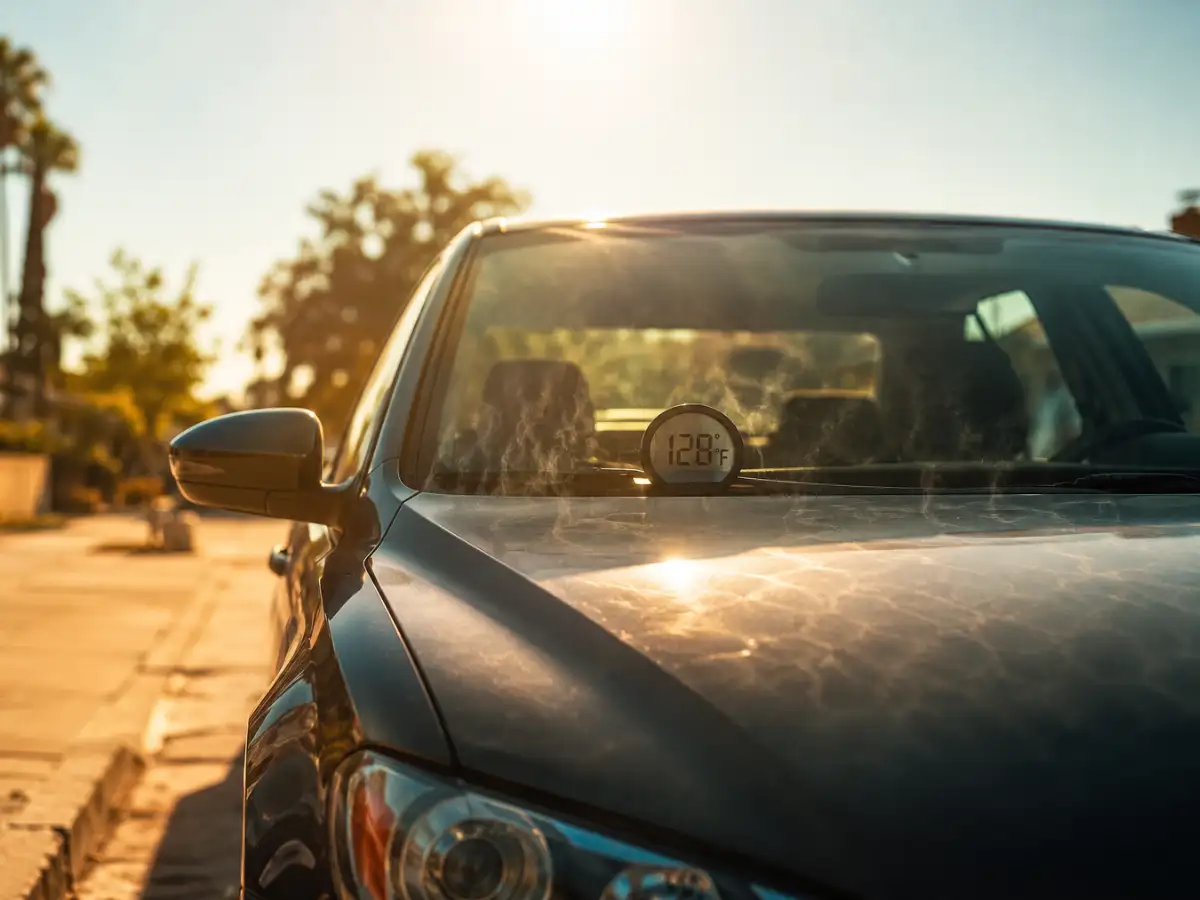
Picture this: it’s a nice 72 degrees outside, you park in the sun for a “quick” errand, and you don’t think twice about leaving your kid buckled in the backseat. According to a 2005 study published in Pediatrics, that decision can quickly turn dangerous. Researchers from Stanford University and San Jose State University measured the inside of a parked sedan on 16 different sunny days with outside temperatures between 72 and 96 degrees. Even on the mildest of those days, the inside of the car still hit 117 degrees in an hour.
The heat doesn't care what the thermometer says outside
Now here’s the interesting part. It was almost irrelevant whether it was 72 degrees outside or 96 degrees outside, the study noted. In either case, the car warmed up at about the same rate, picking up about an average of 3.2 degrees every five minutes. The only difference was the final number: on average, cars were about 40 degrees hotter than the starting outside temperature, with individual days ranging from 28 to 49 degrees of increase. And most of that rise happens quickly. The study found that 80 percent of the total temperature increase happened during the first 30 minutes.
Cracking the windows doesn't actually help
Many parents probably leave the windows open by an inch or two, thinking that it will let the heat out. According to the study, it hardly makes a difference. Researchers compared cars with windows cracked open 1.5 inches to cars with windows fully closed, and found the two heated up at a similar pace, between 3.1 and 3.4 degrees every five minutes, and landed at the same final maximum temperature regardless. A cracked window can feel like a safety net, but the data says it is not.