Wednesday's Nobel Prize in chemistry was a historic first for women
It was the first time a Nobel science prize was given to more than one woman but no men, in a specific category. This has happened 169 times for multiple men and no women in a specific category since the prizes were awarded starting in 1901.
In the 120 years of Nobel prizes in medicine, physics and chemistry, prizes were awarded 599 times to men and 23 times to women. The prize can be split as many as three ways or given to two or just one person. Some people, like Marie Curie, have won more than once, and there have been several years when no prize is awarded.
Three other times, a woman won one of the sciences by herself. This has happened for men 147 times. This means four times, including this year in chemistry, there have been all-female prizes in one of the three sciences and 316 times, including this year in medicine, there have been all-male prizes in one of the sciences.
This is also only the second time a year's science prize went to more than one woman. In 2009, Elizabeth Blackburn and Carol Greider shared the medical prize for discovery of how chromosomes are protected by telomeres with Jack Szostak.
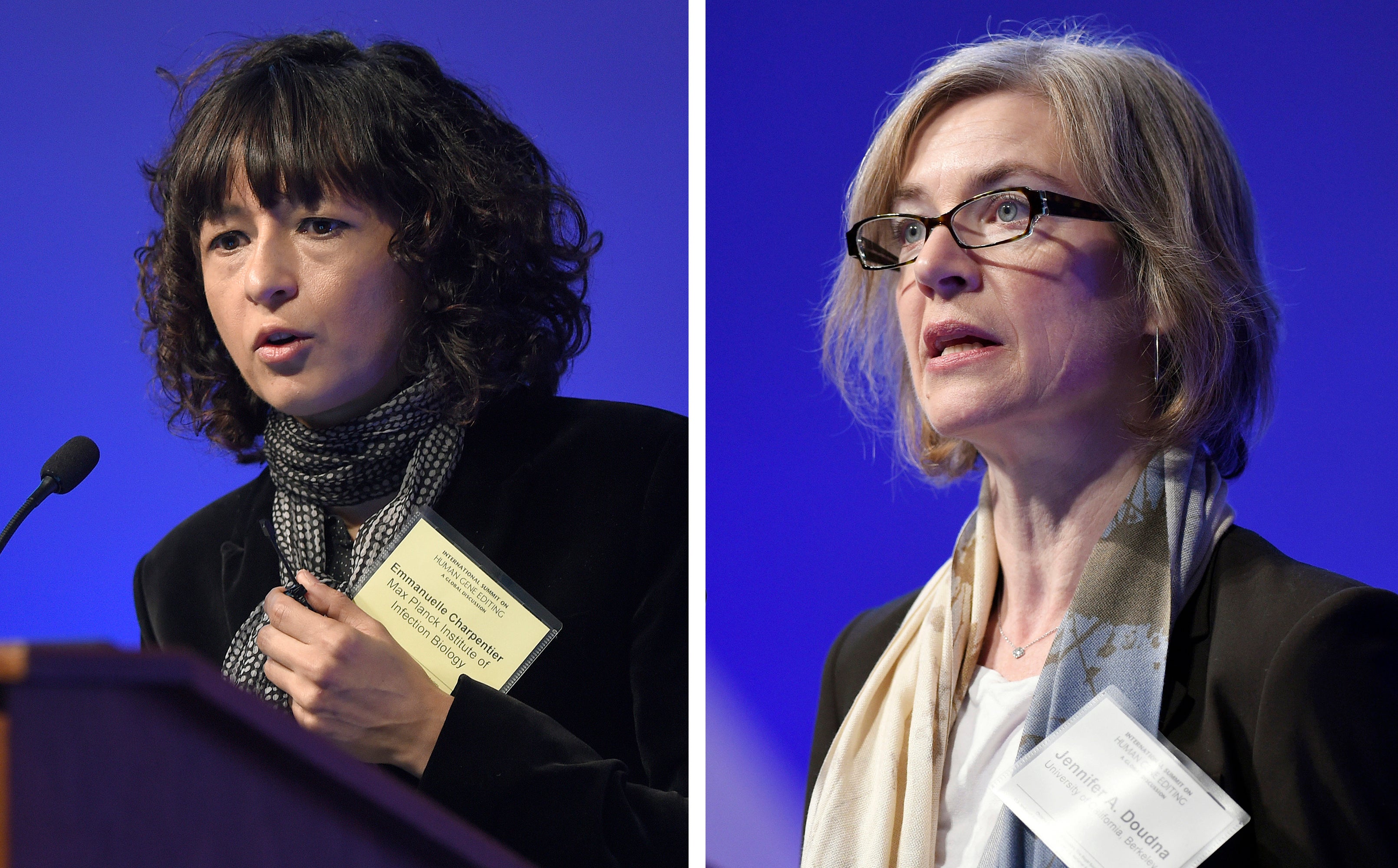
This year, Emmanuelle Charpentier and Jennifer Doudna won the chemistry prize for developing the CRISPR method of genome editing.
In 1911, Marie Curie won the chemistry by herself for the discovery of radium and polonium.
In 1964, Dorothy Crowfoot Hodgkin was the sole chemistry winner for using x-rays to understand important biochemical substances. In 1983, Barbara McClintock won the Nobel for medicine by herself for the discovery of mobile genetic elements.
Women have won the most prizes in medicine with 12, seven in chemistry and four in physics.
“For too long, many many discoveries made by women have been underplayed and they have simply not been recognized,’’ American Chemistry Society President Luis Echegoyen, a chemistry professor at the University of Texas El Paso. “The under representation of women in science has been too clear.’’