In 2024, a cluster of developments quietly marked a shift in how nutrition is understood - and practiced.
The journal Nutrients published, for the first time, a consensus definition of culinary nutrition as its own discipline. The paper brought together 30 researchers and practitioners from the U.S., Australia, the U.K., Europe, and Asia.
Iowa State University received formal certification from the Research Chefs Association for its culinary food science program - the first of its kind.
At the same time, data from nearly half a million patients taking GLP-1 drugs pointed to a gap that standard care hasn't closed: 22% developed nutrient deficiencies within the first year, despite medical supervision.
These threads converge around a simple but underexamined idea. Nutrition isn't just about what ends up on the plate. It's about what happens in between - the transformation of food from ingredient to something the body can actually absorb. And who has the training to work there.
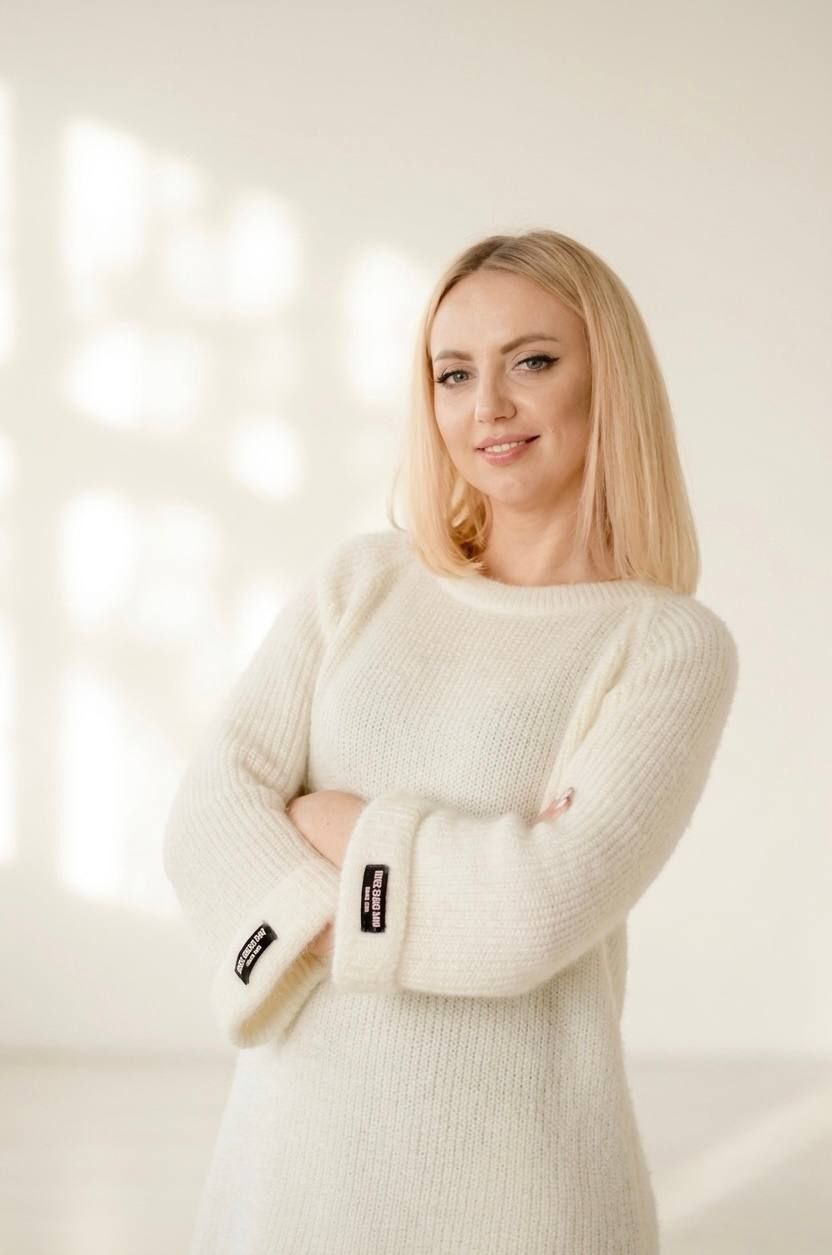
Marina Rubel, a nutritionist working with clients in the U.S., has been operating in that space for years.
A field that finally has a name
Culinary nutrition existed long before anyone tried to define it.
Chefs who understood human physiology. Nutritionists who could work with ingredients beyond abstract recommendations. People who spent years at the intersection of those worlds without a formal framework to describe what they were doing.
The 2024 consensus didn't so much invent a field as gave language to something that had already taken shape: the integration of cooking and nutrition science with a practical aim - improving health.
That recognition changes how the work is perceived, how it's taught, and how it fits into a medical context.
"When I was starting out, it was much harder to explain what I actually did," Rubel says. "Now there's data - and a vocabulary - for it."
She didn't come into the field through theory. Years spent in professional kitchens across the U.K. and Europe gave her hands-on experience - and a persistent question: why does this work the way it does?
What happens to a product at a specific temperature, in a particular environment, in a given sequence?
The kitchen didn't offer those answers. She had to go looking for them in physiology and biochemistry.
Professionals who operate at both levels - culinary practice and evidence-based nutrition - are still rare. That combination largely defines the kind of problems clients bring to her.
Education as a professional stance
Over the past decade, nutrition programs have multiplied faster than standards for quality could keep up.
Short-term certifications. Organizations with little scientific grounding. Wellness courses packaged as professional training.
In that landscape, the choice of program says something.
Rubel wasn't drawn to the wellness model, with its emphasis on general balance and well-being. She was interested in mechanisms - what happens at the molecular level, and how that feeds into metabolism.
IPHM certification, she says, offered that structure: an academic framework, international accreditation, and a foundation in evidence.
"There's a difference between telling someone to 'eat more spinach' and being able to explain the conditions under which the micronutrients in it are actually absorbed. That's a different level of training. I wanted the kind that lets you have the second conversation."
Moving past prescriptions
Traditional nutrition tends to run on instructions: what to eat, what to avoid, how much.
The patient follows a plan.
The downside is that it often creates dependence on the specialist rather than building independent understanding.
Rubel's approach is built differently. The goal isn't just to hand over a list - it's to pass on the logic behind it.
Why pre-processing grains changes how they're absorbed. How the order of foods in a meal can shift the glycemic response. When flavor and nutritional value reinforce each other - and when they work at cross-purposes.
Clients leave with a framework, not just a plan. Over time, they stop needing ongoing guidance.
"For me, the marker of success is when people stop asking questions," she says. "Because they've started to understand how it works."
GLP-1 and the system's blind spots
GLP-1 drugs exposed a gap that was always there.
When appetite drops, total food intake falls - sometimes sharply. That puts pressure on every meal to deliver more, nutritionally speaking.
Standard recommendations, focused on food choice, don't always account for that shift.
Because the real question moves elsewhere: not just what you eat, but how it's prepared.
Bioavailability - the share of nutrients the body actually absorbs - depends on a long list of variables: cooking temperature, fat content, acidity, duration, ingredient pairing.
In some cases, they make a significant difference - iron uptake, fat-soluble vitamins, protein absorption.
When overall intake shrinks, there's less room to compensate for mistakes in preparation.
"If someone is eating less, the cost of each mistake goes up," Rubel says. "And this is something almost no one is taught - patients, and often practitioners too."
Demand is rising. The people equipped to meet it are still few.
A profession taking shape in real time
Culinary nutrition is only beginning to formalize as an academic field.
Research tied to GLP-1 and nutrient deficiencies is accelerating demand for a different kind of expertise.
But the practice itself has been there for a while.
Specialists working at the intersection of cooking and metabolic physiology showed up before there was a name for what they did. Now their experience is starting to cohere into something more structured.
Marina Rubel is one of them. She arrived in this space well before it had a clear outline - driven by questions the kitchen couldn't answer.
Those questions are now at the center of the field.