
“If you haven’t got a family, you need that replaced in some way, that’s the most important thing you can do for someone in care,” says 24-year-old Chloe Juliette, herself a care leaver. You have to “replace those really base-level bonds that you need to be OK as a human being”.
At the age of 18, care leavers are more likely to go to prison than to university; Juliette was one of the few who went to the latter. But the transition of leaving care can be traumatic without parents or family to call on for emotional and practical support. And, for many of those in care, the local authority services that are meant to support them fall short, with those in charge failing to listen to what care leavers really need and want.
A project, entitled New Belongings, is trying to change this. The initiative is the brainchild of the Care Leavers’ Foundation and involves a team of care leavers and other experts (Juliette is one) working with councils to improve services for young people in care. The aim is to educate local authorities about what the 2012 care leavers’ charter is and the demands it places on them; and also to ensure that different councils are providing a similar standard of service.
The project started in 2013 but has just received an additional 12 months’ government funding. This will enable the New Belongings team to work with 10 more local authorities, in addition to the eight they supported last year. Bids are currently being considered to decide which local authorities are included.
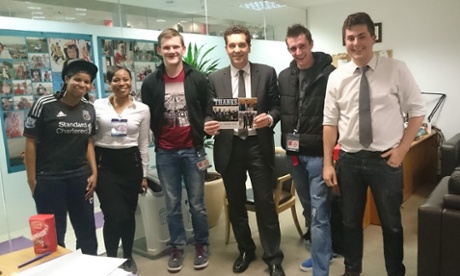
Jeanette Warburton, service manager for children’s social care at Stockport council, was involved in the first phase of the project, between 2013 and 2014. Stockport was in the “North West cluster”, a group of four councils that worked together during the course of the programme. “It was a real opportunity to work with our colleagues in neighbouring authorities,” says Warburton, “to focus on improving the areas [where] our young people were telling us they wanted some improvement.”
All four councils did a survey of their local young people, to find out what changes they wanted to see. Common themes – such as a greater range of accommodation, more financial support and more out-of-hours services – emerged. Each of the four authorities took the lead on a particular issue: Trafford focused on transitions while Stockport looked at integration and health. They then brought back their findings to the group. “It really accelerated our progress,” explains Warburton.
“[The cluster has] achieved a huge amount,” says Liz Lyden, chief executive of the Care Leavers’ Foundation, which worked with the four authorities. “They sparked each other off.” Both Stockport and Trafford said they had achieved four years’ work in the space of just a year.
One of the most valuable parts of the project is the sharing of information between local authorities. By exchanging information about what they offered to care leavers – such as the value of leaving care grants and whether they have an emergency fund for each person – colleagues from different councils got best practice ideas from each other and worked to improve their services.
Accommodation was one of the areas with the most problems, but significant improvements have been made. This includes big changes, such as the chance to return to care if a young person feels that they moved out too soon, and working with housing providers to place people in areas where they want to live and have connections. But there are also smaller changes, which cost the local authority little but can have a big impact in terms of how secure care leavers feel, such as a visit from a handyman when they move into their own home, to help them put up curtain poles and other such tasks – typically the role of a parent.
For the next phase, the New Belongings project will focus more on bringing care leavers into the community and getting local businesses and organisations involved. “You need to be connected with people, and I think bringing in the community is the best alternative to having a family,” says Juliette.
More opportunities for care leavers to get work experience are vital, as they don’t have the family connections that many rely on. Stockport councils is in the bidding process for phase two of the New Belongings project; Warburton says if it is successful, it will do more work on young people coming out of custody or placed out of area. A big focus for Stockport and other local authorities is emotional and mental health; care leavers are often more prone to loneliness, isolation and mental health difficulties.
How long the New Belongings project lasts is down to government funding, on which it is entirely dependent; it is only secure for another year. But one of Lyden’s aims is to set up a website that disseminates the resources and information gained from the project, meaning that any local authority can access it remotely and benefit from the findings.
Juliette is keen to see the creation of a network where councils can talk to one another and share experiences of the problems they face and the solutions they have tried. Being involved in New Belongings has been “quite incredible”, she says. “I feel like I’ve finally found a small family of my own, and it’s the New Belongings group.”
And if they can extend that culture and feeling of family to the local authorities, and get them to put care leavers in the middle of their decisions, then the project will have been well worth it.