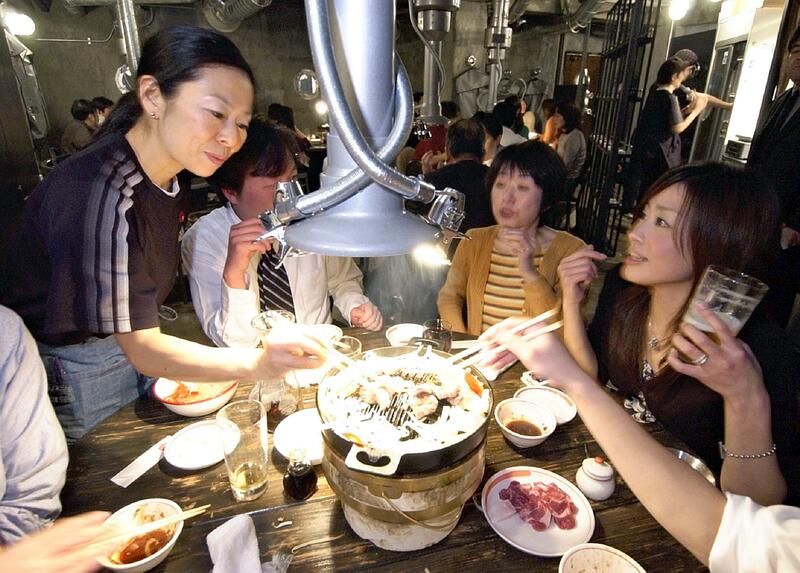
I am hungry for sheep meat. Mutton and lamb are less commonly found in Japanese supermarkets than beef, pork or chicken, and the long state of emergency in Tokyo severely limited opportunities to dine at restaurants that specialize in it.
With the emergency finally over, many people may be thinking of eating out for the first time in a long while. And I, for one, am thinking especially about sheep meat dishes.
-- Not big in Japan
When I traveled around the world writing feature stories for The Yomiuri Shimbun's Sunday edition, I found that mutton and lamb were familiar foods not only in Australia -- a major sheep-raising country -- but also in Northern Europe, North Africa, the Middle East and East Asia. In fact, it might be difficult to find a country that consumes as little sheep meat as Japan does.
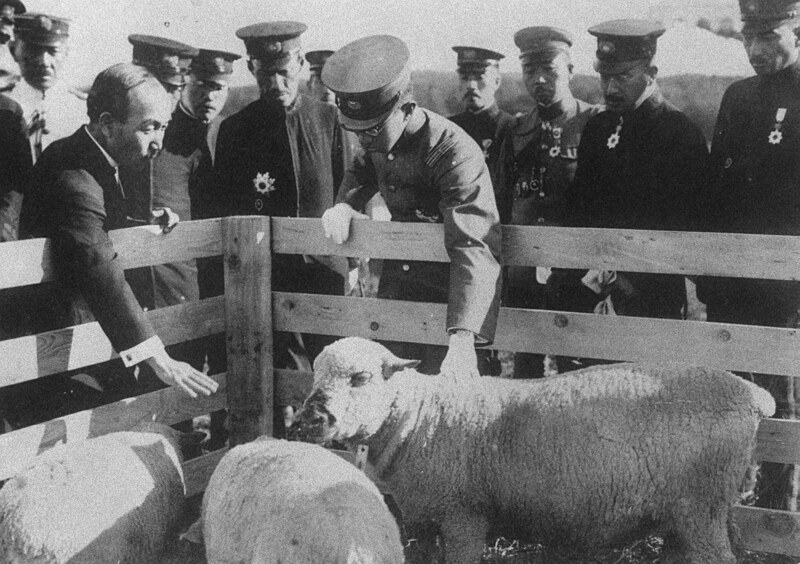
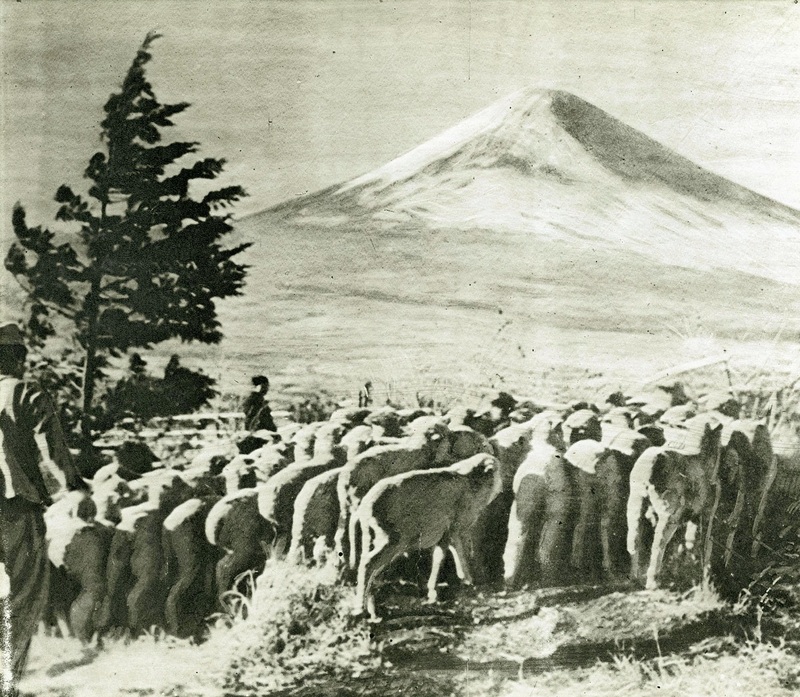
The reasons are at least partly historical. There simply used to be no sheep in Japan. It was not until the Meiji era (1868-1912) that sheep came to be raised as livestock or used for food. The June 9, 1914, morning edition of The Yomiuri Shimbun included a headline that read: "Sheep meat is recommended as the finest animal meat. Sheep wool can be used as fabric. Sheep is becoming more and more necessary."
Three years later, on Dec. 14, 1917, the morning edition reported a plan of the agriculture and commerce ministry to achieve self-sufficiency in wool over a 30-year period. Another article, in the morning edition of April 29, 1919, recommended that farmers keep a few sheep each, as it is "best as a family side job." It also said that sheep "can be friends of the family's children."
-- 'Mongolian' Japanese cuisine
An article in The Yomiuri Shimbun's morning edition dated Dec. 25, 1918, was headlined, "The use of sheep meat for Japanese dishes was studied at a women's school that trains teachers for higher education. The meat was found to taste light and delicious." Short stories on sheep meat tasting events and cooking classes held by the government also were carried in the paper for several years after that.
According to the book "Yakiniku no Bunkashi" (Cultural history of yakiniku grilled meat) by Michio Sasaki, published by Akashi Shoten Co., the government promoted the spread of sheep meat cuisine in the 1920s, and jingisukan grilled sheep meat -- thought to be named for the Mongol conqueror Genghis Khan -- became established as a representative sheep meat dish.
The Yomiuri Shimbun's evening edition on Feb. 5, 1938, carried an advertisement for a jingisukan restaurant in the Koenji district of Suginami Ward, Tokyo. It was a well-known eatery in its day, and the words "Beijing-style mutton cuisine" appeared beside the name of the restaurant.
Readers might be puzzled by the "Beijing-style" description, as Beijing is far from Mongolia. But in fact, jingisukan is not Mongolian cuisine. According to Sasaki's book, an article in the February 1937 issue of Ryori no Tomo (Friends of cooking) magazine said that a Beijing dish called kaoyangrou was enjoyed around the 1910s by Japanese residents of China who came to call the dish jingisukan.
Nihon Wellness Sports University Prof. Rikido Tomikawa, a cultural anthropologist from China's Inner Mongolia Autonomous Region, said, "Sheep meat is a staple food for Mongolians, but it is usually eaten boiled, rather than grilled."
Such clues suggest jingisukan is basically a Japanese dish with a Mongolian name and ingredients.
-- Jingisukan hot spots in Japan
Jingisukan tends to be associated with Hokkaido, but there are other areas in the nation where jingisukan is the specialty. One is Tono City in Iwate Prefecture. Another is Shinshushinmachi, a former municipality that is now part of Nagano City. I have visited each of them to report on the dish. Both are mountainous areas where raising sheep was once popular.
In Tono, jingisukan is said to have been spread by people who opened butcher shops dealing in sheep meat after returning to their hometown from the front in World War II. They are said to have learned how to cook sheep meat in Manchuria. They lent customers plates designed for jingisukan and metal buckets with large holes. The buckets are similar to a shichirin Japanese portable stove. As a result, jingisukan spread as a popular style of outdoor cooking, like barbecue.
In Shinshushinmachi, restaurants serving jingisukan are said to have proliferated after the mayor proposed dealing with a postwar decline in the demand for wool by promoting the consumption of sheep meat. A section of National Route 19, the main road in the district, was lined with so many sheep-meat restaurants that it became known as the Jingisukan Road.
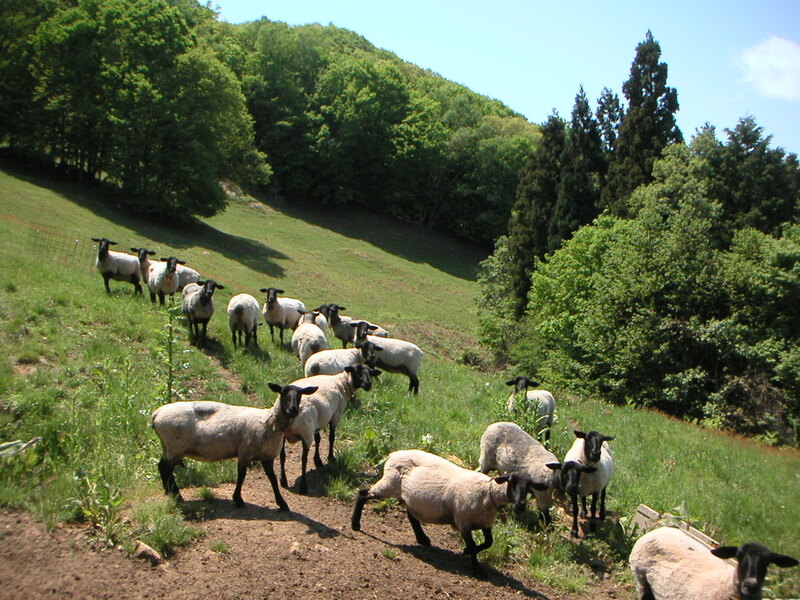
The Shinshushinmachi style is to grill sheep meat on an iron plate, after marinating it in a sauce made by each restaurant using spices and fruits. In the 1980s, a municipal ranch started raising black-faced Suffolk sheep, which were rare in Japan at that time.
-- Low status of mutton
However, outside of these places and Hokkaido, the status of mutton was not very high in Japan immediately after the war. In the past, many people would scowl at the very mention of mutton, saying the meat is tough or smelly. This attitude must have been partly due to the fact that the meat, mostly imported, was not preserved very well in those days because of poor freezing and refrigeration techniques.
An article in the morning edition of The Yomiuri Shimbun dated Oct. 30, 1967, suggested various ways to cook sheep meat. "Even as autumn sharpens people's appetites, housewives are struggling because of the skyrocketing prices of beef, pork and other meats," the story sympathetically remarked. "Beef, in particular, is beyond the budget of ordinary people. So we can focus on mutton and lamb instead as an inexpensive meat supplying animal protein."
Although imports from Australia and other countries had started five years earlier, the article said, "Probably because many people dislike the peculiar smell of mutton, only a small amount of sheep meat has been used for food."
-- Growing interest in food safety
In the current century, sheep meat has begun to get a warmer welcome in Japan.
An article in the city news section of The Yomiuri Shimbun's March 11, 2005, evening edition had this headline: "Mutton jingisukan is popular. It is said to be effective for dieting. Mutton jingisukan eateries double in Tokyo."
The articles described jingisukan as "a specialty of Hokkaido that is becoming popular in Tokyo." It also said, "The number of jingisukan restaurants in Tokyo has doubled in the past year, and there has been a rush of jingisukan restaurant openings this year."
The article said demand for mutton and lamb had increased across all demographic groups since the meat is said to be effective for dieting and reducing cholesterol. Fears of bovine spongiform encephalopathy (BSE), also known as mad cow disease, and avian influenza, are also said to have contributed to its popularity as an alternative meat.
The first years of the 21st century were marked by a number of high-profile food safety-related incidents. Beef imports from the United States were even suspended because of BSE beginning at the end of 2003.
-- Improved food preservation technology
Although the jingisukan boom of the 2000s subsided, various sheep meat dishes have become available in Japan in recent years.
An article in The Yomiuri Shimbun's morning edition on Oct. 4, 2018, stated the reason in a headline: "Sheep meat is booming again thanks to improved quality."
An official of an Australian meat producers' association quoted in the article said that with the advancement of food preservation and transportation technologies, more restaurants were offering meat that was properly kept under a freshness control system.
An employee of a supermarket in Ichikawa, Chiba Prefecture, said: "Sheep meat is a food free from religious taboos around the world. Therefore supermarkets, which play a leading role in the local diet, have come to offer the meat." The remarks suggested an increase in the number of foreign residents in Japan also contributed to the spread of the meat.
To call sheep meat "smelly" and "tough" now reflects an outdated mindset. As a sheep meat lover, I hope that it will come to play a role similar to that of beef, pork or chicken in kitchens across Japan.
Read more from The Japan News at https://japannews.yomiuri.co.jp/