A month has passed since the government's nationwide lifting of the coronavirus-related state of emergency on May 25. Although companies have tried to make a comeback while thoroughly preventing infection, the situation is far from pre-corona level. To sustain economic activities, the government needs to speed up the implementation of economic stimulus measures and strengthen its virus confirmation system to prepare for the second wave of infections.
--Tourism industry
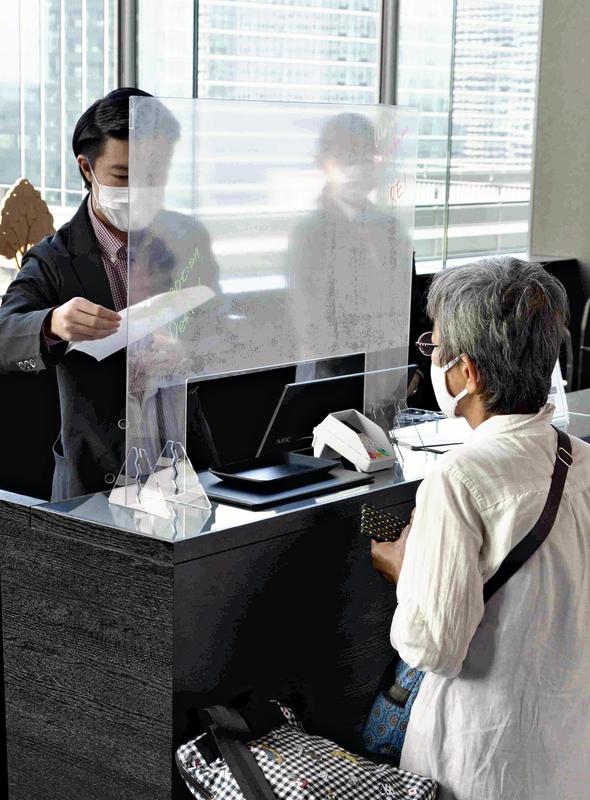
Yokohama Tokyu REI Hotel in the Minatomirai district of Yokohama, originally scheduled to open in April, had to postpone its grand opening to Jun 5 following the lifting of the state of emergency. The hotel installed barriers at the reception desk to ensure the safety and security of guests.
While the hotel had hoped for guests booking for business-related purposes, many companies are still refraining from allowing business trips, so the number of guests is far lower than expected. "We'd like to consider ways to attract not only business travelers but tourists as well," said General Manager Masaya Yajima.
The total number of bookings at hotels and inns in April plunged by 76.8% from the same month last year, marking a record-breaking drop, according to the Japan Tourism Agency. Japan's foreign visitor count in May was only 1,700, the lowest it has ever been since statistic recording began, highlighting the devastating impact the virus has had on such businesses.
In response to such a situation, the government has plans to support the tourism industry with its Go To Campaign, which includes a 50% subsidy for domestic travel. Although the program's launch was delayed due to criticism over the cost of outsourcing administrative work, the government will implement the program in August, the peak season for tourists.
--Food industry
Restaurants and retailers are also moving toward recovery.
Along with sales at existing outlets of Watami Co., a chain of izakaya bars, having plummeted to below 10% in April and May from a year earlier, Watami expects demand for such establishments to inevitably decline for reasons including people becoming accustomed to teleworking. In July, the company will launch a delivery service at two of its outlets in Tokyo, delivering bento lunch boxes to customers who place orders by phone.
According to the Japan Department Stores Association, sales at major department stores between June 1 and 17 were down about 27% from a year earlier. In an effort to regain lost ground, many stores have begun sales of clothing items whose stockpile has increased. The stores are also trying to have customers maintain social distance from each other by adjusting the timing of sales for each brand and by expanding the sales floor during the ochugen summer gift-giving season.
However, there is little that can be done at small establishments. A woman, 55, who runs an izakaya in Shinbashi, Tokyo, sighs, "I'm really in dire straits. I don't know what to do."
She reopened her izakaya in mid-May, but its sales are about 10 to 30% of what they were before. With employees' salaries and a monthly rent of about 400,000, yen she cannot see a way to turn her izakaya to profit.
The government's subsidy to provide up to 2 million yen for small and midsize companies to sustain their businesses has been inundated with inquiries about the system. The money remittance is behind schedule as it takes time to check application documents.
On another subsidy, up to 6 million yen to support rent payment, it is taking time to narrow down screening criteria, such as the kinds of documents to confirm rent and land prices. The government is expected to start accepting applications for rent benefits in July. In order to support the frontline of consumption, the speed of benefit payment is being severely tested.
Read more from The Japan News at https://japannews.yomiuri.co.jp/