A month in space: cosmic clouds and a rocket launch – in pictures
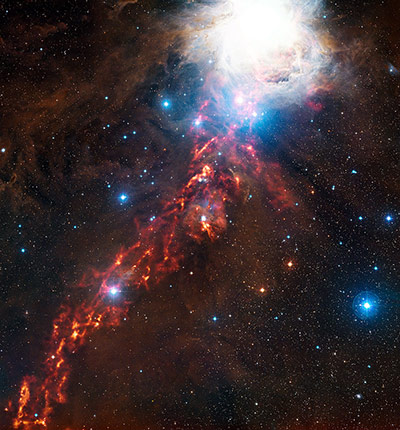
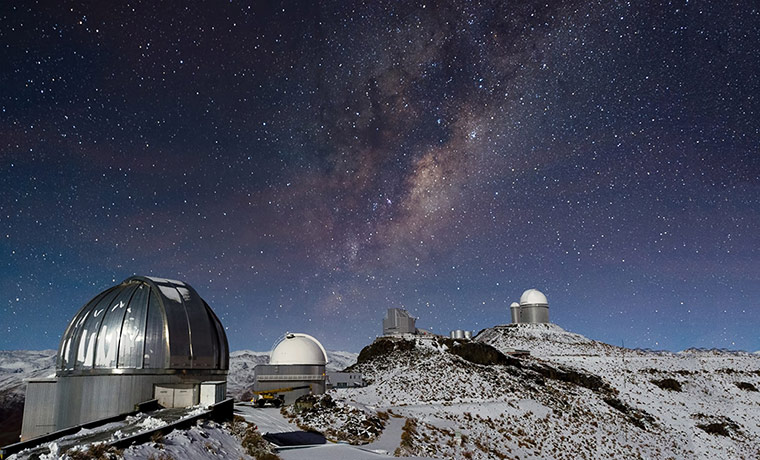
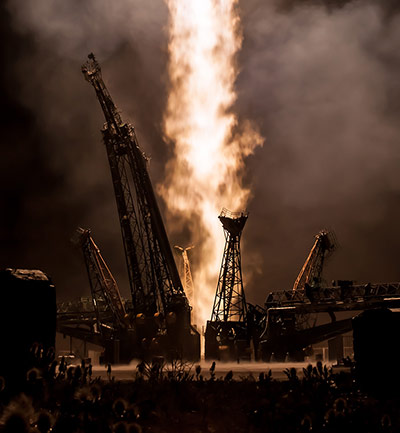
This dramatic new image of cosmic clouds in the constellation of Orion reveals what seems to be a fiery ribbon in the sky. The orange glow represents faint light coming from grains of cold interstellar dust, at wavelengths too long for human eyes to see. It was observed by the ESO-operated Atacama Pathfinder Experiment (APEX) in Chile. In this image, the submillimetre-wavelength glow of the dust clouds is overlaid on a view of the region in the more familiar visible light, from the Digitized Sky Survey 2. The large bright cloud in the upper right of the image is the well-known Orion Nebula, also called Messier 42 Photograph: Digitised Sky Survey 2/ESOIn the outskirts of the Atacama Desert in Chile, the skies are pitch-black after sunset. Thanks to the lack of light pollution, ESO's La Silla Observatory has an incredibly clear view of the night sky. In this picture, taken in May 2013, the mountain peak and its telescope domes have been covered with snowPhotograph: Jose Francisco Salgado/ESOA Soyuz rocket launches on 29 May from the Baikonur Cosmodrome in Kazakhstan on its way to the International Space StationPhotograph: Bill Ingalls/NASA
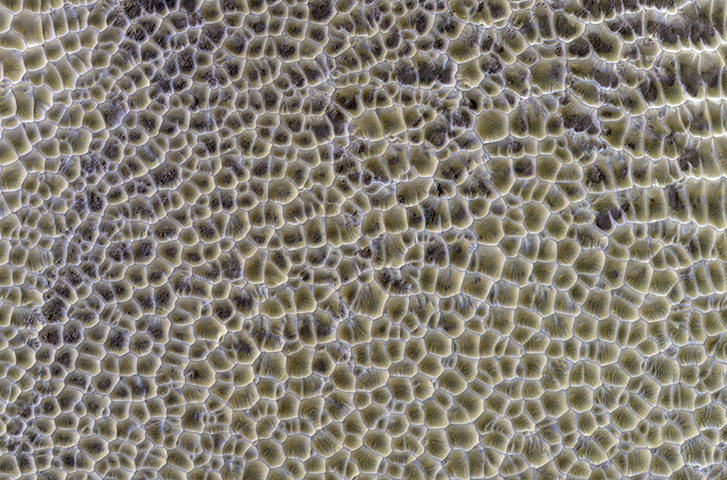
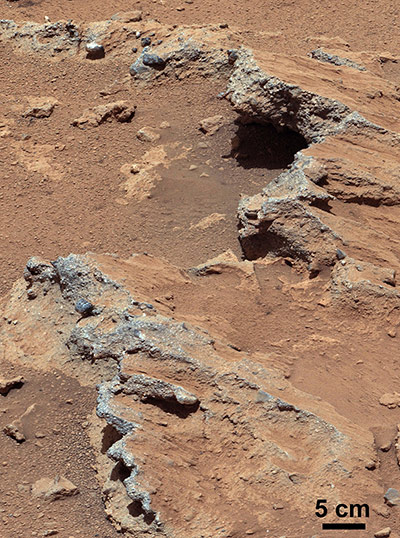
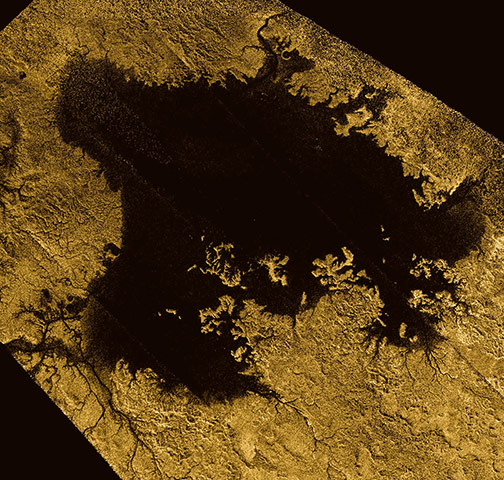
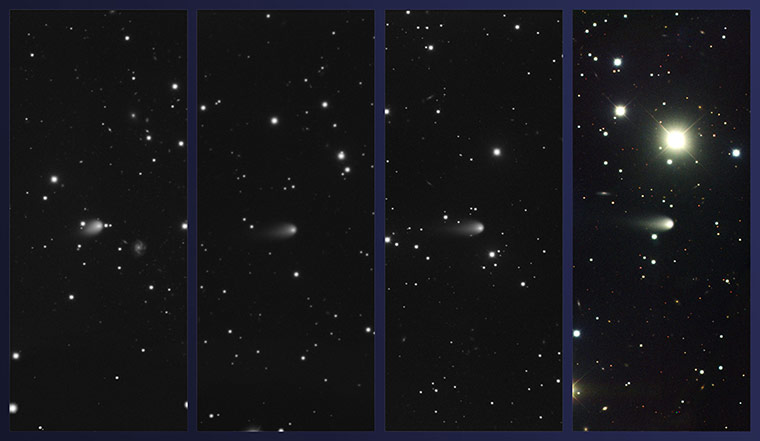
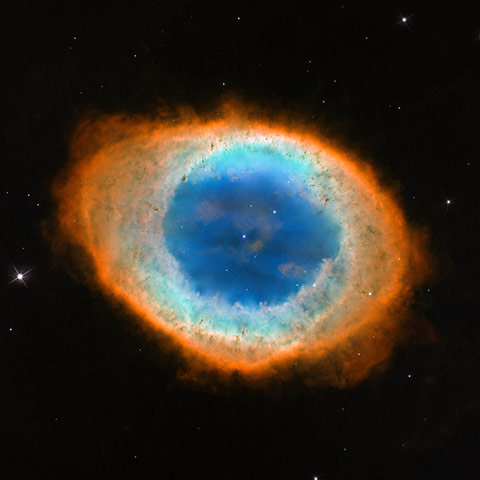
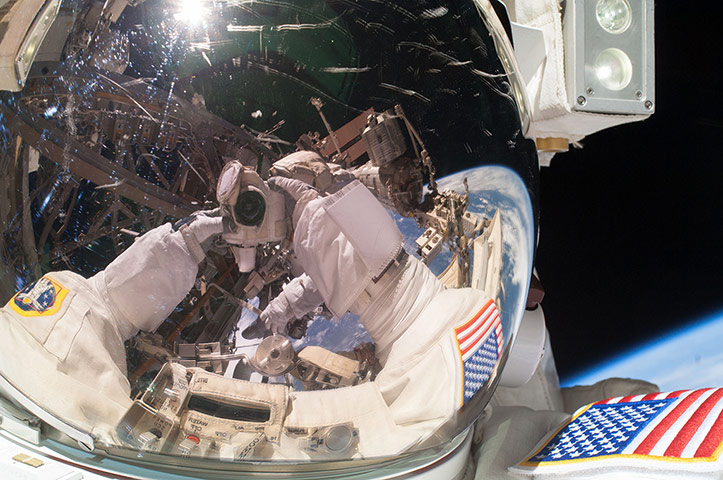
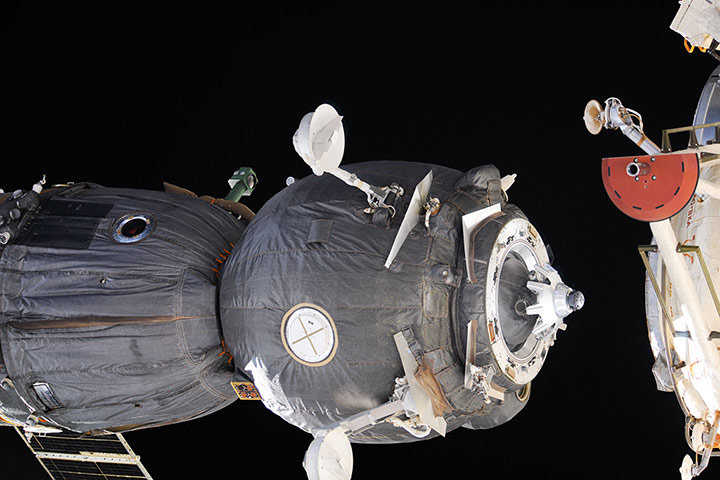
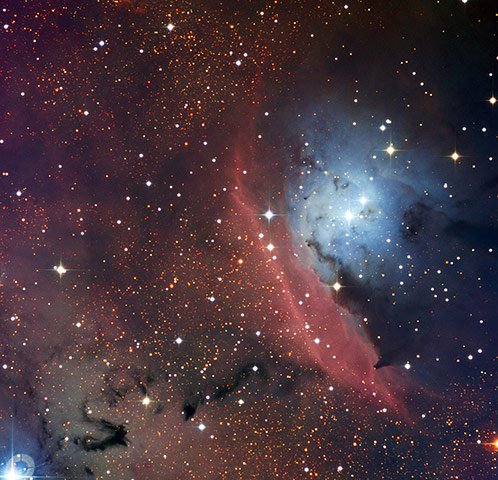
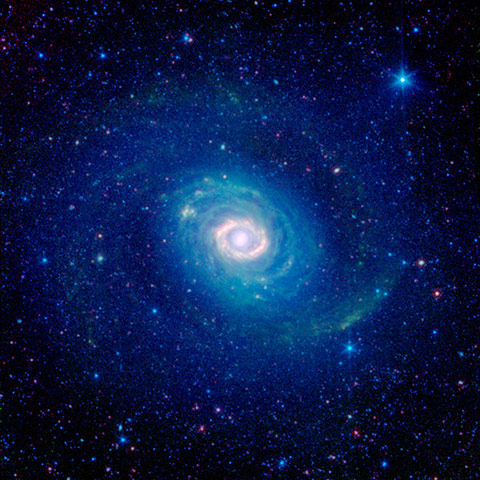
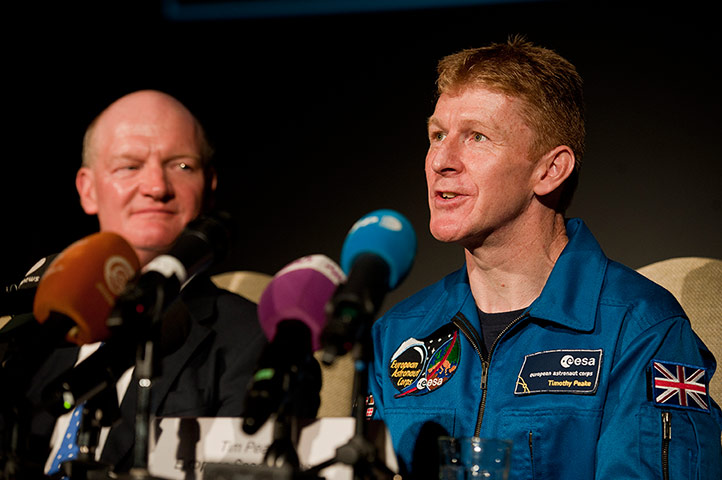
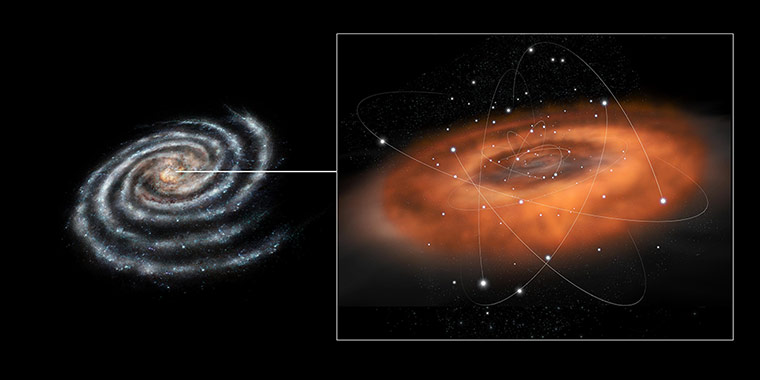
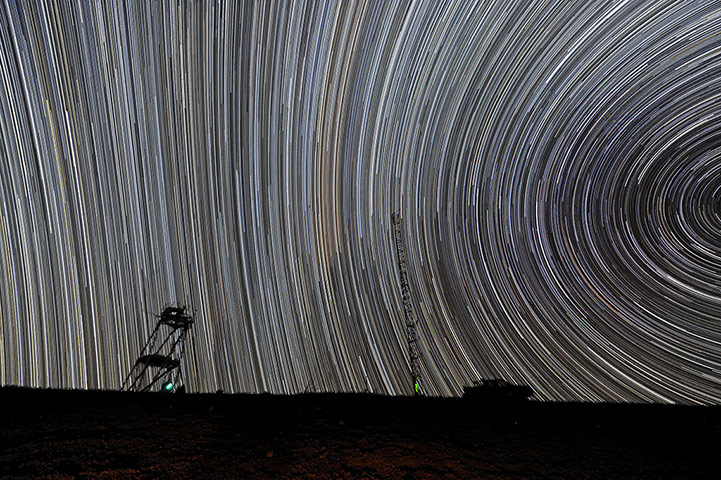
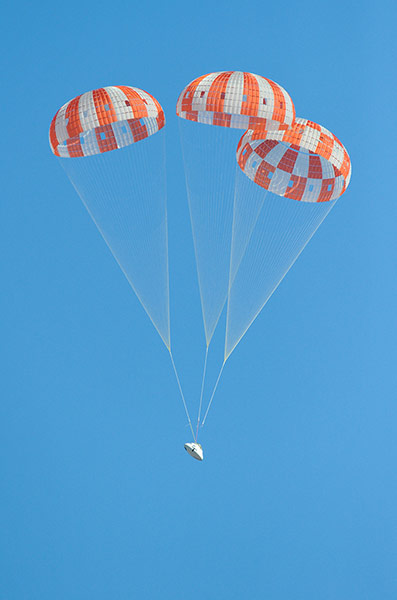
Polygonal dunes on the surface of MarsPhotograph: University of Arizona/JPL/NASAThis intriguing new view of a spectacular stellar nursery, IC 2944, has been released to celebrate a milestone: 15 years of ESO's Very Large Telescope. The image also shows a group of thick clouds of dust known as the Thackeray globules silhouetted against the pale pink glowing gas of the nebula. These globules are under fierce bombardment from the ultraviolet radiation from nearby hot young stars. They are being eroded away and also fragmenting, rather like lumps of butter dropped on to a hot frying pan. It is likely that Thackeray's globules will be destroyed before they can collapse and form new starsPhotograph: ESONasa's Curiosity rover found evidence of an ancient, flowing stream on Mars at a few sites, including the rock outcrop pictured here, which the science team has named 'Hottah' after Hottah Lake in Canada's Northwest Territories. This geological feature is exposed bedrock made up of smaller fragments cemented together, or what geologists call a sedimentary conglomerate. Scientists think the bedrock was disrupted in the past, giving it the tilted angle, most likely via impacts from meteoritesPhotograph: MSSS/JPL-Caltech/NASALigeia Mare, shown here in data obtained by Nasa's Cassini spacecraft, is the second largest known body of liquid on Saturn's moon Titan. It is filled with liquid hydrocarbons, such as ethane and methane, and is one of the many seas and lakes that bejewel Titan's north polar regionPhotograph: Cornell/ASI/JPL-Caltech/NASAA series of images from Gemini Observatory shows Comet C/2012 S1 (ISON) racing toward an uncomfortably close rendezvous with the sun on 4 February, 4 March, 4 April, and 4 May (left to right, respectively; Comet ISON at centre in all images)Photograph: Gemini Observatory/AURAThis image shows the dramatic shape and colour of the Ring Nebula, otherwise known as Messier 57. From Earth's perspective, the nebula looks like a simple elliptical shape with a shaggy boundary. However, new observations combining existing ground-based data with Nasa/ESA Hubble Space Telescope data show that the nebula is shaped like a distorted doughnut. This doughnut has a rugby-ball-shaped region of lower-density material slotted into its central gap, stretching towards and away from us Photograph: C Robert O'Dell (Vanderbilt University)/Nasa/ESAExpedition 35 flight engineer Chris Cassidy takes a self-portrait during a space walk on 11 May to replace a pump controller box on the International Space StationPhotograph: ISS/NASAFrom inside the International Space Station, the Soyuz TMA-07M undocking was recorded on 13 May 2013 by one of three Expedition 36 crew members – Chris Hadfield, Tom Marshburn and Roman RomanenkoPhotograph: ISS/NASAThe Danish 1.54-metre telescope located at ESO's La Silla Observatory in Chile has captured a striking image of NGC 6559, which shows the chaos that occurs when stars form inside an interstellar cloud. This region of sky includes glowing red clouds of mostly hydrogen gas, blue regions where starlight is being reflected from tiny particles of dust and also dark regions where the dust is thick and opaquePhotograph: ESOThe galaxy Messier 94, also known as NGC 4736, captured in infrared light by Nasa's Spitzer Space TelescopePhotograph: JPL-Caltech/NASABritish astronaut Major Tim Peake speaks alongside Britain's science minister David Willetts (left) during a press conference at the Science Museum in London on 20 May, where it was announced that Peake will be joining the International Space Station in late 2015. The former army helicopter pilot was named as the first 'homegrown' British astronaut to travel to the International Space Station Photograph: Will Oliver/AFP/Getty ImagesThis artist's concept illustrates the frenzied activity at the core of our Milky Way galaxy. The galactic centre hosts a supermassive black hole in the region known as Sagittarius A*, or Sgr A*, with a mass of about four million times that of our sun. The Herschel space observatory has made detailed observations of surprisingly hot gas that may be orbiting or falling toward the supermassive black hole Photograph: C Carreau/ESAThis mesmerising image shows the apparent motion of the stars through the southern sky. It was taken at Cerro Armazones, a mountain peak more than 3,000 metres above sea level, which lies in the centre of the Atacama Desert, in the Chilean Andes Photograph: S Brunier/ESOA model of Nasa’s Orion spacecraft glides to a successful touchdown during a test of its parachute system on 1 May 2013. Orion’s three main parachutes, which slow it gradually down for landing, weigh 300 pounds each and can cover almost an entire football fieldPhotograph: NASA
Sign up to read this article
Read news from 100’s of titles, curated specifically for you.