A monster star in the making, a Martian volcano, Earth's 'selfie' and Curiosity's successor – in pictures
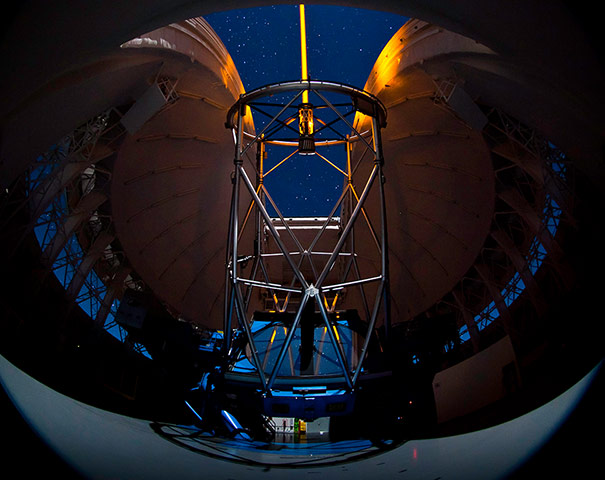
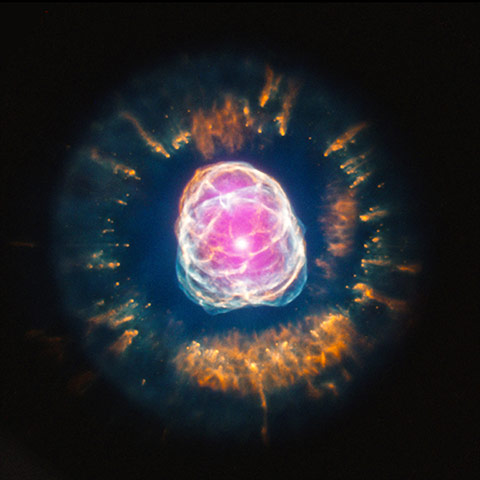
This swirl of gas reminiscent of the time tunnel in the 1960s TV series of the same name, is the centre of galaxy NGC 524. Located in the constellation of Pisces some 90m light-years from Earth, it is a 'lenticular' galaxy – believed to be an intermediate state between elliptical and spiral galaxies. Spirals have vast, pinwheel arms that contain millions of stars. Accompanying these are clouds of gas and dust where new stars are born. When most of the gas has dispersed, the arms fade and the spiral shape weakens. What remains is a lenticular galaxy: a bright disc full of old, red stars surrounded by what little gas and dust the galaxy has managed to cling on toPhotograph: Hubble Space Telescope/Nasa/ESAThe Gemini South telescope in Chile fires a laser heavenwards. The optical telescope uses lasers and deformable mirrors to compensate for atmospheric distortions, giving sharper images than is possible with conventional ground-based telescopes Photograph: Manuel Paredes/AURA/Gemini ObservatoryA planetary nebula (so-called because an 18th century astronomer mistook these elderly stars for planets) form when a star such as the sun uses up the hydrogen in its core. It begins to cool and expand, and eventually the outer layers are swept away, leaving a hot core. Radiation from the star and interaction with this wind creates a complex, filamentary shell. This composite image of NGC 2392 contains data from the Chandra x-ray observatory, in pink, showing the location of million-degree gas near the centre. Data from Hubble – red, green and blue – shows the intricate pattern of the outer layers that have been ejectedPhotograph: Chandra X-ray Observatory Center/Nasa
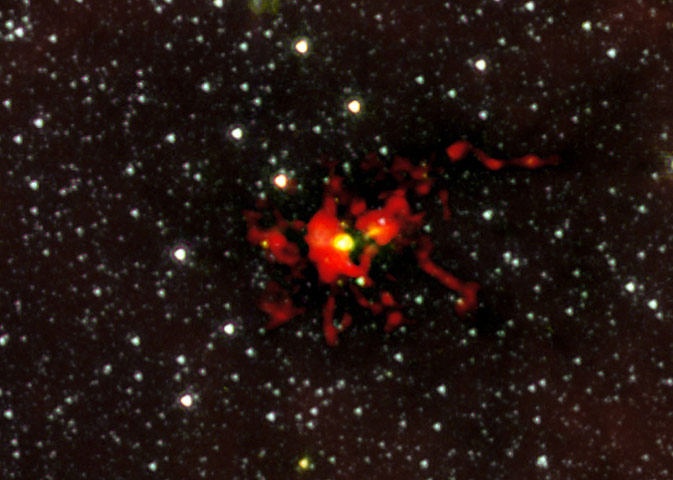
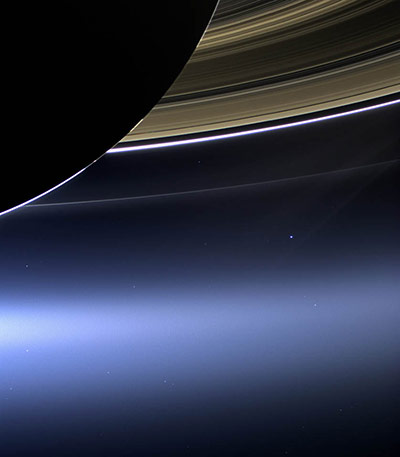
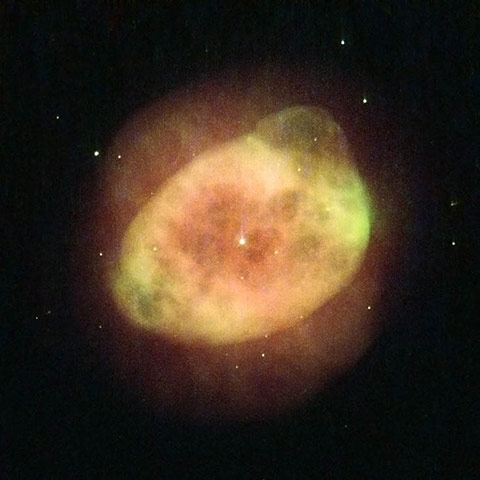
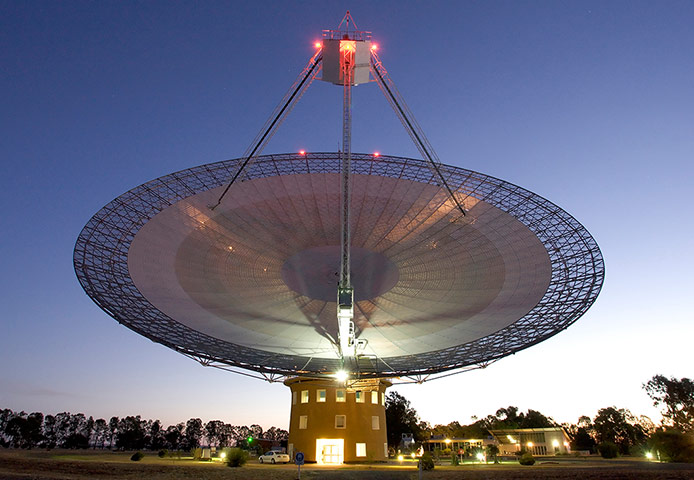
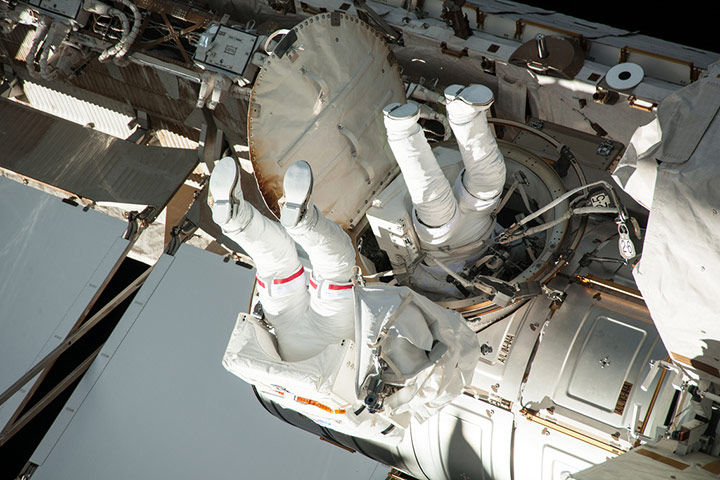
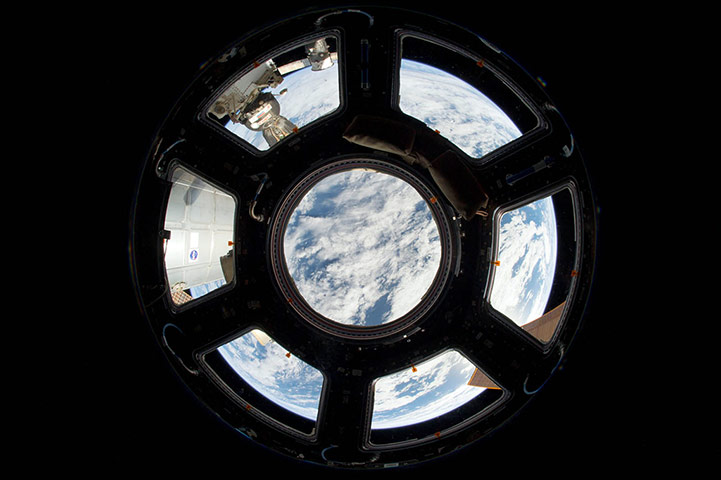
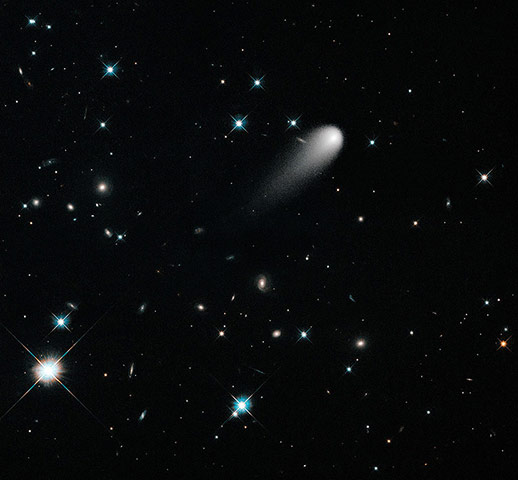
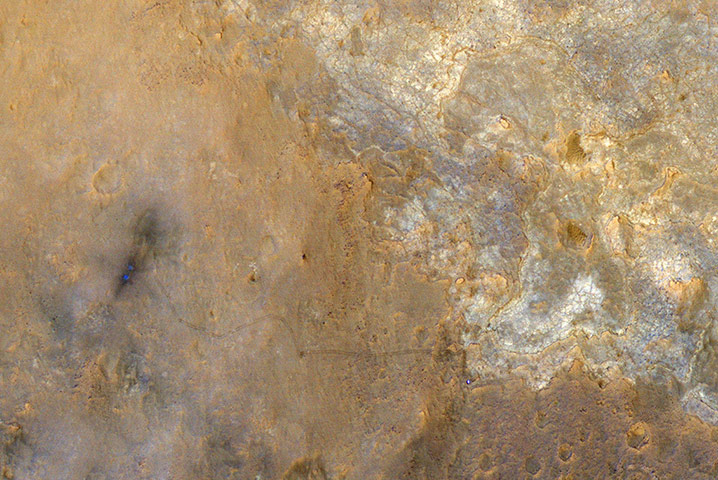
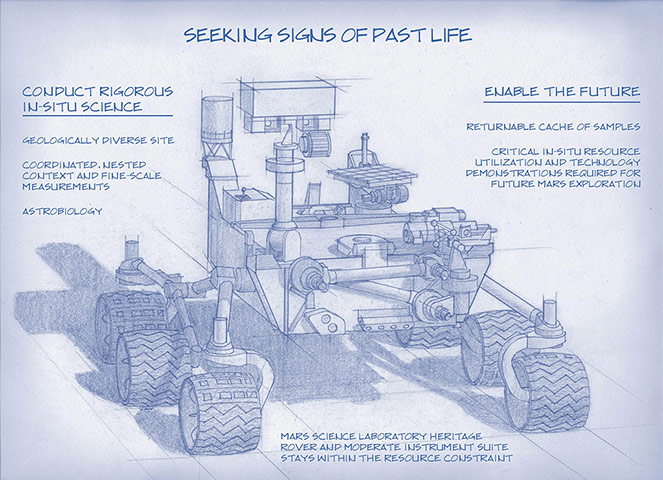
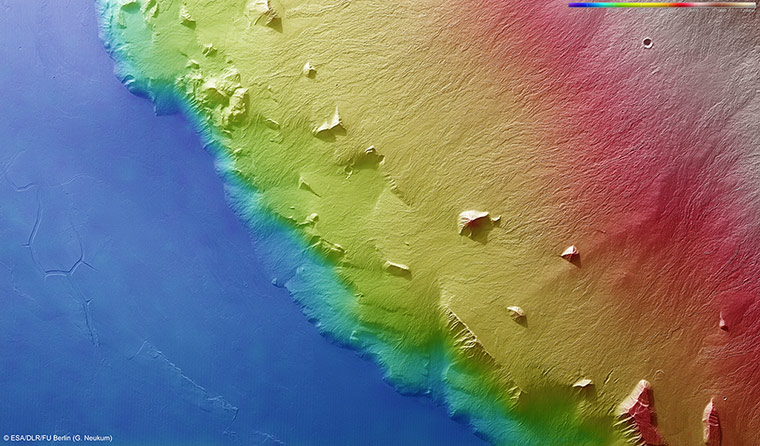
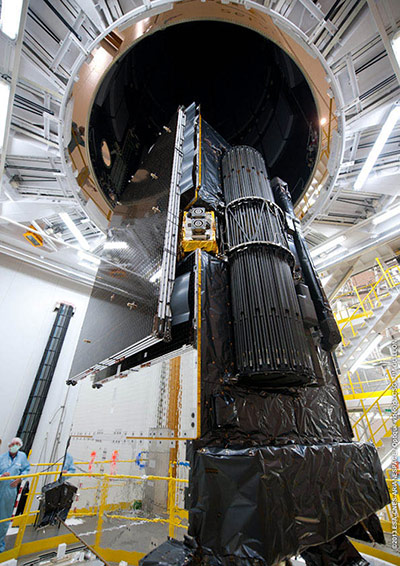
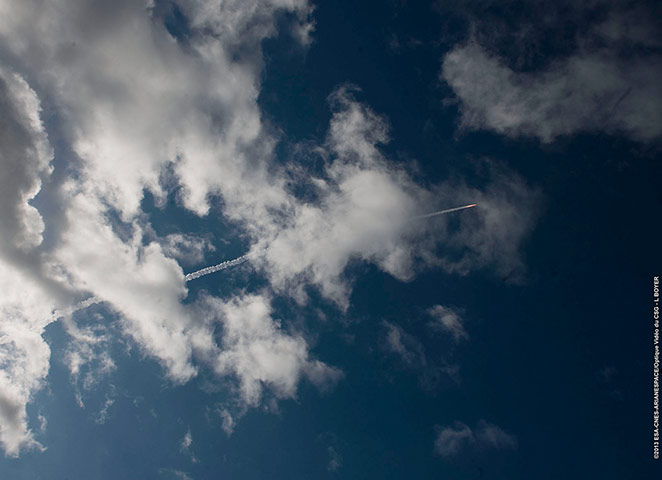
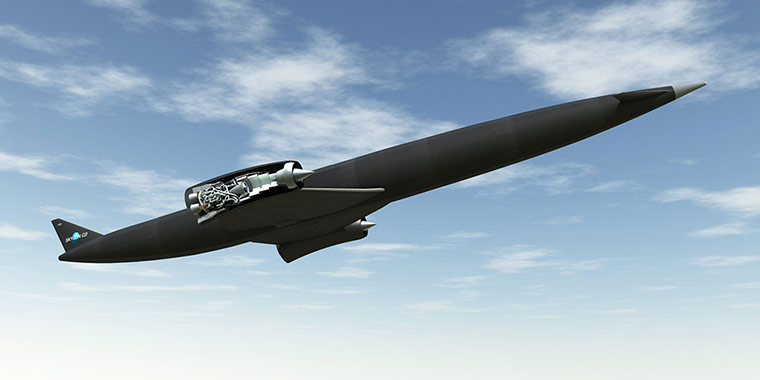
Observations of the dark cloud SDC 335.579-0.292 using the Atacama Large Millimeter/submillimeter array (Alma) in Chile have given astronomers the best view yet of a monster star in the making. The cloud – a stellar 'womb' over 500 times the mass of the sun – is the largest ever seen in the Milky Way. Material is raining down on the embryonic star, which will eventually be up to 100 times the mass of the sunPhotograph: Alma/ESONo, that little blue dot is not dropped pixels on your screen, it's a picture of Earth taken from some 1.44bn kilometres away on 19 July by the wide-angle camera on the international Cassini spacecraft. It also captures Saturn's F, G and E rings. If your screen is good, you may be able to make out our moonPhotograph: JPL-Caltech/NasaThis Hubble Space Telescope image shows the planetary nebula IC 289, located in the northern constellation of Cassiopeia. Formerly a star like our sun, it is now just a cloud of ionised gas being pushed out into space by the remnants of the star’s core, visible as a small bright dot in the middle of the cloud. More herePhotograph: Hubble Space Telescope/Nasa/ESAThe Parkes telescope in Australia, part of the Commonwealth Scientific and Industrial Research Organization was used to detect the first population of radio bursts known to originate from beyond our galaxyPhotograph: Shaun Amy/NasaEsa astronaut Luca Parmitano (right) and Nasa astronaut Chris Cassidy, Expedition 36 flight engineers, exit the Quest airlock feet-first for a session of extravehicular activity as work continues on the International Space Station. During the six-hour, seven-minute spacewalk, Cassidy and Parmitano prepared the space station for a new Russian module and added installations on the station's backbonePhotograph: ISS/NasaThis image was taken by Esa astronaut Luca Parmitano through the International Space Station’s window on to the Earth, the Cupola. He tweeted: 'Proof that the Earth is indeed round' Photograph: Luca Parmitano/ISS/ESA/NasaIn this Hubble Space Telescope composite image taken in April, the comet Ison approaches the sun. Background stars and galaxies were photographed separately in red and yellow-green lightPhotograph: Hubble Space Telescope/Nasa/ESANasa's Curiosity Mars rover is the bluish dot near the bottom right corner of this enhanced-colour view from Nasa's Mars Reconnaissance Orbiter. Twin wheel tracks about 3 metres apart can be seen where the rover trundled from the landing site in the left half of the scene. Two bright, blue spots surrounded by darker patches reveal where the Mars Science Laboratory spacecraft's landing jets cleared away reddish surface dust at the landing sitePhotograph: Univ. of Arizona/JPL-Caltech/NasaAn artist's impression of Curiosity's successor, the Mars 2020 rover. The mission will look for signs of past life, collect samples for possible return to Earth, and demonstrate technology for future human exploration. The vehicle would re-use Curiosity's design and engineering, but sport new instruments selected through a competitionPhotograph: JPL-Caltech /NasaLava flows at the foot of Olympus Mons, the largest volcano in the solar system, photographed by Esa's Mars Express probe. The image has been coloured to illustrate the topography of the regionPhotograph: G. Neukum/FU Berlin/DLR/ESAAlphasat – Europe's biggest telecommunications satellite – shortly before being 'encapsulated' in the fairing of an Ariane 5 rocketPhotograph: JM Guillon/CNES/ESAThe rocket launched on 25 July from Europe's spaceport in French Guiana. The satellite reached geostationary orbit and successfully deployed its giant 9-metre antennaPhotograph: L. Boyer/CNES/ESAThe UK government announced plans to invest in Sabre – the Synergistic Air-Breathing Rocket Engine – which could one day revolutionise access to space. Designed by British company Reaction Engines, Sabre will breathe air as it passes through the atmosphere in the early part of its flight, before switching to rocket mode for its final ascent to orbit. Skylon (above), a pilotless vehicle powered by Sabre, will be a true spaceplane – light, reusable and able to take off from and return to a conventional runwayPhotograph: Reaction Engines Ltd/ESA
Sign up to read this article
Read news from 100's of titles, curated specifically for you.