I’m 17, and I’m paying for my bone marrow transplant. Here’s why.
I remember being 13 and getting ready to go back to school after the summer holidays. I’d been playing a lot of cricket, and my junior football season had kicked off when I started to feel unwell.
I was fit – I was a typically active kid, but I just didn’t seem to have any energy. My mum wasn’t convinced it was the usual teenage lethargy that has a tendency to creep on at that age – she thought something wasn’t “quite right”, and took me to the GP. After I had a blood test the local hospital contacted me within hours, and called me straight in. It was weird. I should have been at school starting year nine and playing rugby with all my friends, but instead I was being transferred to Sheffield Children’s hospital. It felt like things were getting more serious than I originally thought.
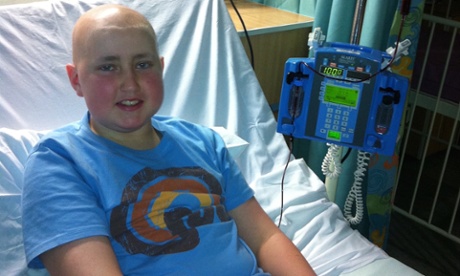
The next day, after some extremely painful bone marrow and spinal fluid tests, I was told the devastating news. I had a rare form of leukaemia (AML). I was told about the chemotherapy I would have to have, and all the side effects I would inevitably have to experience: sickness, hair loss, tiredness, bleeding, bruising and isolation. My immune system would get so low that there would be times when I wouldn’t be able to see anyone except the doctors and my family because of the risk of catching an infection.
The hospital was old and the wards were too small and noisy. On one side of me my mum was asleep on a camp bed, and on the other, a poorly baby crying, with its mum on a camp bed too. This went on for weeks on end. The nurses had no room to work, there were machines bleeping all the time, and lots of sick people coming and going, for whom there was little or no privacy.
When my mum and dad told our friends and family the news about my illness, they were really shocked, but most people just wanted to help. Friends ironed my brother’s school shirts for us, sent meals for my dad and my brother when my mum was staying in hospital with me, and made cakes to cheer me up. My brother also set up an online donations page and soon quite a bit of money started to come in.
I needed a lot of blood transfusions during my treatment. So when more and more people asked what they could do to help I began to say, “Well, you could become a blood donor,” because I wanted to help those who were helping me – the medical team that surrounded me every day.
The doctors and nurses at Sheffield Children’s hospital were amazing. They explained everything to me about all the treatments I would have. They even managed to organise chemo at home for me so that I wouldn’t have to be in hospital on my 14th birthday.
My doctor, Professor Vora, is a world expert in children’s leukaemia. I felt really fortunate to be in a hospital where I could be looked after by a professor and his team. While I was on my third course of chemo, the professor went to a conference in London and came back with the news that for my specific type of leukaemia, research had shown the best plan would be to have a bone marrow transplant to try to stop the disease coming back.
My heart sank as my doctor explained about how the transplant could feel even worse than chemo, and that I would have to spend a greater number of days in an isolation room to protect me from infections.
Once I’d had time to process the news, I asked Julie, my bone marrow transplant specialist nurse, how much a bone marrow transplant would cost the NHS. “About £150,000,” was the answer. And suddenly, I had the answer to how people could help me. I wanted to pay the hospital back for my treatment, and to make the hospital better for future patients.
I want to help redevelop the cancer ward at Sheffield Children’s hospital so more teenagers can have a better, more comfortable experience. I want to make the hospital a better place for patients and their families. It needs spaces for babies, for children – and teenagers too – and more modern facilities for the amazing doctors and nurses to be able to treat their patients better. I want to fund research on childhood leukaemia so that Professor Vora and others can help more children. Research gives hope to patients and their families. It helps find better treatments with fewer side effects and, maybe one day, it will deliver a cure.
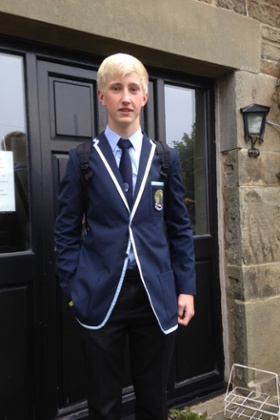
I’m 17 now, and I’m in remission. I’ve done my GCSEs, (seven As and five Bs), I’m doing my gold Duke of Edinburgh award, and I’m in the sixth form studying for four A-levels. I play as much sport as I can; after all that time being ill, I need to keep myself fit. I get involved with as many school activities as possible, and play cricket out of school too.
My fundraising total now stands at £63,683.25, so I’m just under half way. I am determined to get to my £150,000 target and I’m hoping that the #GivingTuesday initiative (a day when people are encouraged to donate to charity or volunteer some of their time for a good cause) will be a good way to raise further awareness of the wonderful care the NHS has given me. I just want to pay back this money to the Children’s Hospital Charity to say thank you for saving my life.
• Donate at #GivingTuesday, Andrew’s JustGiving page. #GivingTuesday is a global day of giving on 1 December, when more than 1,200 charities and businesses are coming together to donate time, money or their voice to good causes.