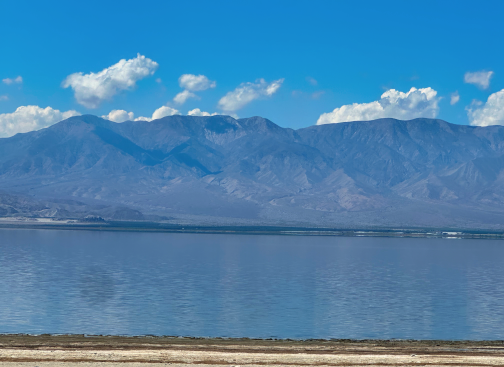
A stretch of desert in Southern California has begun to stir with the same energy that once pulled thousands of hopeful prospectors westward with pickaxes and dreams of striking it rich. The ground may look quiet, but far beneath the surface lies a mineral now nicknamed "white gold." Lithium, the soft silvery metal powering batteries in everything from smartphones to electric vehicles, has turned the region surrounding the Salton Sea into one of the most closely watched resource zones in the United States.
Government scientists confirmed in 2023 that geothermal brine beneath the Salton Sea could contain roughly 18 million metric tons of lithium, an amount valued at hundreds of billions of dollars. The deposit is so large that it could supply batteries for about 375 million electric vehicles, exceeding the number of cars currently on American roads.
The discovery has ignited a modern kind of gold rush—one driven not by glittering flakes in riverbeds but by the rising demand for energy storage and battery technology. Investors, developers, and energy companies have begun turning their attention toward the desert basin, where one privately owned property now offers a rare chance to step directly into the story.
Forty Acres at the Center of the Opportunity
Amid the growing attention surrounding the Salton Sea sits a parcel of land that places buyers directly within the unfolding opportunity. The property spans 40 acres in Riverside County, positioned along the northern edge of the Salton Sea in an area known for geothermal activity and mineral-rich underground brine. As energy companies move deeper into the region, privately available land near these resources has become increasingly scarce.
The property is being offered through Seized Property LLC With lithium discoveries around the Salton Sea drawing international headlines, Curley believes the timing of the sale places the property in the middle of a rapidly expanding conversation about mineral resources in California.
"What sets me apart is that I want to sell my property now, especially with the Salton Sea in the news every day due to its lithium developments," Michelle Curley says, managing member of Seized Property LLC.
Ownership of land near a mineral boom carries a long history in American economics. During earlier resource rushes, those who secured strategic ground sometimes found themselves in a powerful position as industries grew around them through partnerships, leasing arrangements, or land appreciation tied to nearby development.
Where "White Gold" Lies Beneath the Desert
The Salton Sea itself was formed by accident in the early twentieth century when irrigation canals from the Colorado River flooded a desert basin. Over time, the inland lake became part of a geothermal region where superheated brine flows deep underground, carrying a mixture of dissolved minerals.
Among those minerals is lithium, a key ingredient in rechargeable batteries used in electric vehicles, consumer electronics, and large-scale energy storage systems. As countries push toward electrification and cleaner power systems, the mineral has become one of the most sought-after resources in the global energy economy.
Scientists now say the Salton Sea region could hold one of the largest lithium brine deposits in the world. The concentration of geothermal activity beneath the basin makes the area particularly attractive for extraction methods that combine geothermal energy production with lithium recovery.
Claiming a Stake in Lithium Valley
The scale of the discovery has turned the Salton Sea into what many now refer to as "Lithium Valley." Major energy and technology players have begun exploring ways to extract the mineral from underground brine while producing geothermal electricity at the same time.
One method involves pumping the superheated brine from deep underground wells, using the heat to spin turbines and generate power before filtering lithium from the remaining liquid. After the minerals are captured, the brine is returned underground, creating a closed-loop process tied to geothermal energy.
Growing interest from industry and government has placed the region firmly on the map as a potential hub for domestic lithium production in the United States. For Michelle Curley, the 40-acre parcel represents more than just land, it sits within a region now drawing attention from across the energy and investment sectors.
More than a century after the original California gold rush reshaped the American West, another resource story is unfolding in the desert. The tools may be different, and the metal may not glitter in the sun, but the principle remains familiar: those who recognize opportunity early often find themselves standing closest to the source.