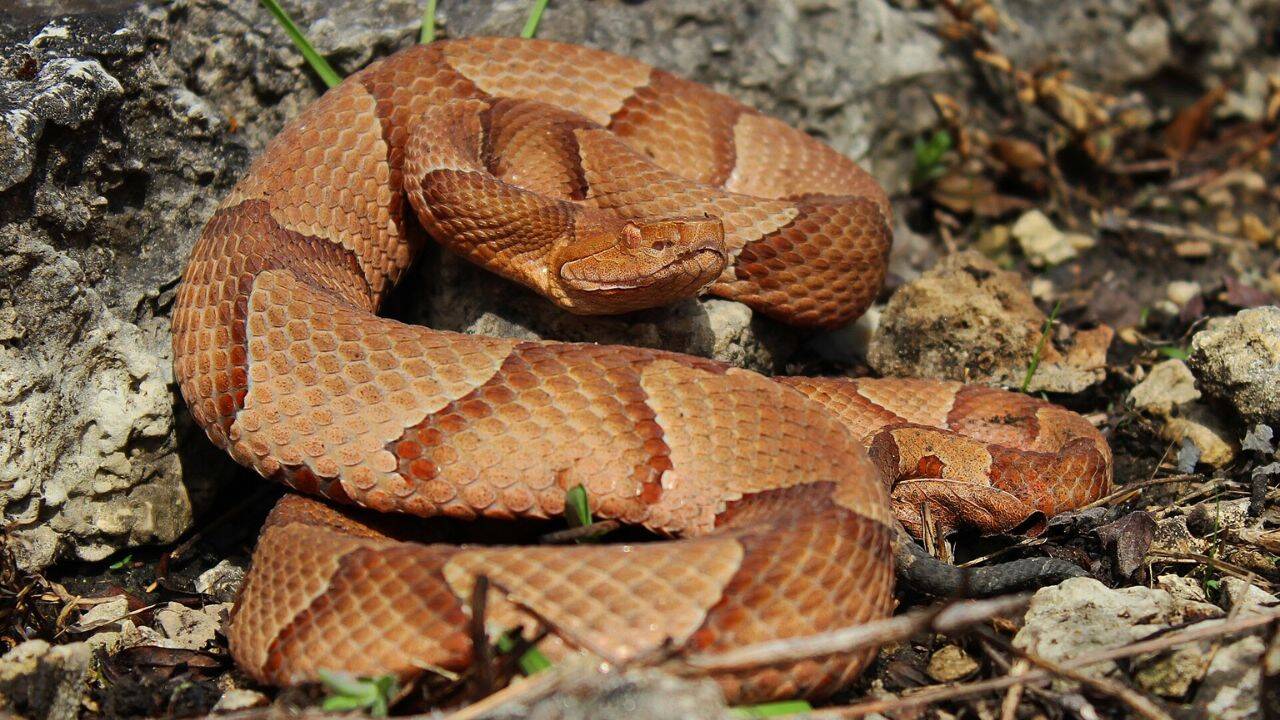
A Missouri farm has become the centre of an unusual ‘copperhead snake’ count after reptile expert Randy Dietz recorded 47 of the venomous snakes on his property in 2026. Dietz, who has lived on the Taney County farm for more than five decades, has been keeping track of the copperheads he encounters around his home and has already passed his previous record of 45.
Get breaking news anytime, anywhere. Download the TOI app now!
The number is striking even for someone familiar with Missouri’s wildlife, where copperheads are among the state’s most common venomous snakes. Some of the snakes Dietz moves away from the property have also appeared again later, adding another curious detail to this year. The sightings do not necessarily mean the local snake population has suddenly exploded, but they offer a close-up look at how easily copperheads can remain nearby without being noticed.
How did a single Missouri farm reach a record 47 copperheads
For Dietz, seeing copperheads is not entirely new. He has spent more than 50 years on his Taney County farm and has long been familiar with the reptiles living around the property. What makes 2026 different is the sheer number of individual encounters.
According to Custom Map Poster, Dietz has counted 47 copperheads around his property so far this year, exceeding his previous record of 45. He has also been documenting the snakes rather than simply treating every sighting as an isolated encounter. Some snakes that he has moved away from the immediate area have later turned up again. That repeated appearance is one reason the story is more complicated than simply saying there are 47 snakes living in the garden or around the house. The sightings show how persistent copperheads can be when suitable habitat is close by.
Does the record mean Missouri has more copperheads this year
Not necessarily. A high number of sightings in one place does not automatically prove that the wider copperhead population has grown. Research reported by KCUR(Kansas City University Radio) helps explain why. A six-year study at ‘Powder Valley Conservation Nature Center’ in Missouri examined copperheads and how they move through their surroundings. Researchers found that the snakes used power-line corridors as routes and treated them as useful edge habitat. They also found that copperheads avoided roads and streams, while rocky areas provided places for them to spend the winter and open grassy areas offered access to rodents, one of their main food sources.
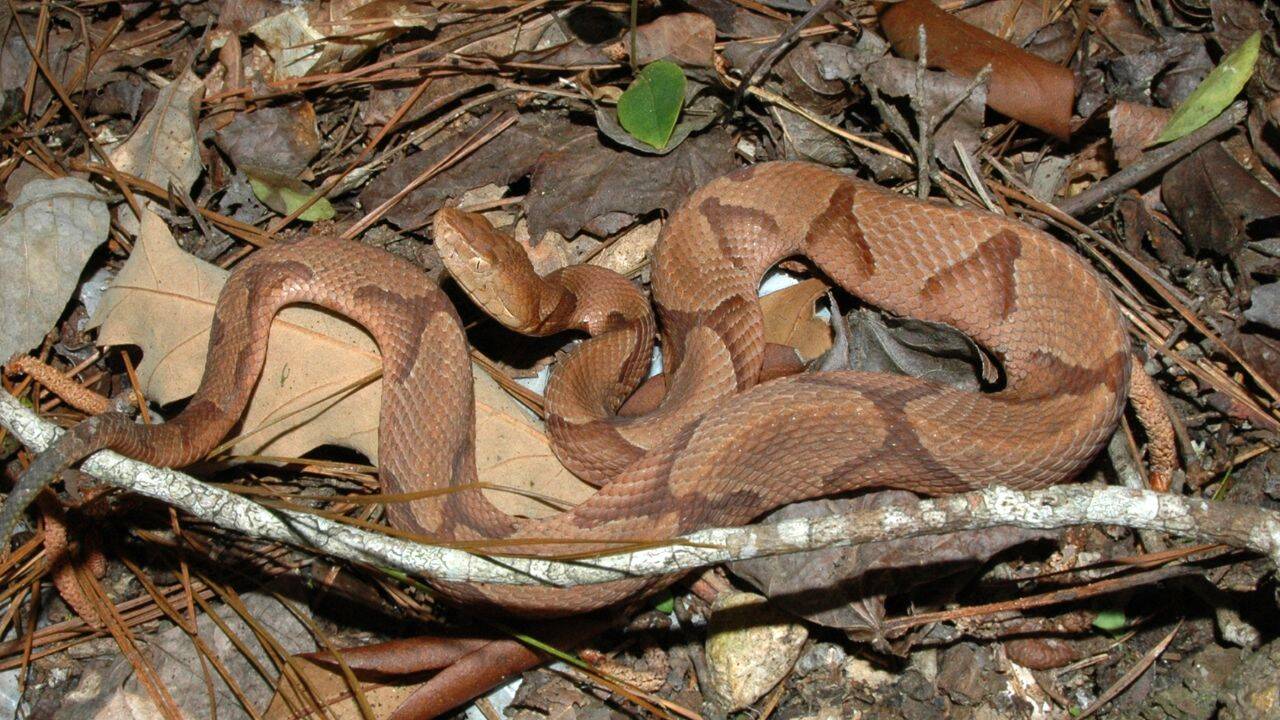
The study also highlighted just how difficult these snakes can be to spot. Their colouring blends closely with brown leaves and the forest floor, allowing them to disappear into their surroundings. Researcher Ben Jellen told KCUR that even when he knew a tracked snake was within about two feet of him, he could sometimes not see it. That makes Dietz's tally particularly interesting. His property may simply provide the kind of surroundings that allow copperheads to remain close while staying largely unnoticed.
Could food availability be bringing copperheads closer
Another possible piece of the puzzle is food. ‘A-Z Animals’ explains that copperheads often become more noticeable during ‘cicada’ emergence because these insects provide an easy meal. Cicadas can draw copperheads out of hiding.
Copperhead snakes generally do not travel long distances simply to reach cicada sites. According to A-Z Animals, they tend to remain within their normal habitats and move towards places where prey is plentiful. During cicada activity, they may be found around trees and bushes where the insects are easier to find. An abundant food supply can have a long-term effect. After a strong cicada emergence, copperheads may have better access to food, and more young snakes may be produced. That increase can continue until food resources decline.
The information does not establish that cicadas are responsible for Dietz's 47 sightings, but it offers one explanation for why copperheads can suddenly seem much more visible in areas where food becomes abundant.
How dangerous are Missouri's copperheads
Copperheads are venomous, but that does not mean they are constantly looking for people to bite. The KCUR report describes them as snakes that rely heavily on camouflage rather than aggression. Researchers found that they can remain remarkably difficult to see even when someone is close to them. Missouri nevertheless has a notable number of venomous snakebite incidents. World Population Review lists an estimated ‘234 venomous snakebites per year’ in the state, equivalent to about 5.42 incidents per 100,000 people. Its figures also record three fatal snakebites in Missouri between 2010 and 2022.