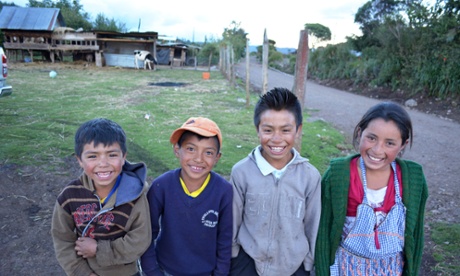
“Soy un campesino” – “I am a peasant.” This is how Miguel Angel Figueroa, founder of the Huahuatenango-based conservation group Asociación de Organizaciones de los Cuchumatanes (ASOCUCH), describes himself. Because Figueroa used to work the land himself, he is keenly aware of the challenges faced by the 14 agricultural and forestry cooperatives in the ASOCUCH network.
“We are really impacted by climate change,” Figueroa says. “When it rains too much, we lose crops. When it doesn’t rain enough, we also lose crops. People are dealing with food shortages.”

Building climate resilience among forest communities is an urgent imperative in Guatemala, a country that lost 17% of its forest cover between 1990 and 2005, and has since then lost an additional 130,000 hectares per year, mainly due to agricultural conversion. ASOCUCH is one of 17 local nongovernmental organizations working in partnership with the Rainforest Alliance to arrest Guatemala’s rampant deforestation crisis by strengthening community forest management, with the support of USAID. It’s a strategy with proven conservation benefits in some of the country’s most precious ecosystems.
For the vast majority of the 9,000 families represented by the member cooperatives of ASOCUCH – mostly indigenous clans engaged in farming, forestry and other subsistence activities – developing climate resilience is a matter of basic survival. Yet in order to sustain the long term health of the forests they depend on, they need sustainable economic opportunities that provide alternatives to agricultural conversion or irresponsible timber harvesting.
Guatemalan laws have a strong bias against rural forestry businesses: one member cooperative with 500 indigenous Maya Mam families, Asociación de Silvicultores de Chancol, struggled to make a living from the 2,500 hectares of reforested land it owns despite a donation of timber processing equipment in 2006.

However, with business management training, technical assistance and legal support from the Rainforest Alliance, the cooperative is now producing 1m board-feet of timber per year and projects sales of US$130,000 for 2015 – the kind of success that demonstrates that healthy landscapes and thriving communities go hand-in-hand.
Content on this page is provided by the Rainforest Alliance, supporter of the Vital Signs platform.