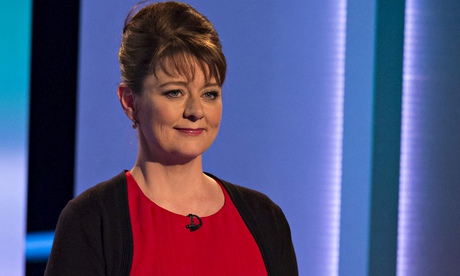
As we prepare for the third leaders’ debate tomorrow, we should reflect on the fallout from the second – a seven-way affair that one could easily have mistaken for the world’s most boring episode of Take Me Out. As a native of Wales, I have been particularly interested in the reaction to the Plaid Cymru leader, Leanne Wood, which seemed mostly to consist of grumbling that all she talked about was Wales (imagine that), and withering references to her party’s nationalism.
It’s always amusing when white, middle-class (usually male) commentators from the south of England denounce the nationalism of others; as though nationalism is only something anyone who deviates from the dominant middle-class English identity does. It’s a wonderful irony, given this particular demographic is the only one that has historically felt so fervent about its own nationalism that it built an empire from it. Perhaps when you own the world, the concept of nationalism seems rather quaint.
When I was a child, Welsh nationalism came with scare stories about extremists setting fire to English people’s homes, or Plaid Cymru MPs denouncing the dilution of Welsh culture by “English immigrants”. As someone with an English mother, to be in favour of Welsh nationalism was unthinkable. But lately I’ve been wondering whether a little more nationalism might be just what the Welsh need. Not the anti-English, cultural purification nationalism from my childhood, but at least a little defiance, a little recognition of the country’s importance and the rights of its people to a decent quality of life. Leanne Wood is right to talk exclusively about Wales in the debates, simply because someone has to. Someone has to crowbar Wales into British political discourse because its absence has had terrible consequences for the country.
Let’s look at the facts. According to Save the Children, Wales has the highest child poverty rate in the UK, with one in three families living on an income that is 60% lower than the national average. In terms of the share of national income, the poorest region in northern Europe is in west Wales; the richest is London (incidentally, nine of the 10 poorest regions in northern Europe are in the UK, so perhaps anyone living outside a 100-mile radius of London should be feeling pretty angry, too). Figures show that poverty is having serious effects on pupils’ attainment rates in schools, and Wales has the highest death rates for drug misuse in the UK. The country has also seen a 20% rise in food bank use in the past year, and Welsh people are being hit hardest by the bedroom tax, with more than one in five in rent arrears.
But people living in Wales don’t need facts to tell them the country is suffering the consequences of national neglect. They only need to visit the towns that have been abandoned by industry, walk the high streets where local businesses have been replaced by bookies and pawn shops, or wave off their children who are moving elsewhere to find work. Any Westminster politician who derides Plaid Cymru for running on an anti-austerity ticket needs to ask themselves why Plaid MPs are so convinced that opposing austerity might win them votes in the first place.
Scotland, another country that has suffered from England-centric Westminster politics, is finally finding its voice. The sight of the national media following politicians as they rushed to Glasgow to plead with the electorate in September was nothing short of remarkable. Wales must now have a similar political moment – not so Welsh people can indulge in some pro-independence flag-waving, but because being treated as a national irrelevance has tangible and disastrous effects. Forcing Wales up the political agenda is not a matter of ideology; it’s a matter of necessity.
This doesn’t necessarily translate to support for Plaid Cymru. The party may have some way to go to persuade Welsh voters it is the right choice: support for independence is at a record low, and it’s no longer the official opposition in the Welsh assembly. Perhaps some voters have lingering suspicions that Plaid’s anti-austerity, social justice credentials are nothing more than a Trojan horse for independence.
But one thing is certain: if mainstream parties want to retain support in Wales, they will need to start talking about it. They will need to be advocates for its people. Surely it is only a matter of time before Welsh voters start to realise that Westminster isn’t working.