Here’s a hypothetical situation for you. Suppose you’re an individual who works in a field connected to literature, journalism, history, sociology, cinema, theatre, economics or social activism. Say you do some kind of work that requires study and intellectual effort, possibly but not necessarily involving the publishing of written texts such as monographs, articles or books. Say you are a politician or a sportsperson. Now let’s say you have achieved a fair degree of success and renown in your field and that you are very aware of everything that’s going on around you.
Now, imagine that your country had a major literature festival that took place every year. There might, of course, be many smaller festivals but say this one was older and bigger than all the others, one of the biggest in the world, the Gargantua of all Lit Fests.
Who’s paying?
Say the Gargantua Lit Fest (GLF) took place in a city that was already a major tourist destination. The festival was free to the public; the programmes were great; it was attended by writers and thinkers and other important and interesting figures from around the world; even if the crowds got a bit enervating there were always many really interesting panels and discussions; and then, every evening, the live music turned the place into a party. Say you yourself had been invited to this festival a few times over the past 10-12 years. Say you’d gone and felt it was really worthwhile despite the cluster-cluck of celebrities, hangers-on who were just there to be seen, and so on.
Now, everyone knows there are no free cultural festivals. Someone has to pay for the whole set-up, the hiring of the venues, the stages and the shamianas, the air fares and the hotels, the folk singers and the rock bands, the food and the booze. Unless it’s a government footing the bill, we all know that this money usually comes from corporate sponsors.
We also know that every now and then, the world over, controversy erupts about who the sponsors are for various events and what corporate misdemeanours and skulduggery they may have committed. We know the arguments about whether participants are helping a particular corporation’s PR effort to cover up often quite huge misdeeds by taking part in the event.
My advice
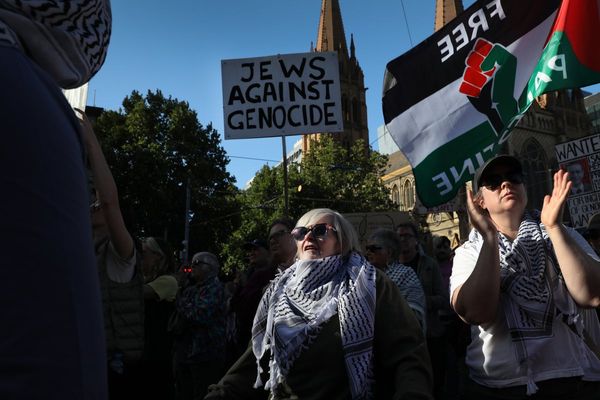
We know people have boycotted festivals, groups have protested at the venues, with placards, posters, slogans and even by capturing the stage to broadcast their objections. We also remember that the protests haven’t always been about the corporate crimes; sometimes political or religious groups — who don’t care a hoot about the sponsors — have also jumped in to attack what is being said on the stage.
Hypothetically, let’s imagine we live in a country where a criminal political group has captured huge sectors of power including media houses and TV channels. One such channel — let’s call them Popular Entertainment Enterprise TV, or PEE TV — has been particularly disgusting in the way they have attacked anyone who dares criticise the regime, particularly in the manner they have propagated lies about young protesters standing up to the regime.
It has been proven beyond any doubt that PEE TV has tampered with both footage and sound to frame the student leaders of these protests, labelling them as ‘anti-national’, ‘terrorists’ and ‘tukde-tukde gang’. As a result one of the student leaders has had a serious attempt made on his life. Unrepentant, PEE TV has redoubled its efforts on the smear campaign. Let’s say you find the behaviour of PEE TV (and other such channels, like Repugnant TV) totally abhorrent.
Let’s imagine that PEE TV has been the sponsor for the GLF for the last few years but in the past few months the channel’s name has been absent from the festival’s publicity. Rumour has it that GLF has parted ways with PEE because of the channel’s odious policies. Now imagine that GLF invited you to be one of the star participants in this year’s festival and you’ve accepted. Suddenly, just a few days before the start of the festival, PEE TV is back as the headline sponsor; the festival is once again called PEE-GLF. What, then, do you do? Do you back out? Do you still attend?
I don’t see you asking for my advice, but here it is. Under normal circumstances there should be no hesitation — any event sponsored by PEE TV should be boycotted by anyone who has spoken out against fake news, communal poisoning and the vilifying of educational institutions. However, if the country was in a political meltdown then it might be time to rethink this.
Could those who are otherwise raising their voices against wrongdoing attend their sessions at GLF and make their revulsion for the sponsors and their ideology clear again and again, in unpredictable ways that would be hard to edit out of any footage? On T-shirts, on placards and on book covers. This is all complete fiction, of course, but perhaps it is interesting to imagine what such a literature festival might be like.
The writer is a filmmaker and columnist.