The lush rural visuals of Thomas Vinterberg’s adaptation of Thomas Hardy’s Far From the Madding Crowd capture one’s attention, and quickly. We watch Carey Mulligan as Bathsheba Everdene ride through the English countryside at full gallop, in full bloom. Confidently, she rides like a man. Approaching a wooded path, she reclines backwards to avoid being entangled with branches blocking the way. The image presents a strong metaphor for the gender-prescribed constraints from which Bathsheba seeks to escape.
We are alongside Gabriel Oak, the shepherd, played by Matthias Schoenaerts, and following his male gaze as he observes Bathsheba on her ride. Then, Vinterberg rapidly changes tack to Bathsheba’s point of view. Mulligan gives a fiercely intelligent and physically active portrayal of Bathsheba. The ethereal floatiness of Julie Christie, receiving the projections of the idealised feminine from her suitors and empty of her own desires and will, is discarded in this version, nearly 50 years later. Christie’s Bathsheba was a vessel into which masculine desire was poured; Mulligan’s Bathsheba is alive to her own desires, initially for power and control, then sexual, and, ultimately, for a relationship.
This Far From the Madding Crowd is a fairytale, describing the archetypal integration of the inner masculine and feminine. Carl Jung called this process “individuation”, the process of becoming a whole person. No wonder the movie starts with Bathsheba emerging out of darkness, for that is the process: coming out of the unknown and the conscious, humbling, work of integrating it. Jung held that each of us carries the psychological functions of what he named the feminine and masculine. Vinterberg’s film depicts these functions being processed through the characters of Bathsheba, William Boldwood, Francis Troy and Oak.
The difficulty of accepting the inner feminine is showcased in Boldwood, Troy and Oak. The feminine brings relatedness, commitment, fidelity, friendship, love, compassion, imagination – all qualities that Oak demonstrates over the course of the film.
Schoenaerts is well cast for this; he is a man of feeling rather than words. In excess, this feminine aspect brings moodiness, sentimentality, hysteria, possessiveness, fantasising; between them, Boldwood and Troy illustrate these. Bathsheba experiences the challenge of integrating her inner masculine dimension. Her assertiveness, courage, analytical thought, strength, vitality and decisiveness are all positive masculine aspects. But she also shows aggression, ruthlessness and abuse of power: the negative masculine. She can only allow space for the feminine aspects of valuing and relating if she recognises the negative repercussions of her behaviours.
Impetuous and irresponsible, seduced by her own position of power and
authority, Bathsheba acts, and her actions impact others. Angered by Boldwood, a neighbouring farmer who slights her at the corn market, she takes her revenge by sending him a Valentine’s Day card as a joke. He takes seriously its message of “marry me”, with disastrous consequences.
Michael Sheen’s Boldwood is dignified, proud and aloof, a man of gravity, status and tradition, highly respected by those around him. His encounters with Bathsheba bring him pain and suffering. He is consumed by his longing and becomes neurotic and obsessed. With self-control lost, he holds to both the fantasy of marrying her and the mind-altering grief of her absence, feelings that ultimately destroy him.
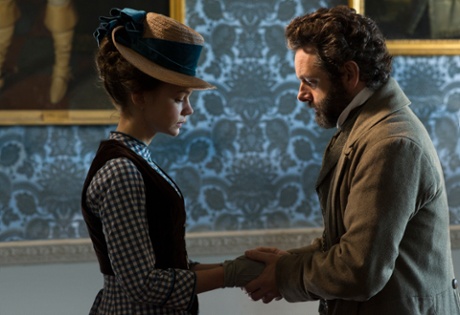
In parallel with Bathsheba’s experiences with Boldwood run those with Sergeant Troy, played by Tom Sturridge as a young, seductive soldier decked out in his scarlet uniform. He arrives at Bathsheba’s farm searching for Fanny Robin, the sweetly innocent serving girl who let him down at the altar. Meeting and seducing Bathsheba, and the masculine power she represents as the propertied woman, revives his feelings of potency, a means to wipe out the feelings of humiliation and loss at having been jilted by Fanny.
Bathsheba’s initiation into herself is accelerated in these scenes, first at the farm at night when she first encounters Troy, and then in the forest, when he demonstrates his swordplay, and in doing so penetrates her masculine armour. The scenes are short and quick, like sword thrusts into the consciousness, yet shadowed, erotic and dark.
Through Troy, Bathsheba experiences feeling and sensation. But their marriage fails and she is rejected, abandoned, left in debt. Mulligan is excellent here. She shows Bathsheba’s pain and humiliation at discovering that she cannot order the world as she wants it; and through this, she opens up to the world of feeling and valuing, previously absent in her.