
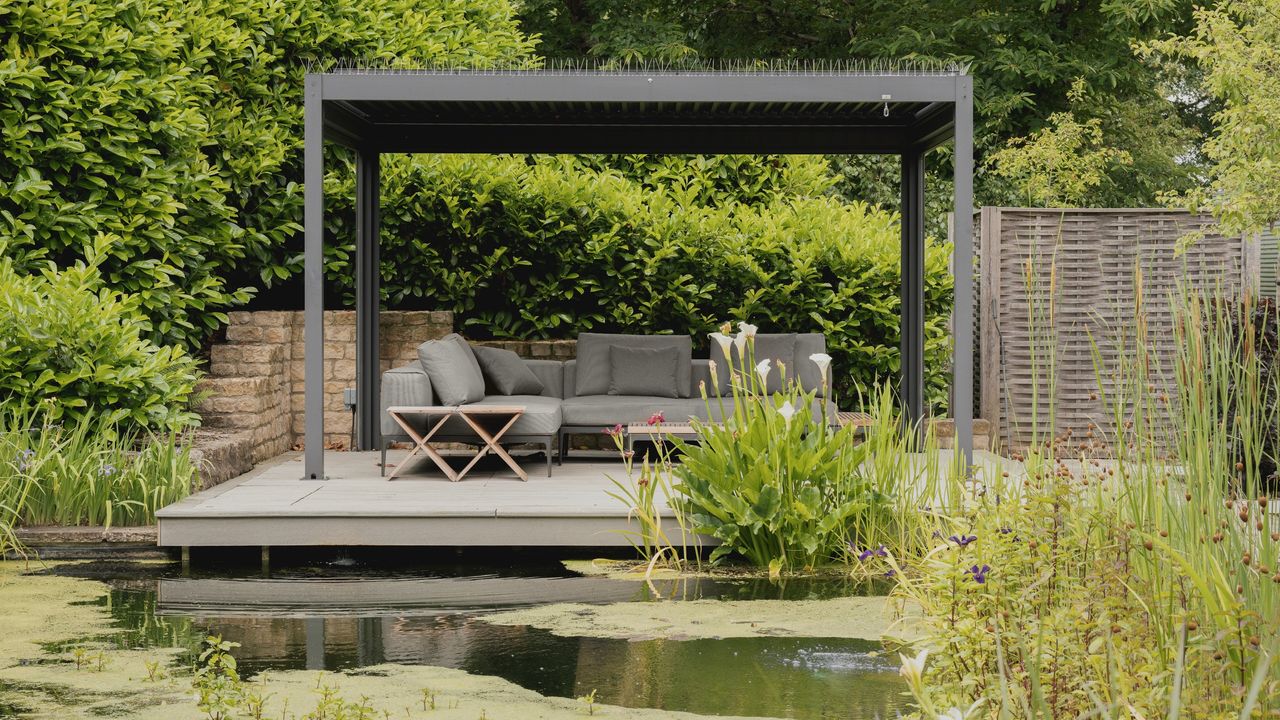
Those of us who live in places with unpredictable summers recognize the importance of a garden structure, particularly if we want to enjoy our outside spaces for longer.
Whether you want to beat a retreat from the blazing sun or shelter from a brief rain shower, a garden structure allows you to continue reclining or dining outside without decamping indoors altogether. But what type to choose?
Pergolas are more regularly seen in gardens, but gazebos are popular too. In truth, the terms are often used interchangeably, yet there are slight differences, which may determine whether one suits you better than the other.
In general, a gazebo is your better option if you have a larger garden and want to make a destination that feels like an outdoor room. For more versatility, a less visually imposing structure, and a more budget-friendly choice, a pergola is your pick.
Here, landscape designers offer their view on when to choose which structure for your garden and how to decide what's best.
What to Consider
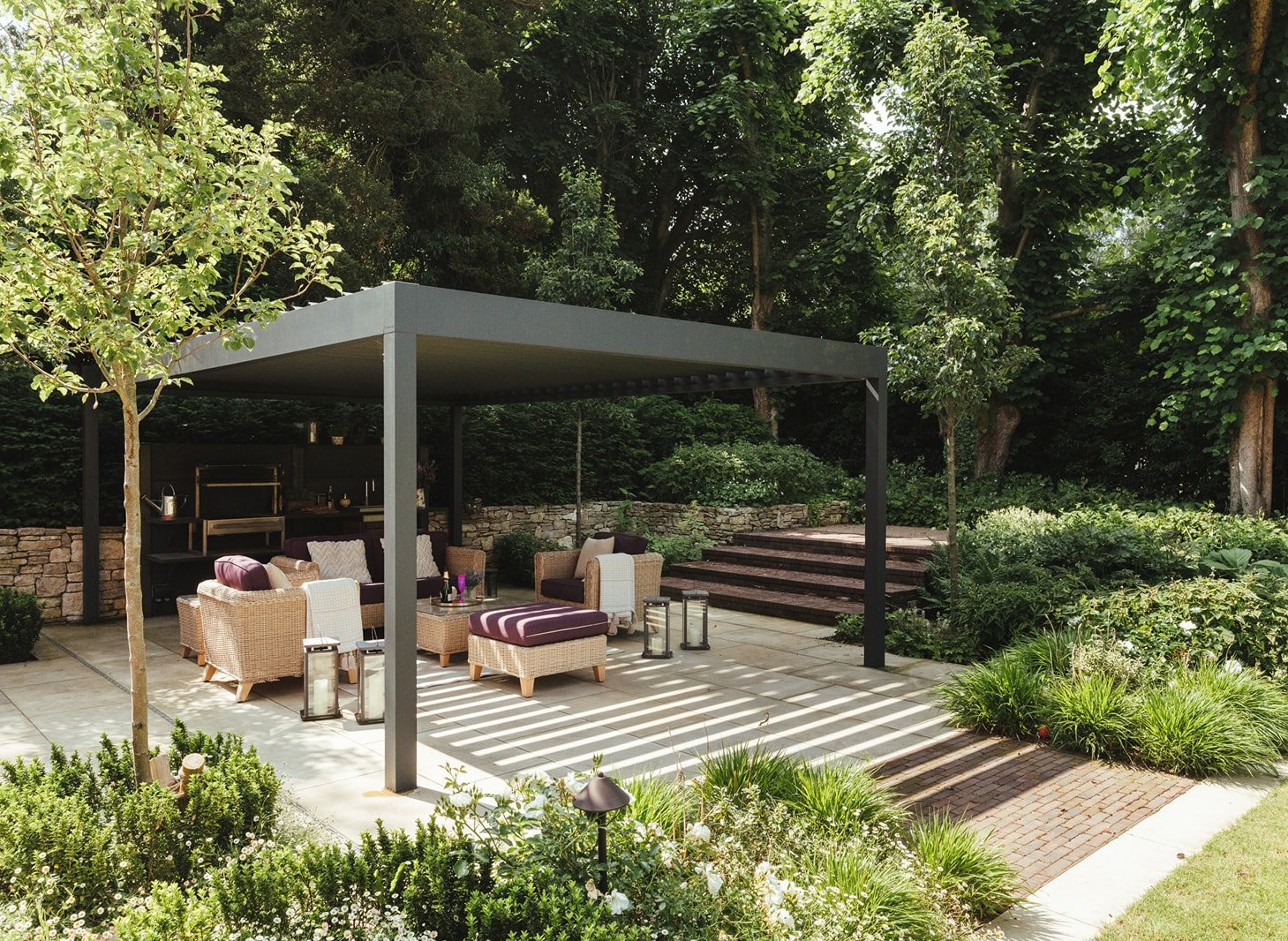
Of the numerous garden screening ideas, pergolas and gazebos are popular choices, offering both privacy and shade. Both structures are open on all sides; however, pergolas generally have a flat, slatted roof, while gazebos have a solid, pitched roof. So their purposes differ.
However, mechanized pergola models with retractable roofs can provide the best of each option, allowing both filtered light and shelter when required. And of course, there are temporary canvas gazebos too.
If you're handy with a hammer, this self-assembly Outsunny pergola from B&Q has a sleek aluminium frame and, at just under 9 square meters would comfortably cover a seating or dining area. It has an adjustable louvred roof, so you can alter the amount of shade required.
"From a garden designer's perspective, the choice between a gazebo and a pergola usually comes down to what the client wants the structure to do, rather than which structure they happen to prefer aesthetically," says Nick Woodhouse, creative director of gardens at Woodhouse & Law.
"I would typically ask how they envisage using the space, how much protection from sun and rain they want, whether the structure is intended as a destination within the garden or simply as a way of defining an area, as well as how it relates to the style of both the house and the wider landscape."
When to Choose a Gazebo - the Pros and Cons
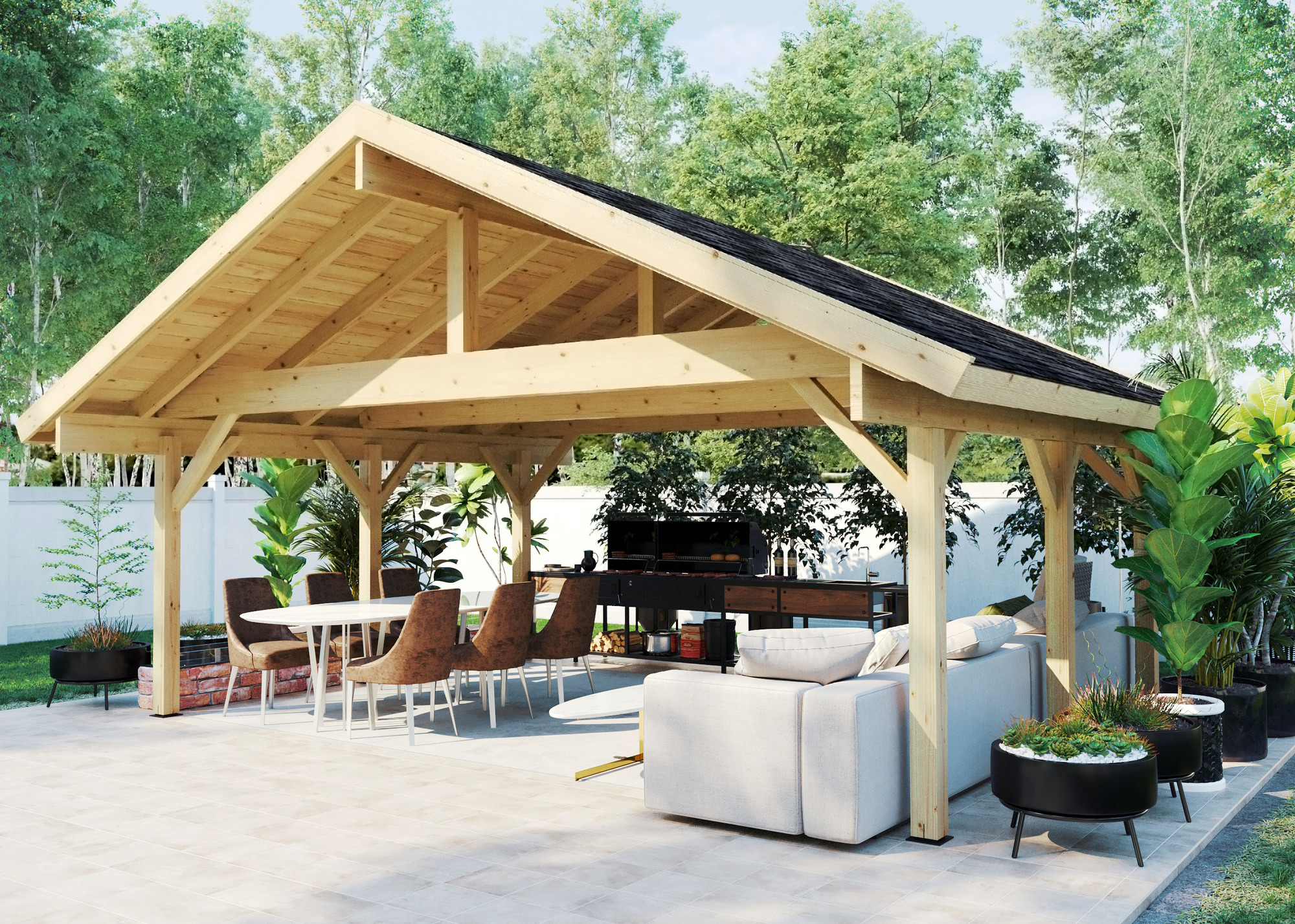
As with any design decision, knowing what you want the structure to do in your garden is key. Once that's established, you can determine its location and then consider the size and style.
"A gazebo is a freestanding structure with a solid, fully enclosed roof, so it gives real protection from rain and strong sun," says garden designer Manoj Malde. "It tends to read as a destination in the garden, a separate little room you walk to."
"If you want shelter from rain so that you can use the space in changeable weather, or you want privacy and shade for something like a hot tub or outdoor dining set that needs protecting, a gazebo is the better fit."
Nick agrees, saying a gazebo is generally the most appropriate when the aim is to create an outdoor room. "Because it has a solid roof and a stronger sense of enclosure, it offers meaningful protection from rain and sun and can extend the amount of time a space is usable throughout the year," says Nick.
"Gazebos work particularly well as destinations within larger gardens, as settings for outdoor dining and entertaining, or wherever a client wants to spend time outdoors, regardless of the weather.
"Their disadvantages are that they are typically more expensive, more visually dominant, and can feel rather heavy-handed in smaller gardens if not carefully integrated into the design."
For this reason, it's essential to ensure that your garden can comfortably accommodate a gazebo, with a suitable spot for the structure. Manoj explains that a gazebo works best where it can stand on its own, away from the house.
"Often at the end of a path or in a corner of the garden is a good spot," says Manoj. "This is partly because that's what makes it feel like a destination.
"Also for practical reasons: a gazebo needs a flat, well-drained base (such as a deck or paved pad), clearance from overhanging trees so debris doesn't collect on the roof, and enough distance from boundary fences both for airflow and because many local planning rules set minimum distances from boundaries for structures over a certain height.
"It also benefits from at least partial shelter from prevailing wind, since the solid roof can act like a sail in storms, if it's not anchored well."
This wooden gazebo from Wayfair has a cedar frame and powder-coated steel roof, so it can stand up to the weather throughout the year. Alternatively, this gazebo from B&Q has a metal frame and a metal roof. Both are self-assembly and come with outdoor curtains for additional privacy.
When to Choose a Pergola
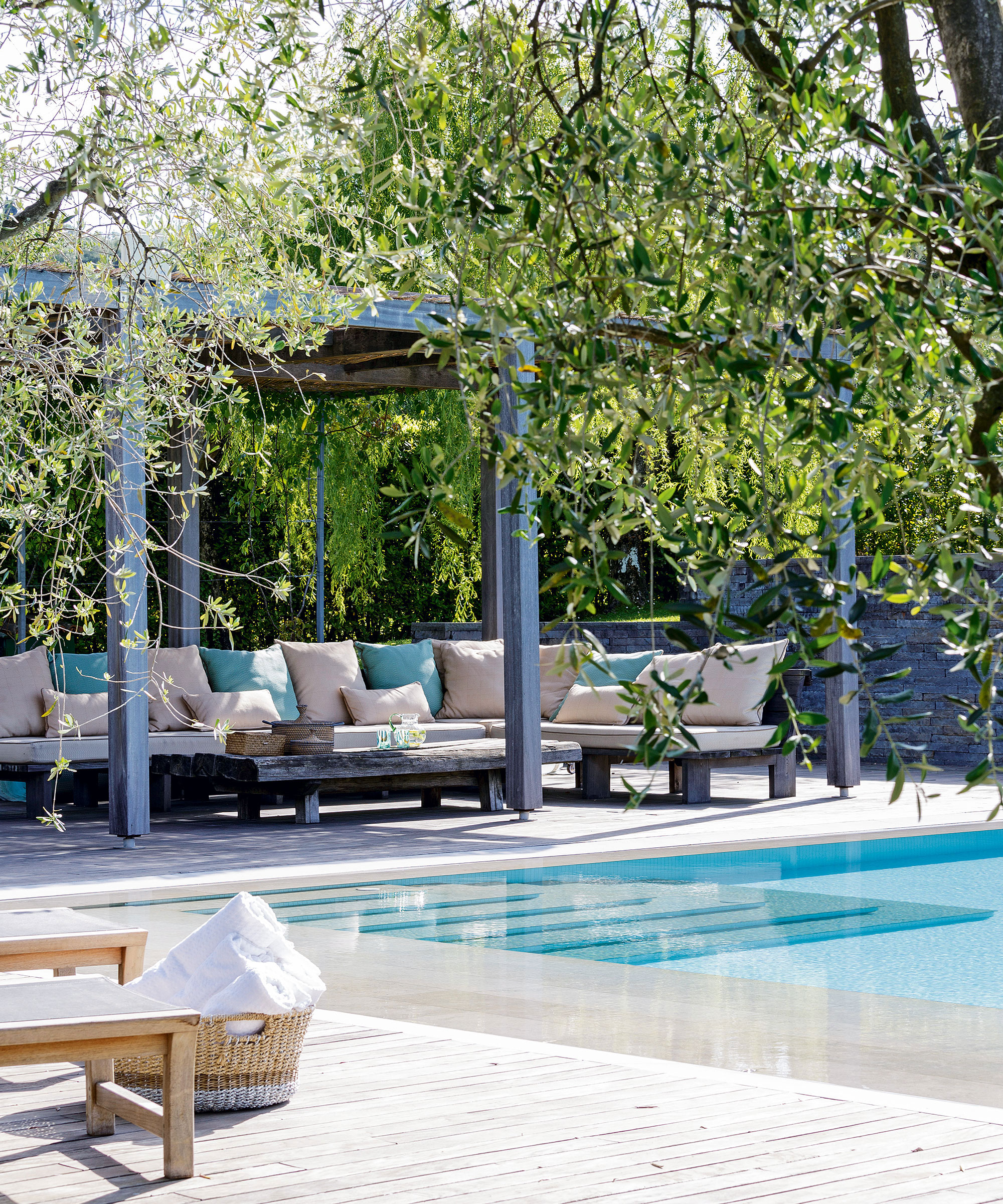
Pergolas (aside from the newer models with retractable roofs) generally provide patio shade rather than shelter. With their flat, slatted roofs, supported on posts, these simple structures are visually more refined and less cumbersome than gazebos. This means they are suitable for patios and terraces, as well as other parts of the garden.
"A pergola is usually positioned attached to the house, over a patio, deck, or seating area right outside a back door, because its job is to extend the usable living space outward and create a shaded transition rather than a separate room," says Manoj.
"It filters light rather than blocking it, and works more as a transition zone, like a covered walkway or a softening of the boundary between house and garden, than as a destination in its own right. Climbing plants like wisteria or grapevines are frequently trained over them, which integrates them beautifully into the garden."
This Dunster House wooden pergola from Wayfair is made from slow-grown spruce and would make a great frame for climbing vines over a deck.
Pergolas can be freestanding too, often running along a path or to frame an entrance. However, wherever you choose to place it, orientation matters, particularly on traditional models without adjustable roofs.
"If shade is the priority, the slats or rafters should run roughly east-west across the strongest midday sun for a given path of the sun," explains Manoj. "A pergola meant to let in low morning or evening light, but block the harsh midday sun might be oriented north-south, depending on your hemisphere and the specific angle of the sun where you live."
When it comes to choice, as a general guideline, Nick states that a pergola is usually the better option when the objective is to organize and enrich an outdoor space without enclosing it.
"Pergolas excel at defining terraces and seating areas," says Nick. "As well as creating transitions between different parts of a garden, framing views, and supporting climbers such as roses, wisteria, or jasmine.
"Pergolas tend to feel lighter and more connected to the surrounding landscape than gazebos — and are often cheaper to build. Their main limitation is that they provide little protection from rain and only limited shade unless heavily planted or fitted with additional screening."
Knowing exactly how you want use your garden and the structure within it will guide you to the best choice for your outdoor space and your lifestyle.
"Gazebos and pergolas solve different problems," says Manoj. "The right choice usually comes down to what you want the structure to do, rather than which one looks nicer in isolation."
For more advice on how to design your landscaping, why not sign up for the Livingetc newsletter?