A flyby of Venus, a dying galaxy and a birthday toast to Edgar Allan Poe – in pictures
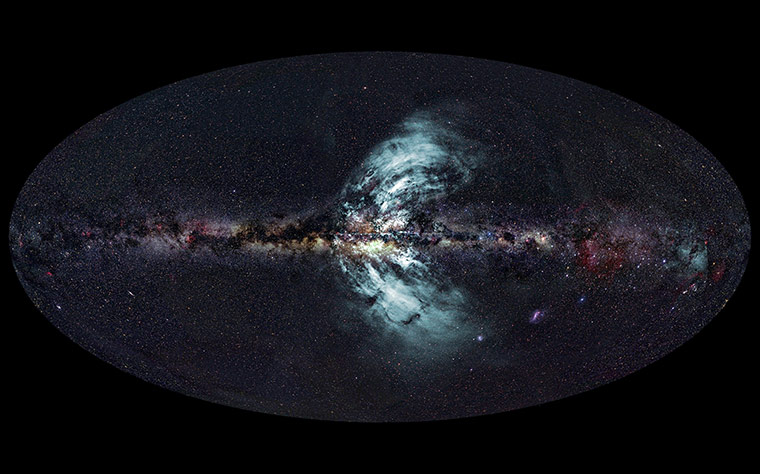
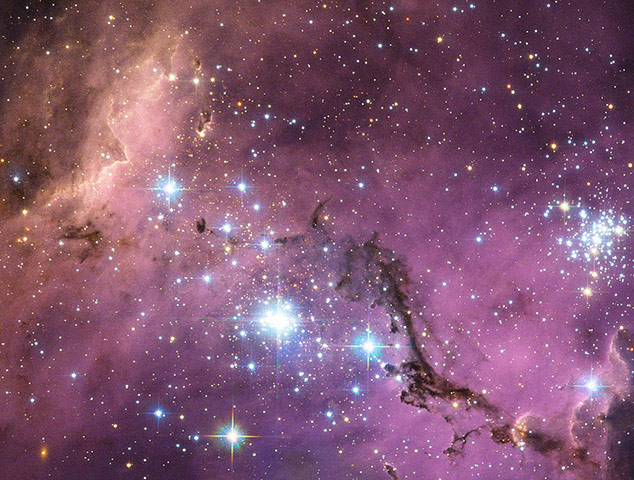
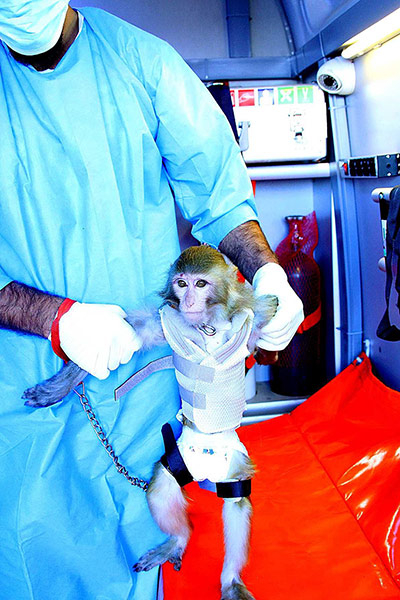
Gargantuan outflows of charged particles (pale blue) flooding from the centre of our galaxy were detected and mapped by the Parkes radio telescope in Australia. They are shown here against the background of the whole Milky Way at the same scale. The source of the outflows remains a mystery. From top to bottom they extend 50,000 light-years out of the galactic plane, equivalent to half the diameter of the entire galaxy Photograph: Radio image - E. Carretti (CSIRO); Radio data - S-PASS team; Optical image - A. Mellinger (Central Michigan University); Image composition, E. Bressert (CSIRO)/ICRARThis picture of the Large Magellanic Cloud won first prize for Josh Lake in the Hubble's Hidden Treasures image-processing competitionPhotograph: Hubble Space Telescope/NASA/ESAThe Iranian space agency said it had launched a monkey into space and returned it to Earth alive in a mission using the Iranian-built Kavoshgar 5 rocket. The launch was unconfirmed by Western monitoring groupsPhotograph: Rex Feature
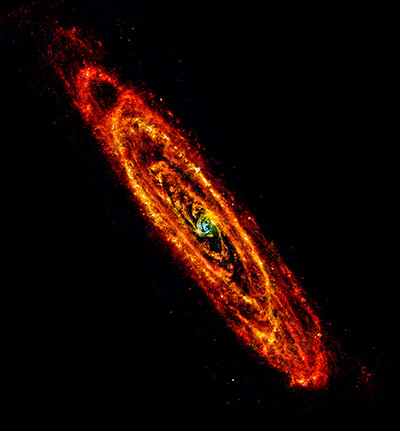
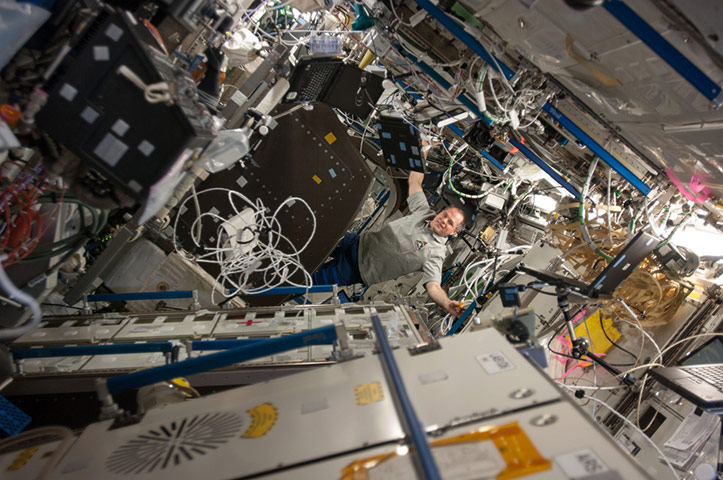
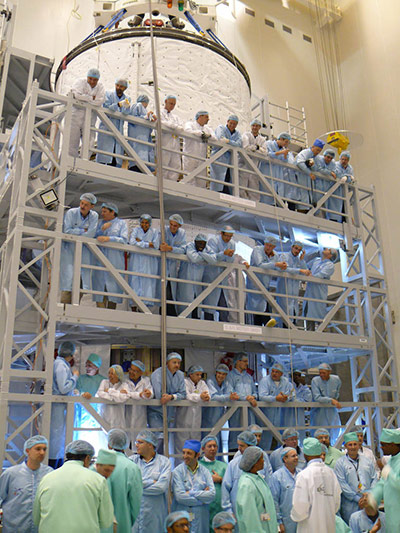
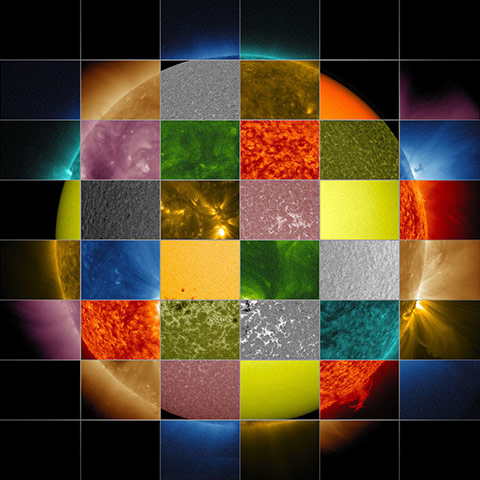
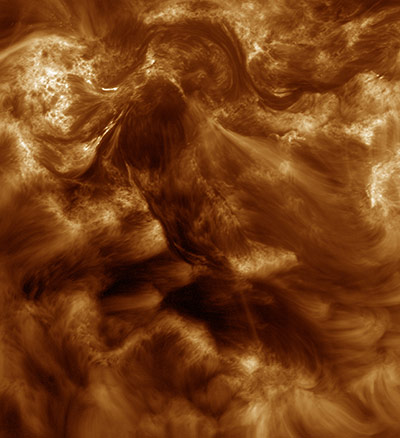
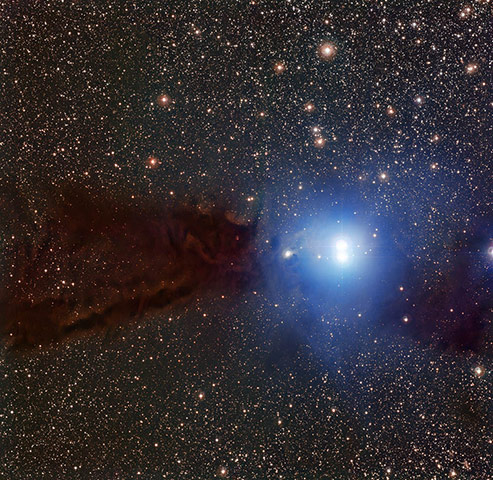
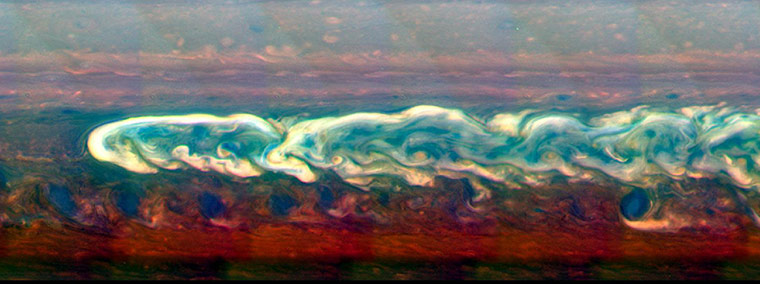
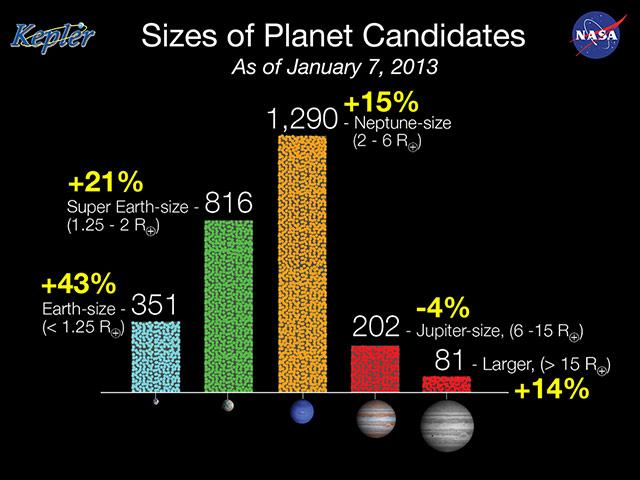
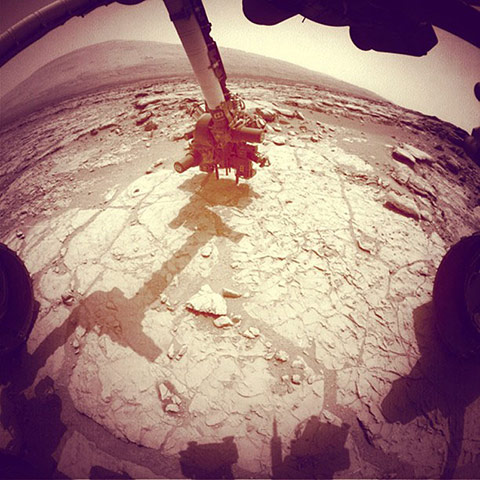
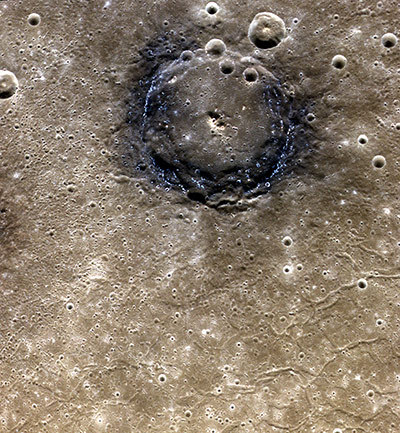
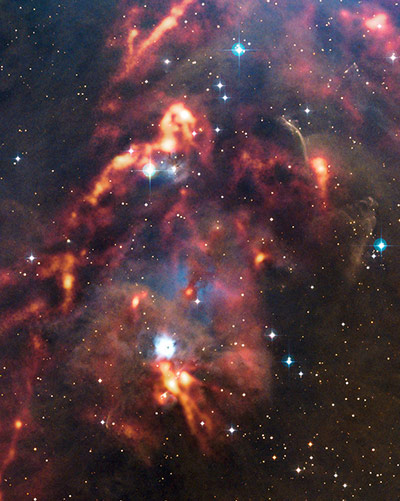
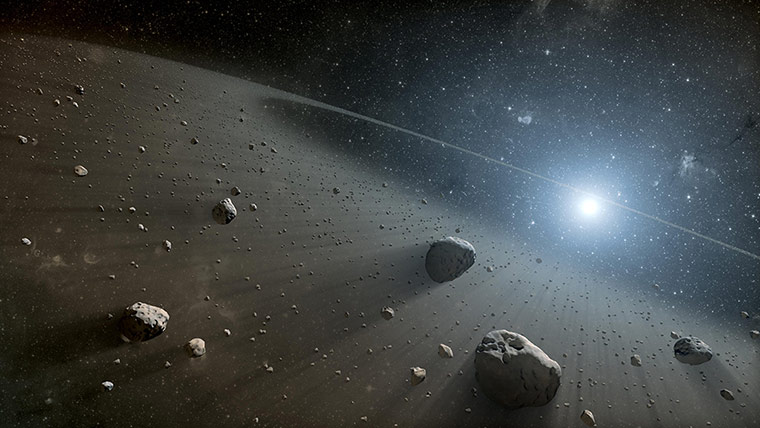
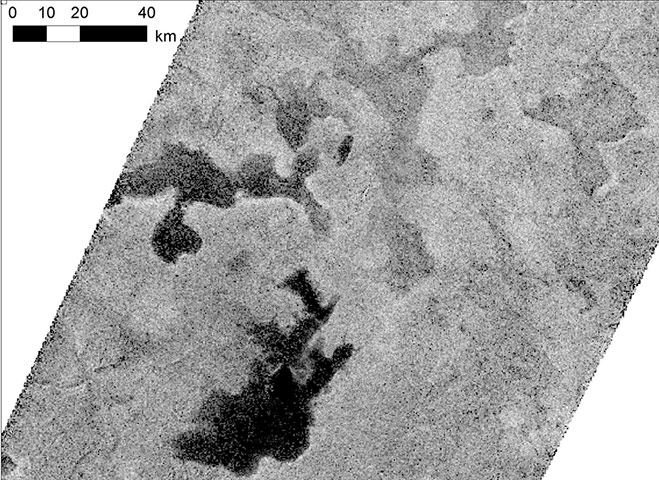
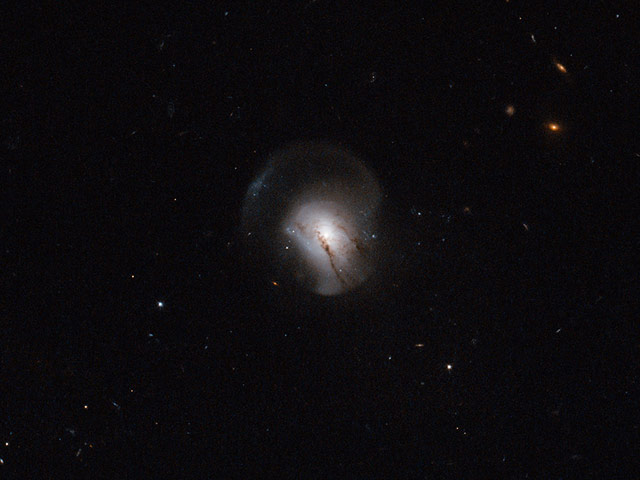
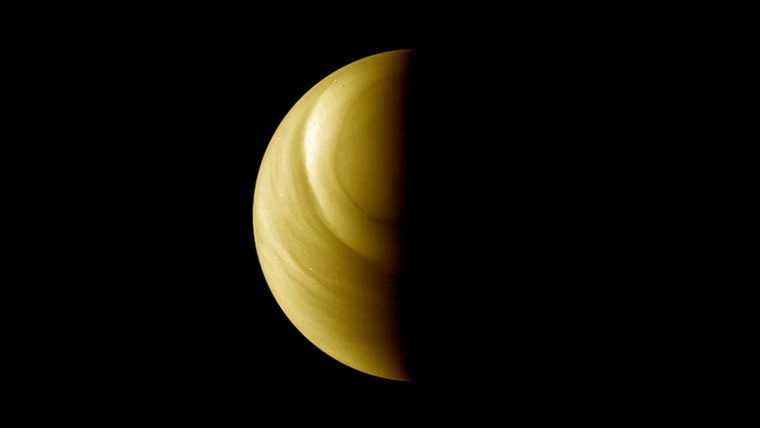
This image of the Andromeda galaxy from the European Space Agency’s Herschel space observatory, reveals some of the coldest dust in the galaxy – only a few tens of degrees above absolute zero – coloured here in red Photograph: ESANasa astronaut Kevin Ford installs an "ultra-sonic background noise test" sensor behind a rack in the Destiny laboratory on the International Space Station. Robonaut 2 – the first humanoid robot in space – was also hard at work in the Destiny module, measuring air flow at ventsPhotograph: ISS/NASA'Team photo following mating!' proclaims the Flickr caption on this celebratory picture taken after the Albert Einstein ATV-4 cargo carrier was joined to its service module at the Guiana Space Centre in Kourou, French Guiana. The ATV (automated transfer vehicle) will launch on top of an Ariane 5 rocket in April, carrying supplies to the International Space Station Photograph: ESAThis collage of images from Nasa's Solar Dynamics Observatory illustrates how observations of the sun at different wavelengths highlight various features of the star's surface and atmosphere. Images from other instruments that record magnetic and Doppler information are also includedPhotograph: Goddard Space Flight Center/SDO/NASAThis is one of the highest-resolution images ever taken of the corona, or outer atmosphere of the sun. It was captured by Nasa's High Resolution Coronal Imager in ultraviolet. Nasa also released a hi-res video of the coronaPhotograph: NASAA dark cloud known as Lupus 3 where new stars are forming, and a brilliant cluster of stars that have already emerged from this dusty stellar nursery. Lupus 3 lies about 600 light-years from Earth in the constellation of Scorpius. Our sun was probably born in a similar star-formation region more than four billion years ago. The picture was taken with the MPG/ESO 2.2-metre telescope at the La Silla Observatory in ChilePhotograph: F. Comeron/ESOThis mosaic of images from Nasa's Cassini spacecraft shows a storm raging on the gas giant SaturnPhotograph: Hampton University/SSI/JPL-Caltech/NASAIn the course of a year, the number of potential planets discovered in data from the Kepler spacecraft increased by 20% and now totals 2,740. The number of Earth-sized and super Earth-sized candidates discovered grew by 43% and 21% respectivelyPhotograph: Wendy Stenzel/NASAMeanwhile on Mars, the Curiosity rover prepared to take a sample of rock. In this image from the rover's front hazard-avoidance camera (Hazcam), a drill mounted in the turret of tools at the end of its robotic arm has been positioned in contact with the rock surface. A powdered sample of rock was later taken for analysis as part of work to determine whether the red planet was ever habitable to lifePhotograph: JPL-Caltech/NASAIn a Birthday 'toast' to Edgar Allan Poe on 19 January, Nasa Goddard Space Flight Center posted a picture of Poe Crater on Mercury on their Flickr page. For more than 70 years, until 2009, an anonymous admirer known as the Poe Toaster left a bottle of brandy and a bunch of roses on the writer's grave in Baltimore, MarylandPhotograph: Johns Hopkins University Applied Physics Laboratory/Carnegie Institution of Washington/NASAAn image from the Atacama Pathfinder Experiment (Apex) telescope in Chile reveals clouds of cosmic dust (orange) in the constellation Orion where star formation may be occurring. The clouds are opaque in visible light, but glow hotly at submillimetre wavelengthsPhotograph: ESOAstronomers discovered what appears to be an asteroid belt around the star Vega, the second brightest star in the northern night sky. It seems Vega may have an inner and outer asteroid belt separated by a gap. As in our own solar system, the gap could be maintained by several planets. The scientists used data from Nasa's Spitzer Space Telescope and the European Space Agency's Herschel Space Observatory Illustration: JPL-Caltech/NASAHydrocarbon lakes on Saturn's moon Titan reflect radio waves to varying degrees in this image from Nasa's Cassini spacecraft. The variations in brightness depend on the smoothness of the surface, with fully liquid lakes looking dark and partially liquid ones looking brighterPhotograph: Cornell/ASI/JPL-Caltech/NASAThis Hubble image provides a glimpse of the eventual fate of our Milky Way galaxy. The elliptical galaxy is in a transitional phase from a young, star-forming galaxy to an older, larger, 'red and dead' galaxy. Two galaxies have collided, exhausting the gases in the surrounding area and stopping the process of star birth. The Milky Way galaxy is predicted to merge with neighbouring galaxy Andromeda in about four billion yearsPhotograph: Hubble Space Telescope/NASA/ESAThis is a screenshot from a new animation of an eccentric orbit of Venus, as seen by the European Space Agency's Venus Express spacecraft. The flyby starts 66,000 km above the planet's swirling south polar vortex, then swoops down to just 250 km above the north pole. Half the planet is in shadow. View the animation herePhotograph: M. Perez-Ayœcar & C. Wilson,IDA/DLR/MPS/ESA
Sign up to read this article
Read news from 100's of titles, curated specifically for you.