A field of galaxies, asteroid mining, Earthrise on the moon, and a rubber chicken called Camilla – in pictures
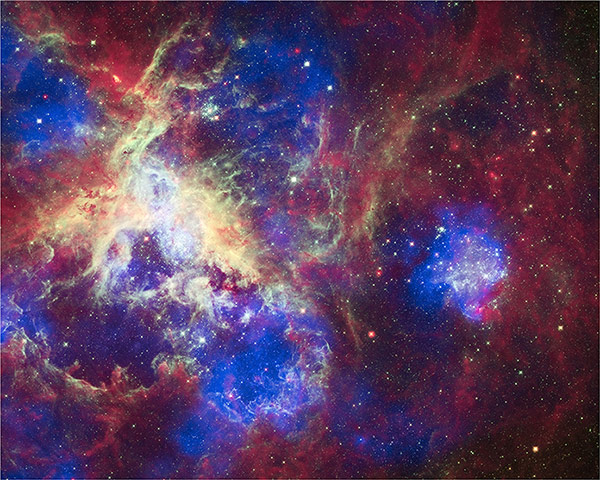
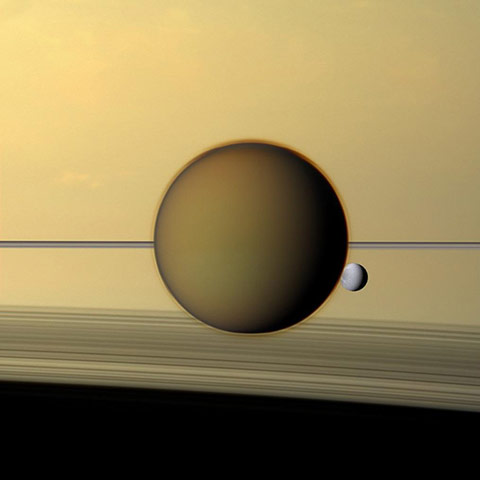
The Tarantula Nebula in a composite image that combines data from three telescopes: Chandra (blue), Hubble (green), and Spitzer (red). The nebula is one of the largest star-forming regions in our cosmic backyardPhotograph: Chandra X-ray ObservatoryEach speck in this image is a galaxy billions of light years away. It's a patch of sky about 40 times the area of the full moon recorded in sub-millimetre wavelengths by the Herschel telescope. The galaxies are invisible in optical images because they are shrouded by dust, which blocks out most of the starlight. However, this dust glows in the sub-millimetre wavelengths detected by Herschel. Most of the galaxies are so far away that they are seen as they were between 3 and 10 billion years agoPhotograph: Herschel/SPIRE/ESASaturn and its moon Titan in an image captured by Nasa's Cassini spacecraft. British scientists have proposed sending a boat to explore the moon's methane oceans – one of the ambitions discussed at a meeting in London on 26 April to celebrate Britain's entry to the space age 50 years agoPhotograph: Space Science Institute/JPL-Caltech/NASA
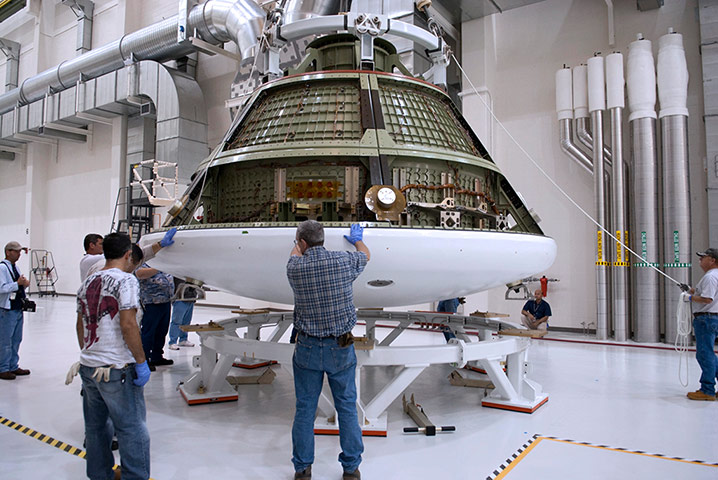
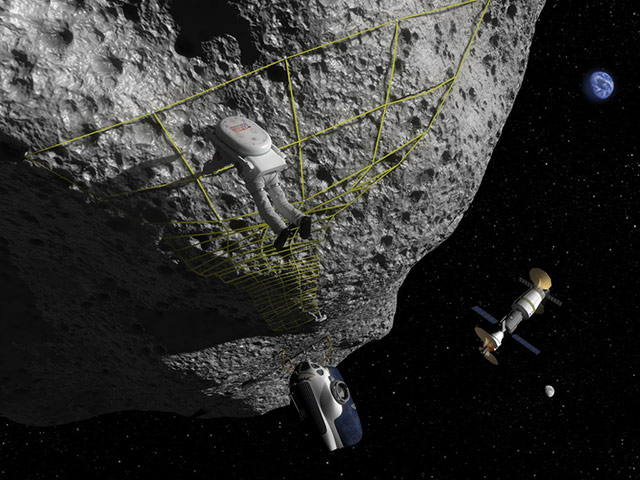
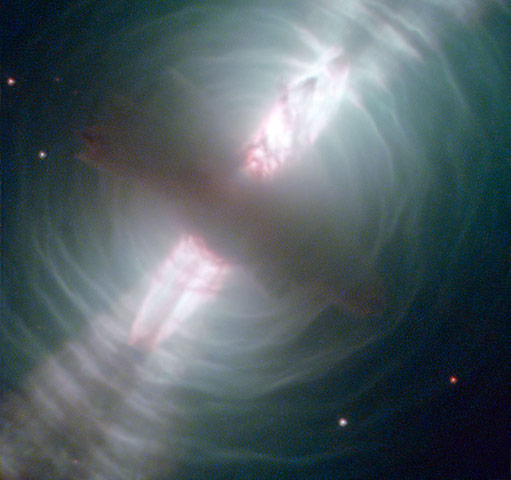
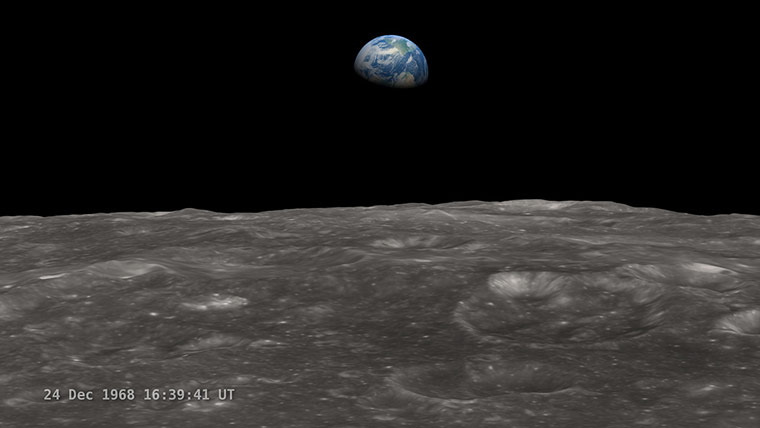
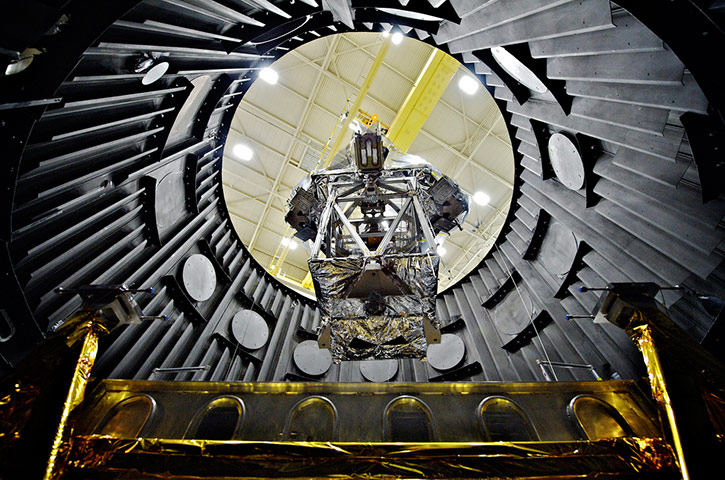
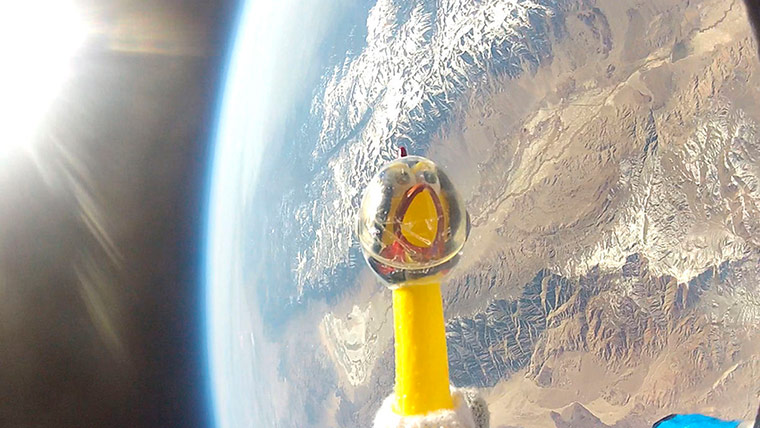
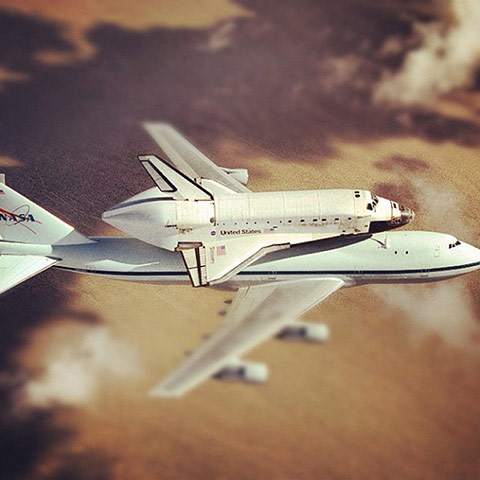
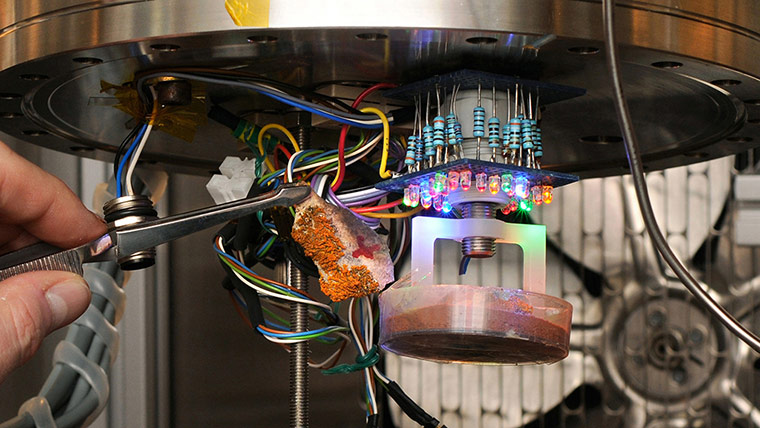
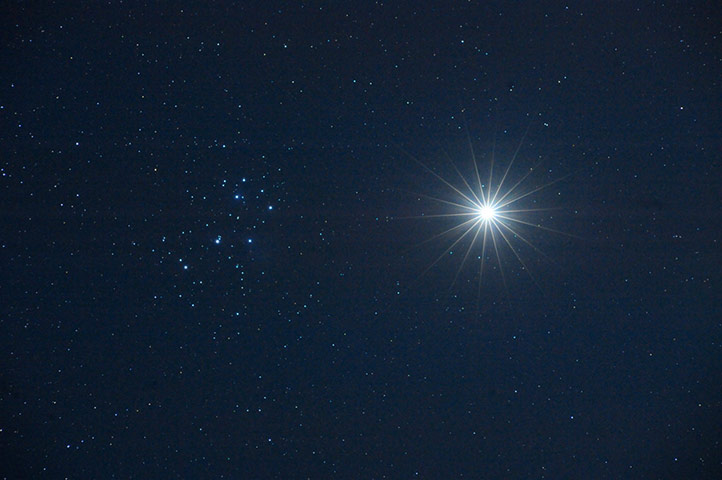
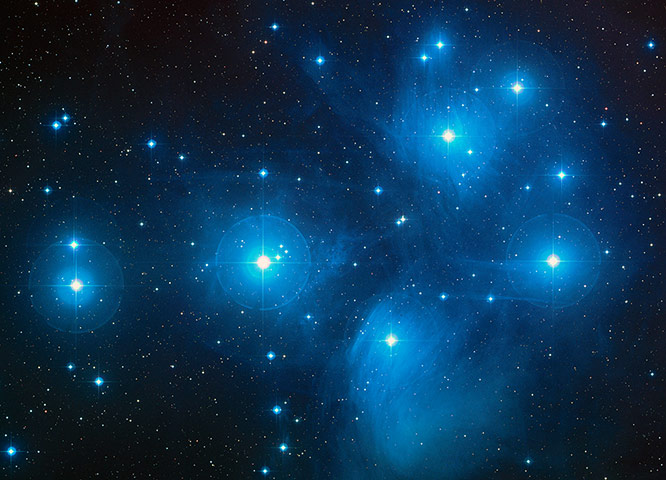
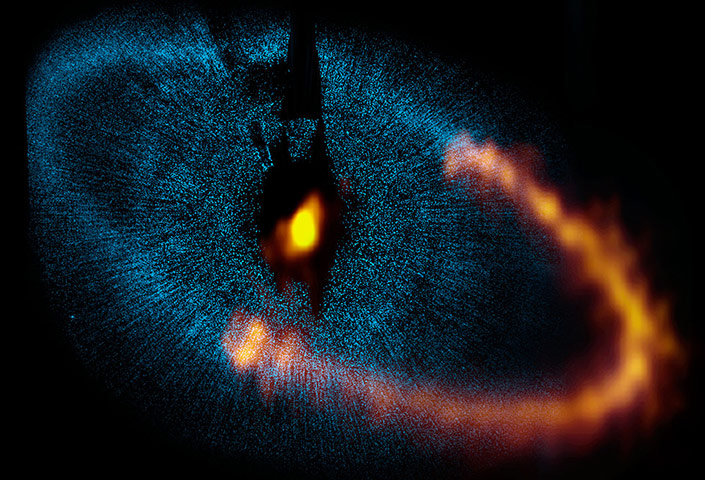
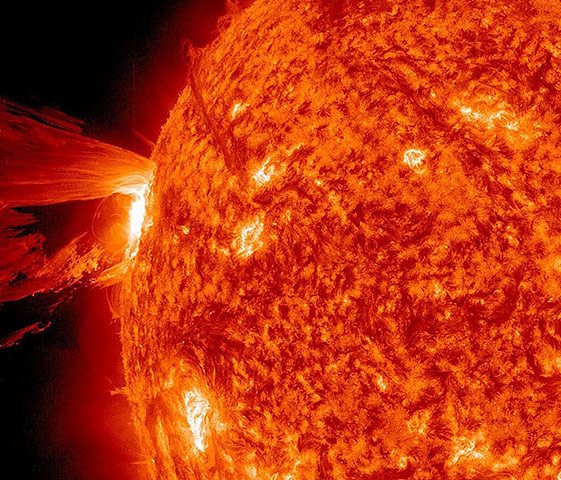
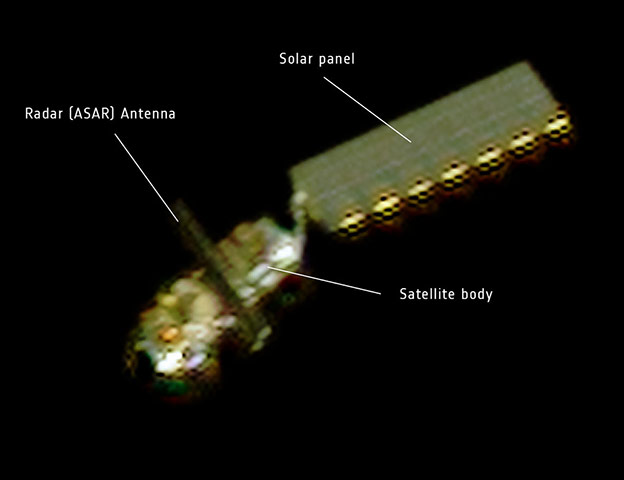
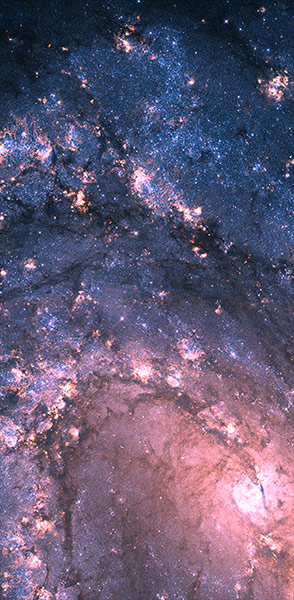
A test version of the Orion spacecraft arrived at the Kennedy Space Center in Florida on 21 April. Orion is designed to take astronauts beyond low Earth orbit. The model will be used for ground operations practice before a flight test scheduled for 2014Photograph: NASAA group of hi-tech tycoons including Google's Larry Page and Eric Schmidt teamed up with explorer and film-maker James Cameron in a venture to mine nearby asteroids. In this artist's impression an astronaut tethers an asteroid. A space exploration vehicle is close by and an Orion crew vehicle can be seen docked to a habitat in the backgroundPhotograph: NASAThe Egg Nebula – a star going through the 'preplanetary nebula stage' as it runs out of fuel at the end of its life. Hubble captured this brief but dramatic phase in a star’s life (which, confusingly, has nothing to do with planets)Photograph: Hubble Space Telescope/NASA/ESANasa recreated the view of the moon's surface from the orbiting Apollo 8 capsule in 1968 as its crew became the first humans ever to witness 'Earthrise'. An animator drew upon the detailed, modern maps of the moon's surface from Nasa's Lunar Reconnaissance Orbiter. Watch the animation herePhotograph: NASACritical instruments for the next-generation James Webb Space Telescope were put through their paces in a giant thermal vacuum test chamber at Nasa's Goddard Space Flight Center in Greenbelt, Maryland. The instruments were lowered on a platform into the chamber, which simulates the frigid conditions of space Photograph: Chris Gunn/NASAMeanwhile a rubber chicken called Camilla experienced the real thing when she was launched 25 miles (40km) above California. The mascot of Nasa's Solar Dynamics Observatory was lifted into the stratosphere by a helium balloon along with a payload of radiation sensors, cameras, GPS trackers, a thermometer, insects and sunflower seedsPhotograph: NASAThe space shuttle Discovery made her final flight, mounted on a Boeing 747. The shuttle's final resting place is the Smithsonian Institution's National Air and Space Museum in Chantilly, VirginiaPhotograph: NASALichens survived for 34 days in conditions designed to simulate those on the surface of Mars. The experiment at the DLR Institute of Planetary Research in Berlin recreated the atmospheric composition and pressure, temperature cycles and solar radiation on the planet. The polar and Alpine lichens even managed to photosynthesise under these harsh conditions, suggesting that life as we know it is not out of the question on the Red PlanetPhotograph: DLRVenus approaching the Pleiades (or Seven Sisters) on 31 March, photographed by astronomy professor Jimmy Westlake of Stagecoach, Colorado. A few days later the planet passed directly in front of the star clusterPhotograph: Jimmy Westlake/NASAThe Pleiades star cluster is about 135m years old, which means any massive stars in the cluster would have exploded as supernovae at a time when ammonites thrived in the seas of Earth. According to the Danish physicist Henrik Svensmark, galactic cosmic rays from nearby supernovae strongly influenced the diversity of marine invertebrates by changing the Earth's climatePhotograph: AURA/Caltech/NASA/ESAThe dust ring around the bright star Fomalhaut as seen by the Atacama Large Millimetre/submillimetre Array (Alma) in Chile. The blue part of the image, from the Hubble Space Telescope, has been superimposed to complete the ringPhotograph: Hubble Space Telescope/ESO/NAOJ/NRAO/ALMAA 'prominence eruption' exploded from the east limb (left side) of the sun on 16 April. There was a simultaneous solar flare, though it was not aimed toward Earth. The event was witnessed by Nasa’s Solar Dynamics Observatory satellite. Watch a video of the prominence erupting herePhotograph: SDO/ GSFC/NASAContact with the Envisat satellite was lost on 8 April. On 15 April, the French space agency CNES rotated its Pleiades Earth observation satellite to capture this image of Envisat and help determine whether its solar panel was still oriented to get power from the sunPhotograph: CNES/ESAA region of the spiral galaxy M83, where a black hole increased its x-ray output by a factor of at least 3,000 times. Nasa's Chandra X-ray Observatory detected the extraordinary outburst. Data from Chandra in the image is shown in pink, Hubble data in blue and yellowPhotograph: Chandra X-ray Observatory Center/NASA
Sign up to read this article
Read news from 100's of titles, curated specifically for you.