GREER, SOUTH CAROLINA. Maybe you grew up riding, but as I’ve mentioned before in these pages, the most I ever rode as a kid was a pedal bicycle. Nothing powered. When I did finally learn to ride a motorcycle, I did it as an adult, and I did so not long after I had also first learned how to drive a car. Now, because I specifically learned to drive a manual transmission car, I’m pretty sure that fact helped me with wrapping my head around riding a motorbike.
I’ve now ridden on the street for close to 20 years, and while I’ve had the odd crash and injury here and there, thankfully, none so far have been serious. But riding the street is a completely different thing from riding dirt or off-road. And as I’ve since learned from talking to loads of folks who grew up riding dirt and/or teaching it to others, it seems that it’s a whole lot easier for a dirt rider to learn good street techniques than it is the other way around.
Part of that, I’m told, is because those of us who learned to ride on the street first tend to have a lot of bad habits we need to unlearn if we’re going to be successful at riding off-road. Thankfully, as I’ve also repeatedly heard, developing good off-road skills tends to translate to better street riding skills. So I was definitely looking forward to that.
Why? Because I just had the great pleasure of attending one of the BMW US Riders Academy’s off-road trainings. And even better, from my perspective, is that I specifically attended one of its women’s courses, where the whole class is a rad group of women (and our instructors were, too).
I have a lot to tell (and show) you, so I’m going to break this down into a couple of different pieces (as well as at least one video on our YouTube channel) to keep it manageable.
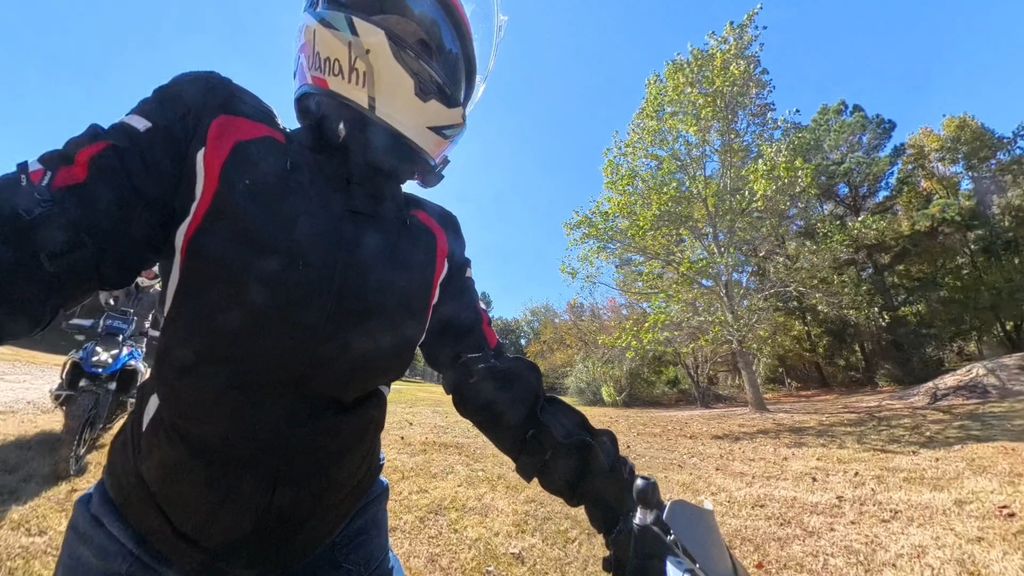

BMW’s US Riders Academy Offers One, Two, and Three-Day Classes, As Well As Private Instruction
Which option is best for you will depend on a whole lot of personal assessment that only you can make for yourself.
The good news is, this is a school that has you use its own bikes for training; you don’t have to bring your own. So that’s definitely something to consider if you’re looking to get good training and up your skills, but you also aren’t comfortable with throwing your own bike around off-road while you’re learning all those important new skills.
At the same time, other things to seriously consider include your body and what it can take. My group was made up of a range of people, and some were definitely feeling it after learning how to stand up on the pegs and maneuver properly from that position. While my gym time made that part pretty easy for me, what couldn’t be helped was how many times the bike and I fell because that’s also part of the learning process.
Which brings me to my next point…
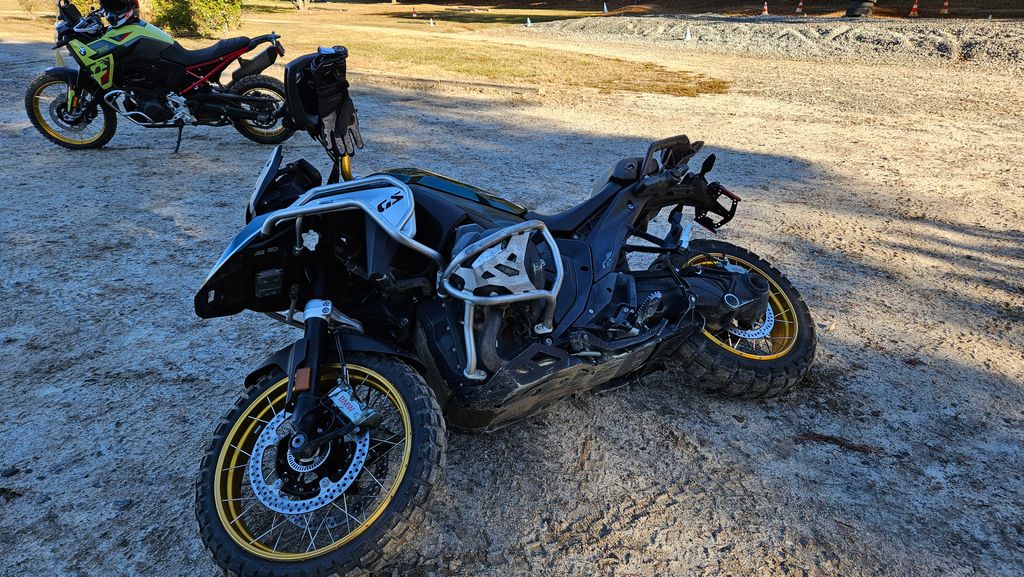
Not Everyone Will Fall As Much As I Did, But You Will Fall While You’re Learning
Falling is, I’m told, part of riding off-road. (Editor’s note: Klein here, if you’re not falling, you’re not riding dirt.) And learning how to fall well—stepping away from the bike as soon as you know it’s going down, which is something I’m still working on—is key. Constantly assessing and reassessing your surroundings so you know where to put your feet is key. I am not good at it yet, even if I can tell you about it from my brain’s understanding. Doing is different from thinking, unfortunately.
That’s one of many reasons why it’s nice to learn on someone else’s bike instead of your own.
BMW mostly put us on R 1300 GS or F 800 GS units, and I’m here to tell you that the R 1300 GS crashes incredibly well off-road. It’s heavier than the F 800 GS, but because it just lands on one of its cylinders and is propped up with its wheels on the ground, it’s actually easier to lever up than the F 800, which ends up with both wheels in the air when it crashes. It’s even easier than the G 310 GS, which also similarly ends up with both wheels in the air. And, yes, I do know from experience, which I’ll get to later.
For instructional purposes, the BMW US Riders Academy has removed the windscreens and mirrors from its ADV Academy bikes, because those are just going to get broken. They also have the enduro pegs installed (makes a huge difference with what we’re doing), enduro rear brake pedal and shifter, engine crash guards, and of course nice, metal hand guards to mostly keep the levers from being snapped off. One of my classmates, however, still made a shorty lever by accident.
Because You’re Inevitably Going To Crash, You Need To Make Sure Your Gear Is Up To Protecting You Properly
I have quite a few bruises now. And I also aggravated an old ankle injury. But I’ll be fine in a couple days, and that’s because I wore boots that protected me from everything, including dropping entire motorcycles on my foot. In this case, it was the 310 GS, which was honestly more of a hazard to me in terms of potential bodily harm than the R 1300 GS, if you can believe it.
Some classmates had newish boots and were having a little bit of difficulty as a result because they weren’t broken in yet. If you can make sure your boots are broken in before class, you’ll probably have a better time.
Having hip protection (and perhaps also tailbone protection) is definitely advisable. And if you’re like me, and you’re also trying to guard against re-injuring an old knee injury, you’ll probably want one (or maybe even two) knee braces. Good gloves, a jacket with solid elbow/shoulder/back protection, and of course a good helmet are also key.
You’ll also want to wear plenty of layers, as the BMW US Riders Academy is located in South Carolina, and your weather conditions will vary throughout the day (particularly if you go in the autumn, like I did). The day will start out nice and chilly, but get warmer as the hours progress. Having removable layers and even openable vents on your gear will make a huge difference to your comfort levels.
The school does a great job of making sure students have plenty of hydration, snacks, and bathroom access, and there’s a little club cart to hold your layers as you shed them, too. It’s really well thought-out and organized to promote a chill, conducive learning environment.
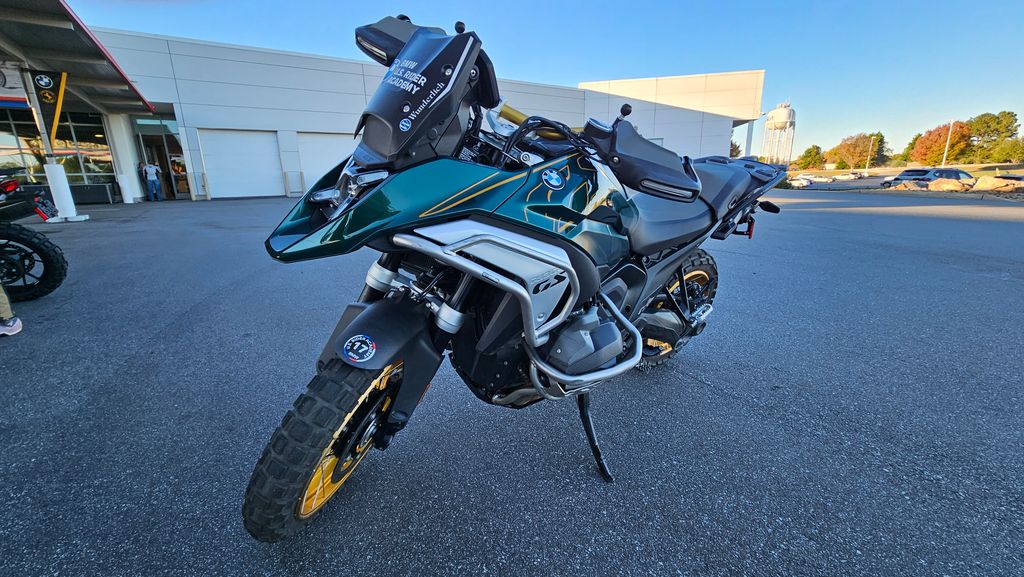
The Majority of Your Time Will Be Spent With The Bikes
There’s a little bit of classroom learning, and it’s spread throughout the experience. As well as scheduled break periods where you can hydrate, have a snack, use the bathroom, and, of course, have a good lunch break in the middle of the day to refuel and process what you’ve learned. But by and large, you’ll be spending time out in the designated training areas, as well as engaging in fun enduro loops that get progressively wider around the BMW grounds as you learn new skills.
Instructors will explain the current exercise to you and answer any questions, and then do a demonstration run to show you what you should be working on during the next exercise period. And then you’ll line up, and it’ll be your turn to give it a go. The instructors will coach you as you perform each exercise, encouraging you and advising on where you can improve as the situation warrants. The groups are nice and small, so you’ll get plenty of individual feedback.
One thing that was repeatedly emphasized throughout the training was that everything here is “challenge by choice,” meaning that you can and should only do what you feel comfortable doing. For example, on our first ride out to the course, one of our instructors suggested that we try doing an exercise where we’re standing up, then crossing one leg over the seat behind us, getting both legs on one side or the other of the bike as we slowly rode to the gravel pad where we’d be doing our first exercise.
From the classroom introductions, it was clear that some of us had more off-road experience than others, and others of us had little to no off-road experience (some even had very little riding experience of any kind, for that matter). As you’d probably guess, some of us tried the crossover leg exercise right away, and some of us were content to simply stand up on the pegs and pilot the bike out to the gravel pad before getting our first falls out of the way because we didn’t get a foot down fast enough. Guess which one I was?
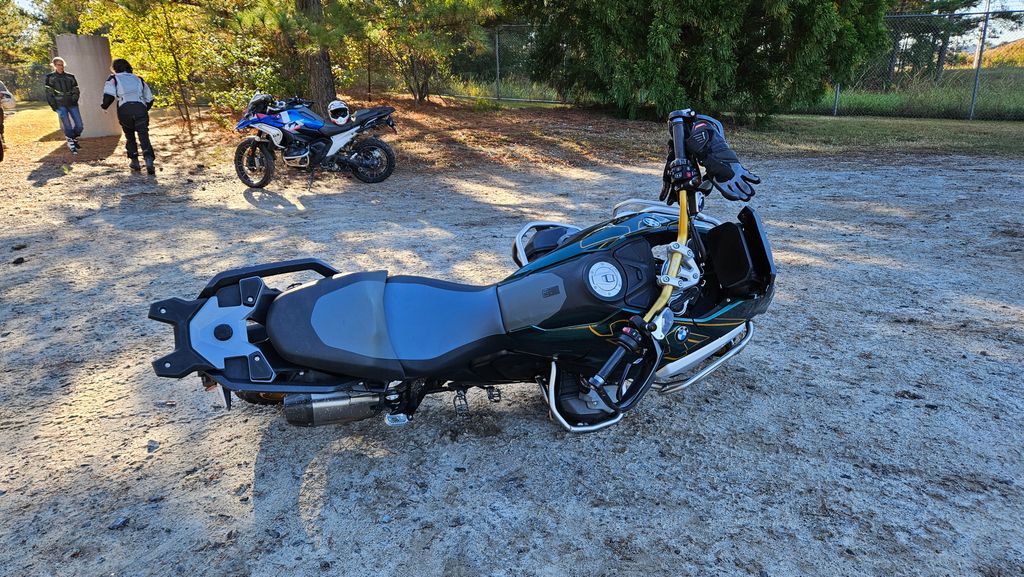
BMW’s US Riders Academy ADV Training Is Intense, But Worth It
I can’t overestimate to you how intense this experience is, though, especially if you’re like me, and you’ve never taken an off-road training course prior to this one. You need to be aware that you’re asking a lot of yourself. You’ll learn a lot, too, but everyone’s learning style is different. You may end up like me, feeling like there’s just so much information that’s been crammed into your head that you’ll be turning it over for days and days, and maybe even forever. I’ve just returned from the course, so I can’t tell you for sure how it’s changed my own street riding, but I can’t see how it wouldn’t.
As a street rider, and through the experience of a couple of painful falls transitioning from pavement to even just gravel road shoulders the wrong way (partly because I was nervous, and partly because I didn’t know what I was doing, and the two things kind of fed on each other and made everything worse), I had it in my head that gravel was essentially lava, and I didn’t want to touch it. While I can’t say for certain that I’ll ever be deeply in love with riding off-road, I do feel like I understand the principles quite a bit better now.
One thing I particularly appreciated is how you could get into an almost trancelike state, just slowing your breathing down and moving at sub-10-mph speeds to carefully pick your way over, around, and through obstacles. Weighting the pegs, counterweighting, moving your body around, turning your head to look where you want to go (keeping your eyes up is absolutely key here), and more. Some of this will probably sound familiar to you if you’ve ever done any MSF or other training, especially the admonishment to “look where you want to go.”
Since you and your bike are moving at lower speeds, your reaction time will be different than what you might be used to on the street. If you’re also a shorter rider with short legs, like I am, then you’ll also need to constantly be making additional calculations about when and where you want to stop, and maybe also which foot you want to put down.
One key takeaway that I learned is that getting one foot solidly down on the ground to hold you and your bike up is INFINITELY preferable to trying to get both tippy-toes down. Tippy-toes are super sketchy and are even more so off-road than they are on-road.
This can be tricky enough if you’re seated in that saddle, but it becomes even trickier when you’re standing up on the pegs and you need to suddenly come to a stop and get one of your feet down after you’ve taken in the surrounding terrain and made a plan for where and how you’ll do it. Your bike and your body might be moving slowly, and your breath may have slowed down, but your brain will need to be moving fast. Constantly alert to how the situation and terrain around you are changing, and how you’ll react next to cope.
One of the first things you do in this course is walk around the bike and learn where its balance points are. This is probably a good thing to do with any bike, whether you’re riding on-road or off-road, because it’ll help you to understand the machine a bit better, and hopefully sink into your brain so that knowledge bubbles up when you need it.
I’ll have more thoughts about the bikes I rode in a different piece, because this one is long enough. But just know that if you attend one of these trainings, both your brain and your body will learn a lot to hopefully make you a better rider on any surface you choose.