Whether you’re on a weight loss journey or just looking to improve your wellbeing through nutrition, you might find yourself spending a lot of time thinking about what you should eat and when to eat it.
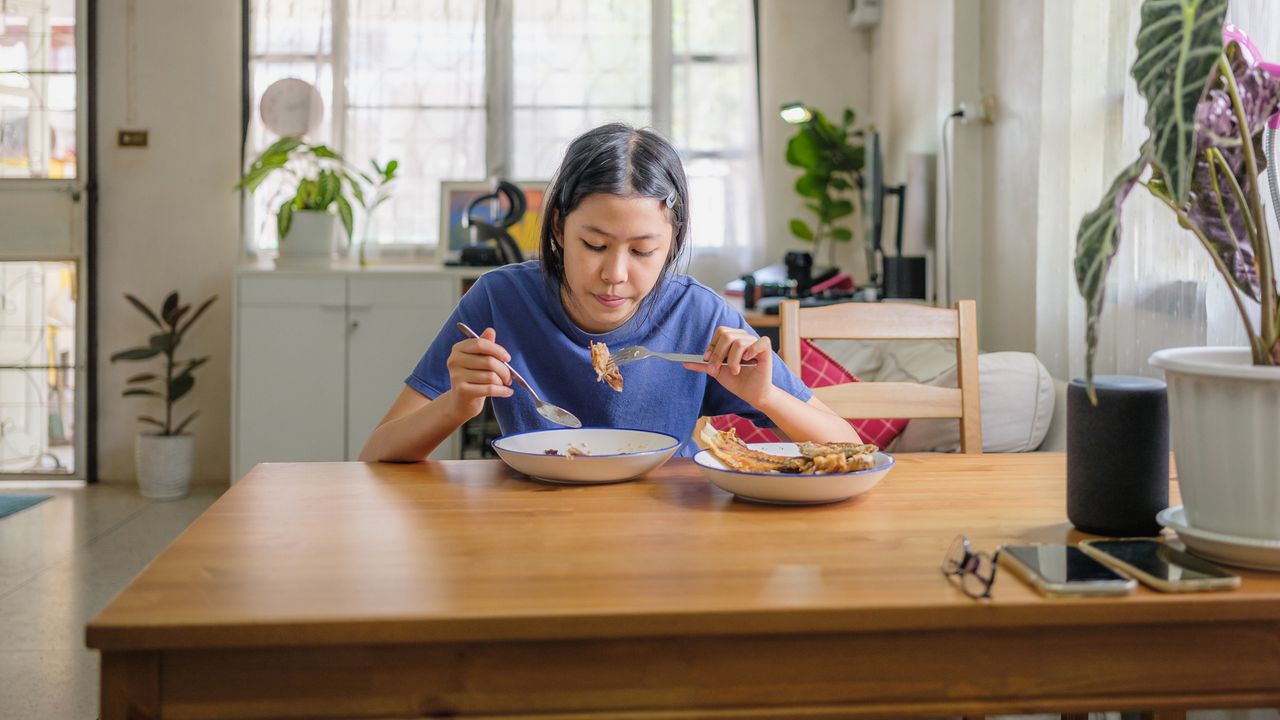
But, according to registered dietitian Clementine Vaughan, considering how you eat is also important.
“On social media, you will see everyone trying to convince you to focus on what you should eat or drink, and which supplements to take—but rarely do they discuss how you’re eating,” Vaughan tells Fit&Well.
According to Vaughan, eating too quickly is one of the most common causes of bloating after meals and is often overlooked.
While what you put on your plate is important, rushing through a meal can increase the amount of air you swallow with each bite, leaving you feeling bloated.
It also means you’re less likely to chew properly, which is an essential way your body prepares your digestive system for food.
“Eating too fast doesn’t give your digestive system time to prepare and process, so you might eat more and feel overly full 15 to 20 minutes after your brain catches up with your gut,” Vaughan explains.
By simply slowing down, you can improve your gut-brain connection and eat more intuitively. “This will help you notice when you’re feeling full enough and not overeat,” says Vaughan.
Plus, unlike dietary advice that might recommend particular foods or supplements that might be costly, this simple hack costs nothing.
All you need is an awareness of how you’re eating, and to remind yourself to slow things down.
Of course, that’s easier said than done.
Building a new habit takes time and practice, so here are Vaughan’s go-to techniques for adopting this into your everyday life.
Five simple ways to slow down eating
- Put your cutlery down between bites. Sometimes the simplest techniques are the most effective—and this one really works. Set your knife and fork down until you’ve swallowed your mouthful to naturally slow down eating.
- Sip between mouthfuls. Another easy way to create a natural pause during your meal is to sip water slowly. Choose plain water over sodas because carbonated drinks could impact bloating.
- Count your chews. Aim to chew each mouthful 20 to 30 times. If that feels tricky, even a small increase to your current habit can strengthen the gut-brain connection and make you more mindful of how you’re eating.
- Set a timer. Challenge yourself to make meal times longer until it becomes a habit. Start with 15 minutes and extend it to 30 minutes as you get used to it.
- Ditch the screens. It’s easy to eat quickly when watching TV or scrolling on your phone because the distraction pulls your attention and awareness away from the meal itself. Practice keeping mealtimes device-free.