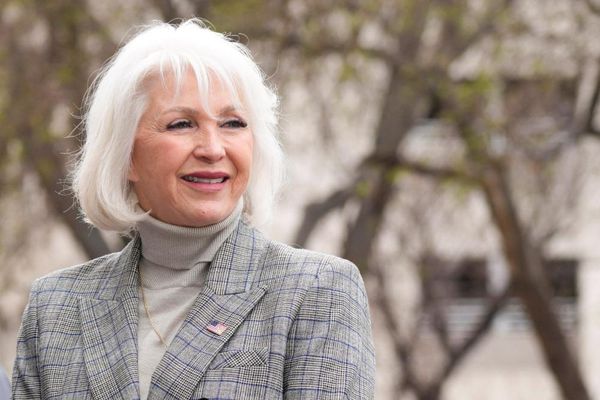
In the kitchen of her new home – hopefully the last one she’ll ever need to find – Helen is looking back over the years of “living hell” she spent in the NSW child protection system, first as a child and then as a mother.
Helen’s four children were taken away from her, one by one, the youngest at 15 months. The children were placed in a series of different care arrangements, some with extended paternal family, some with foster carers, none together. One of her children, now 19, was “gone” for seven years; the baby was three and a half when Helen finally had parental responsibility returned by the family court.
This social housing townhouse is a new start, the first time in years she’s had a stable place to live. Helen has arrived here the hard way, and knows how close she came to giving up.
“If I had taken my own life, who was going to get them kids back together?” she says. “I was the only one who had the power to get those siblings back to one unit. Knowing that, as hard as it was, is what kept me alive.
“They’d already been damaged – who was I to damage them even more and show them they weren’t fighting for? They were worth everything I went through, and I’d go through it all again just to have them home.”
Helen and her partner had been taking and selling drugs. But she’d also been dealing with having been sexually abused as a child. She’d been in out of home care for a time as a youngster, and been through the court system as a kid for theft.
“Something happened to me when I was 25,” she says. “Something that was going to be a secret for the rest of my life somehow came out, chewed me up and spat me out. I asked for help. I was dealing with things not in the right way, with a lot of memories coming back from my childhood, so I was judged and my kids were taken.
“Anger, sadness and pain consumed my life for 26 years. I’m still judged to this day. I’m my own biggest judgment.
“Noah was in care for seven years. My baby in care, Tyson – he was taken when he was 15 months – so Tyson would have been there just over two years. He was the quickest ... child I’ve ever gotten back.”
Helen credits Grandmothers Against Removal (GMAR) with having her children returned. Her mum, Hazel Collins, was one of its founders. She helped set it up after Tyson was taken away and placed in out-of-home care. Collins couldn’t understand why she hadn’t been given the chance to care for her grandchildren, and she found there were many other Aboriginal grandmothers in the same situation.
Since GMAR formed in 2014 it’s had a big impact on the child protection system in NSW, and similar groups are being formed in other states.
“If GMAR hadn’t been formed when I lost my last baby, I wouldn’t have got my kids back to this day,” says Helen. “It wouldn’t matter what I’ve done, how far I’ve come. The 360 we do on our lives does not matter.”
Helen’s life experience is pretty common in the child protection system: childhood trauma, often undisclosed, followed by addiction, family breakdown and trauma, which is passed on to the next generation in a continuous cycle.
Helen says she did ask the family and community services department (Facs) for help, but its solution was not about keeping the family together.
“There’s nothing, there’s no support structure, no policy, nothing where they have a support around mum and the kids,” she says. “They take our kids. They’re mad on doing these affidavits. They get into court real fast, and what they put in there about us … no one’s going to give a kid back to that person.
“They’ve got your kids, so then they want meetings. And I didn’t know you needed a solicitor. So I was going to these meetings at this big round table. You’ve got all these people sitting there, and they’re all having their say about you. And you’re sitting there. If you get angry they say you’re mentally unstable or aggressive. You can’t defend yourself and you’ve just gotta wear it. It’s failure from word go. I wouldn’t have my kids back if it wasn’t for GMAR.”
Helen believes families need early intervention, and a more streamlined way to seek help. When she disclosed that she’d been sexually abused as a child, she found it really difficult to seek help when Facs held so much power over her family’s life.
“It was suggested I see a sexual assault counsellor,” she says. “I was very scared to do it; I was worried they might take the kids if [the counsellor] told them anything … It was scary, not a normal world to us. I didn’t know what they wanted.
“Some parents don’t get to prove and show their kids that the department was wrong about them because they’re too damaged to show. Drugs take over people, alcohol takes over people. So many people aren’t as lucky as I am, and I’m just one determined person.
“But it’s been shown that we can have a voice. As embarrassing as it is for me to admit about the drug use, about the drinking, about the prison, the whole lot – well, who’s anyone to judge? We’re not bad people. I’m living proof of that. And I just hope I show others that we can do it. Just don’t give up. Don’t let them beat us.”
Her kids saved her life: “I never gave up, as much as I’d relapse and it’d beat me down, I keep coming back.
“I’m trying my hardest, for everyone else to break that cycle. As hard as it is, we can.
“Because how do you live without them? How do you sleep at night when your baby could be crying for you? Nobody’s kissing that baby. When that baby’s sick, who’s consoling them?
“They aren’t given the love and affection that would come from us. Doesn’t matter if they’re with the best person in the world it’s not coming from us. And what a child craves and a child needs, is what comes from a parent. No one can fill that void.
“Anger, sadness and pain consumed my life for 26 years. I’m still judged to this day. I’m my own biggest judgment.”
- Support our independent journalism by making a one-off or monthly contribution.