
If you were planning to see the Eagles at the Ball Arena in Denver next week, you would need to pass some tests (and not just ones about age and musical taste).
To see the rock legends live, you would need to meet the entry protocols:
- Proof of vaccination against COVID-19 (at least two weeks after final dose) at the time of the event and provide proof of vaccination - either the original vaccination card, a printed or digital copy of the vaccination card, or printed proof of immunisation;
- Printed proof of a negative COVID-19 antigen test within 24 hours of the event; and
- Printed proof of a negative COVID-19 molecular test within 48 hours of the event.
The conditions give a glimpse of an alternative reality. In contrast to the halt on communal life in Canberra, Americans are going to concerts. But restrictions are tight (and cases of COVID are high).
Denver in the Rocky Mountains is similar to Canberra.
It's true the population is twice as big but it has high rates of vaccination. Denver, like Canberra, has about 70 per cent of its eligible citizens with at least one jab.
It has clear mountain air and a spectacular rural backdrop. It is a prosperous city.
Unlike Canberra, it is not in lockdown. Life is getting towards what used to be thought of as normality. But infections in Denver are higher than those in Canberra, and rising.

"Normality" has a cost. In Denver, there are about 160 new cases a day for every 100,000 people. In Canberra, it's in single figures.
Institutions are adapting. The Denver Centre for the Performing Arts will require proof of vaccination plus masks for its concerts from October 1. Children under 12 will have to show they have had a negative COVID test.
The tough masks-plus-proof-of-vaccination rules are because of the Delta variant. The Denver health authorities aren't sure vaccines offer enough protection, so the masks will remain.
The city government is being tougher in Denver than the territory government is in Canberra. It announced: "Denver has issued a public health order requiring all city employees, as well as private-sector workers in high-risk settings, to be fully vaccinated against COVID-19 by September 30."
The United States experience shows there is no easy path.
Bakersfield in inland California has a population the same size as Canberra.
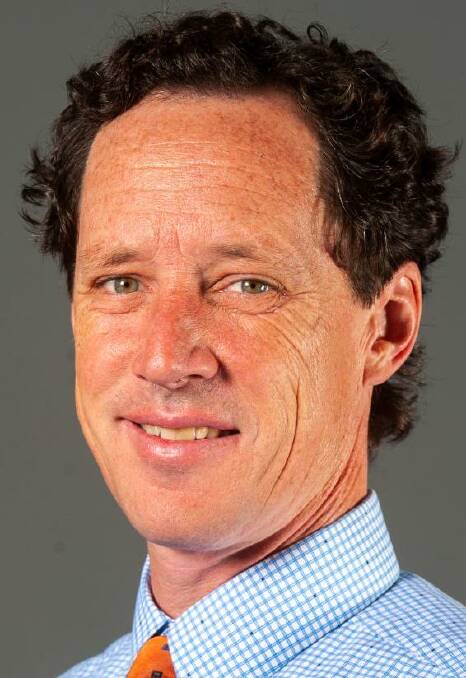
"Life here seems pretty normal," John Cox, business editor of The Bakersfield Californian told The Canberra Times. "Life has returned to normal. Most of us have returned to normal."
Bakersfield had a tight lockdown a year ago but that hasn't been repeated this year, even as infections have risen.
The restaurants and bars are open but the hospitals are filling up. Largely with the unvaccinated, Mr Cox said.
He has just written a story under the headline: "Local hospitals struggle to keep up with latest COVID-19 surge." He thinks as infections rise, so will vaccinations (as they did in Sydney).
Vaccination is a political issue in the United States, with the right tending to refuse the jab and the mask. But many people seem to have gone for caution plus canniness - not isolating themselves completely but not opting for full, unprotected movement, either.
They are living lives as near to "normal" as they conveniently can, without being reckless. Mr Cox is double vaxxed. He had started shaking hands with people he knew and even hugging friends. But when one was ill, they didn't meet.
He was going out to restaurants but also wearing a mask, though not the heavy-duty most protective type.
In Britain, where vaccination rates (72 per cent with one jab) are higher than in Australia (52 per cent) and the US (63 per cent), there is a similar picture of a more normal life. There are, though, more cases but far fewer end up in hospital than did so a year ago - and with the unvaccinated more likely to need serious treatment.
Take Coventry, a city of a similar size to Canberra (although within an urban sprawl).
On the most recent figures, there had been 328 cases per 100,000 people, outstripping Denver and many multiples more than Canberra.
But the policy is now to live with COVID rather than to eradicate it.
As Coventry City Council puts it: "COVID-19 will be part of our lives for the foreseeable future, so we need to learn to live with it and manage the risk to ourselves and others. Every action to help reduce the spread will reduce any further resurgence of the virus in the coming months."