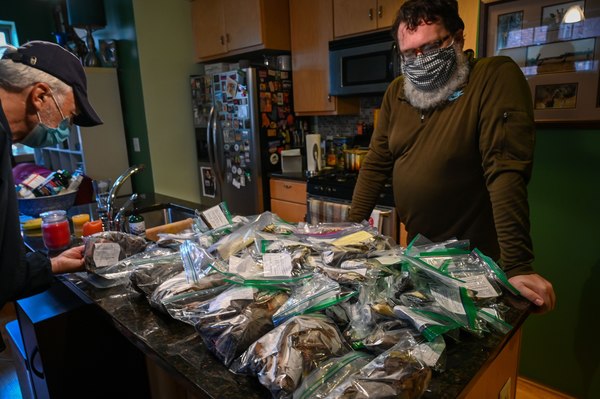
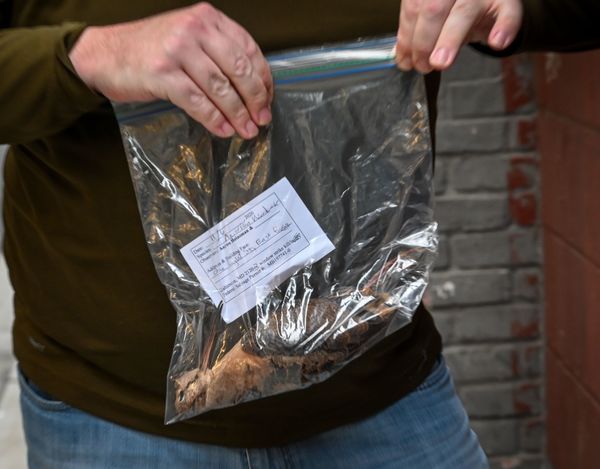
BALTIMORE — The Ziploc bags are tucked into a shoe box in Aaron Heinsman's freezer, near pouches of frozen vegetables and a cauliflower pizza crust.
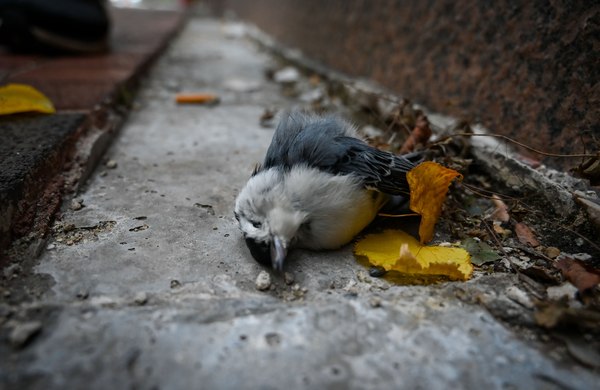
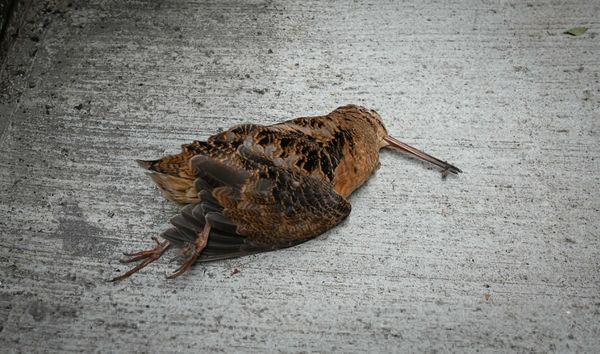
Inside are birds. Hundreds of them. Common yellowthroats and American woodcocks and ovenbirds, avian ice cubes tightly sealed in plastic.
Each met a devastating end in Baltimore City during this year's migration season, at the hands of glass buildings they didn't see coming. The birds are collected by Lights Out Baltimore — a group that advocates for making area buildings "bird-safe," and collects data on bird collisions along the way.
And frozen they will remain — at least for the time being. Normally, the frosty songbirds would be bound for a museum collection or a laboratory. But because of COVID-19 Heinsman and the group's other bird-gathering volunteers have nowhere to take them.
"This is sort of uncharted territory for us," Heinsman said.
Washington's Smithsonian Museum of Natural History, where the birds usually land, is closed to donations. Plenty of scientific research that might make use of them is still on hold.
And so, for Lights Out volunteers, there is yet another strange coronavirus complication: birds in freezers. And lots of them.
"When people come over to my house: 'Oh, do you need some ice for your drink? I'll get that for you," said Lynne Parks, one of the group's volunteers, who also stores fallen birds at home.
Heinsman added: "Explaining the dead birds has been interesting to friends, potential romantic partners and cat sitters."
The pandemic struck the United States before Lindsay Jacks, the group's director, could donate the 2019 haul, some 500 birds. And so they, too, fill a large stand-alone freezer in her basement, awaiting a return to relative normalcy alongside their human collectors. Soon, Jacks will buy a new freezer altogether, the temporary resting place for another several hundred birds that died this year on city streets.
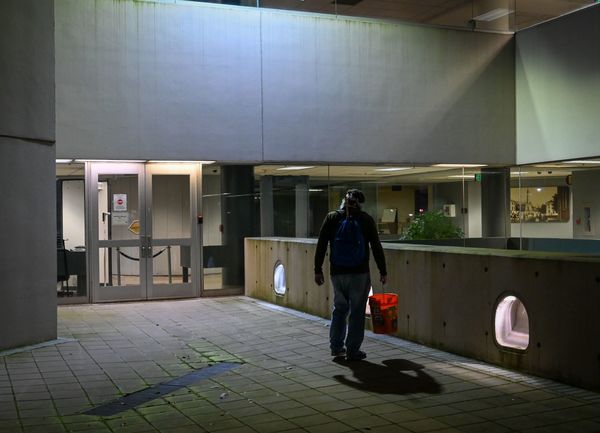
Practically every day during migration season, Lights Out volunteers scour downtown Baltimore beginning around 5 a.m., and circle the perimeters of skyscrapers in search of dead and injured birds. The dead are sealed in plastic bags and placed into a waiting bucket, and the wounded are swept into paper bags, which are binder clipped to the bucket's lip. At the walk's conclusion, the dazed songbirds — and sometimes bats — are brought to the Phoenix Nature Center in Baltimore County for rehabilitation.
For the volunteers who have gone to incredible lengths to collect and maintain the specimens, their value to medical research and museum collections is without question.
In May, Johns Hopkins University School of Medicine researchers published a study they conducted using bird specimens from Lights Out.
Birds use up lots of oxygen when they fly, and despite the stress this exerts, they live remarkably long lives. Through their study, researchers discovered that a gene deletion helps them do so, said researcher Gianni M. Castiglione, who worked alongside Hopkins ophthalmology professor Elia J. Duh.
Most of the project's research took place before COVID-19 halted laboratory work, Castiglione said.
The genome research could shed light on how to slow human aging using antioxidants. It could also help with the development of pharmaceutical drugs that treat cancer and certain diseases of the eye. For cancer, it's ideal to flip off the body's antioxidant response, for certain ocular diseases, it's ideal to kick it into overdrive.
For one month during three different migration seasons, Castiglione woke up around 4 a.m. to await word from Lights Out volunteers on their morning walks. Often, the injured birds they brought had lain outside for too long, and some tissue samples that Castiglione needed from their livers, lungs, hearts and skin weren't viable. But most of the time, the birds could be used somehow to further the research.
"I think I could have probably found another way, through bird rescues or something like that, where they have deceased birds. But I don't know if I'd be able to get them as quickly. They might have been frozen carcasses," Castiglione said. "Short of me buying a bird and sacrificing it myself, which is, you know, unethical, of course, I don't think I would have been able to do the same rigor of research if it wasn't for Lights Out Baltimore. I think I can say that unequivocally."
At the end of the migration season, when Lights Out's dead birds are typically dropped off at the Museum of Natural History an hour's drive down Interstate 95, they are carefully logged and entered into the museum's collection. Then, under normal circumstances, they're available for researchers to borrow and examine.
"It's hard because we can't go in and check the collection, protect the collection or add to the collection," said Christina Gebhard, a museum specialist in the division of birds. "Above all else, we cannot contribute to science."
Researchers have been doing their best to organize and catalog photos of the collection from home, but they're itching to return to the museum. Officials say there's no such return in sight.
"The Smithsonian is reopening its facilities to the public and essential staff where and when it can safely," wrote spokesman Ryan Lavery in a statement. "I hope the lack of clarity on a projected timeline is understandable given the uncertainty around the coronavirus."
So far, there are 165 birds from Lights Out Baltimore in the collection, and some of those are likely to feature in a Natural History Museum exhibition tentatively planned for fall 2022.
Called "Dark Skies," the exhibit will focus on the "global issue of how man-made light is influencing nature and our relationship with the night sky," Lavery said.
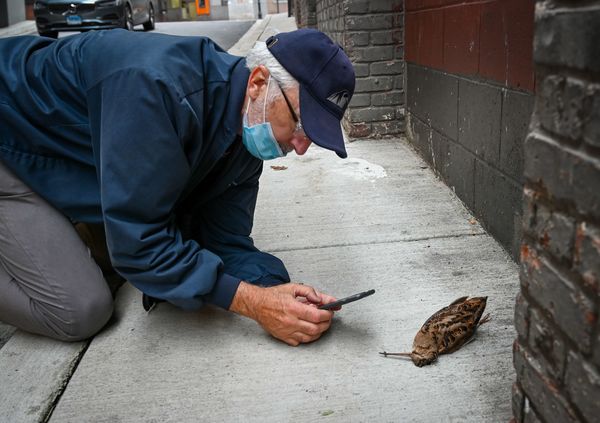
The birds haven't just contributed to scientific research, but to a changing landscape in downtown Baltimore. Thanks in part to the record-keeping of Lights Out, a few of the city's worst offenders when it comes to bird collisions have taken steps to become "bird-safe."
Perhaps most notably, the National Aquarium covered a glass wall surrounding its Australia exhibit in a dotted film a few years back, so that birds could detect it. On the film, a collection of dense and sparse dots spell out "National Aquarium" vertically along the building's edge.
"That's what's kind of so amazing about it is, it's doing, you know, this really great work, and it just looks like it was meant to be there," said Jacqueline Bershad, the aquarium's vice president of planning and design.
The aquarium plans to redo the glass on its rainforest exhibit in a few years time, and it will use frosted glass instead this time, Bershad said, so that the pane is visible to nearby birds.
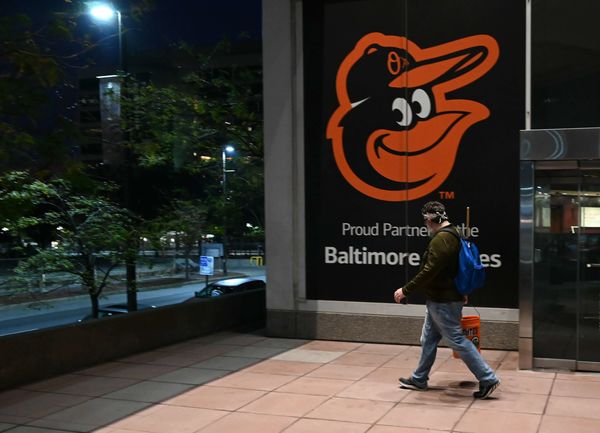
There are also plans to rid the aquarium's courtyard of lighting that shines upward, since those fixtures can confuse migrating birds.
It's a constant battle, and a uniquely morbid hobby, but volunteers say it's rewarding, too.
"One out of 4 is a rescue, and that 1 out of 4 can really keep you going," Jacks said. "You started your day at 5:30 in the morning and you rescued a bird. How many people can say that?"
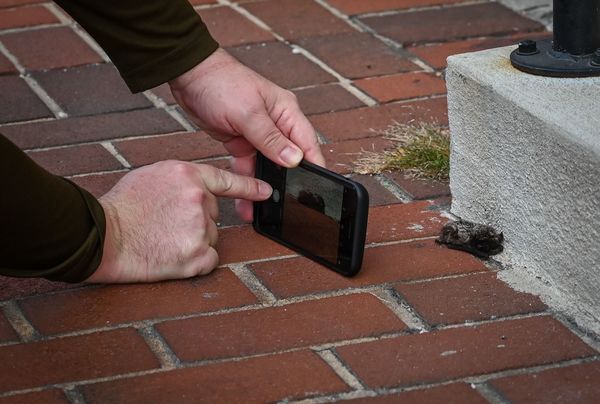
On a recent walk, Heinsman discovered his 1 out of 4 — a fallen silver-haired bat, huddled in a ball beside a stoop on Pratt Street. Though the bat may have looked dead to the average passer-by, it was in fact very alive, and when prodded, emitted hisses and squeaks, before splaying out its wings and baring its tiny fangs. Quickly, it was brushed into a lunch bag and toted around the city, before a volunteer came by to haul him to Phoenix.
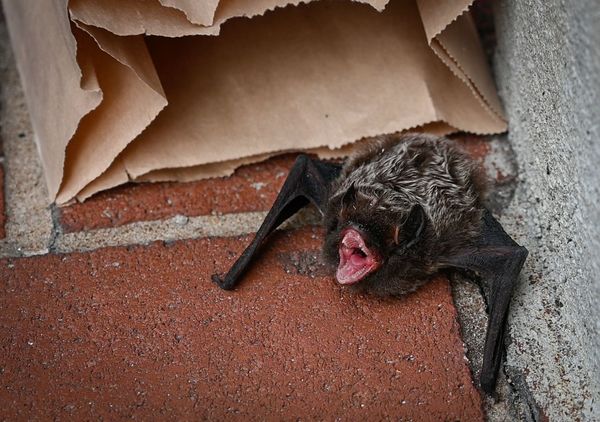
When bats collide with buildings and fall to the ground, a major worry is that they will become dehydrated. But bats can also have a rather difficult time taking flight from land.
But this bat was one of the lucky ones.
About a day after it arrived at the nature center, it was released back into the wild.
As Heinsman said of his first rescue: "It's magical."