
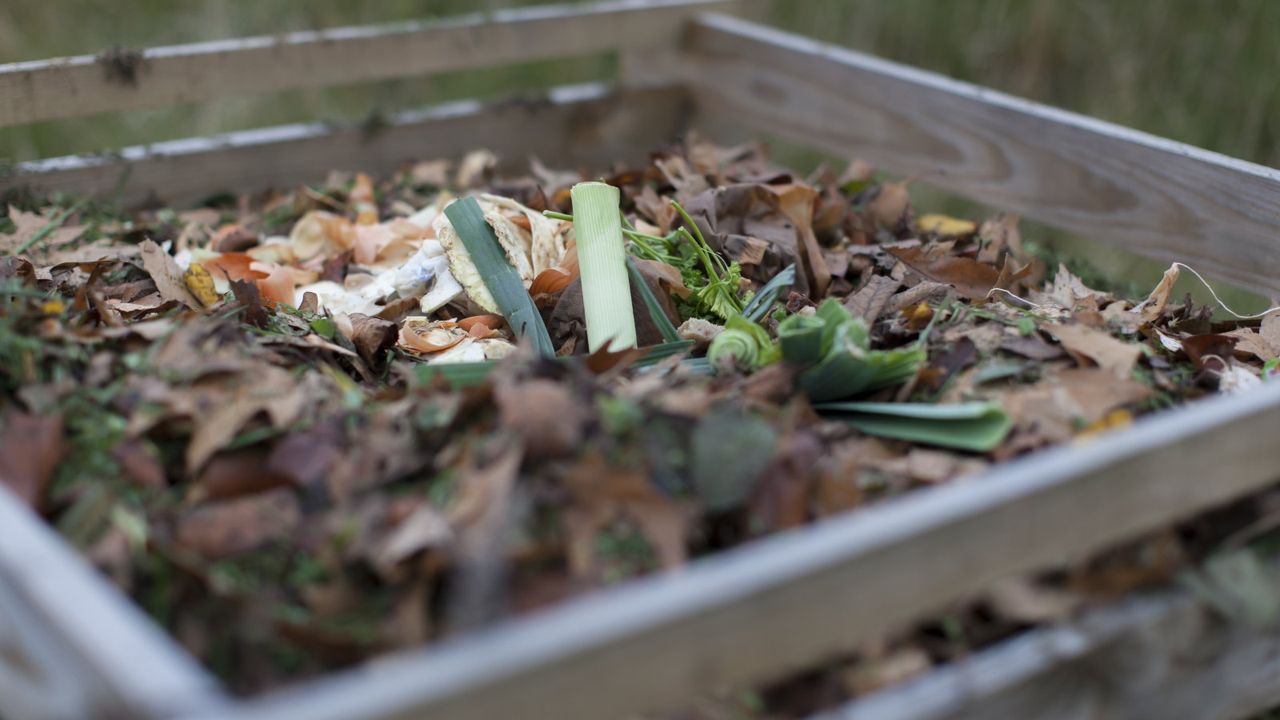
Making compost is a great way to turn garden and kitchen waste into valuable gardening gold. For a better and more efficient composting system, a simple chimney in the middle of your pile can make all the difference.
A compost chimney is simply a channel or tube made of wire, PVC, or sticks that sits vertically in the center of a compost pile. It boosts the natural movement of oxygen, stops inactive and smelly piles, and can even speed up the overall composting process.
If you make compost at home and have struggled with slow or smelly compost piles, a chimney may be the answer to your prayers. Here, we reveal how a compost chimney works, and a compost expert explains how a natural version made from sticks or stems may be better than putting a plastic or metal tube in the pile.
What Is a Compost Chimney?
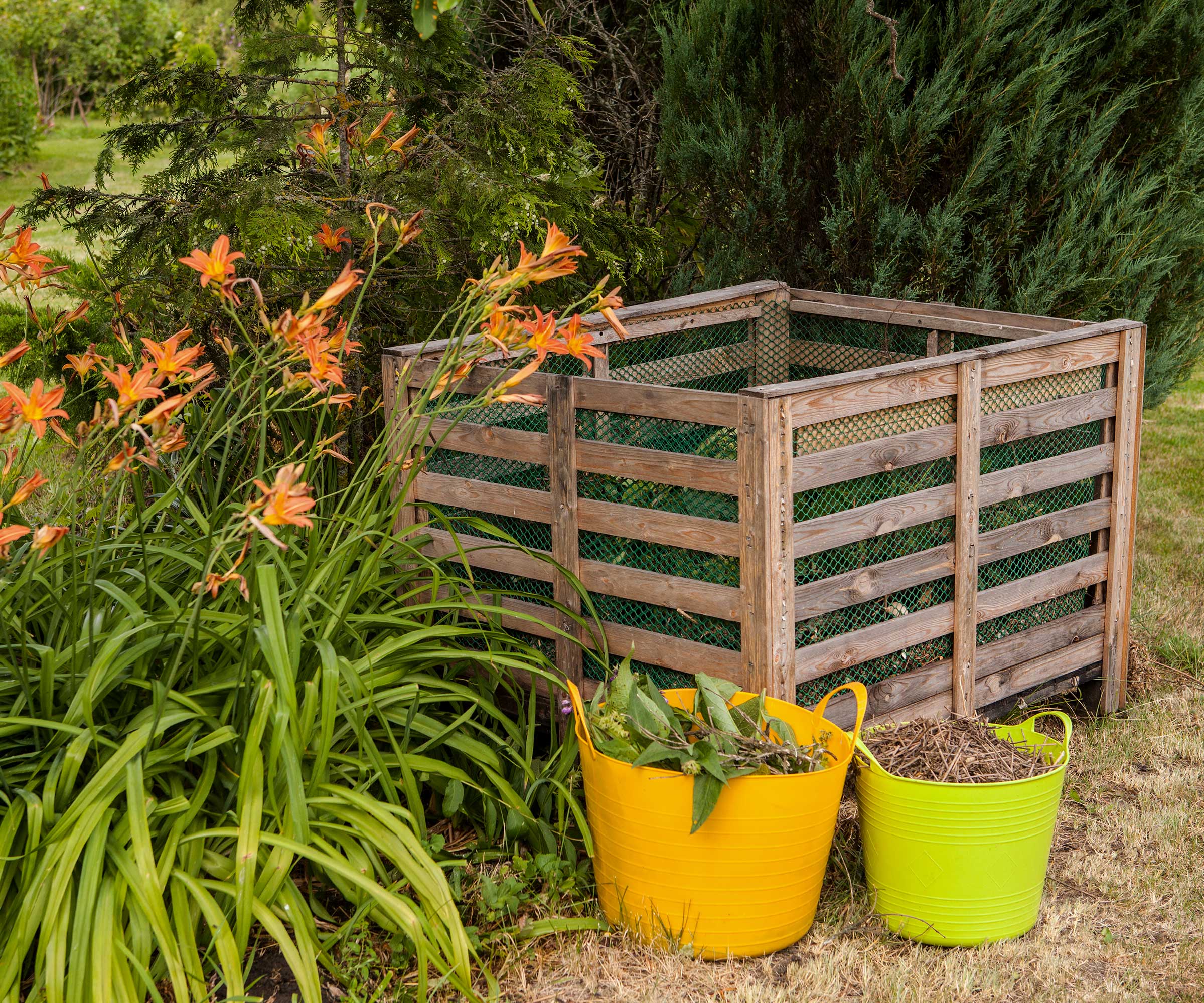
A compost chimney is an easy, convenient way to speed up your composting. It is a simple component to add to any compost pile. It isn’t complicated or expensive to achieve, and there are DIY methods to integrate one into an existing pile.
Lauren Click, founder of Let's Go Compost, explains: ‘A compost chimney is an airflow channel placed vertically through the center of a hot compost pile, and is normally made from perforated PVC pipe or wire mesh.
‘It acts like a pile’s “breathing tube” to help fresh air reach the middle, where compost can become dense, wet, and low in oxygen.’
A compost chimney is specifically designed for a static compost pile. If you have alternative systems, such as a tumbling composter, a wormery composter, or a bokashi system, a chimney is unnecessary.
How It Boosts Composting?
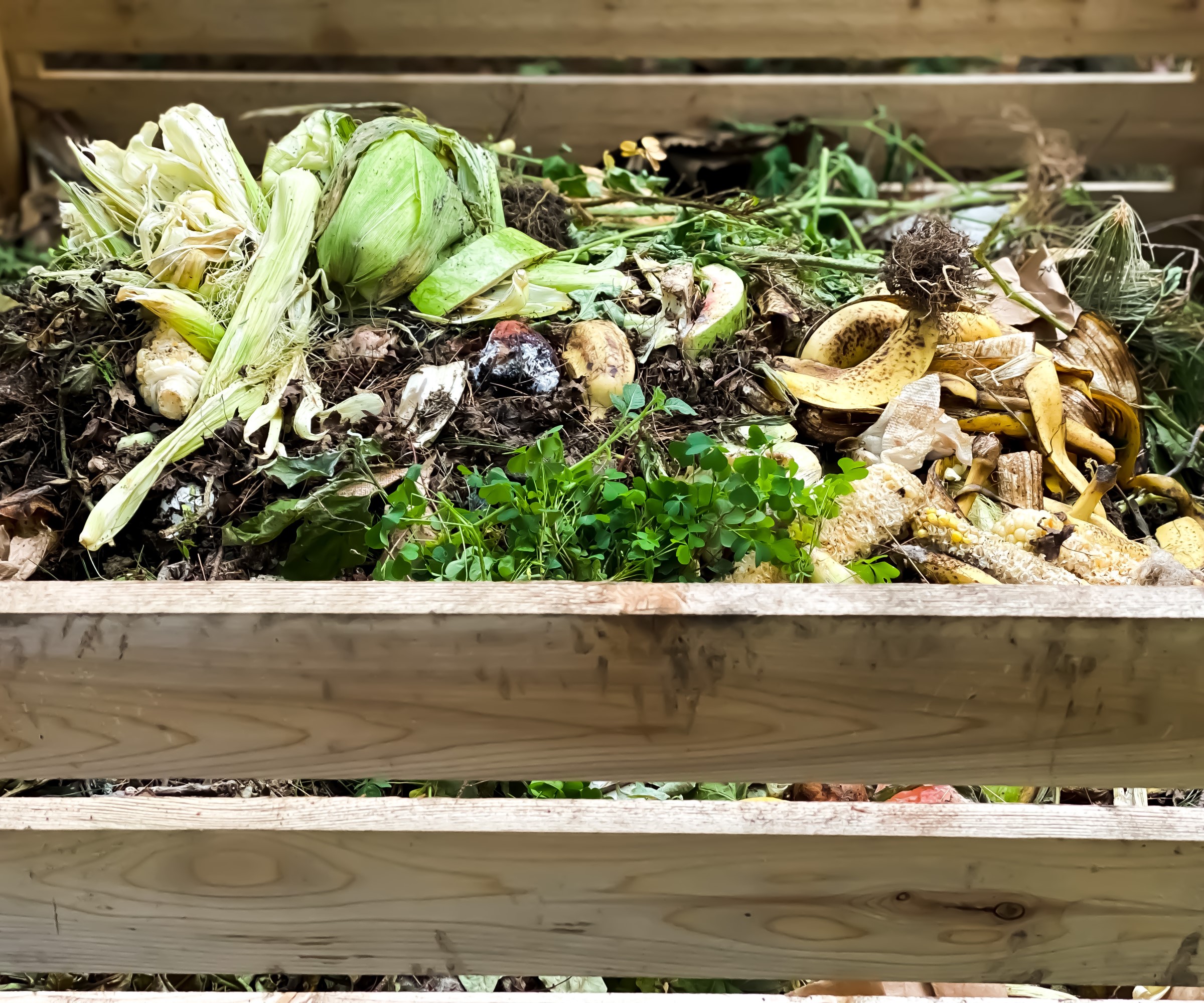
As gardeners routinely add garden trimmings, grass clippings, hedge prunings, leaves, cardboard, kitchen scraps, and more to a compost pile, it can become compacted over time.
Oxygen is essential for good composting. But compaction reduces pore space and oxygen movement, which affects the pile’s efficiency. A lack of oxygen can lead to anaerobic conditions, where decomposition slows, and the pile starts to emit a bad smell.
If your compost is not heating up, it can often be due to a lack of aeration. This is a scenario where a compost chimney can come to the rescue.
Lauren says a compost chimney ‘improves passive aeration’ and the natural movement of oxygen throughout a compost pile, which in turn ‘supports aerobic decomposition’ in the pile.
The chimney provides a channel for fresh air to get into the middle of the pile. Warmth at the base of the compost rises out the chimney, and cooler air is pulled in to create the perfect conditions for efficient composting.
‘A compost chimney also helps regulate moisture distribution by preventing overly saturated wet pockets and supports more uniform thermophilic activity,’ adds the compost expert.
‘In larger or denser piles, this can contribute to faster, more even decomposition and more stable compost over time.’
The coming and going of warm and cooler air through the chimney prevents a compost pile from overheating. While an overheating compost is not a fire risk, once the temperature exceeds 160°F, it can kill the beneficial microbes essential for breaking down organic waste.
What to Use for a Compost Chimney
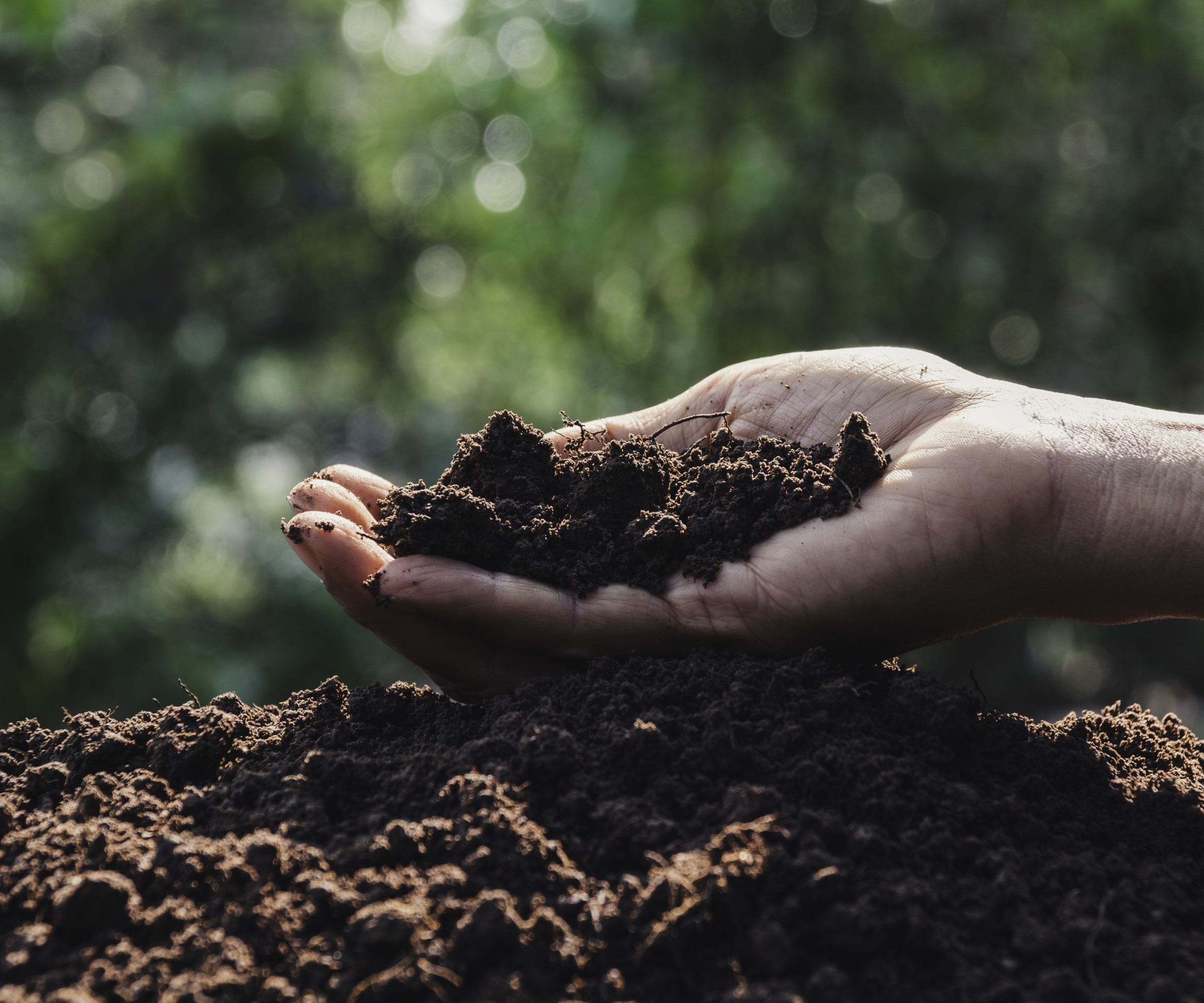
There are different ways to incorporate a compost chimney into your pile. A common way is to insert a pipe with drilled holes or chicken wire rolled into a tube into the center of the compost.
While these types of chimneys work, Lauren offers alternative methods, too, as she recommends: ‘A simple compost chimney can be made with a vertical column of hardware cloth, coarse sticks, or bulky browns to create an air channel for passive aeration.’
You can get a roll of hardware cloth at Amazon to create your compost chimney.
‘If you do decide to add an aeration tube, choose food-grade, garden-safe materials to avoid potential leaching,’ she adds.
When it comes to some potential materials, Lauren does warn: ‘Little is known about what will happen if a PVC tube interacts with a hot compost pile for an extended period of time and what types of microplastics or chemicals may leech.’
If you prefer plastic alternatives in the garden, you can opt for the coarse sticks method, as Lauren mentioned above. To do this, you may bundle woody stem prunings, tree branches, or bamboo sticks (you can get bamboo plant stakes at Walmart) together and insert them into the center of the pile.
The bunding will create the required air gaps, and woody plant stems can be chopped up later and added to the compost.
Shop Composting Essentials
A tumbling composter with a capacity of 43 gallons. It has two chambers, and the rotating design eliminates the need to dig or turn your compost.
A worm composter turns food scraps into a nutrient-rich tea to feed plants. This one has four trays for scraps and a vented lid for air circulation and temperature control.
A pitchfork is a useful tool for turning compost or spreading mulch. This one has five forged oval steel tines and a strong hardwood handle.
Lauren Click from Let's Go Compost says that compost chimneys should be seen as ‘complementary’ to turning compost, rather than a replacement or alternative to turning a pile.
Regularly turning and mixing compost aerates the pile and helps to speed up the decomposition process. This kind of mechanical aeration keeps a pile healthy and should be seen as a regular part of your composting process, even if you add a compost chimney.
If you love inspiring garden ideas, outdoor advice, and the latest news, why not sign up for our newsletter and get the latest features delivered straight to your inbox?