If you’re interested in digital photography then one thing you absolutely need to know are RAW files. We’ve all heard of JPEGs – the industry standard for compressed, easily sharable pictures – but any digital camera worth its salt will have the ability to shoot RAW images, too, the larger uncompressed ‘full-fat’ files.
Unlike JPEG, which is an acronym standing for Joint Photographic Experts Group (which founded the image format), RAW isn’t an acronym – it literally means the ‘raw’ data straight from the image processor of your camera.
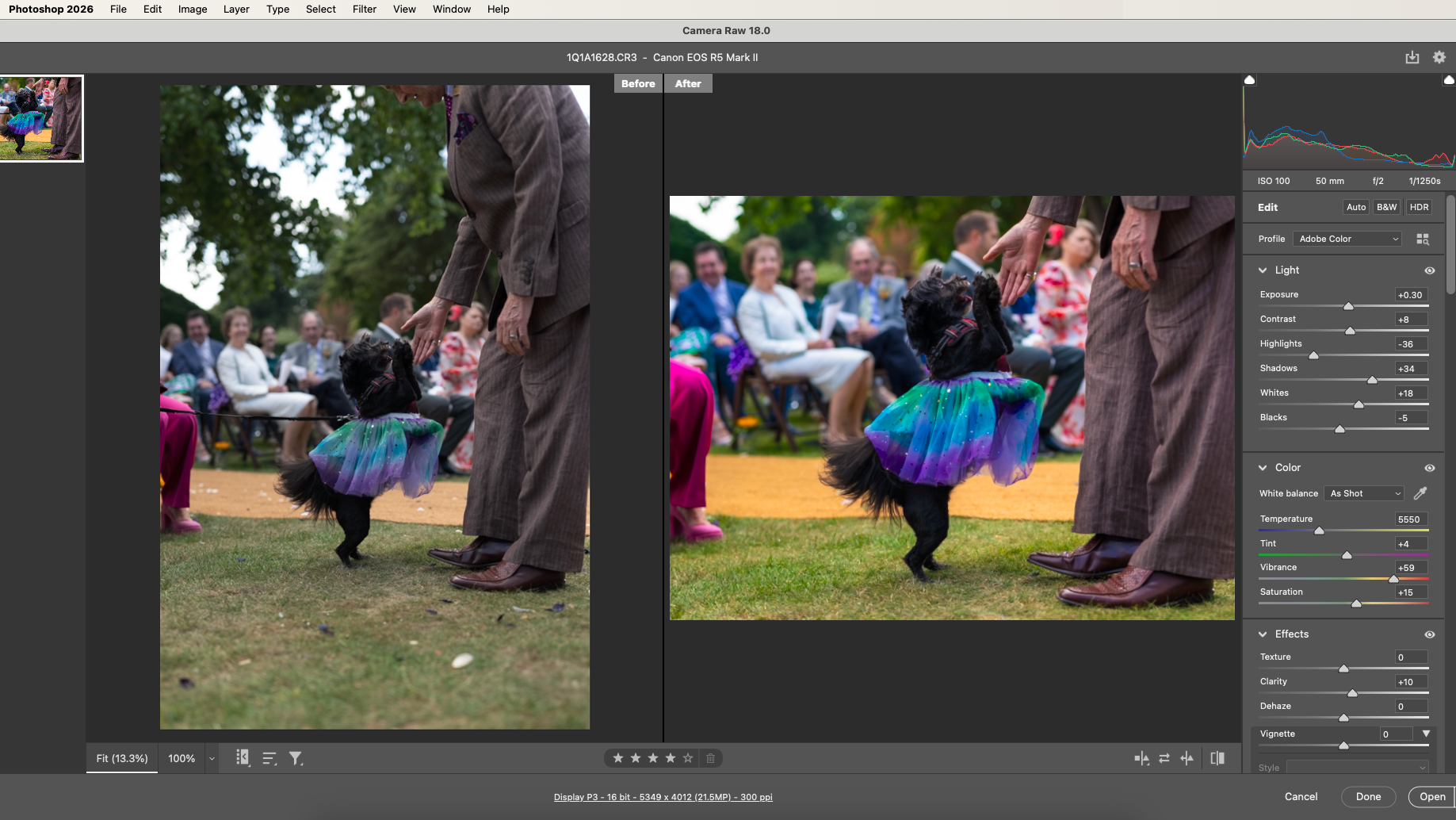
Even if you’re not confident editing yet, I would still suggest shooting both JPEG and RAW for now – further down the road, when you’re more comfortable editing RAW files in programs such as Lightroom Classic CC, you’ll be able to go back and edit these files rather than the smaller JPEGs that don’t contain as much data.
On my Canon EOS R5, for example, the JPEG Fine files average about 8-15MB, whereas the RAW files are around 50-70MB, and this fluctuates a little from image to image.
So the downside with RAWs is that they take up notably more space on your memory cards. The benefits overshadow this issue, however, as their extra data is useful for rescuing blown highlights, revealing data in shadows that you didn’t realize was there, tweaking the white balance and so on.
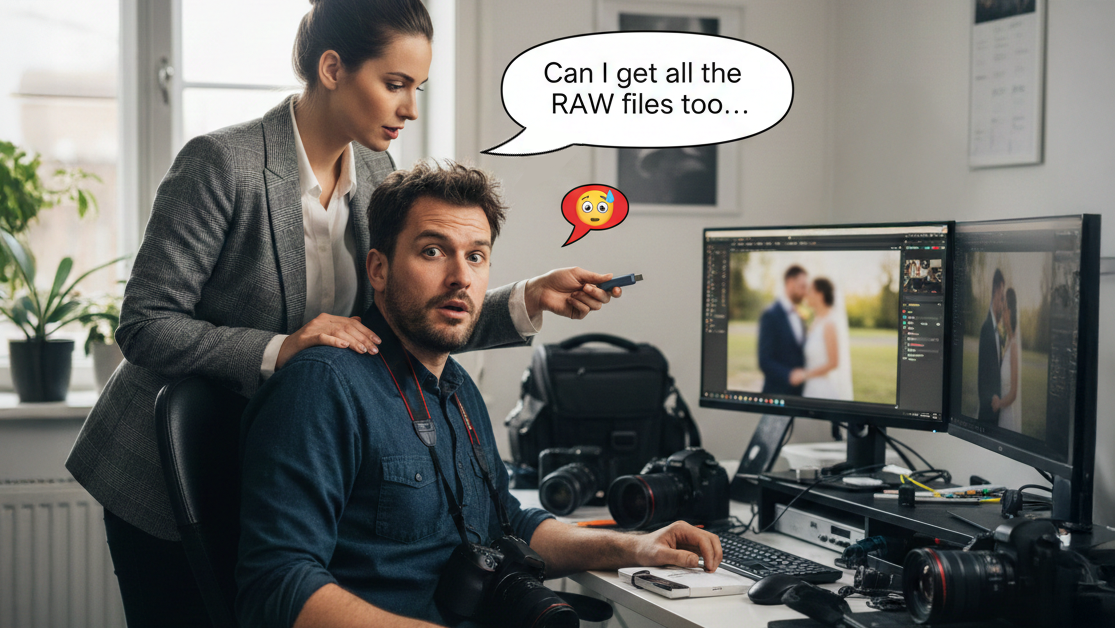
Okay, so now you know what a RAW file is, here’s why I declined to share them with my clients from a recent wedding – and it wasn’t just one single reason.
Firstly, because of their large size, it would be a problem trying to share thousands of large RAW files over the Internet. It’s not too bad when you’re plugging your cards into your computer and transferring to a fast hard drive, but uploading online would take forever – and I don’t know about you, but I don’t have that much cloud storage space to facilitate this either.
I did suggest that the couple could look through the RAW images on my laptop, and pick out any extra images they’d like me to work on, but these would still be provided to them as smaller, edited JPEGs.
The second reason is that when I submit a wedding gallery to a client, they are seeing only the very best images I took on the day – and they’re all edited to meet my high standards. What the client doesn’t see, though, are the misfocused, badly-timed or poorly-exposed images that we all inevitably take from a full day’s shooting.
This is just part and parcel of being an events photographer. But I’d rather not break the illusion and start showing clients the shots that didn’t make the grade, as they could start to call my skills into question – when the reality is that all photographers cherry pick the very best shots, and the rest are destined for the trash or banished to a hard drive never to see the cold light of day.
The final reason I don’t share RAWs is because it impacts my ability to control both the copyright and the output of my images. If I downsize my gallery for online viewing and keep it high enough resolution for printing, then the client is happy and I also keep the full-fat RAW file so there’s no question over who the copyright belongs to.
If I were to share my RAW files, it would be easy for someone else to start tweaking things like the exposure and colors – something that I wouldn’t want to happen, because I wouldn’t want my name to be associated with a bad edit. In fact, many photographers put it in their contract that once the gallery is submitted to the client the photos are not to be edited without their permission.
So there you have it! Those are my key reasons why I would never share RAW files with a client – and why you should keep yours private, too!
You might also like…
Do you shoot weddings? Take a look at the best cameras for wedding photography along with the best lenses for wedding and event photography.