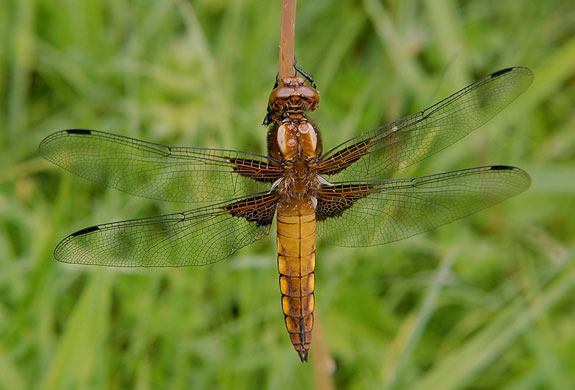
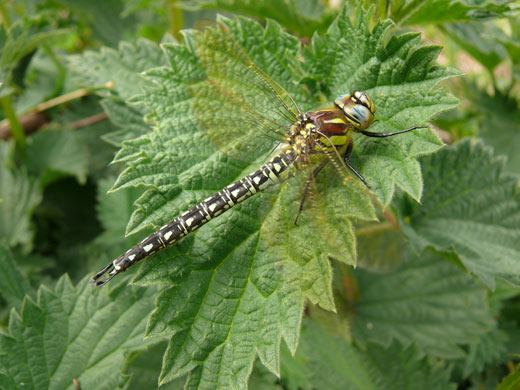
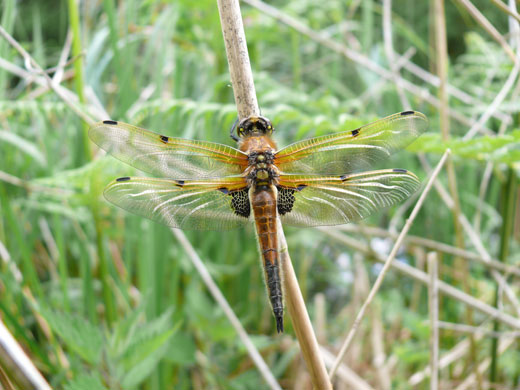
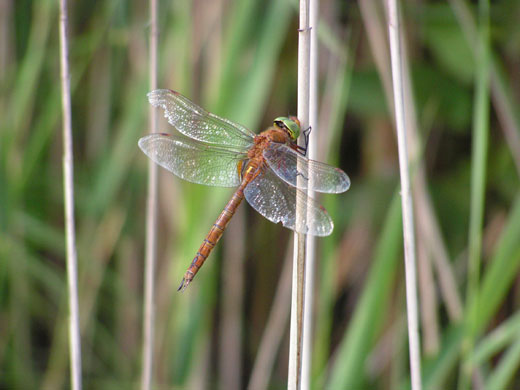
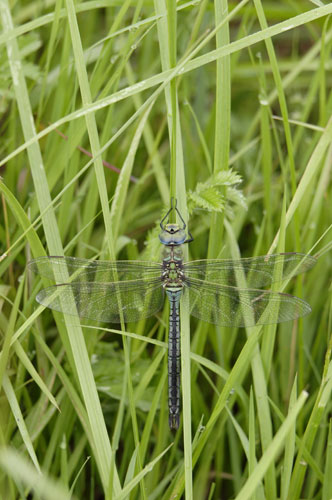
The broad-bodied chaser has an approximate wingspan of 70mm, and is active between May and AugustPhotograph: National TrustThe hairy dragonfly, also known as the hairy hawker lives in ponds, lakes, fens, ditches, and canals rich in vegetationPhotograph: National TrustThe four-spotted chaser's larvae have a two-year developmental cycle which feed primarily on other aquatic insect larvae and tadpolesPhotograph: National Trust
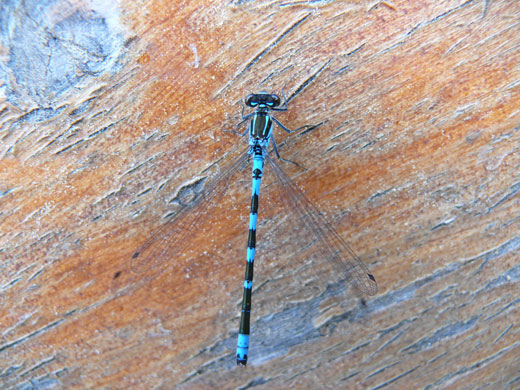
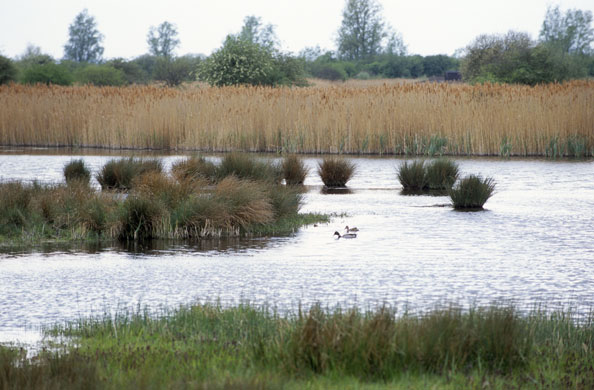
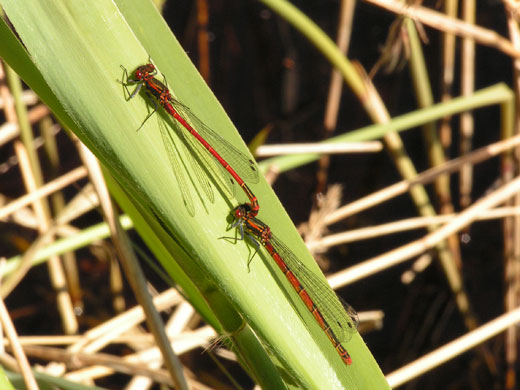
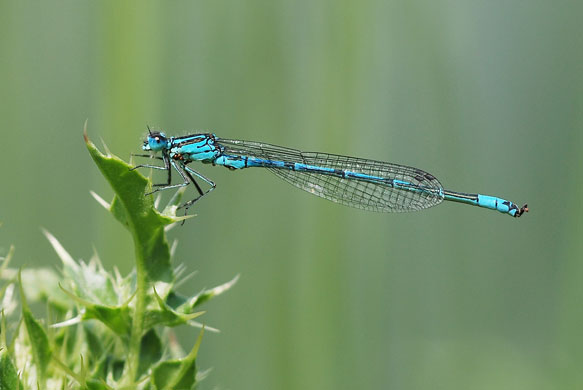
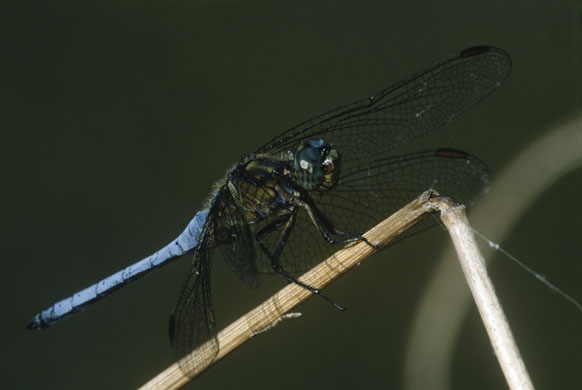
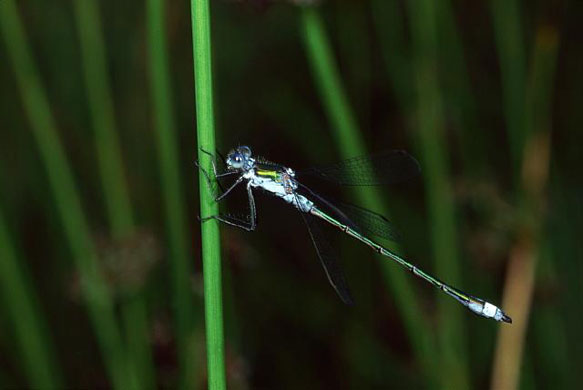
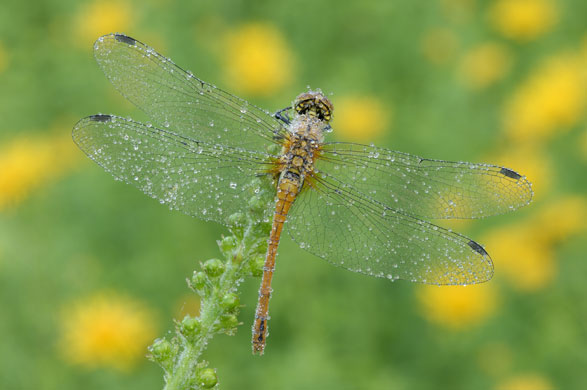
The northern damselfly has an extraordinary blue hue, but is a weak flyer with a very restricted range and is found in only a few small lochans in Scotland and other parts of the UKPhotograph: National TrustWetland habitats such as Wicken Fen are very important for dragonflies, which are in decline nationallyPhotograph: Paul Harris/National TrustA pair of large red damselflies, which inhabit ponds and dykes and occasionally slow-moving riversPhotograph: National TrustThe Norfolk hawker has historically been found in the Cambridgeshire fens although it is basically a Mediterranean speciesPhotograph: National TrustMature azure damselflies are frequently seen mating and laying eggs. They usually stay close to the vegetation around ponds or lakes, and fly from May to SeptemberPhotograph: National TrustThe black-tailed skimmer dragonfly, usually found near open water along the shore, where the patrolling males frequently rest in the sun Photograph: Christian Ricci/Getty ImagesUnlike most other damselflies, the emerald damselfly usually rests with its wings half open at an angle of approximately 45 degreesPhotograph: Alastair Shay/CorbisThe emperor dragonfly is a large and powerful species of European hawker dragonfly averaging 78mm in lengthPhotograph: Michael Hutchinson/Rex FeaturesThe ruddy sympetrum dragonfly has a wingspan of up to 6cm and can be seen between July and NovemberPhotograph: Martin Ruegner/Getty Images
Sign up to read this article
Read news from 100’s of titles, curated specifically for you.