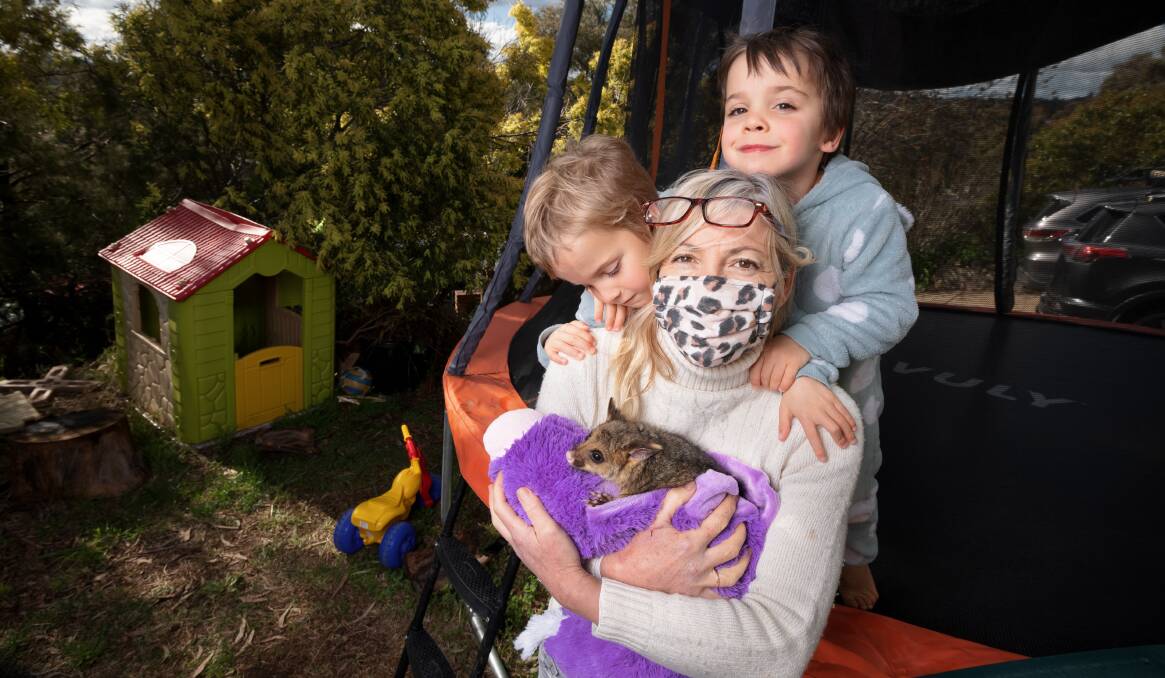
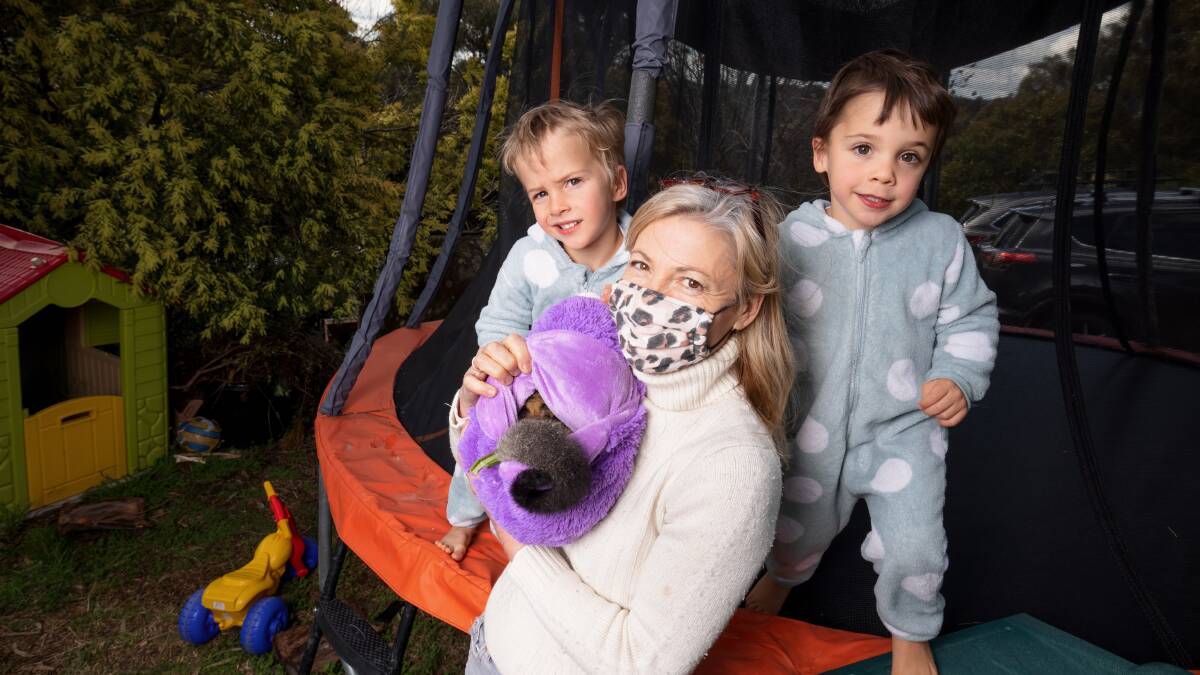
With four-year-old twins and five possums at home, lockdown has been particularly busy for ACT Wildlife volunteer Lisa Kobezda.
"I have to prepare food, I had to clean out cages, I have to go and get native plants for them ... wherever I can find it," she said.
Ms Kobezda and her family just finished a two-week isolation period after her sons and their father visited an exposed pharmacy.
"[The twins are] both completely emotional creatures at the moment,' she laughed.
"So here I am trying to care for possums and homeschool, teach them reading and writing and separate them when they decide to launch on one another over a toy or something or other."
She had sick possums delivered to the house for triage during the 14 days, with the house always open for any sick animals needing help.
ACT Wildlife CEO Lindy Butcher admits that looking after native species in suburban homes is "a bit crazy" for the organisation's approximately 100 volunteers.
"But we all love it," she said.
The ACT government has granted ACT Wildlife $100,000 annually for the next four years.
It is a portion of the ACT government $3.5 million package for local environmental groups.
The wildlife charity will use the money to reduce the administrative workload done by volunteers.
"We had an incredibly good year with the generosity of people after the bushfires and the hailstones that we had last year," she said.
"[Now] we need to be sure that we can keep a good steady income stream to keep doing work we do because the work we do just keeps getting more and more."
The organisation runs a 24-hour hotline, manned by volunteers outside working hours, allowing injured animals including wombats, birds and reptiles to be treated as soon as possible.
"If people call in the middle of the night, there's someone there to answer the phone, which is incredible," Ms Kobezda said.
The advent of spring will mean extra work for volunteers, Ms Butcher said.
"All the bird carers very shortly will be inundated with baby birds that have been brought in," she said.
"Some of them need to be fed every 20 minutes in daylight hours. And so there'll be this madness, but that won't last, as birds are only in care for maybe six weeks or so. The people with possums will have tiny baby possums on nighttime feeds as well.
"The lizard people are waiting for the weather to warm up, as the lizards start to become active."
Ms Butcher said she anticipates more wildlife injuries as Canberra's population grows.
"The animals will have pressure on their nesting sites, their food feeding sites, and we will see more and more of them come into contact with domestic animals, being hit by cars," she said.
"It makes me nervous, but the thing is making sure that we're ready for those things when they happen."
- WildLife ACT is the only organisation in Canberra which rehabilitates and rescues native wildlife.
- Their 24/7 Hotline is 0432 300 033.
- They are also looking for volunteers to care for bats, birds, possums, reptiles and wombats, as well as help with transport and administrative work.