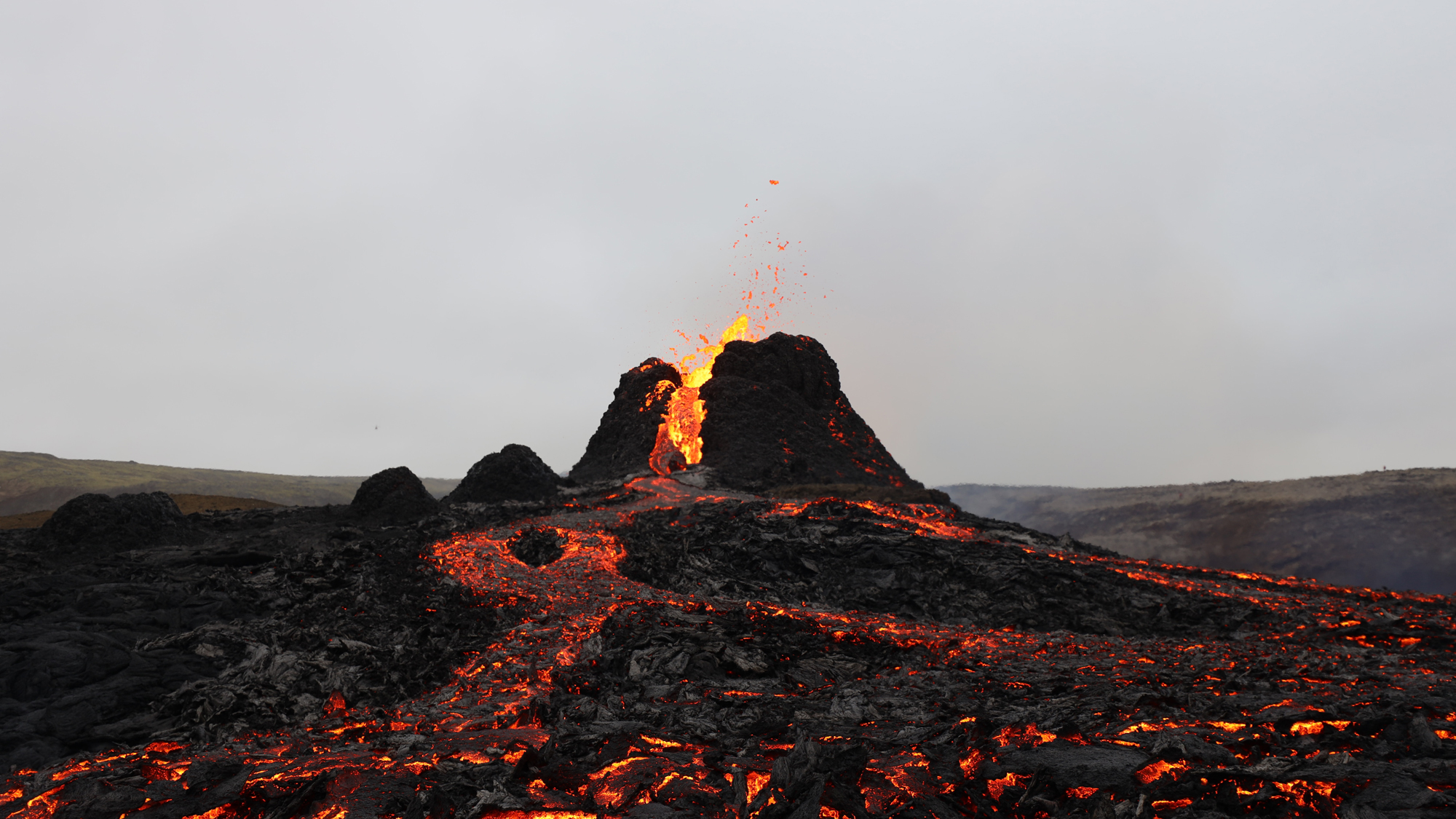
Scientists have developed a low-cost camera that could help predict when a volcano is likely to erupt. When magma is near the surface of a volcano, it emits sulfur dioxide (SO₂) gas, but until recently ultraviolet cameras that could detect changes in SO₂ emissions were incredibly expensive – so very few were used.
Now researchers from the University of Sheffield, England, have developed a much more affordable SO₂ camera that costs around $5,000 (approximately £4,000 / AU$7,500) and could be set up at lots more volcanic sites. Costs have been kept down by 3D-printing as many components as possible, and the camera itself requires around half as much power, so for sites where solar panels are being used a lot less of them are needed.
• These are the best thermal-imaging cameras designed to detect heat radiation
User-friendly software has also been developed to control the camera and process the data acquired, making it more accessible to volcanologists who don't have access to massive budgets but want to be able to gather accurate datasets for gas emissions from specific volcanoes.
"Our instrument uses a sensor not dissimilar to smartphone camera sensors," said Dr Thomas Wilkes, a researcher at the University of Sheffield and lead author of the research. "It is modified to make it sensitive to ultraviolet light, therefore enabling SO₂ detection."
Initial research from the project, which will help get better long-term data about emission rates from volcanoes, has already been published in Frontiers in Research Science – an open-access leading journal that features more than 200,000 top researchers and is the third most cited scientific journal in the world.
Two cameras have been set up by Wilkes and his team. One at Lascar, a stratovolcano in Chile, and the other at Kilauea, a shield volcano on The Big Island, Hawai'i. Until recently, the only volcanoes that were being permanently monitored included Mount St Helens in Washington, Augustine in Alaska and the aforementioned Kilauea, where testing of this new camera has taken place.
Despite the low cost of these cameras making them more accessible, they do still have their limitations in that they work best under optimal weather conditions – namely blue skies and when volcanic plumes move at a 90° angle to the camera. They could, however, still alert researchers to the risk of a serious eruption, giving people time to evacuate an area and save lives.