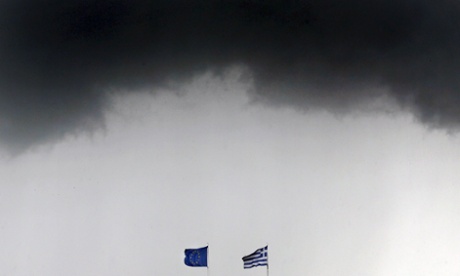
Greece has delayed a debt repayment to the IMF of €300m. The instalment was due on Friday, but instead the country has said that it will bundle all four of this month’s payments into one €1.6bn settlement that it will pay on 30 June.
This doesn’t mean that Greece has defaulted. The IMF’s rules do allow for this type of arrangement. In fact, Greece follows in the footsteps of Zambia, the last country to take a similar route in the mid-1980s.
However, if Greece fails meet the obligation at the end of the month it will then most probably default. And to make matters even more pressing, the country’s current bailout deal expires on the same day as its IMF bill falls due.
Zambia and Greece aren’t alone in having overdue financial obligations with the IMF.
Here’s a history of protracted arrears (defined as overdue financial obligations for six months or more) with the fund:
Cuba (1959-64)
Egypt (1966-68)
Cambodia (1975-92), 36.9m SDR (special drawing rights)
Nicaragua (1983-85), 14.4m
Guyana (1983-90), 107.7m
Chad (1984-94), 4.1m
Vietnam (1984-93), 100.2m
Sierra Leone (1984-86), 25.1m
Sudan (1984-present), 979.8
Liberia (1984-2008), 543m
Tanzania (1985-86), 22.9m
Zambia (1985-86), 115.1m
The Gambia (1985-86), 10.6m
Peru (1985-93), 621m
Jamaica (1986-87), 50m
Zambia (1986-95), 830.2m
Sierra Leone (1987-94), 85.5m
Somalia (1987-present), 234.6m
Honduras (1987-88), 3.3m
Panama (1987-92), 180.9
Democratic Republic of the Congo (1988-89), 115.4m
Haiti (1988-89), 9.2m
Honduras (1988-90), 27.5m
Iraq (1990-2004), 55.3m
Dominican Republic (1990-91), 24.3m
Democratic Republic of the Congo (1990-2002), 403.6m
Haiti (1991-94), 24.8m
Bosnia and Herzegovina (1992-95), 25.1m
Yugoslavia (1992-2000), 101.1m
Central African Republic (1994-94), 1.6m
Afghanistan (1995-2003), 8.1m
Zimbabwe (2001-present), 81.1m
What is evident browsing through this list, from Cuba and Cambodia to Sudan and Yugoslavia, is that many of the countries that are on it were characterised primarily by domestic or regional violence, if not by outright war, during the years in question.
The same is true of the longer history and list of sovereign defaults. Many nations that went through extreme financial hardship (again, with notable exceptions such as the recent case of Argentina), and eventually were unable to meet their obligations, often did so not due to economic and political mismanagement alone, but following periods of conflict, civil war, revolutions, world wars or after the collapse of old empires.
The fact that in 2015 a country in the European Union - one of the most prosperous and peaceful areas in the world - is potentially weeks away from a default is an extraordinary outlier.