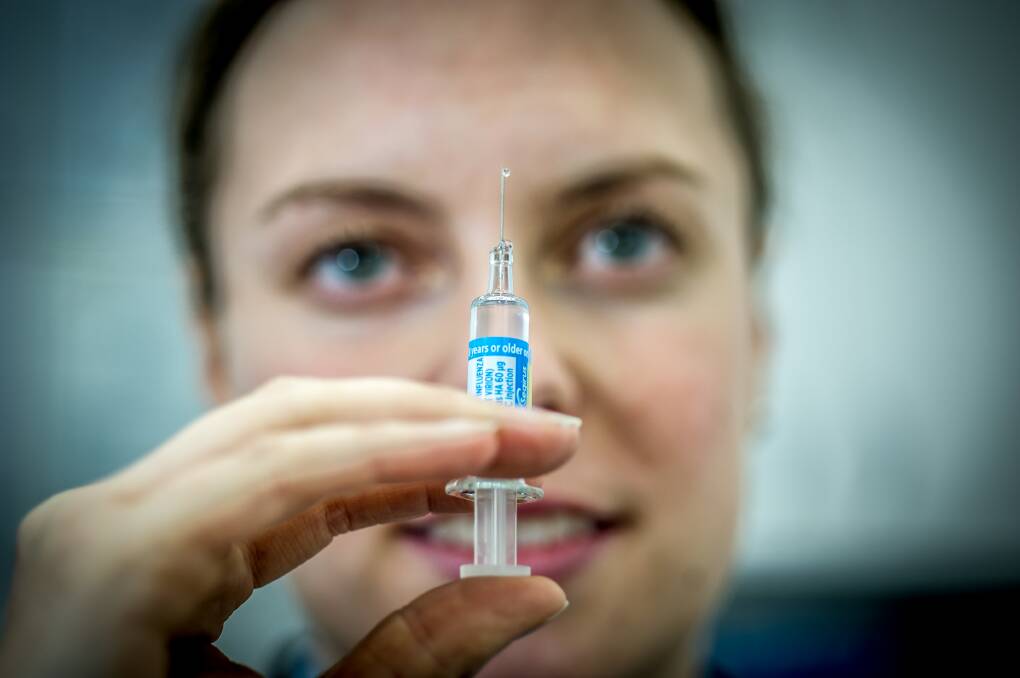
Fewer than two thirds of Australians say they will definitively get a COVID-19 vaccine once it is available, new analysis from the Australian National University shows.
Researchers say the findings are sobering and suggest proactive measures will need to be taken to make sure an appropriate portion of the population is vaccinated.
The analysis examined COVID-19 vaccine hesitancy and resistance and builds on a survey of 3000 adult Australians.
It found women, those living in disadvantaged areas, those who had more populist views and higher levels of religiosity were more likely to be hesitant or resistant to a vaccine.
Meanwhile those on higher incomes, who social distanced, downloaded the COVID-Safe app, who were supportive of the government's management of the crisis, or were more supportive of migration were more likely to get the vaccination.
"Overall, there are significant levels of vaccine hesitancy or resistance across Australian society," study co-author Associate Professor Ben Edwards said.
The analysis showed 6 per cent of Australians definitely wouldn't, and a further 7 per cent probably wouldn't, get the vaccine.
Some 28.7 per cent, almost three-in-10 Australians, were likely to get a vaccine but were still not certain.
The remaining 59 per cent said they would definitely get it.
Study co-author Professor Nicholas Biddle said, "To open up our society, economy and community fully again, we need to develop a vaccine and get it out to the population as quickly as possible.
"Our findings show vaccine hesitancy, which accounts for a significant proportion of the population, may be addressed by public health messaging.
"But for a significant minority of the population with strongly held beliefs, alternative policy measures may well be needed to achieve sufficient vaccination coverage to end the pandemic."
It comes as the developers of two US-developed vaccines have claimed their products have been found to be effective in preventing infection.
Biotech Moderna says its vaccine was found to be 94.5 per cent effective in stage three trials, while Pfizer says its is 90 per cent effective.
The analysis forms part of the ANU Centre for Social Research and Methods COVID-19 monitoring program.
It's the first representative longitudinal survey of more than 2000 respondents that examines the demographic, political and social attitudes to a COVID vaccine.
Funding for the research was provided by the Australian Institute for Health and Welfare.