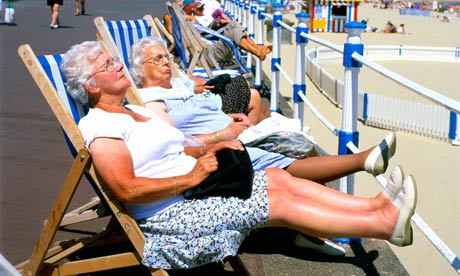
The extension of life expectancy for older people has been one of the great achievements of recent decades. Since 1981, life expectancy at age 65 has improved by 34% for men and 18.5% for women in the UK. How we improve the quality of these additional years, especially when a significant proportion of them are likely to be spent with a disability or long-term health condition, looks set to be one of the key challenges of the next few decades.
Politicians are only too aware of the stakes. Older people are the fastest growing group in the population: they also vote. Yet, perhaps unsurprisingly in this economic climate, the focus to date has been on questions of funding and affordability. The danger is that older people, especially those who need high levels of care, are portrayed as a demographic "time bomb", a problem to be solved. This us-and-them mentality means that the voice of the real experts – older people themselves – is rarely heard.
The group of older people with a high need of support is changing as well as growing and it is increasingly clear that one size will not fit all when it comes to meeting housing and care needs. There are, for example, 163,000 new diagnoses of dementia a year. Communities of older people are emerging with very specific needs: those who have HIV, learning disabilities or those who are transgender.
The baby boomers now approaching retirement are more diverse than their parents. This generation contains more of an ethnic mix, and greater numbers of financially independent women and wealthy (or at least asset-rich) middle-class people. It also includes disabled people who have lived independently in the community and same-sex couples joined by civil partnership.
One of the most striking changes has been the rise in the proportion of older people living alone. Solo living does not inevitably bring isolation and loneliness (just as living in a care home or a sheltered housing complex will not necessarily rule them out).
Wherever you choose to live, it's important to be part of a community which you can contribute to as well as receive support from. Newer models such as extra care housing, retirement villages, co-housing and house sharing offer innovative ways of creating such communities around older people.
For many older people, improving quality of life does not require huge innovations. It's all too often a question of meeting basic human rights and of listening to the person, not just performing a series of care tasks on them. When asked what she would like more than anything else in the world, one older woman living in a residential home said that she would like to "go out for 10 minutes a day or every other day to feel the fresh air on my face, and eat a nice roast potato".
Today is UK Older People's Day, on which we are called to celebrate the contributions older people make to our society and to the economy. If we are to empower older people to enjoy better lives, we need to start by viewing them as full and equal citizens with rights as well as needs.