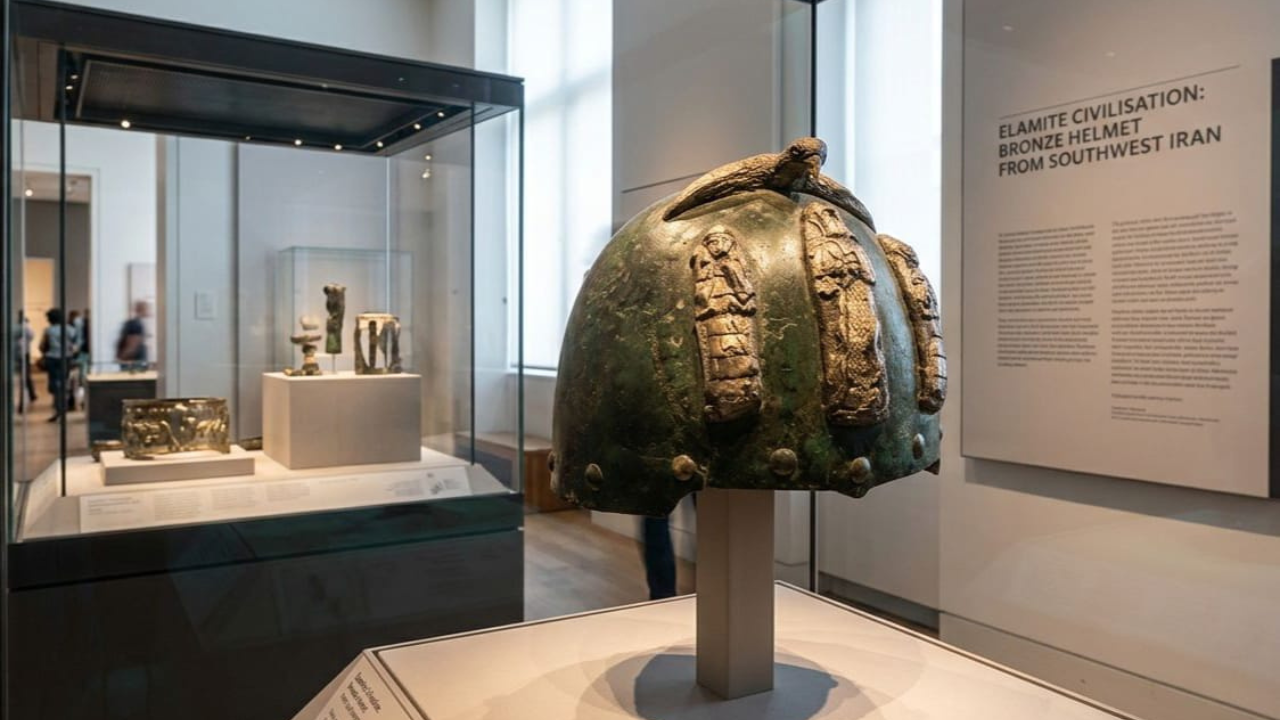
Go back 3,500 years to the heart of ancient Iran, as a powerful Elamite warrior king prepares for a battle. His wonderful piece of equipment is not just functional, but a masterpiece. A ‘bronze helmet decorated with gold-plated deities and covered by a fierce, protective raptor.' This extraordinary object, now located at the Metropolitan Museum of Art in New York, provides a rare insight into the sophisticated Elamite civilization. This culture flourished centuries before the Persian Empire came to be, displaying outstanding skills and deep faith. The armour helmet, with its exquisite detail and powerful symbolism, reveals the high status and religious affiliations of the warrior who wore it, and also offers a link to a rich and royal past.
Get breaking news anytime, anywhere. Download the TOI app now!
Who were the Elamites and why were they feared by Mesopotamia
The Elamites were the closest neighbours to the famous Mesopotamians, situated in the present day ‘Khuzistan’ and ‘Fars’ provinces of Iran. Their capital, ‘Susa,’ was one of the most important political and cultural hubs of the ancient world. The Elamites maintained a unique artistic style characterised by decorative surface patterns and life-like animal forms.
The helmet dates to the 14th century BCE, during the Middle Elamite period. At this time Elam was a major political power and would regularly invade Mesopotamia taking statues of foreign kings and gods as trophies. The quality of this armour suggests that it belonged to someone of high rank and power, most probably a king, who wanted to demonstrate his dominance on the battlefield.
What makes this helmet a masterpiece
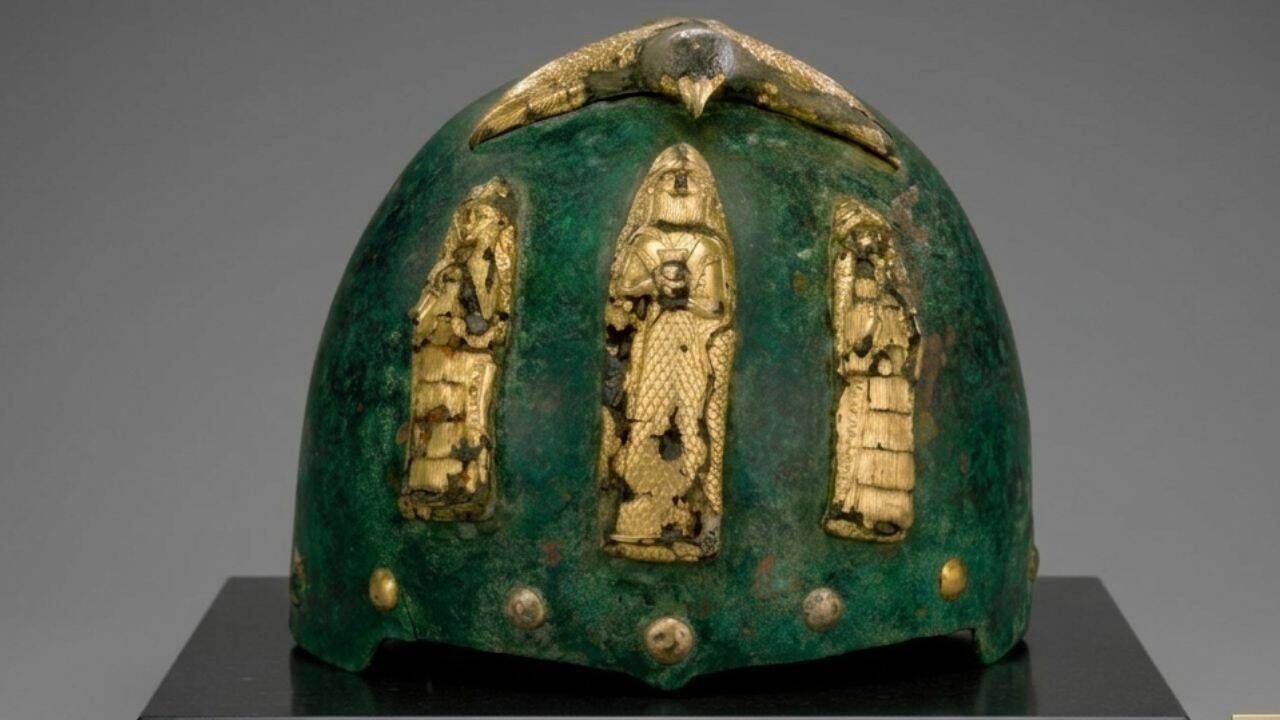
You might expect a 3,500-year-old helmet to be a simple piece of metal, but this object is incredibly complex. Standing at roughly 16.5 cm high, it is more or less hemispherical (bowl like shape), with the front edge cleverly cut away to clear the eyebrows and pointed down slightly at the nose for better protection. What truly sets it apart, is the technique used to decorate it. The four figures on the front were not simply cast in bronze. Instead, each figure was sculpted from bitumen (a natural tar-like substance). These were then covered with a layer of silver and gold foil. Modern X-rays have revealed that a layer of silver is covered by a layer of gold. This method of covering bitumen with precious metal sheets is a hallmark of Elamite art. These figures were then attached to the bronze plates, which were then fixed directly onto the helmet.
Who are the ‘gold-plated’ gods on the helmet
The front of the helmet features a ‘group of Gods’ intended to keep away the evil and ensure victory. In the central position is a bearded male deity. He is identified as a mountain-water god, by looking closely at the mountain design in the background and the ‘streams of water’ from the vessel he holds. This imagery of flowing water was a powerful symbol of life and wisdom. Present on both sides of this central god are two ‘identical goddesses.’ They stand with the same mountain-scale background, holding their hands open in a gesture of respect. Apparently, the male god is the boss because his crown contains multiple pairs of horns, while the goddesses have only one pair. In ancient middle-Eastern art, a horned helmet was the universal symbol of divinity.
Why is a ‘giant raptor’ present on the helmet
The most dramatic feature of the helmet is the giant raptor with widespread wings covering over the three gods. But what does it represent?
Scholars suggest it could serve a few different purposes. It might be a combination of the power of skies and the power of water and mountain gods below. Alternatively, it could symbolise the ‘bird of prey’ on the battlefield, flying over the scene and waiting for the enemies of the king to fall. Whether it was meant to be inspiring or terrifying, its presence added to the helmet's value that in the ancient world, certain symbols could provide spiritual protection from harm.
Was this helmet meant for actual combat in the battlefield
It is possible that such a beautiful object was purely for show, perhaps only for royal ceremonies. However, experts believe it was intended for practical use. The bronze is strongly made, and the helmet even features a small metal tube at the back. It was designed to hold a feather, so the king could be easily spotted by his troops in the chaos of battle. This suggests that the design of the helmet was part of a long-standing tradition of Elamite military equipment.
What can we learn from this 3,500-year-old relic
The helmet is more than just a piece of armour; it is evidence of the sophistication of Elamite metal workers and the deep religious belief of their rulers. It shows a culture absorbing the traditions of Mesopotamia while creating something original of its own.
When you look at the raptor's wings or the gold-plated gods, you are actually looking at the hopes and fears of a king who lived 3,500 years ago. He didn't just rely on a metal helmet to fight the battle, he brought the combined power of the mountains, the waters, and the skies with him. It remains one of the most stunning examples of ‘how ancient people blended the challenges of war with the faith in the divine.’