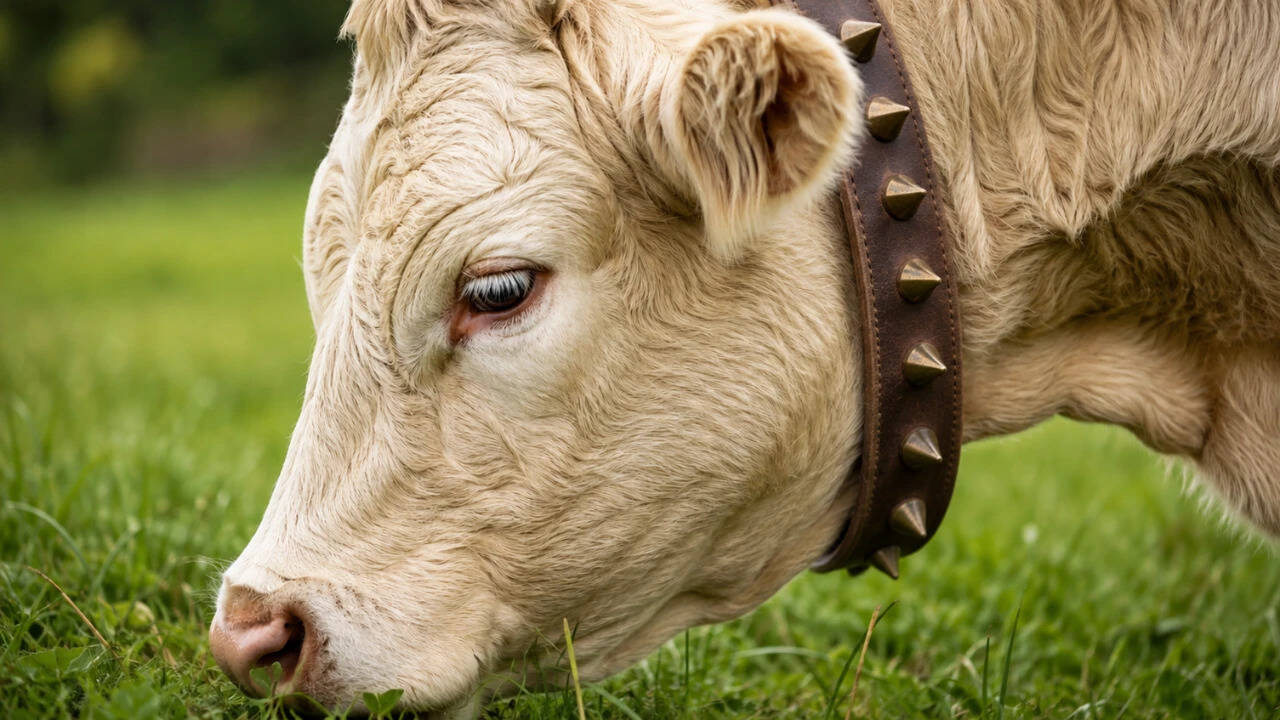
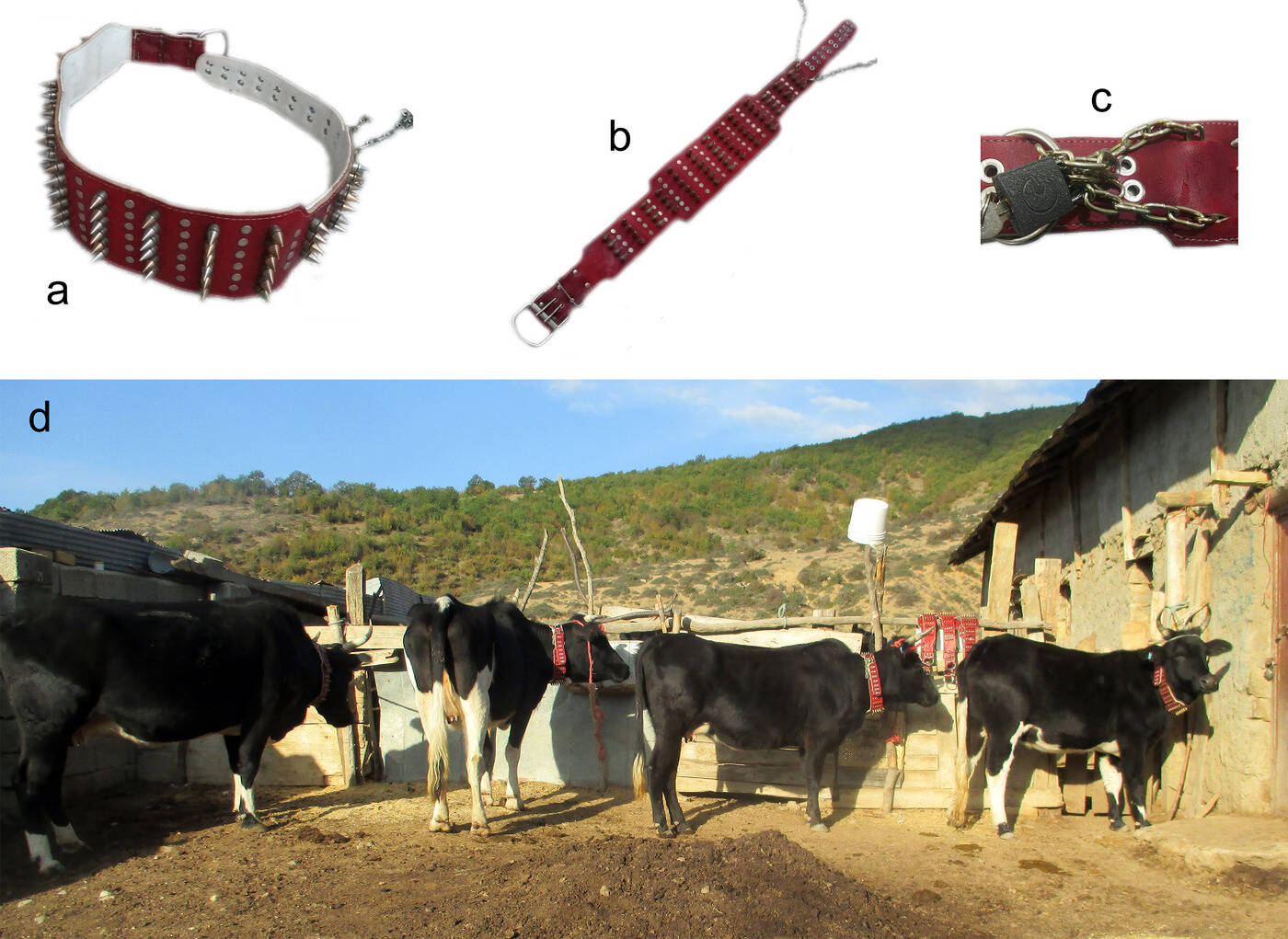
Ranchers in the US know the struggle. Coyotes and mountain lions pick off cattle. Farmers want to protect their herds without hurting the predators too. A team of researchers in northern Iran faced the same problem, but with leopards. Their fix was simple: a leather collar covered in metal studs. According to a study published in Ecological Solutions and Evidence by Igor Khorozyan and his team, researchers put these collars on 202 cattle. They tracked the herd for 14 months. Not one collared cow was killed by a leopard.
Get breaking news anytime, anywhere. Download the TOI app now!
How the experiment worked
The study took place in a forest in Mazandaran Province, northern Iran. It sits near three protected areas: Kiasar National Park, Paband National Park, and the Lafoor No-Hunting Area. This region is home to the Persian leopard. It is an endangered subspecies. The researchers worked with 27 cattle owners across eight villages. Together, these owners grazed 460 animals in the forest.
The team split the herd into two groups. They put spiked collars on 202 cattle. They did not collar 258 cattle. Both groups grazed close together in the same forest. They were exposed to the same leopards. This setup works like a medical drug trial. That allowed researchers to isolate the collar’s effect rather than chance.
The results were hard to believe
Over fourteen months, not one collared cow was killed by a leopard. Nine of the 258 uncollared cattle weren’t so lucky. Based on these numbers, the study reports a 100 per cent reduction in leopard kills of collared cattle. Moreover, the researchers identified a pattern. Most attacks took place during the summer and fall. There was more vegetation, and with longer daylight hours, cattle wandered deeper into leopard habitat. There were nine losses from six owners in four villages. This suggests leopards were active only in certain parts of the forest.
Why a few metal studs stop a big cat
A leopard usually kills large prey by biting the throat. The metal studs of the collar are right there. A leopard trying to bite the neck of a collared cow is more likely to meet hard, sharp metal than soft skin. That makes the attack too risky to finish. The idea was discussed by the study’s author, Igor Khorozyan, in an interview with The Applied Ecologist. His team wanted a solution that was simple, cheap and acceptable to local herders.
The idea is already spreading
Since then, this idea has spread beyond Iran. Conservation biologist Sofia Nanni and colleagues used a similar idea to study a different predator: pumas in Argentina’s Dry Chaco. Local craftsmen made spiked collars for sheep and goats. The researchers observed the animals over a period of two years. A 2025 study on this project, published in the journal Biological Conservation , found something striking. Uncollared animals were killed at 10 times the rate of collared animals. Herders in the area also grew less angry at pumas once losses dropped. That shift in attitude may be as important as the collars’ direct effect.

What this means for the US
Ranchers in the American West have to deal with wolves, coyotes and mountain lions. Non-lethal tools like this are becoming a bigger part of the conversation. A cheap, low-tech collar is appealing. It doesn't need guard dogs or GPS trackers or fencing crews. All it takes is a willing owner, metal studs and leather. With fewer cattle deaths, there are also fewer reasons for herders to retaliate, and that’s a good thing for a threatened animal like the Persian leopard.
There is also a simple lesson for anyone concerned with wildlife. Sometimes big, expensive repairs just aren’t the answer. Sometimes the best solution is a simple tool a local farmer can make from readily available materials.
None of this means collars fix everything. The Iranian trial was limited to one region for approximately one year. Leopard behaviour can be influenced by habitat and prey. The researchers see this test as a first-of-its-kind test, not the final word. Still, for a problem that often pits farmers against wildlife, a low-cost collar that seems to work is rare good news for both sides.