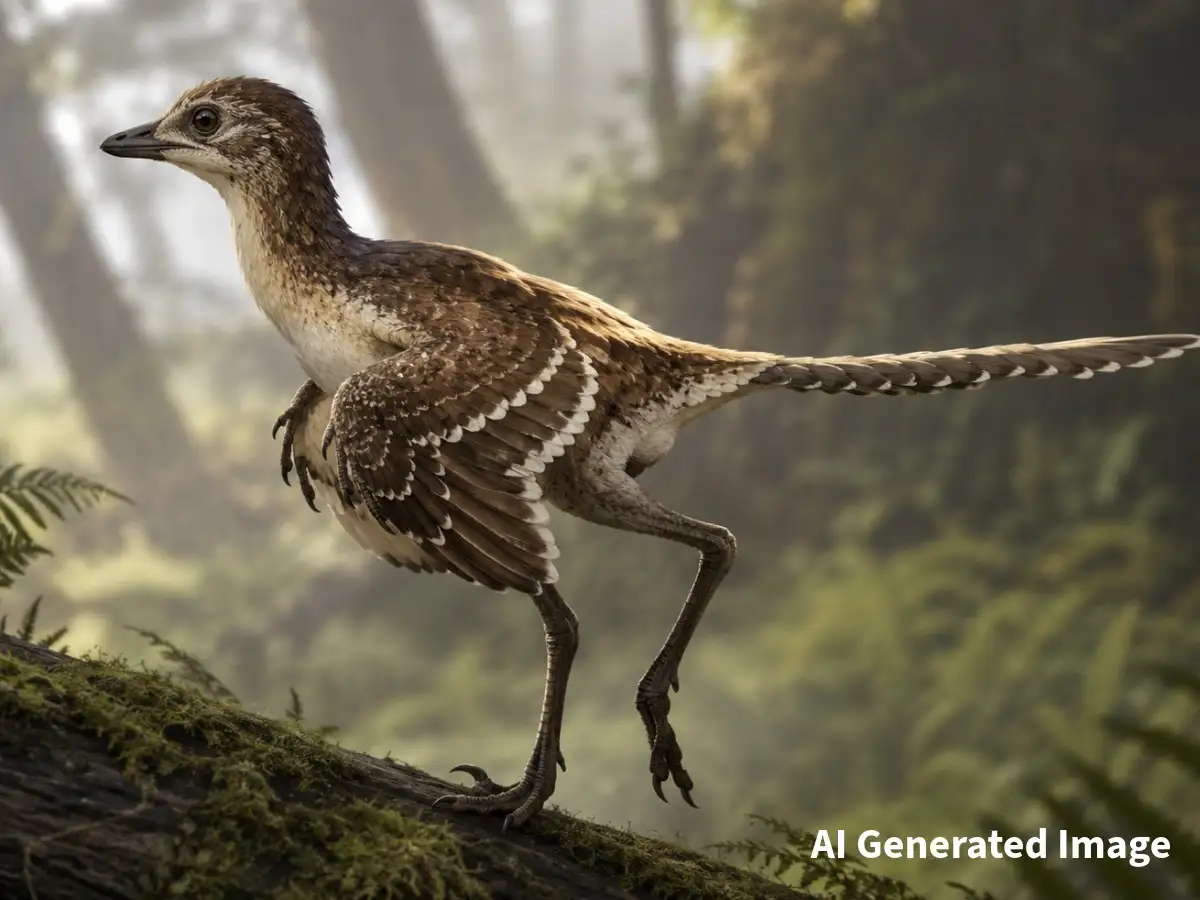
How did the long bony tail of a dinosaur become the short, compact tail of a modern bird? It is one of the more stubborn open questions in palaeontology, partly because fossils showing the in-between stages have been almost impossible to find. A new discovery from China may have just changed that.
Researchers have described a previously unknown bird species from the Late Jurassic period, named Zhengheornis buyu, whose fossil was recovered from Fujian Province in southeastern China. The findings were published in the journal Science Advances on 1 July 2026.
The specimen is estimated to be around 148 million years old.
What makes this fossil different
What sets Zhengheornis buyu apart from other ancient birds is its tail. The fossil preserves 15 short caudal vertebrae but no pygostyle, the fused bone structure found at the base of a modern bird's tail that anchors its tail feathers and supports flight.