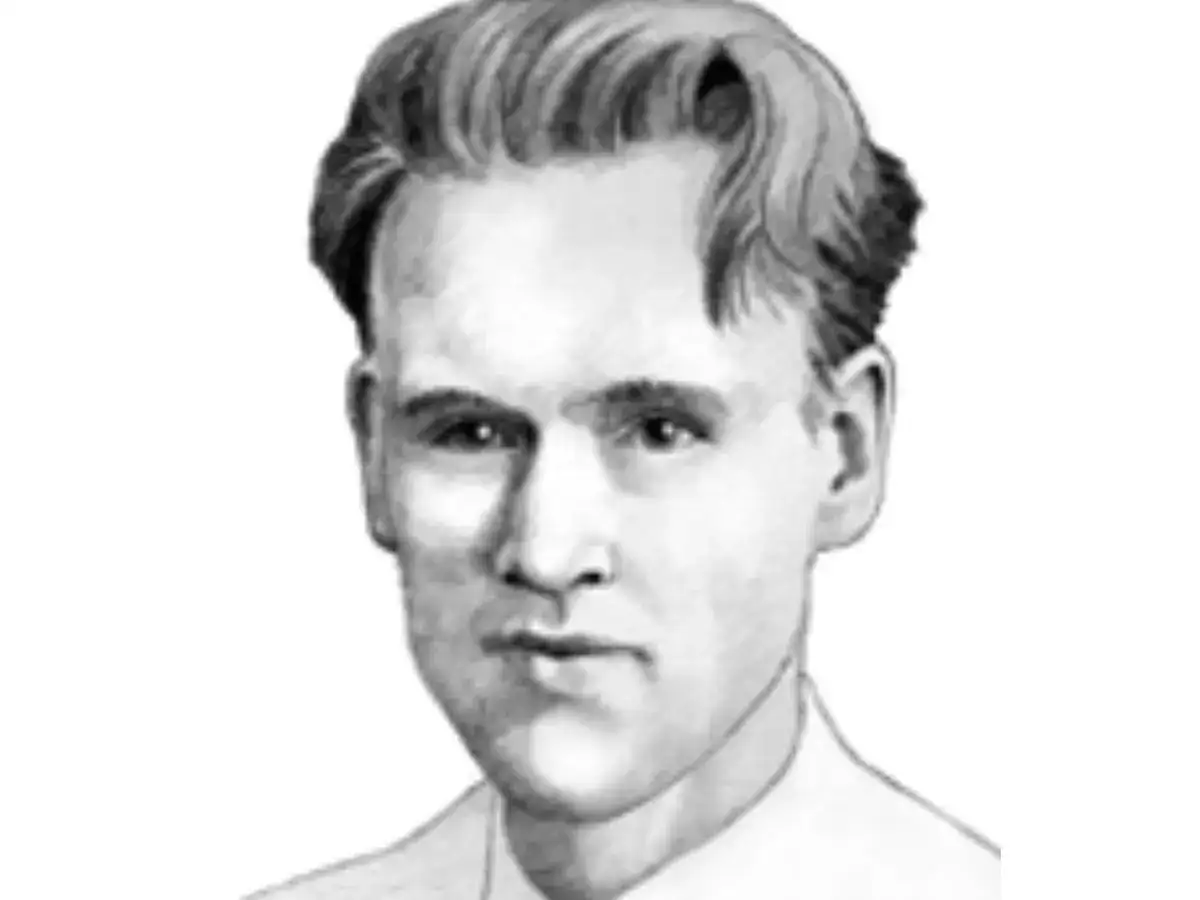
At the age of 14, Philo Farnsworth came up with an idea that no one expected would later be used in the formation of television technology. He had grown up in Idaho, where his days were filled with agricultural chores and studying about machines. According to the U.S. Census Bureau, while observing a plowed field, he formed an imagination of sending images using electronic technology.
That simple visualization stayed with him for many years and later contributed to the design of all-electronic television systems that changed the world of entertainment and communication. It is believed that Farnsworth's case is unique compared to others, as there are many documents, school sketches, patents, and working models that attest to his story. His idea was neither conceived at an institute nor did any professional help play a significant role. Instead, it started with a teenager who was drawing things in his sketchbook.
The sketch from a farm that made a difference
According to the U.S. Census Bureau, Farnsworth came up with the idea of designing electronic television when he was still in high school. He drew some complex designs in an attempt to visualize electronic image transmission. At the time, most television experiments were done mechanically, using revolving discs and motion mechanics. Farnsworth had a vision that there should be a different way. He proposed that an image should be captured and transmitted electronically through the use of electrons.
As explained by the Lemelson-MIT Program, the revolutionary aspect of Farnsworth's idea lied in developing the first entirely electronic system for the television. The education resource published by the Lemelson-MIT program regarding Farnsworth's achievement claimed that aspiration is often inspired when someone rethinks a common problem from a new perspective.
The story about his inspiration from the pattern of lines in plowed field became iconic because it illustrates the power of observation and imagination. According to the legend, Farnsworth came up with a way to scan images line-by-line by seeing the perfectly straight rows created by plows.
Turning a young man's inspiration into technology
Inspiration was just the first step, though. Many more steps would follow before electronic television became a reality. According to the United States Census Bureau, Farnsworth applied for the first patent of his television invention on January 7, 1927, thereby making the idea a real engineering project.
As noted in Lehigh University Libraries, Farnsworth later created an early television prototype known as the "image dissector," which turned out to be one of the first operating all-electronic TV devices ever invented. As researchers explain, it was critical in establishing the possibility of an electronic TV device working independent of mechanical devices.
IEEE, which studies the history of the development of broadcasting innovations, states in its research that the transition from mechanical to electronic systems was crucial for the future development of television. It seems as if Farnsworth's development strategy resembles those used in other sciences and technologies. He had an idea, which, however, needed to be tested repeatedly and improved gradually.