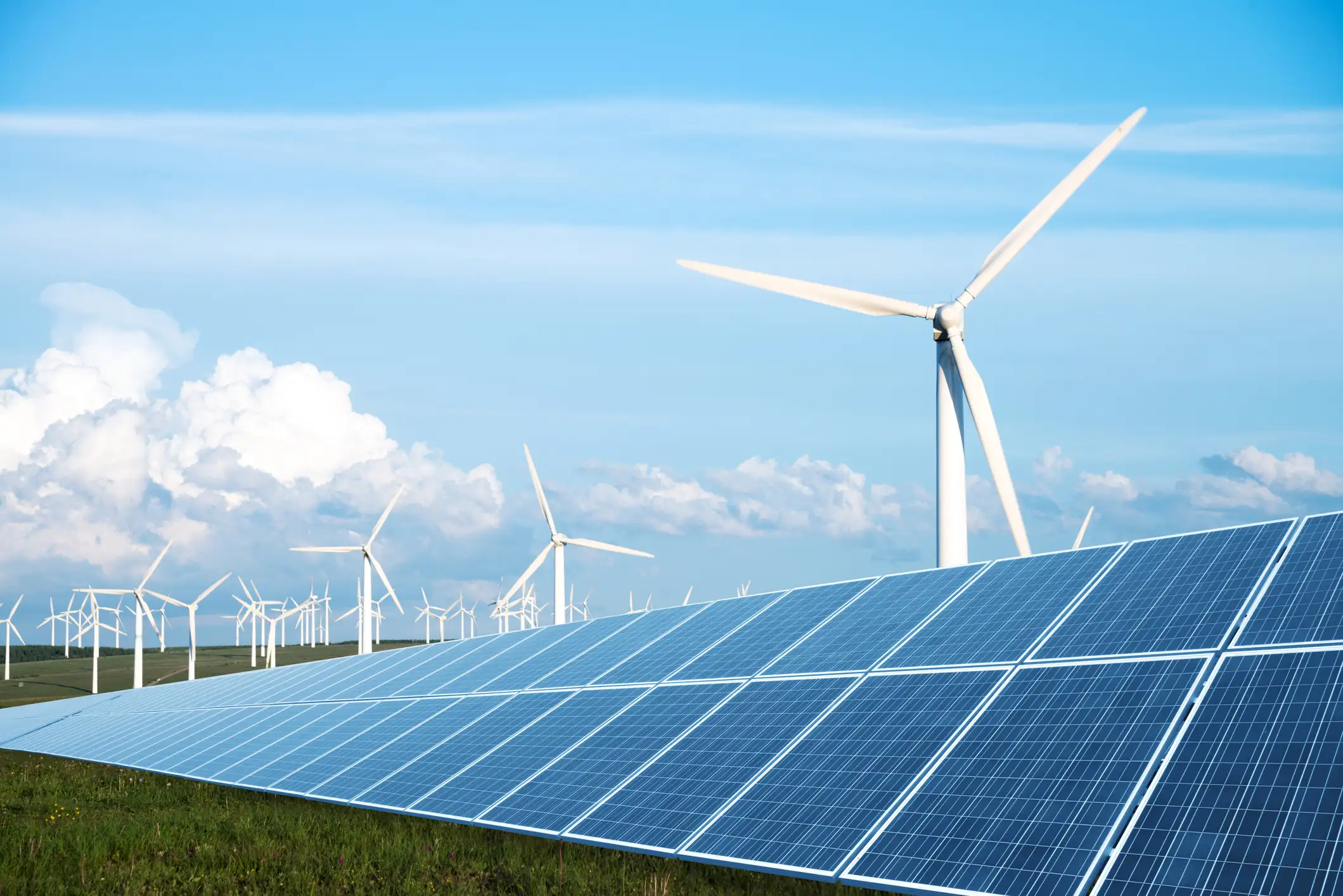
An old knock on renewable energy and other planet-friendly endeavors is that they can’t stand on their own without financial props from the government. Ironically, it took the second presidency of Donald Trump, in which those supports have turned to mule kicks, to kill this trope once and for all. Not only can the green economy sustain itself, but it trounces many other sectors.
A recent report from the London Stock Exchange Group Plc (LSEG) found that “green economy” companies, or those that derive a significant portion of their revenue from stuff like clean energy, efficiency and water management, now have a total stock market value of $10 trillion. If this were a standalone sector, it would be bigger than healthcare and third in the world only to technology and industrials.
Since 2008, valuations for these companies have grown by 18% a year, compared with 12% for the broader market, the report found. Their stocks have outperformed global equities by 133%. A representative sample of these companies, the FTSE Environmental Opportunities All Share Index, topped the FTSE Global All-Cap Index by 12% last year.
In fact, this stealth sector just had one of its best years on record despite many of the world’s governments and the corporate sector abandoning their pre-Trump pledges to zero out carbon emissions to stave off the worst of global heating. Green revenues grew 5.3% last year, the fastest since 2022, the year of President Joe Biden’s Inflation Reduction Act (IRA).
Evidence keeps mounting that the green economy has entered a new phase, one where its rapidly improving economics give it lasting immunity from fickle political sentiments. Even as the dreams of the 2015 Paris Agreement, net zero, the IRA and more have crumbled, the technology with the power to make some of those dreams come true has only gained momentum.
“What the LSEG data shows us is that the green economy’s resilience is no longer dependent on politics,” Matthew Roling, assistant professor and founding executive director of the Abrams Climate Academy at the Kellogg School of Management at Northwestern University, said in a statement. “Energy security, grid reliability and supply chain security are now the primary drivers. Those are arguments that resonate in boardrooms. That’s a materially more durable foundation than Paris Agreement consensus ever was.”