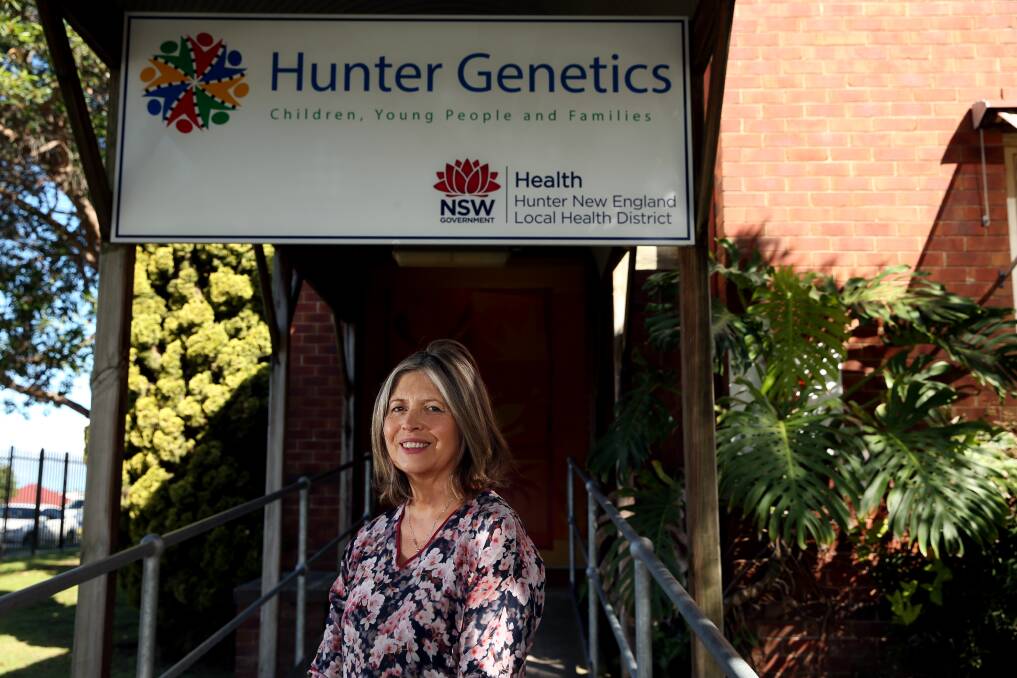
A HUNTER clinical geneticist using artificial intelligence to learn more about rare diseases has been awarded a $1.6 million grant from the Medical Research Future Fund.
Dr Tracy Dudding-Byth said the grant would fund a new study that uses artificial intelligence to learn more about "neurofibromatosis type 1", which affects about 1 in 3000 people, and causes tumours within nerve tissue.
One of the most common features of the condition is "cutaneous neurofibroma" - tumours on the nerves which are visible under the skin.
Adult patients report potential cosmetic disfigurement due to these skin tumours as the greatest burden of living with the condition.
Dr Dudding-Byth plans to repurpose the technology that earned her a spot as a finalist in Research Australia's Health and Medical Research Awards to help her recruit participates for her new study internationally.
She has been using facial recognition technology to investigate and help diagnose children and adults with "syndromic" intellectual disability. Her FaceMatch project is a "first-of-its-kind" international platform that uses facial recognition technology to learn more about different causes of intellectual disability, as about 50 per cent of children with moderate to severe intellectual disability have unique facial features that can provide a clue to diagnosis.
Using the same technology, Dr Dudding-Byth hopes to assess and recruit study participants from around the globe.
"The site will allow international patients to consent online and upload images of their skin and information," she said. "We will use a computer vision-based machine learning solution to quantitatively assess the severity of the [tumours] from photographs, and also be collecting DNA to learn more about genetic factors predicting the severity of the disease."