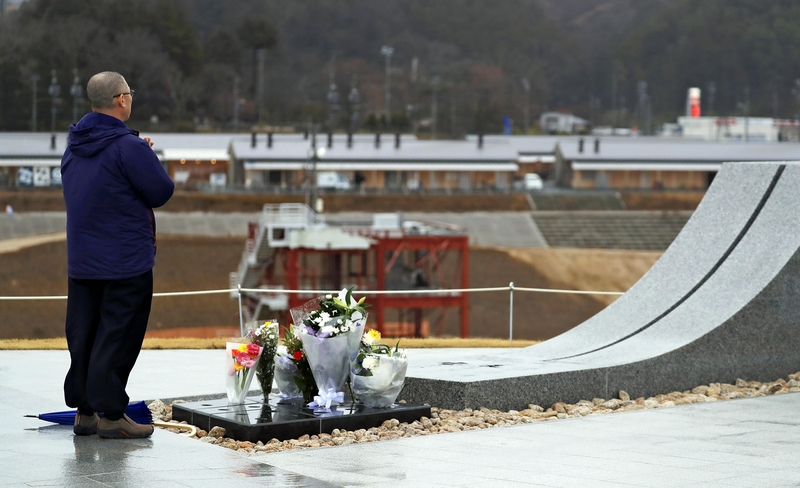
Wednesday marked nine years since the Great East Japan Earthquake.
While homes have been rebuilt in Iwate, Miyagi and Fukushima prefectures, prolonged reconstruction projects have caused serious population outflows, leaving many lots vacant in the renewed towns.
In Fukushima Prefecture, which experienced the disaster at Tokyo Electric Power Co. Holdings Inc.'s Fukushima No. 1 nuclear power plant, there is little sign of residents returning to areas where evacuation orders were slow to be lifted.
The government's "reconstruction and revitalization period" is set to end one year from now. This will be the 10th year for residents to be involved in figuring out what is best for their communities.
Mass relocations to higher ground and inland areas are expected to finish this month with plots for 16 households, marking the last of the planned 8,389 units.
Of the about 30,000 public housing units planned for disaster victims, 99% have been completed.
Temporary housing, of which about 120,000 units were occupied at its peak, is expected to disappear during the coming fiscal year, not counting nuclear evacuees. However, shops and homes have not returned to downtown areas where massive embankments were raised to protect from tsunami.
All train lines in the disaster-affected areas are expected to be back in operation this month. The JR Joban Line between Tomioka and Namie stations in Fukushima is slated to resume operations Saturday. Sanriku Railway's Rias Line, which reopened last spring but was damaged by a typhoon, is expected to be running again from March 20.
Meanwhile, the hardships in Fukushima continue.
The prefecture still has more than 40,000 evacuees. Over the last nine years, many have settled down in the areas they fled to and have little desire to return.
More than 60 percent of the original residents of Futaba and Okuma, where some evacuation orders were lifted this month, "have decided not to return," according to a survey by the Reconstruction Agency.
Since the nuclear accident, the fishing industry has continued fishing trials while checking the safety of the products, aiming to resume full-scale operations.
However, a government panel of experts made two proposals on how to dispose of contaminated water from the nuclear plant that has been treated, one of which involves releasing it into the ocean. There is growing concern among fishermen that this could damage their image through harmful rumors.
The government has extended the lifespan of the Reconstruction Agency by 10 years to the end of March 2031.
While the government will continue to encourage evacuees to return and deal with harmful rumors in Fukushima, it plans to end aid projects for promoting industry and other sectors in Iwate and Miyagi in five years.
Read more from The Japan News at https://japannews.yomiuri.co.jp/