
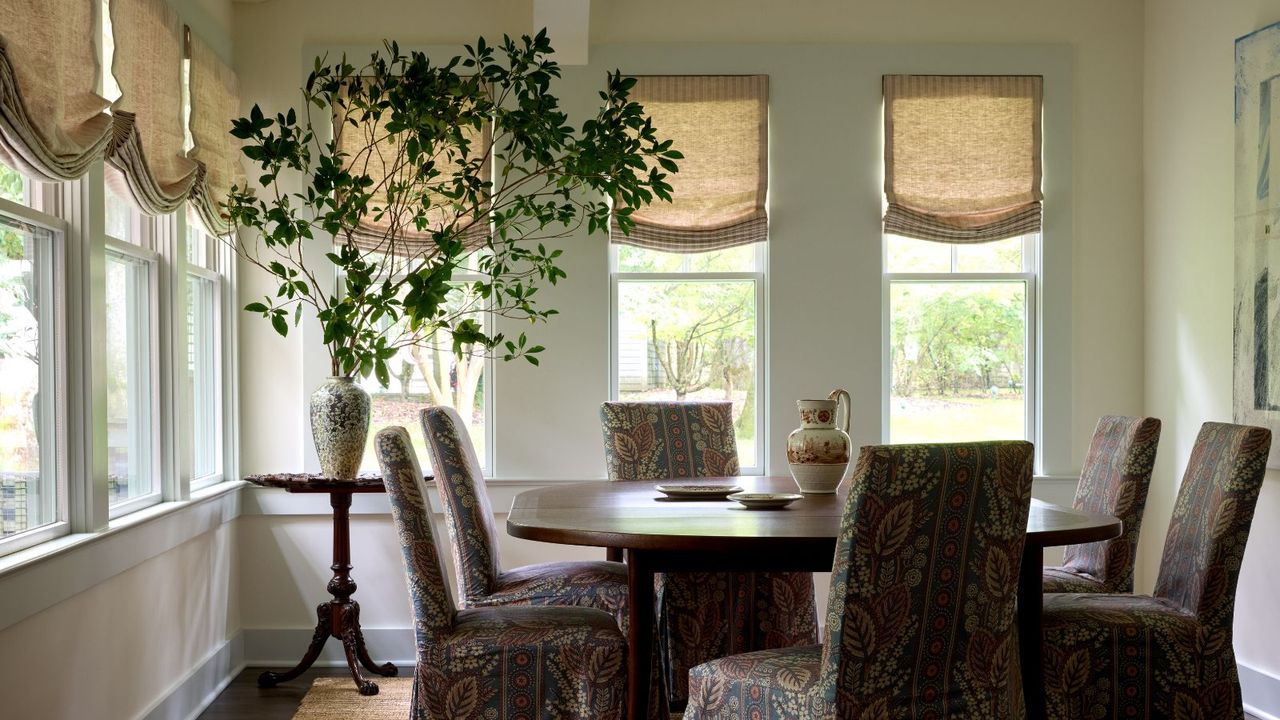
It's easy to assume that a sunroom’s greatest asset – walls of glass and uninterrupted outdoor views – should be left completely uncovered. But while natural light is the reason these spaces feel so inviting, designers rarely leave them entirely bare. The right window treatment doesn't detract from the architecture; it softens it, making a sunroom feel more comfortable, considered, and connected to the rest of the home.
Whether it's diffusing harsh afternoon glare, protecting upholstery from UV rays, or introducing warmth to a room dominated by glass, window treatments have an important role to play beyond privacy. From relaxed linen drapery and tailored Roman blinds to discreet solar shades that almost disappear against the glazing, the best solutions balance function with beauty while preserving the connection to the outdoors.
'For sunroom window treatments, I like to think of them as an important architectural layer rather than something that hides the windows,' says interior designer Dorothee Junkin, founder of Dorothee Junkin Design Studio. 'While sunrooms celebrate natural light, window treatments help soften the space, control glare, and make the room comfortable throughout the day and across seasons.'
Below, designers share the window treatments they return to time and again, along with the projects that prove why they're worth considering.
1. Hang Full-Length Curtains to Soften a Glass-Heavy Room
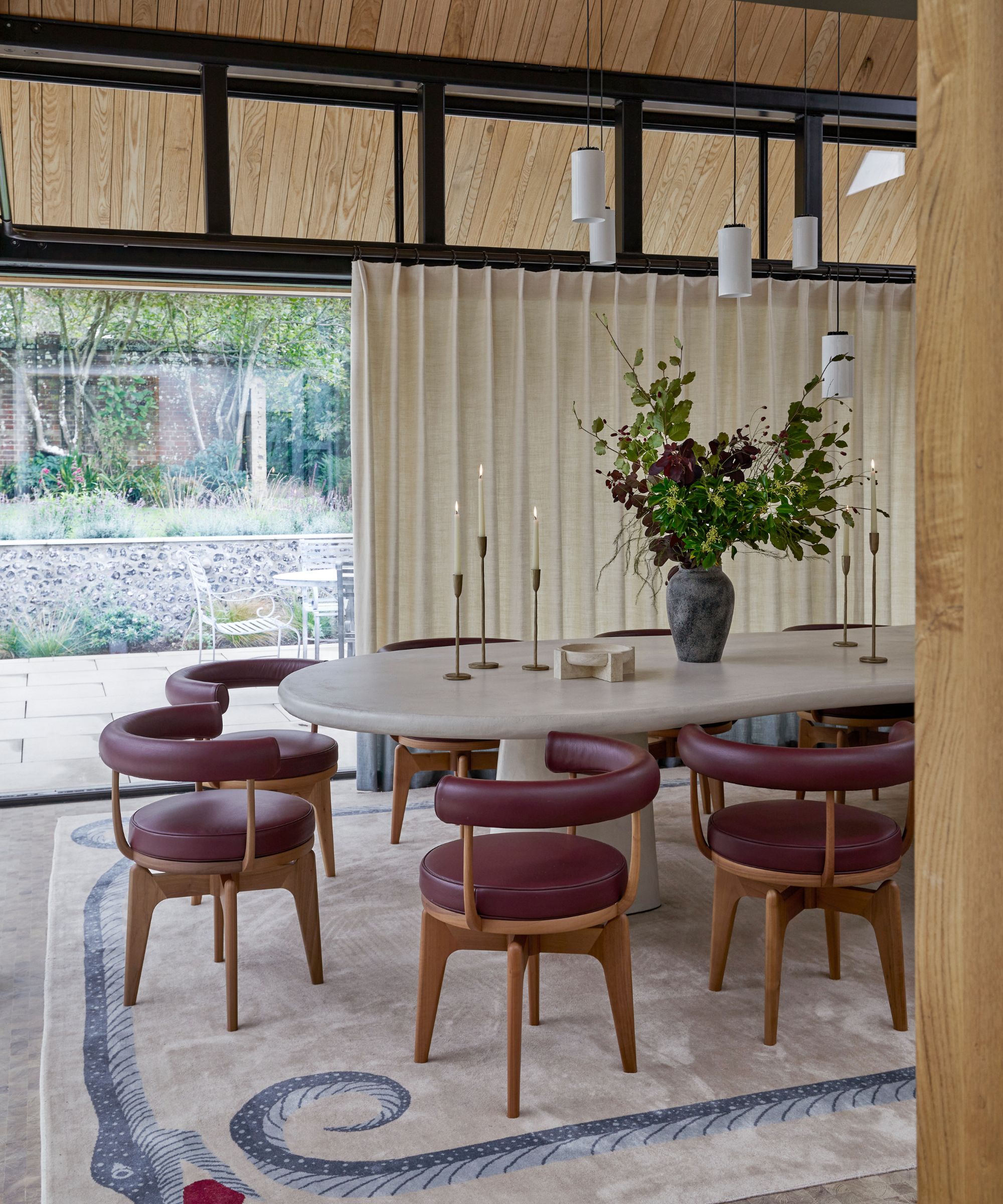
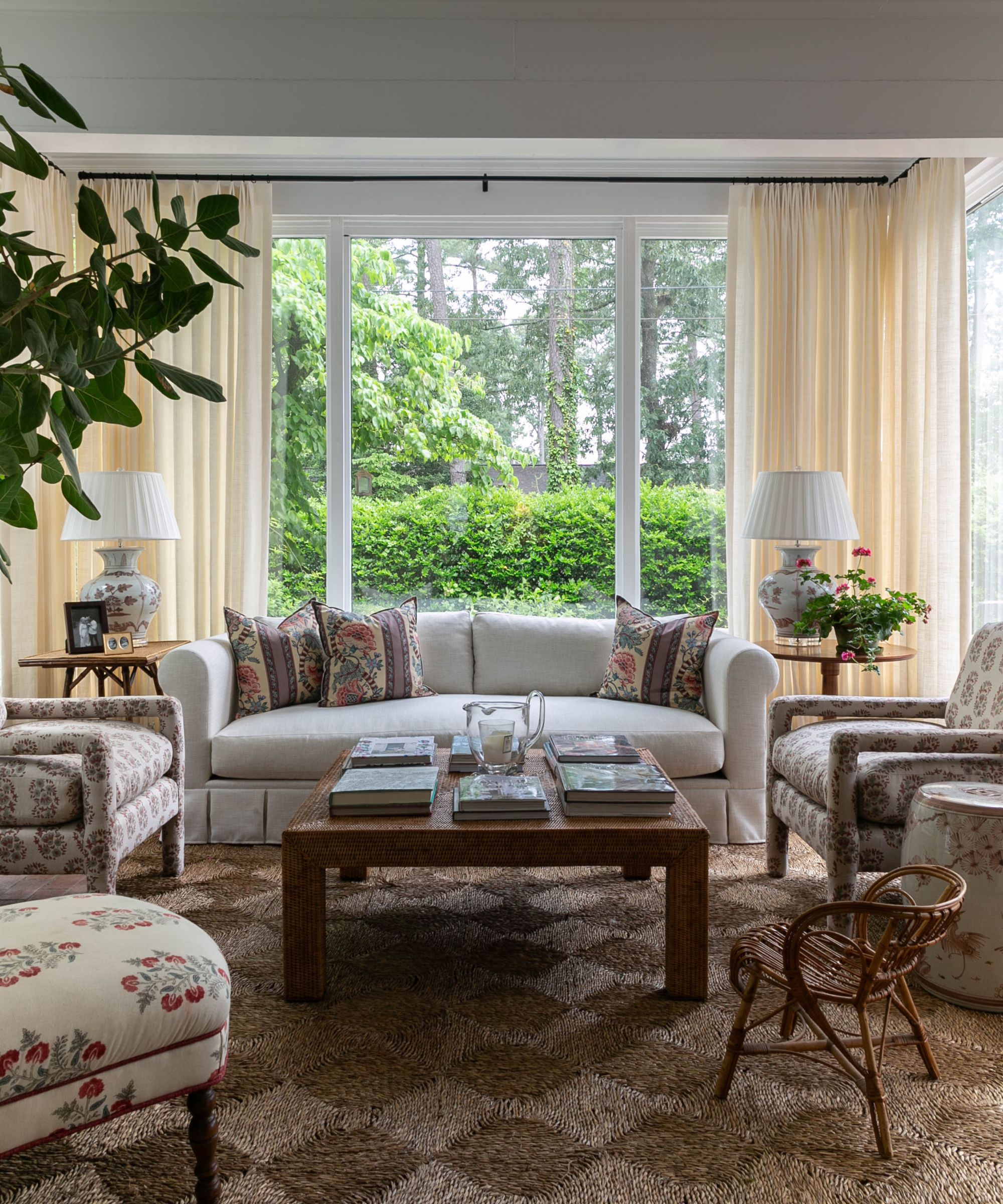
Nothing tempers a room wrapped in glass quite like full-length curtains. Rather than blocking the view, they frame it, introducing softness, texture, and a sense of permanence that makes a sunroom feel like a true extension of the house rather than an enclosed patio.
In this sunroom designed by K&H Design, the drapes can totally enclose the room, wrapping it in a soft texture and diffused light. It makes it a perfect space for hosting all year round, not just in the summer months, as the drapes add warmth and coziness when in use, but can be pushed aside, going almost unnoticed when the space calls for plenty of sunshine.
2. Elevate Curtains With a Decorative Trim
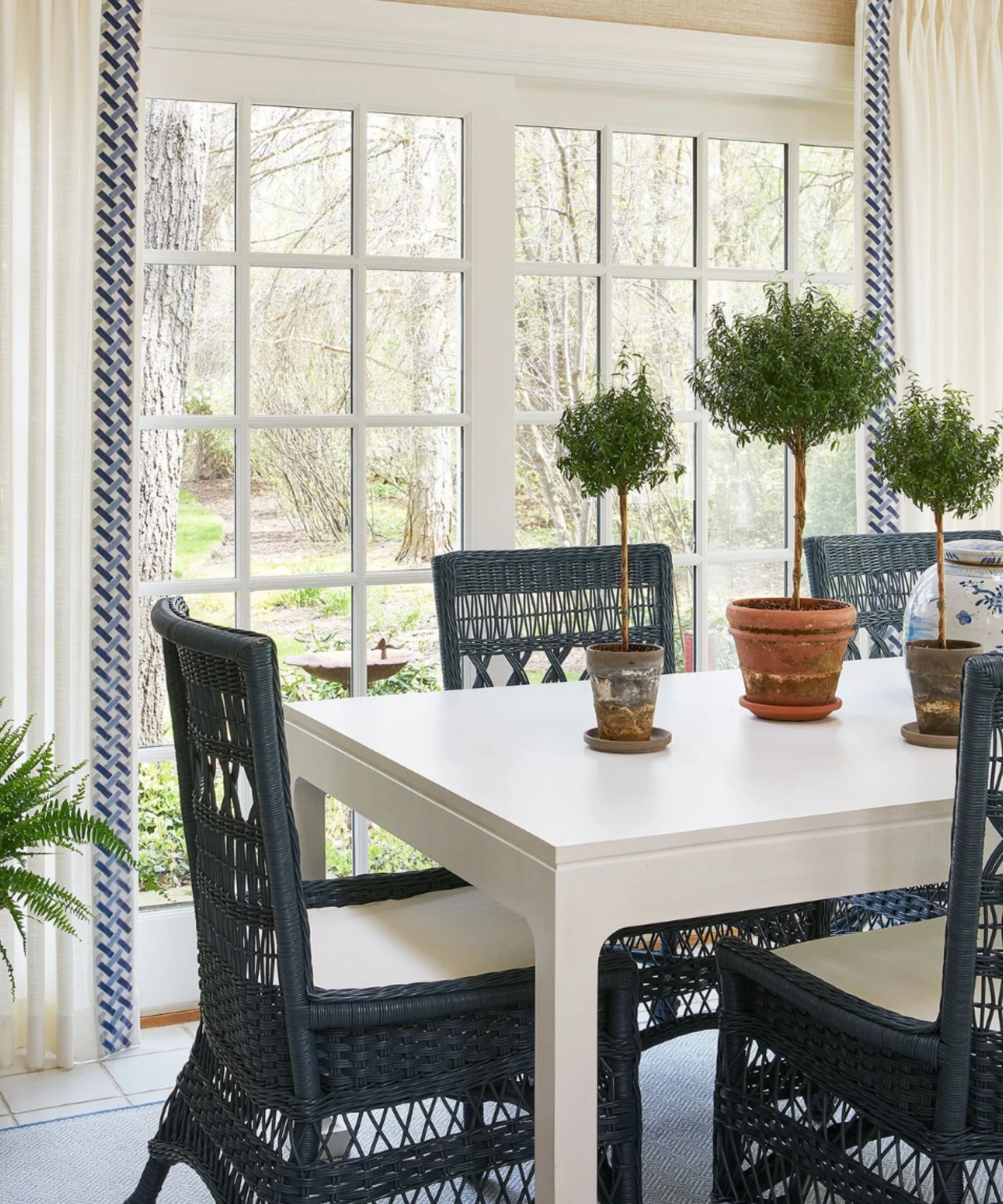
Window treatments don't have to rely on bold fabrics to make an impact. Sometimes it's the finishing details that elevate an otherwise understated scheme. In this light-filled sunroom by Savarie Interiors, crisp off-white drapery is finished with a striking blue geometric trim that draws the eye upward and echoes the woven dining chairs and blue-and-white ceramics nearby. Rather than competing with the garden views, the decorative leading edge gives the curtains a tailored, custom appearance.
'I love linen fabric or sheers in a sunroom,' says interior designer LJ Savarie. 'They feel light and airy and work well with the warmer months.' This approach works particularly well if you prefer neutral window treatments but still want them to contribute to the room's overall design. A contrasting tape or border introduces personality while remaining timeless, and can easily tie together colors already found elsewhere in the space.
3. Choose Relaxed Roman Shades for Gentle Light Filtration
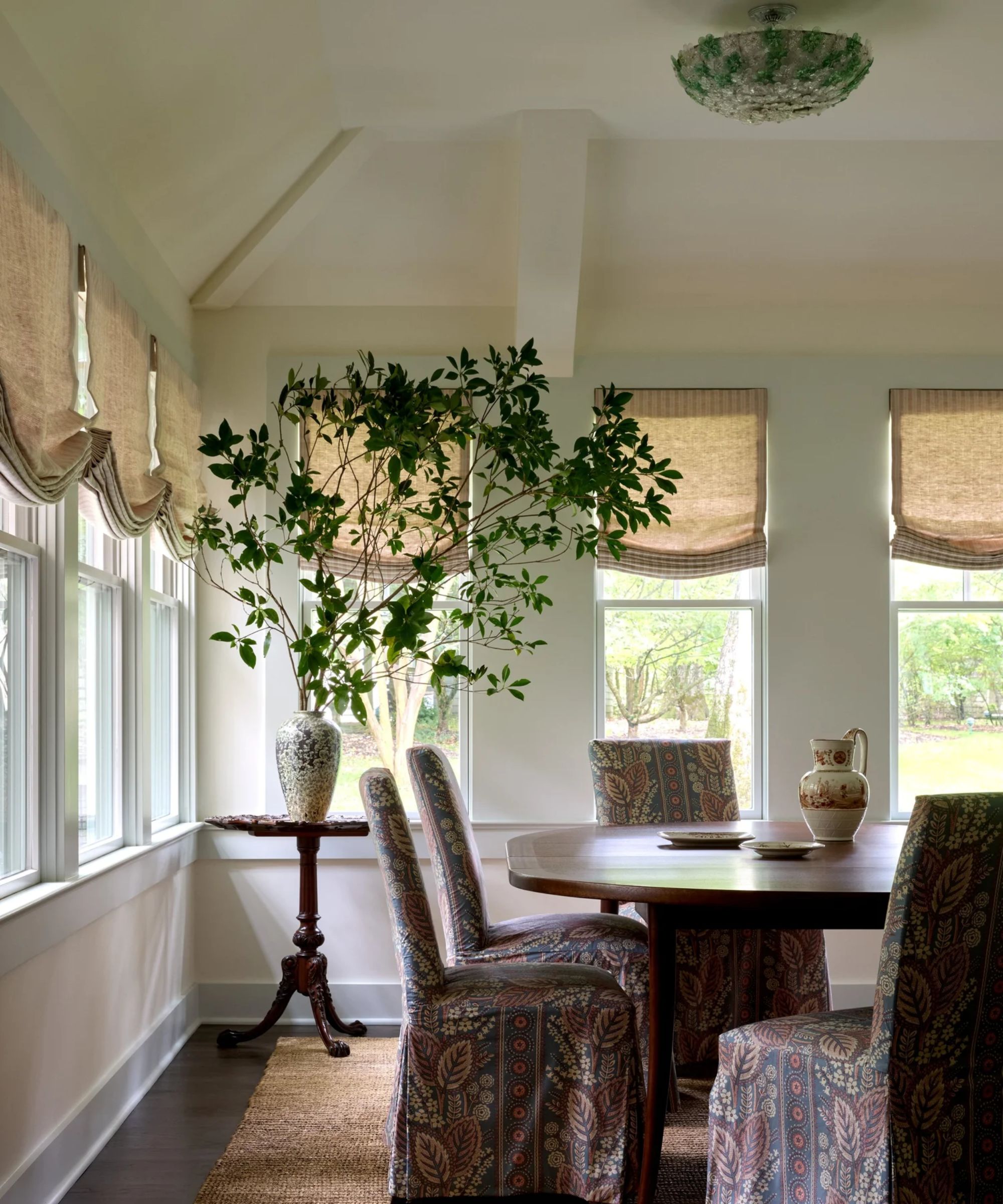
Roman shades are often associated with formal spaces, but relaxed versions feel particularly at home in a sunroom. Their softly curved folds introduce texture without the visual weight of heavy drapery, while softly dispersing light through the fabric.
Lauren Carlucci often gravitates toward natural materials when dressing bright rooms. 'Chik blinds are a beautiful option because they gently filter the light while introducing an organic texture that helps bring the outside world in,' the designer says.
In this East Hampton dining room, loosely tailored Roman shades sit comfortably against crisp white trim, providing privacy while still allowing daylight to flood the room. The natural texture of the fabric complements the woven rug and richly patterned dining chairs, creating a layered interior that still feels airy. Roman shades also have the advantage of stacking neatly when raised, leaving the majority of the glazing unobstructed and preserving the garden views that make sunrooms so appealing.
4. Tailor Roman Shades to Awkward Architecture
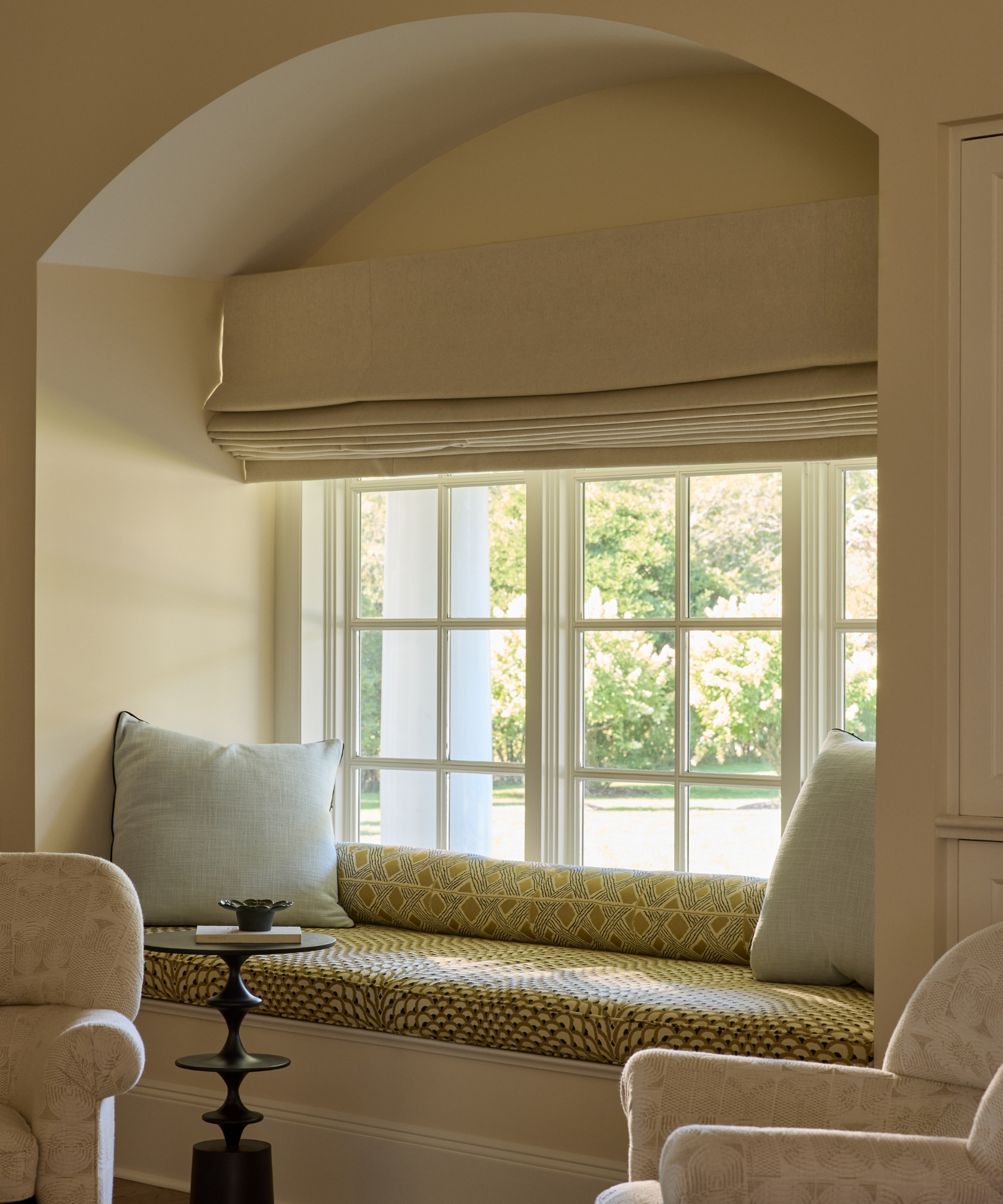
Sunrooms don't always have straightforward windows. Arched ceilings, deep alcoves, and built-in window seats often call for a more considered approach than off-the-shelf blinds, making tailored Roman shades one of the most versatile solutions.
This cozy reading nook by Lauren Carlucci demonstrates how a single oversized Roman shade can soften an architectural recess without competing for attention. Finished with subtle contrast piping, the tailored shade follows the proportions of the alcove beautifully, creating a sense of symmetry while allowing the built-in window seat to remain the focal point.
Roman shades are particularly effective in spaces where full-length drapery would feel bulky or impractical. They're also an opportunity to introduce another layer of texture. Choosing a softly woven linen or textured fabric helps temper the hard lines of glazing, making even small sunrooms feel warmer and more inviting.
5. Use Interior Shutters as an Architectural Feature
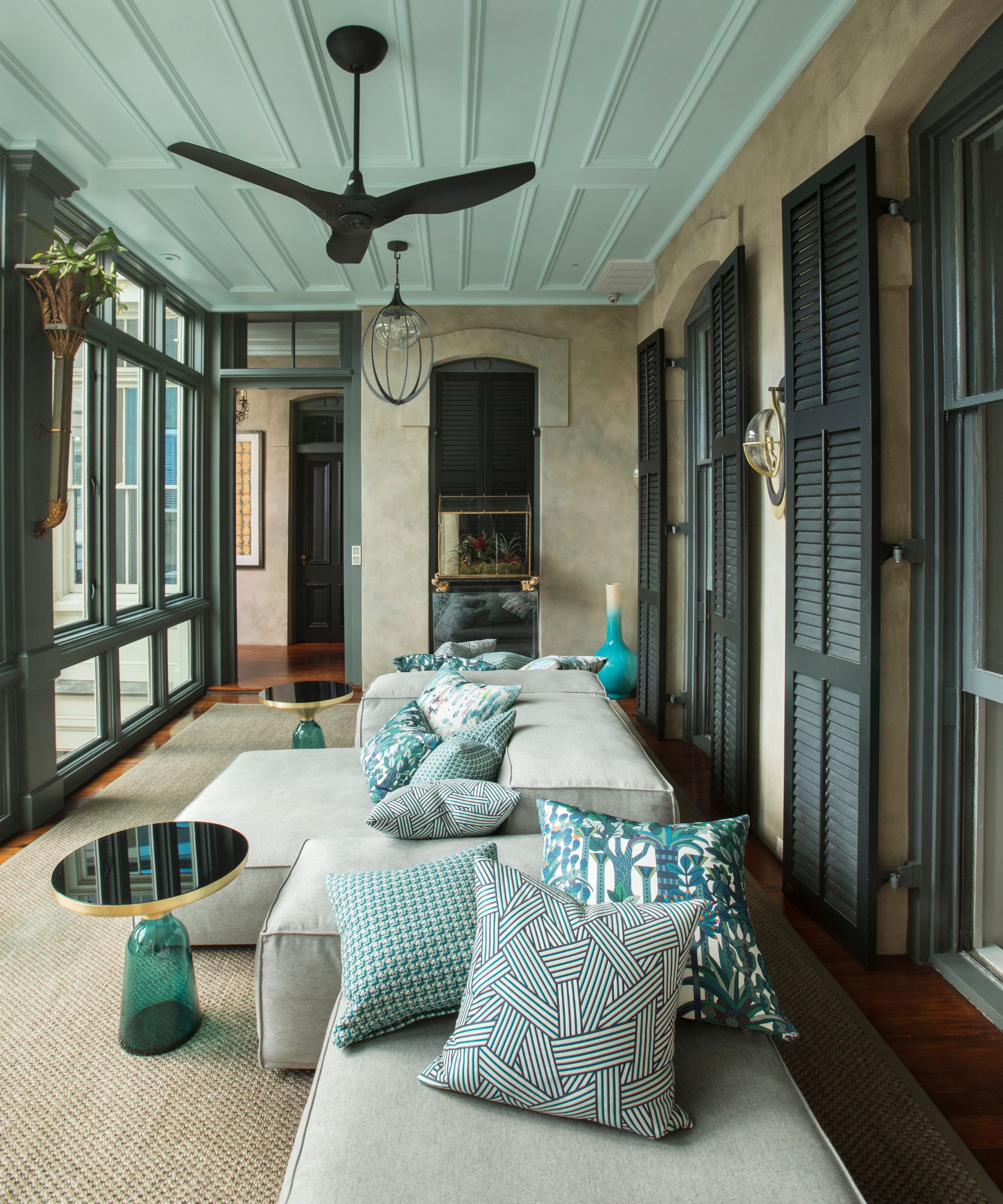
Curtains and blinds aren't the only way to dress a sunroom. Interior shutters can become part of the architecture itself, adding rhythm, depth, and character while giving homeowners complete control over light and privacy.
In this long, sun-drenched sunroom designed by Chuck Chewning, dark green shutters line one side of the room, echoing the steel-framed windows opposite. Their repeated vertical lines draw the eye through the space, creating an elegant sense of balance while lending the room a permanence that fabric treatments alone couldn't achieve. ‘We have used wooden shutters on the inside that are hinged and can open,’ Chuck explains. ‘They add an architectural element while being practical.’
Unlike fabric window treatments, shutters can be adjusted throughout the day to direct sunlight, encourage airflow, or create privacy without completely blocking the connection to the outdoors. They're particularly well suited to homes inspired by coastal, Mediterranean, or historic architecture, where they feel like an intentional part of the building rather than an afterthought.
6. Automate Blinds in Fully Glazed Sunrooms
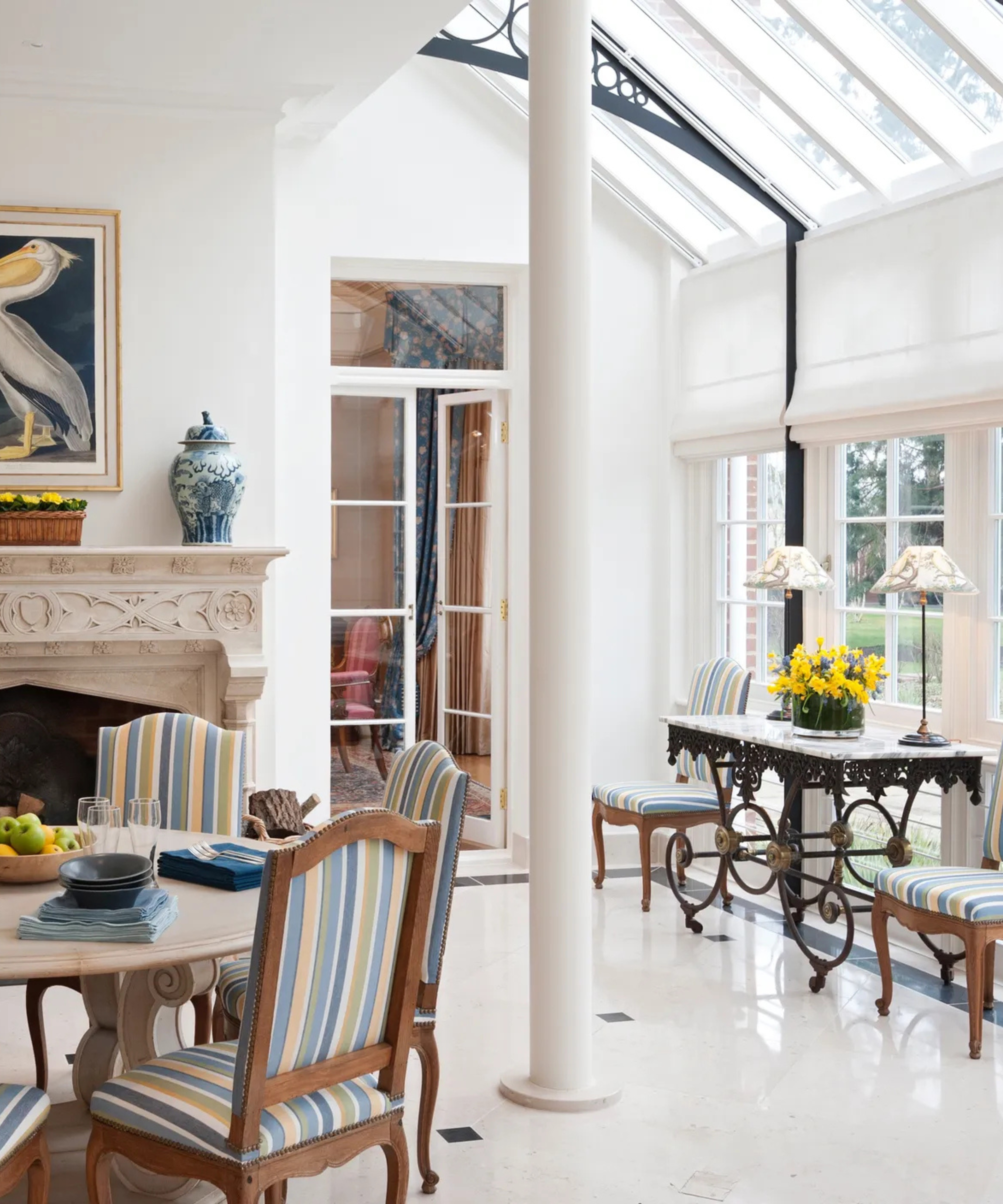
A glass roof might flood a sunroom with daylight, but it can also transform it into one of the hottest rooms in the house. That's why many designers consider automated blinds one of the smartest investments for heavily glazed spaces.
Rather than relying solely on side windows for shade, automated roof blinds allow homeowners to control sunlight at its source, reducing glare and helping regulate temperatures throughout the day. Because they're motorized, they're also far easier to operate across high or hard-to-reach glazing.
‘One of the biggest practical considerations is sunlight,’ says Hattie Hansard, interior designer at Joanna Wood Interiors. ‘Direct sun can bleach upholstery, rugs, artwork and photographs surprisingly quickly. I always recommend incorporating electric or automated blinds, particularly for glazed roofs, so you can control the light throughout the day without losing the connection to the garden.’
In this elegant Cambridge conservatory, the discreet white blinds almost disappear into the roof structure when open, preserving the room's bright, airy character. When lowered, they gently diffuse intense sunlight without darkening the space, helping protect furnishings while making the room far more comfortable to enjoy throughout the warmer months.
‘It's all about striking the balance between embracing natural light and making the room genuinely comfortable to spend time in,’ Hattie adds. ‘There's no point having a beautiful, light-filled space if it's too hot to sit in for half the year.’
7. Choose Discreet Solar Shades in South-Facing Rooms
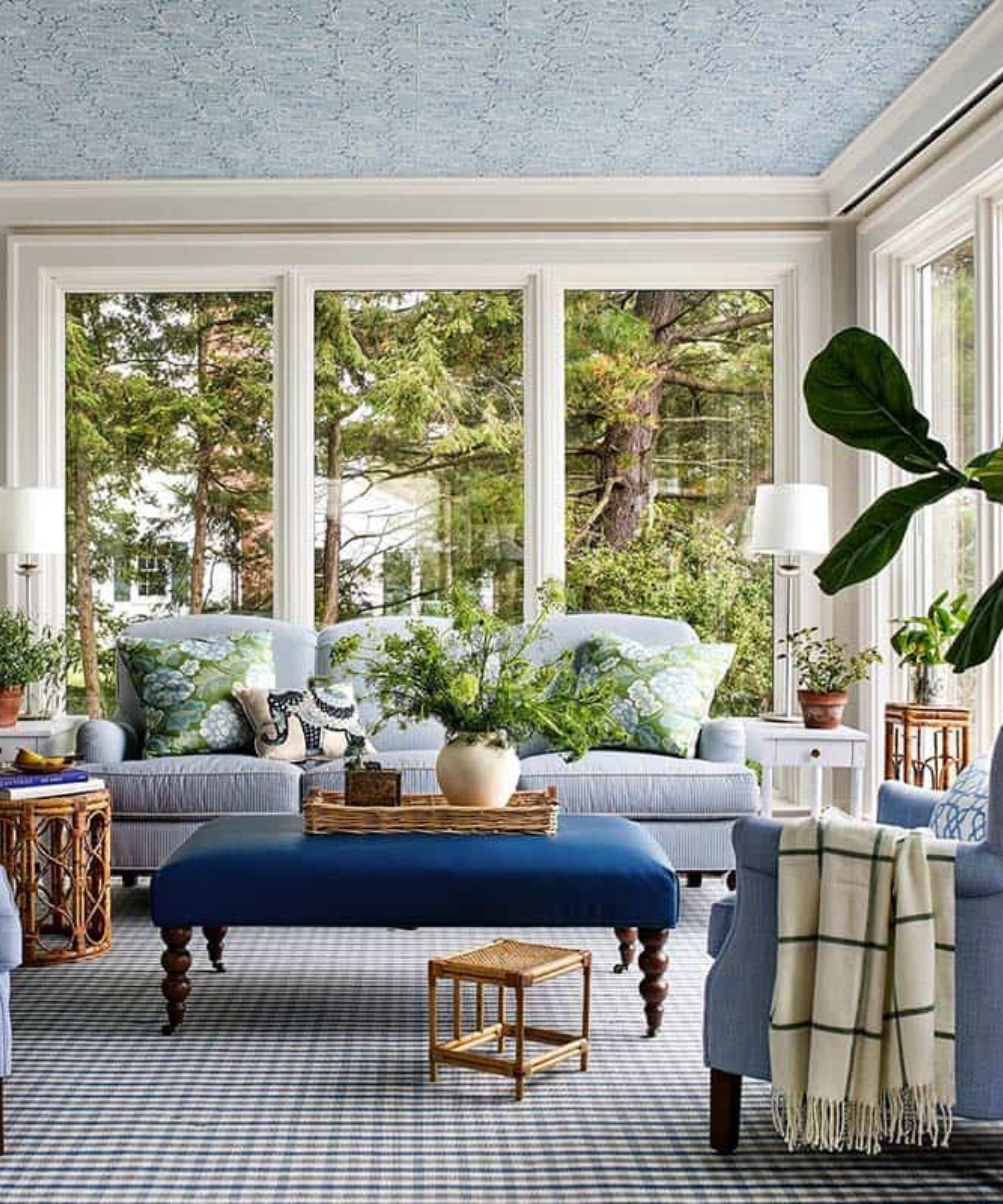
In sunrooms with particularly intense exposure, especially those overlooking water or open landscapes, solar shades can make all the difference. Unlike heavier blinds, they reduce glare and heat gain without sacrificing the view, making them one of the most discreet options available.
'For spaces on the water with significant sun, we always want to think about solar options. Layer that with something beautiful like simple, light sheers,' says designer Marika Meyer. The beauty of this scheme lies in how little you notice it. The barely-there shades blend seamlessly into the window frames, quietly filtering harsh sunlight while preserving uninterrupted sightlines beyond the glass. Rather than becoming a decorative feature in their own right, they allow the architecture and surrounding landscape to remain the stars of the show.
8. Choose Performance Fabrics to Withstand the Sun
A sunroom's abundance of natural light is part of its appeal, but over time, it can take a toll on fabrics. Constant UV exposure can fade curtains, upholstery, and rugs far sooner than homeowners expect, making material choice just as important as the style of window treatment itself.
'While upholstery often gets the most attention, window treatments play an equally important role in creating a comfortable sunroom,' says Greg Voorhis, Executive Design Director at Sunbrella. 'Selecting performance fabrics designed for high-light environments allows homeowners to soften the space while maintaining durability.'
Solution-dyed acrylic fabrics, such as those made by Sunbrella, are engineered to resist fading from prolonged UV exposure while remaining soft enough for drapery. Other high-performance options, including acrylic-polyester blends and performance linens, offer the relaxed look of natural fabrics with added resistance to moisture, mildew, and everyday wear.
Rather than reserving performance textiles for outdoor furniture, Greg recommends using them indoors where sunlight is particularly intense. 'The best solutions balance light control, comfort, and aesthetics without detracting from the connection to the outdoors.' If your sunroom is one of the brightest spaces in the house, specifying high-performance fabrics from the outset can help your window treatments look beautiful for years to come.
9. Leave Windows Bare When the Setting Deserves it
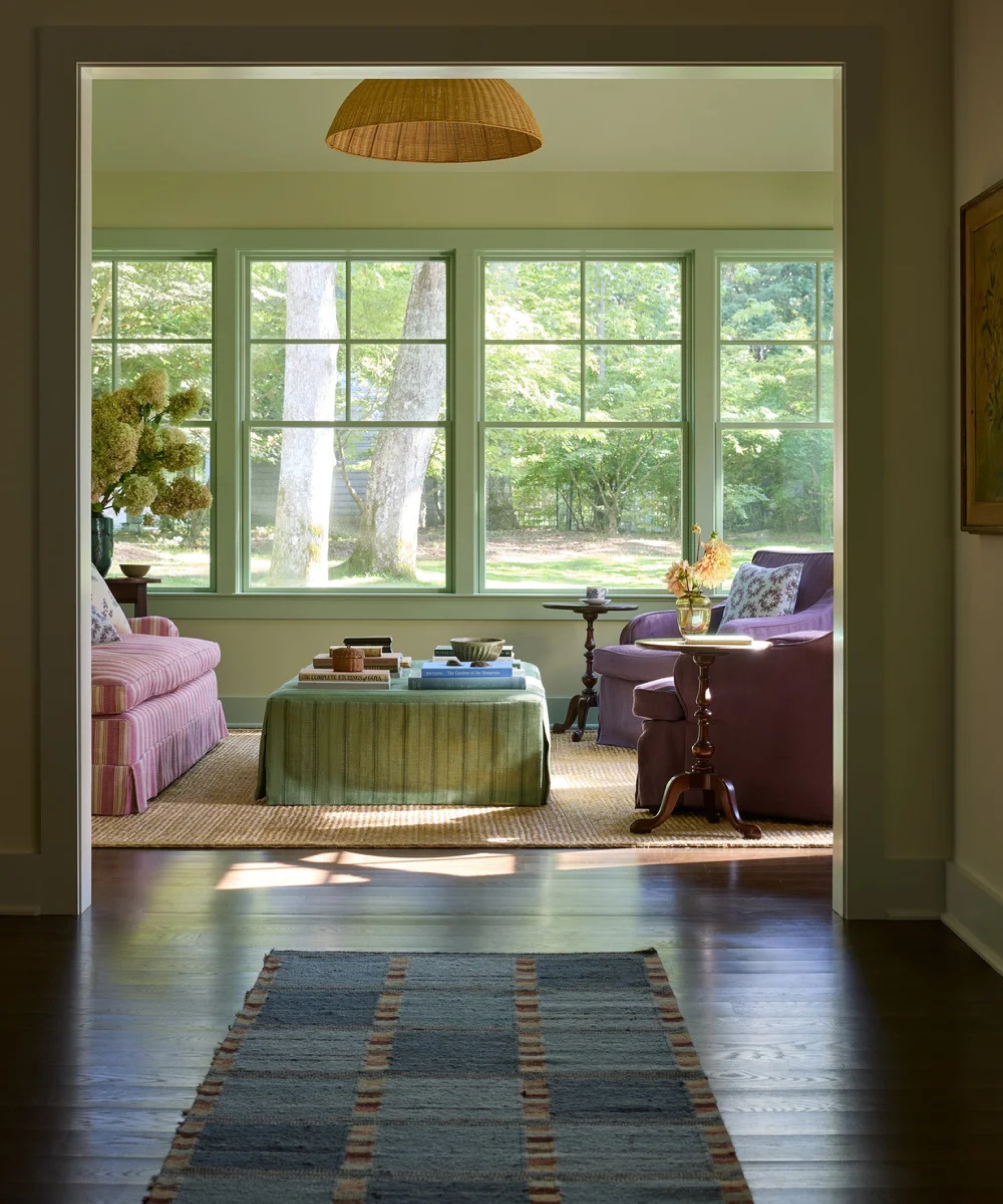
Sometimes, the best window treatment is no window treatment at all. While it's tempting to assume every sunroom needs curtains or blinds, designers agree there are occasions when leaving the glazing completely uncovered creates the strongest result.
‘There are moments when the view and natural light should take precedence,' suggests Lauren Carlucci. She points to this East Hampton project as the perfect example. 'The room had enough privacy, and adding another layer would have diminished the openness we wanted to create.'
Here, expansive panes of glass frame the surrounding trees almost like living artwork, while the painted window mullions provide all the architectural interest the room needs. The absence of window treatments reinforces the feeling that the landscape is part of the interior, allowing natural light to flood the space from every angle.
If privacy isn't a concern and your windows frame a beautiful outlook, it's worth asking whether they need dressing at all. In the right setting, restraint can be just as impactful as decoration.
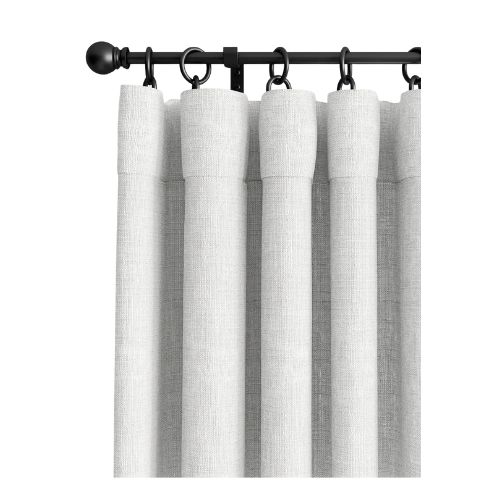
Designed to gently diffuse sunlight while resisting fading from prolonged UV exposure, it's an ideal choice for bright sunrooms where you want to soften the light without sacrificing longevity.
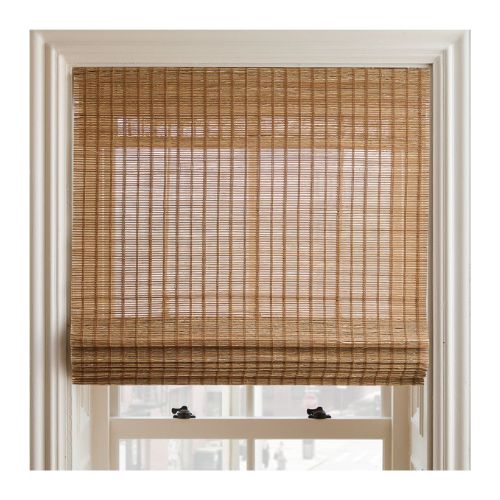
Crafted from natural bamboo, these chik blinds softly diffuse daylight while adding warmth and texture to a sunroom.
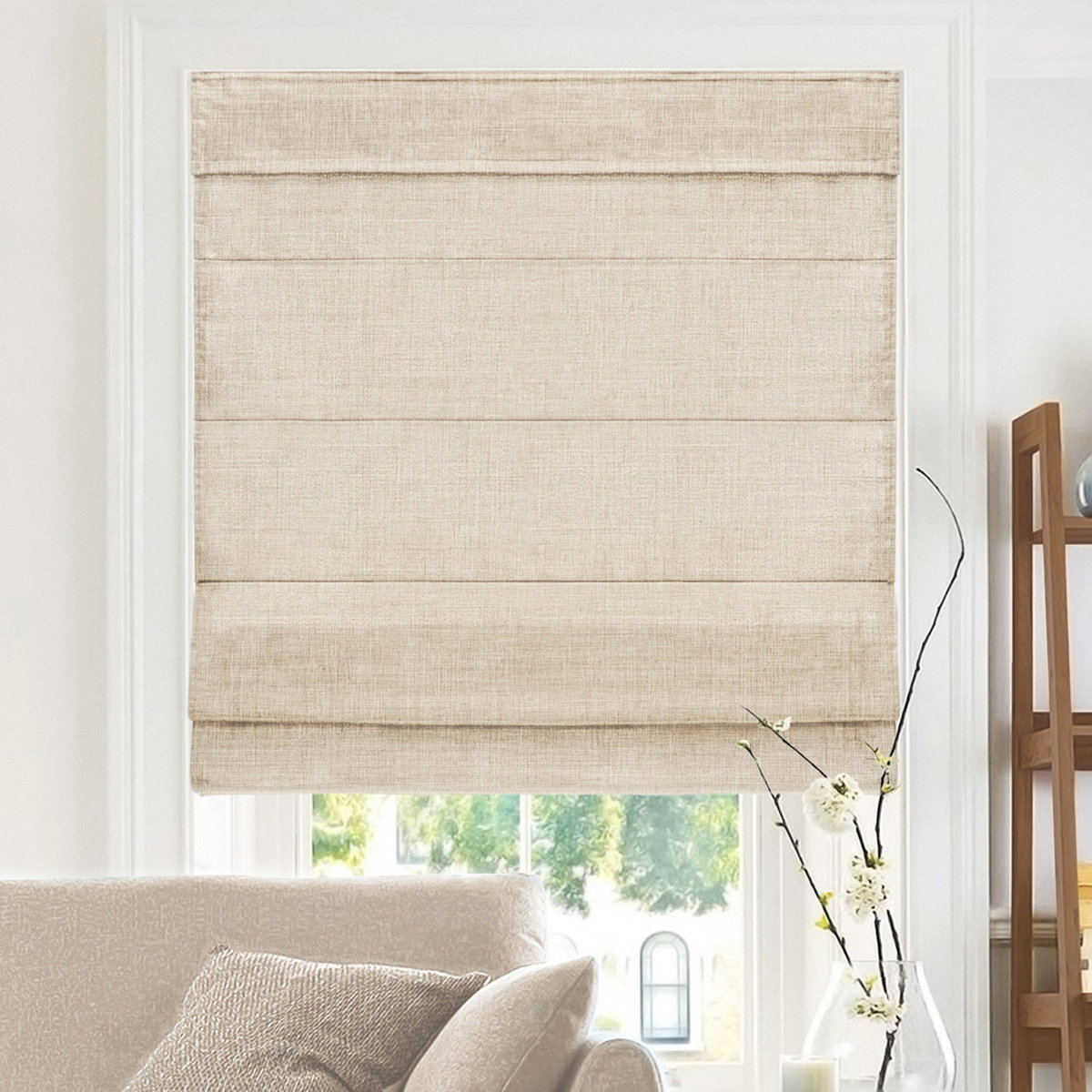
With its textured fabric and cordless design, this Roman shade diffuses sunlight without weighing down the room.
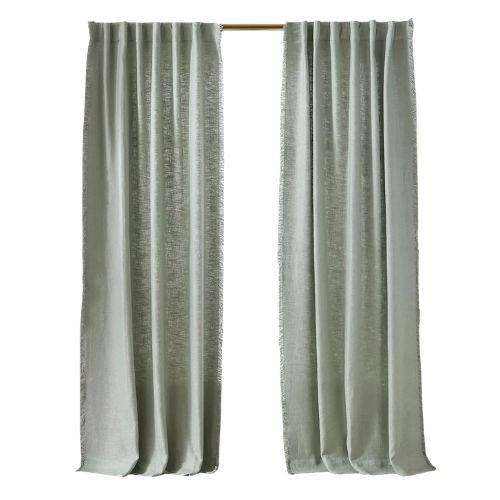
These linen-blend curtains soften glare without blocking daylight, bringing a relaxed, airy finish that's well suited to sunrooms.
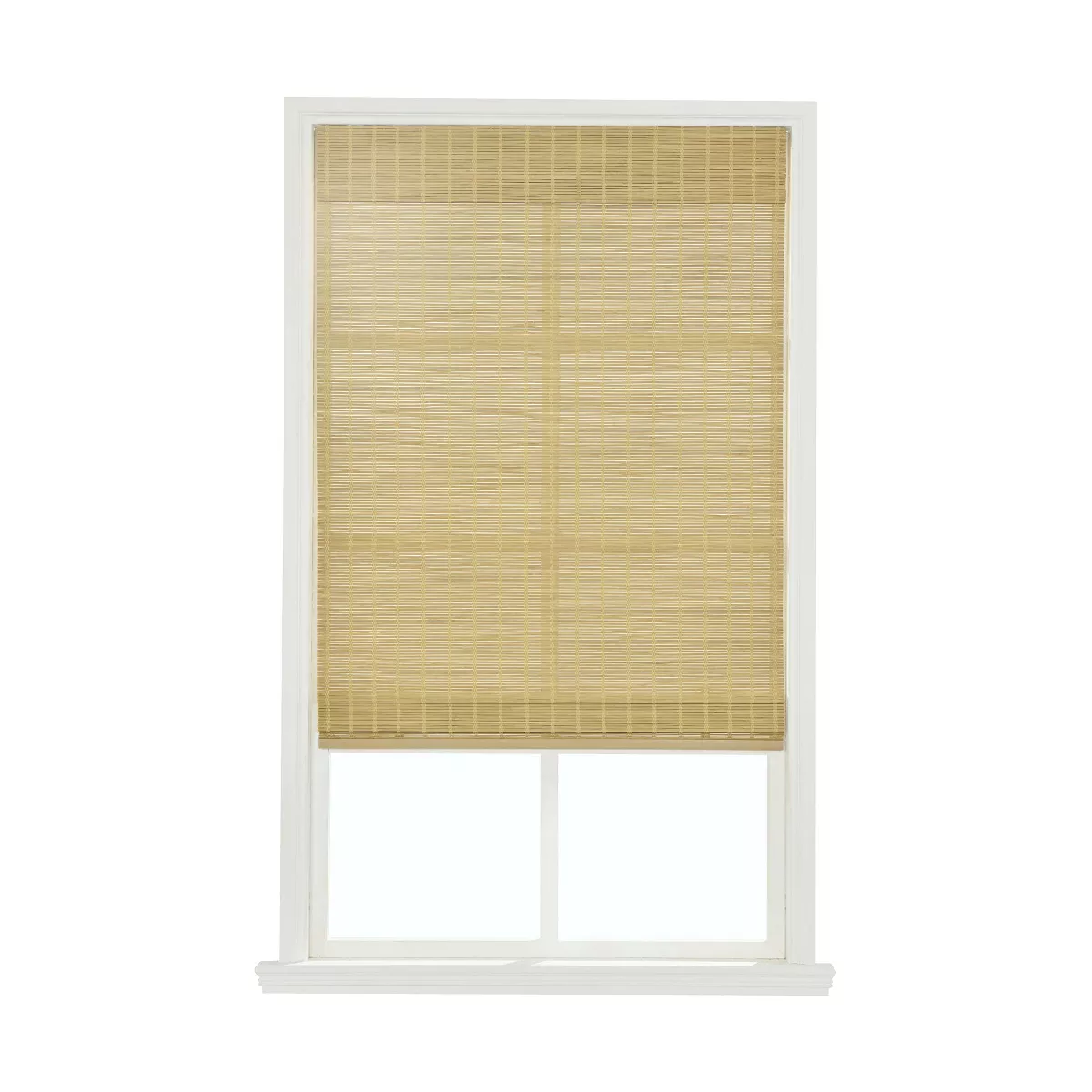
A woven bamboo shade is an easy way to introduce organic texture while gently diffusing sunlight, perfect for sunrooms with a relaxed, indoor-outdoor feel.
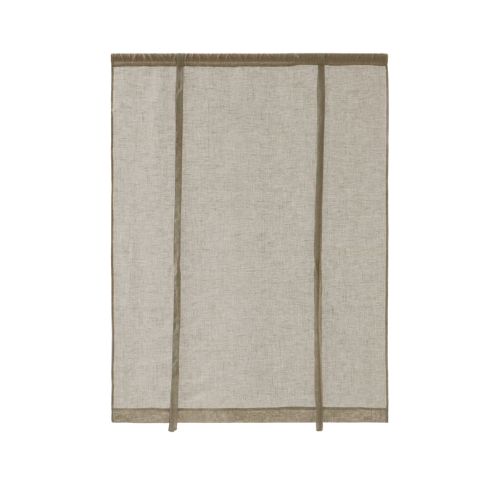
For contemporary glazed extensions, linen roller blinds provide discreet light control without adding visual bulk.
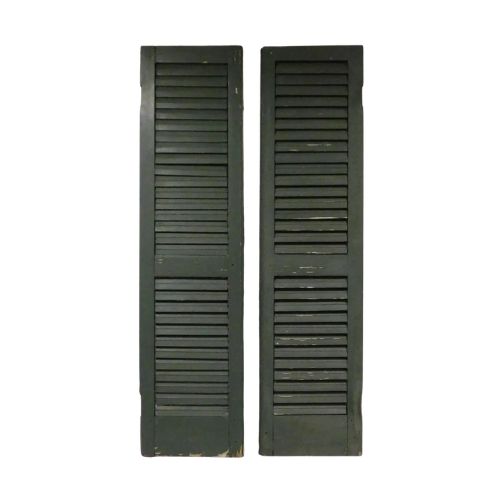
Vintage louvred shutters bring instant character to a sunroom while offering adjustable privacy and ventilation.
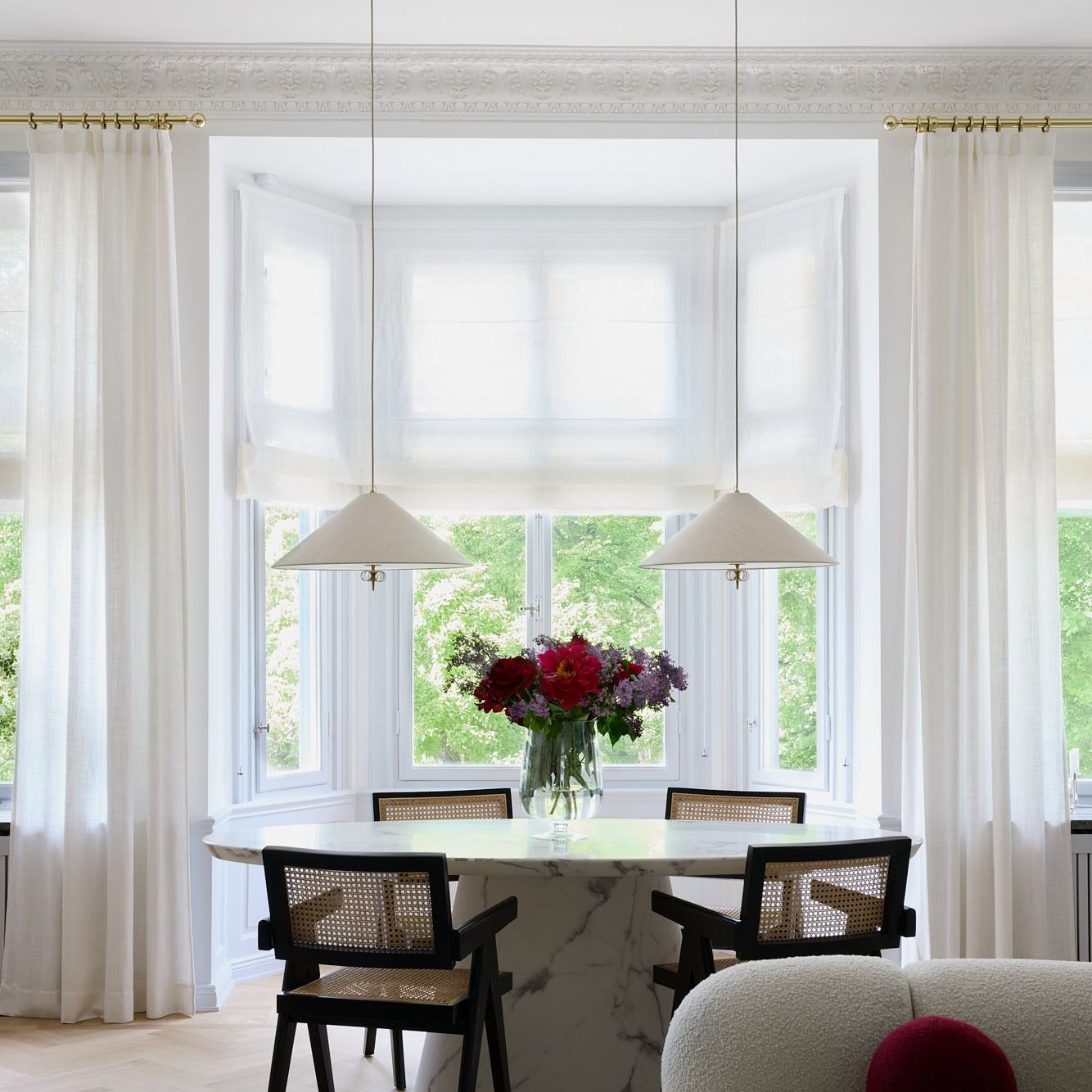
Sheer linen Roman blinds help reduce glare without darkening the space, making them well suited to rooms that are used throughout the day.
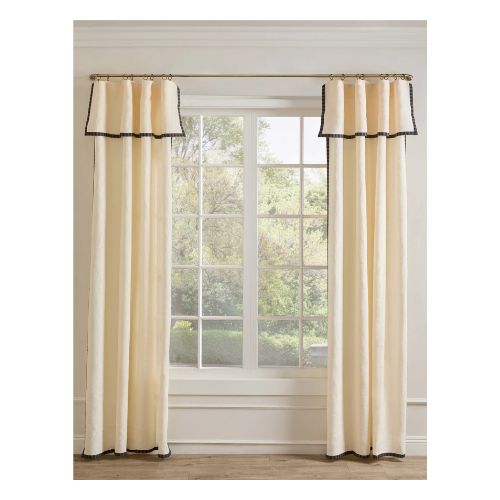
If you want to frame a view without overpowering it, sheer linen curtains with a contrasting border offer gentle light filtering and just enough definition to the windows.
The best sunroom window treatments aren't there to hide the windows — they're there to enhance how the room feels and functions. Whether that's introducing the softness of floor-to-ceiling linen curtains, layering tailored Roman shades, filtering harsh afternoon sun with discreet solar blinds, or recognising when a spectacular view deserves to remain completely unobstructed, every choice should support the architecture rather than compete with it.
Instead of thinking about window treatments as a finishing touch, consider them another design layer that helps shape the atmosphere of the space. Natural materials, thoughtful layering, and solutions tailored to your room's orientation and architecture will always feel more timeless than following trends. Get the balance right, and your sunroom will remain light-filled and connected to the outdoors while becoming a comfortable space you'll want to enjoy in every season.
Love beautiful design ideas, expert advice, and inspiring decor trends? Sign up for our newsletter and get the latest features delivered straight to your inbox.