
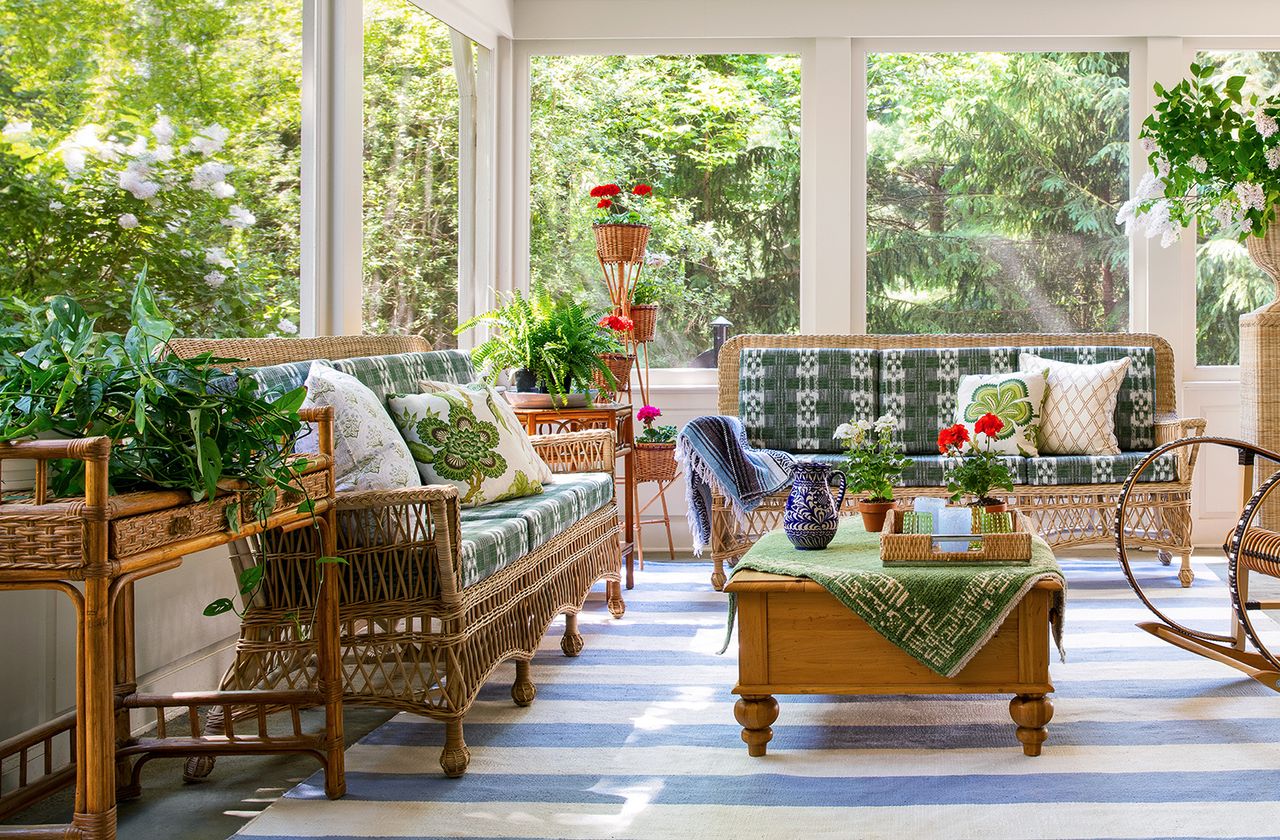
A compact footprint doesn't have to limit your sunroom's potential. In fact, some of the most inviting sunrooms are also the smallest. Their naturally intimate proportions lend themselves to slow mornings with a cup of coffee, curling up with a book, family dinners, and long conversations as the light changes throughout the day.
The secret isn't filling every available inch with furniture, but making every design decision work a little harder. A carefully considered layout, appropriately scaled furniture and thoughtful layering will always outperform a room that's simply packed with seating. In smaller spaces especially, restraint creates comfort without the clutter.
Here, interior designers share the sunroom decorating ideas, layout tricks and space-saving solutions they rely on to make small sunrooms feel beautifully considered, effortlessly functional and far larger than their square footage suggests.
1. Decide How You Want Your Small Sunroom to Work First
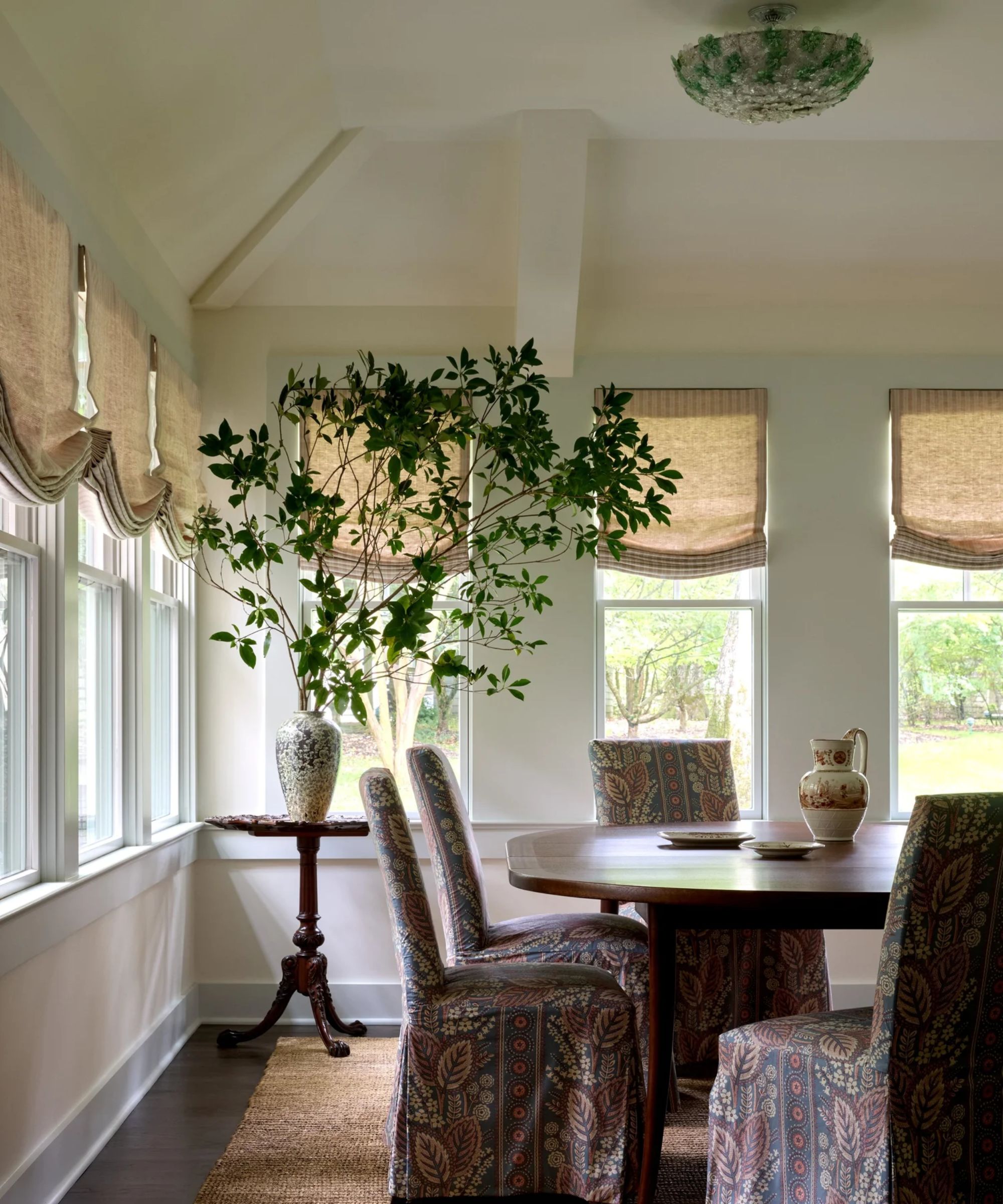
When space is limited, every piece of sunroom furniture needs a purpose. Before choosing paint colors or ordering a sofa, think carefully about how you'll realistically use the room. Will it become somewhere to enjoy your morning coffee, a cozy reading nook, an informal dining space, or somewhere to entertain friends? Defining that function early makes every subsequent decision, from layout to lighting, much easier.
‘Sunrooms are typically smaller spaces, so it's important to be mindful about how you plan to use them,’ advises designer Meg McSherry. ‘A small dining area can double as a game table, and a sofa perfect for afternoon naps can just as easily serve as seating for entertaining. Flexibility is key, but so is being realistic about how the space will be used most often.’
Lauren Carlucci, who designed the above sunroom as an entertaining space, agrees that smaller rooms benefit from resisting the temptation to assign them a single purpose. ‘Sunrooms are wonderfully multifunctional,’ she says. ‘The same room can be enjoyed alone with a cup of tea in the morning and then used to serve cocktails with friends before dinner. There are no rigid rules, but it is important to understand how you want to live in the room before deciding on its layout.’
2. Choose Furniture That’s the Right Scale
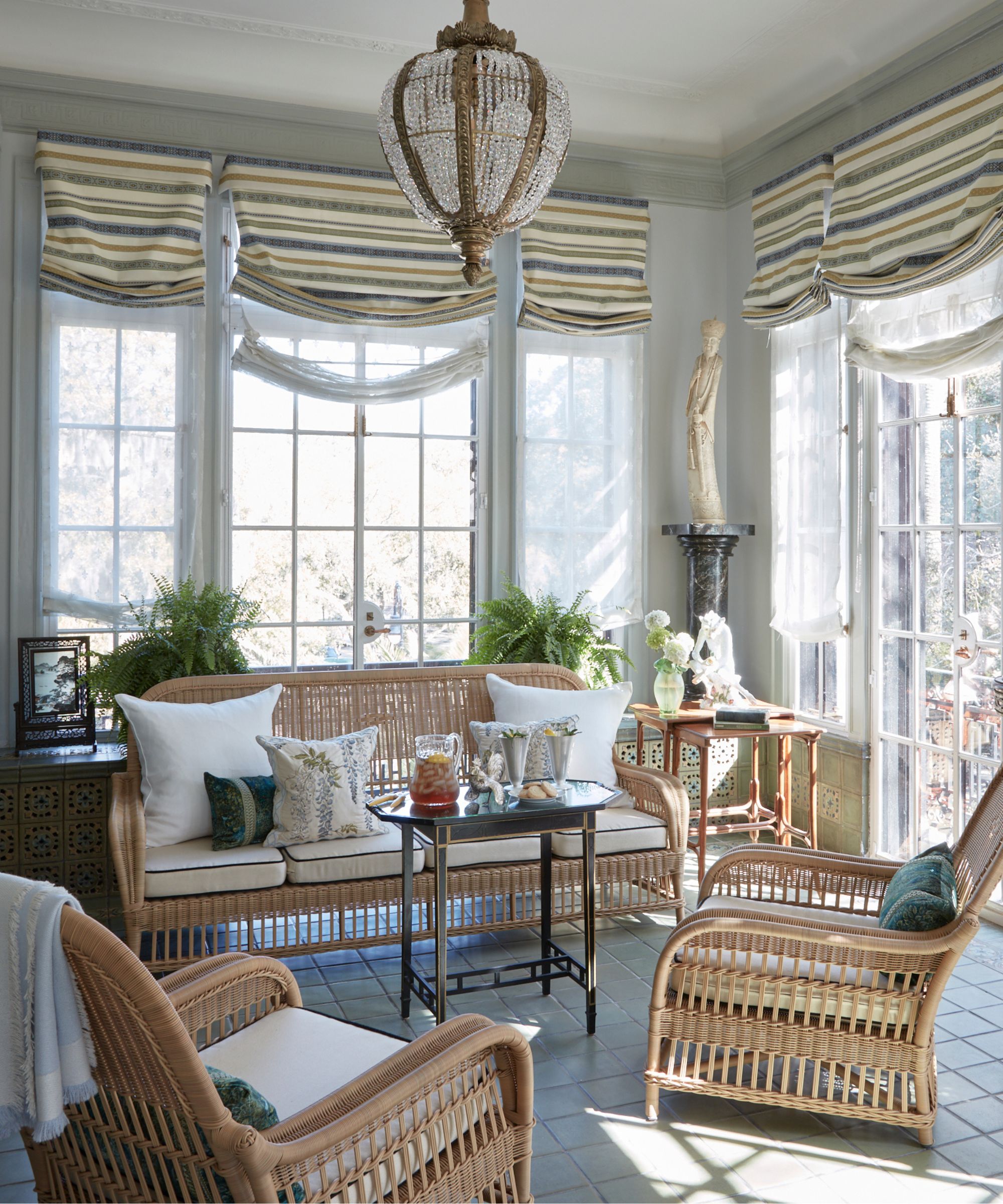
The quickest way to make a small sunroom feel even smaller is to fill it with oversized furniture. Instead, think carefully about proportion. Pieces that feel perfectly comfortable elsewhere in the house can easily overwhelm a compact, glass-lined room.
‘I like to use upholstered pieces on legs because they bring levity,’ reveals designer Marika Meyer. ‘It's also important to consider the form of the upholstery – thinner arms always feel less bulky. Strategically using Lucite and glass for tables also helps create a more open feel. Think carefully about scale, especially chairs. When in doubt, go vintage. Smaller-scale vintage pieces often work beautifully in compact spaces.'
Furniture with visible legs allows more flooring to remain on show, creating a stronger sense of openness. Likewise, slimmer silhouettes and lower profiles help preserve sightlines across the room, allowing natural light to travel uninterrupted. Chuck Chewning, who designed the sun porch above, also recommends choosing furniture that earns its place. ‘Ottomans are wonderful in sunrooms because they can function as extra seating, somewhere to put your feet up or even a coffee table,’ he says. ‘Ceramic garden stools are another favorite because they can work equally well as side tables or additional seating.’
3. Make Every Piece Work Harder
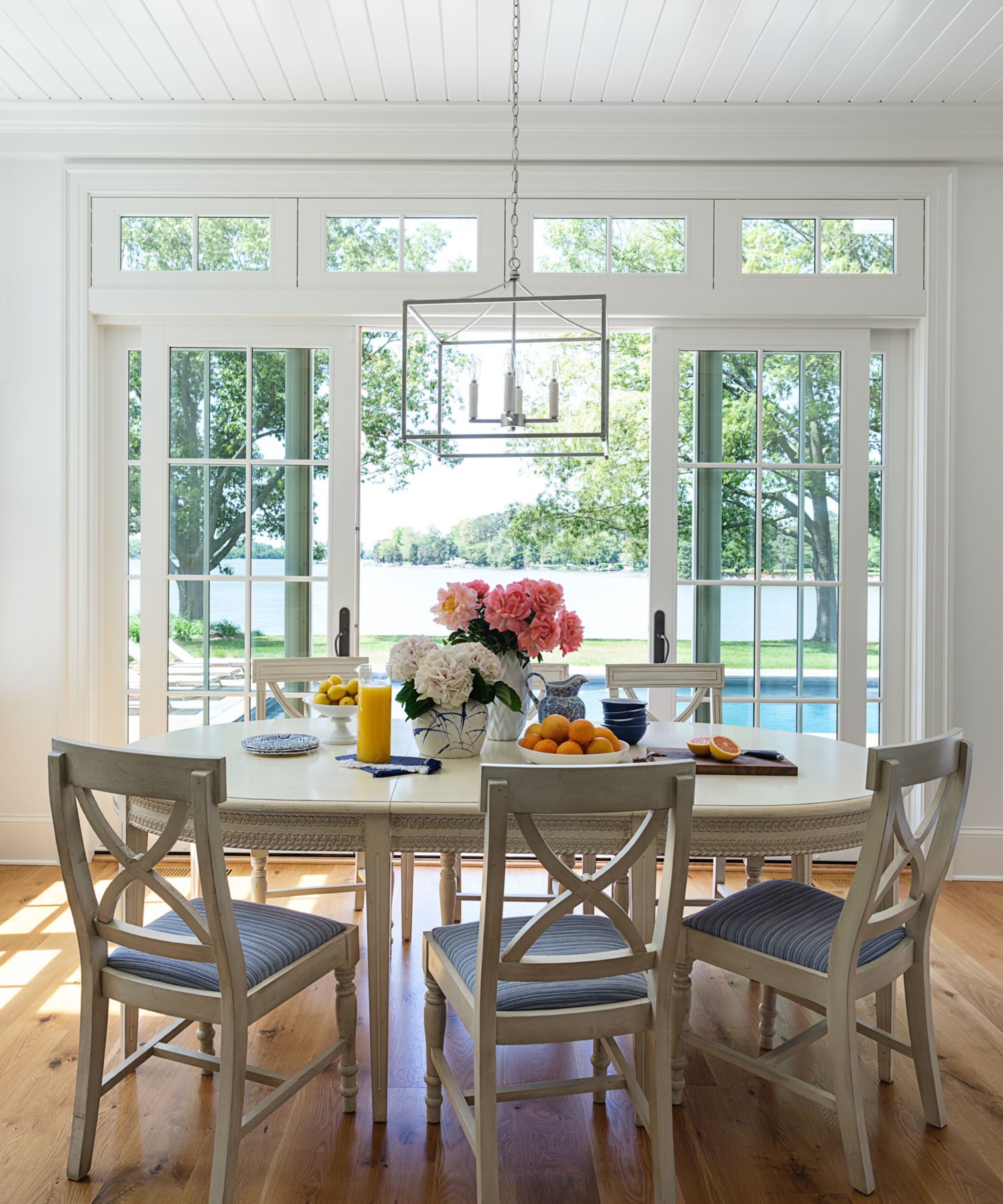
In a compact sunroom, multifunctionality isn't simply helpful; it's essential. The most successful spaces subtly perform several roles at once without ever feeling overworked. Marika Meyer recommends looking beyond conventional furniture.
‘I always recommend sourcing vintage pieces,’ she says. ‘Tilt-top tables and drop-leaf console tables can convert into dining or games tables depending on your needs. It's also smart to use furniture that transforms throughout the day – for example, a bar that can double as a desk when you're working from home.’
Built-in furniture can also maximize every available inch. Georgina Cave, founder of Cave Interiors, designed a bespoke L-shaped banquette for a recent sunroom project, positioning it against the wall to free up valuable floor space while comfortably accommodating both dining and relaxing. Lightweight rush-seated chairs can then be moved around the room as required, creating a flexible arrangement that adapts to everything from family meals to reading by the window.
Storage deserves equal consideration. Benches with concealed compartments, nesting tables that tuck neatly away, and drinks cabinets that double as serving stations all help minimize clutter while allowing the room to evolve throughout the day.
4. Create the Illusion of More Space with a Clever Layout
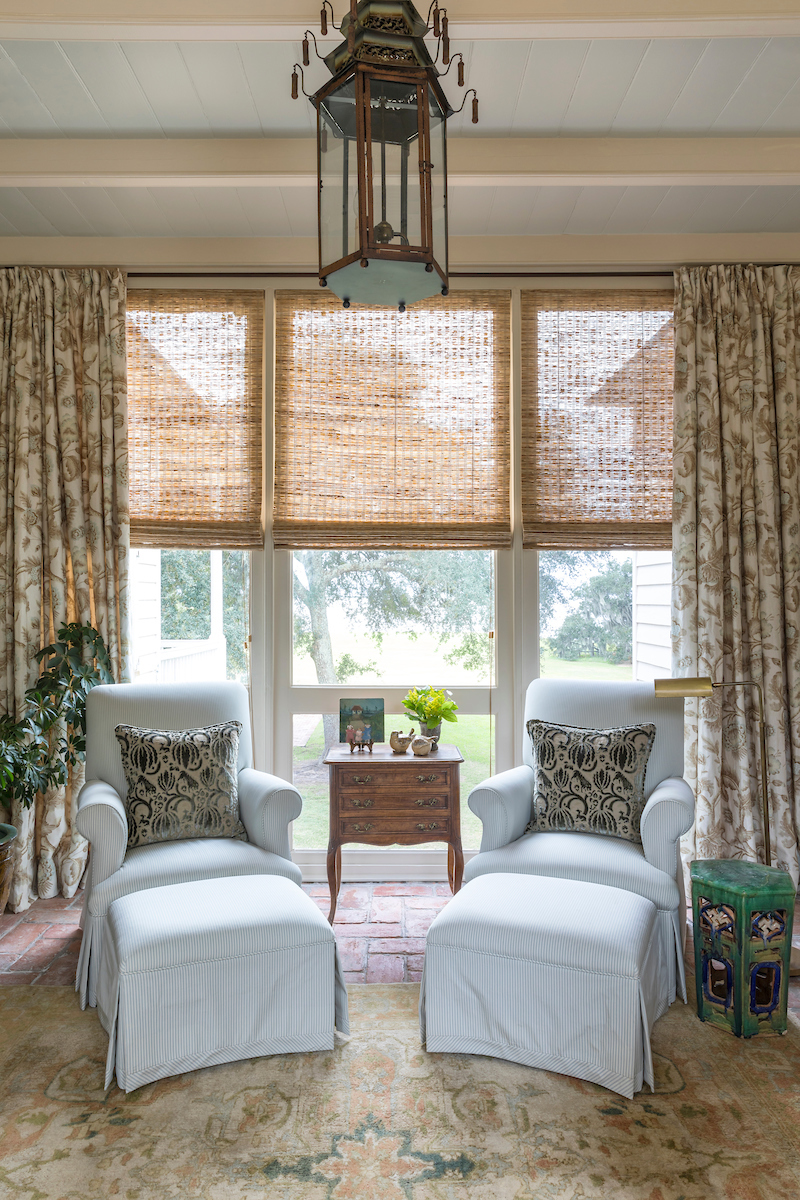
Small sunrooms often tempt homeowners to push every piece of furniture against the walls, but that approach can actually make the room feel more confined. Instead, designers recommend thinking about how you move through the space, creating clear circulation and allowing the eye to travel naturally from one end of the room to the other.
‘We pay close attention to the circulation – how you enter the space and how your eye moves through it,’ says Melissa Lee, founder of Bespoke Only. ‘A well-designed sunroom should feel intentional, with each piece helping to complete the overall story of the room.’
Rather than squeezing in additional seating, consider floating a pair of armchairs around a coffee table or creating a simple conversation area that leaves generous walkways around the perimeter. Even in a compact footprint, negative space is just as important as the furniture itself.
Symmetry is another trick that works particularly well in small sunrooms – for example, in this sunroom decorated by the New Orleans-based designer Chad Graci. 'The symmetrical layout really aids communication,' Chad says. 'Additionally, the symmetrical arrangement can ground a sunroom where there is so much light and view and ideally, a yard surrounding the space!'
5. Blur the Boundaries Between Indoors and Out
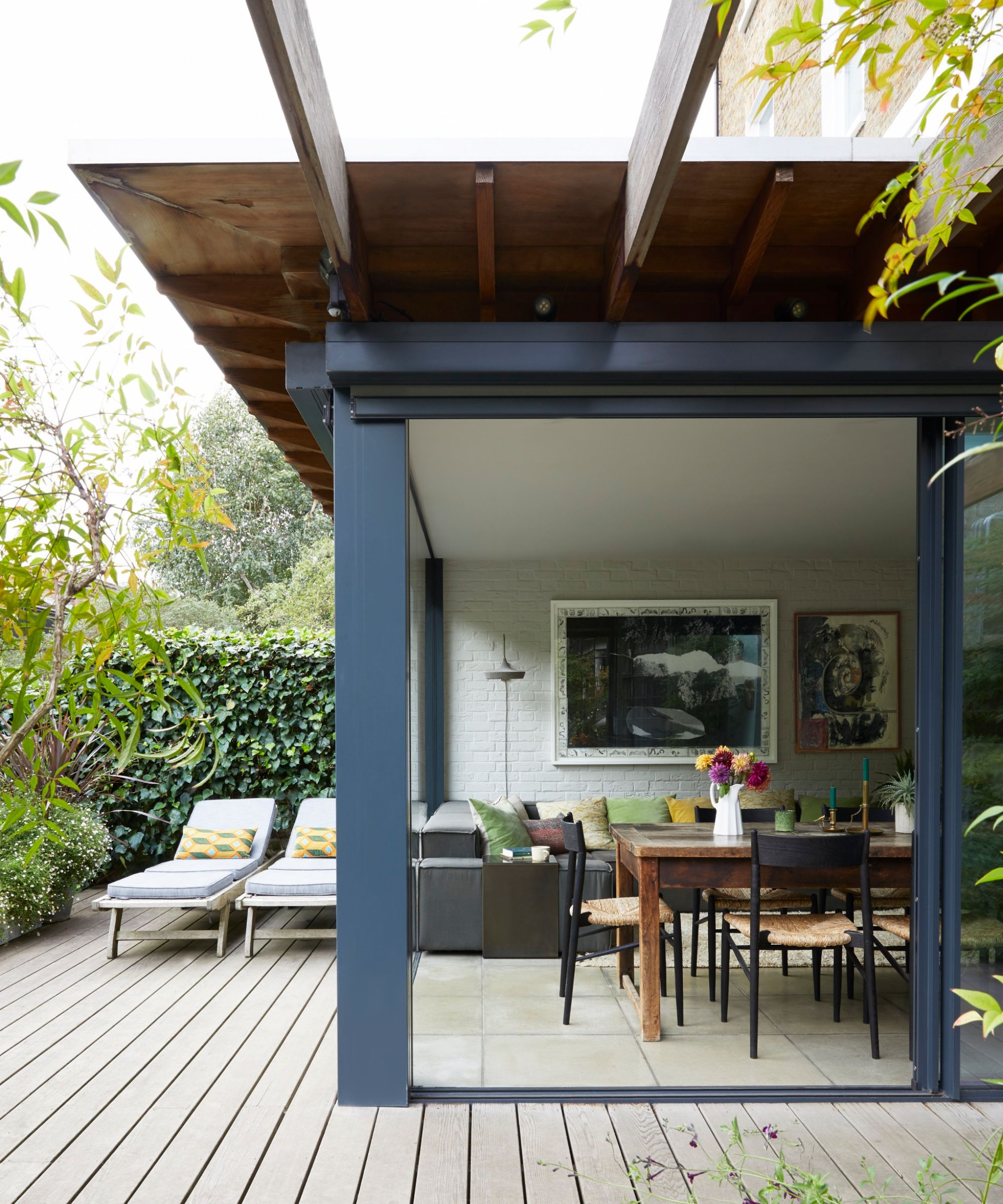
One of the greatest advantages of a small sunroom is its connection to the landscape beyond. Rather than competing with those views, the most successful schemes in smaller spaces borrow colors, textures, and materials directly from the yard, making the room feel larger by visually extending it outdoors.
‘I always begin with continuity,’ says designer Dorothee Junkin. ‘A sunroom should feel connected to the architecture and material palette of the home rather than treated as a standalone space. Carrying through similar tones, finishes and textures creates a seamless transition.’
That continuity can be as simple as repeating timber finishes from adjoining rooms, introducing natural woven materials or selecting upholstery in soft greens, earthy neutrals and muted browns that echo the changing landscape outside.
Plants play an equally important role. Rather than filling every windowsill with pots, opt for one or two larger specimens that bring sculptural height without creating visual clutter. Marika Meyer believes restraint is crucial. ‘Plants are another layer of texture and add character,’ she says. ‘We're threading the needle between being in an interior space while welcoming the aura and feel of the outdoors. Strategically placed without overdoing it, they bring warmth and reinforce that connection.’
By allowing the eye to move seamlessly between the interior and garden, even the smallest sunroom can feel surprisingly generous.
6. Layer Texture Instead of Clutter
When square footage is limited, it's tempting to keep decorating to a minimum, but a pared-back room isn't always the most inviting. The secret is adding warmth through texture rather than filling the space with unnecessary accessories.
‘A sunroom should still feel like a proper interior room,’ says Lauren Carlucci. ‘Because it is often dominated by glass and hard architectural surfaces, I like to add softness through upholstered furniture, pillows you can sink into, rugs and fabric lampshades. Those layers make it feel comfortable and considered rather than simply like an enclosed patio.'
A generous area rug immediately anchors the furniture while helping absorb sound, something that's especially important in rooms surrounded by glass. Cushions, throws and linen upholstery introduce another layer of comfort without taking up additional floor space.
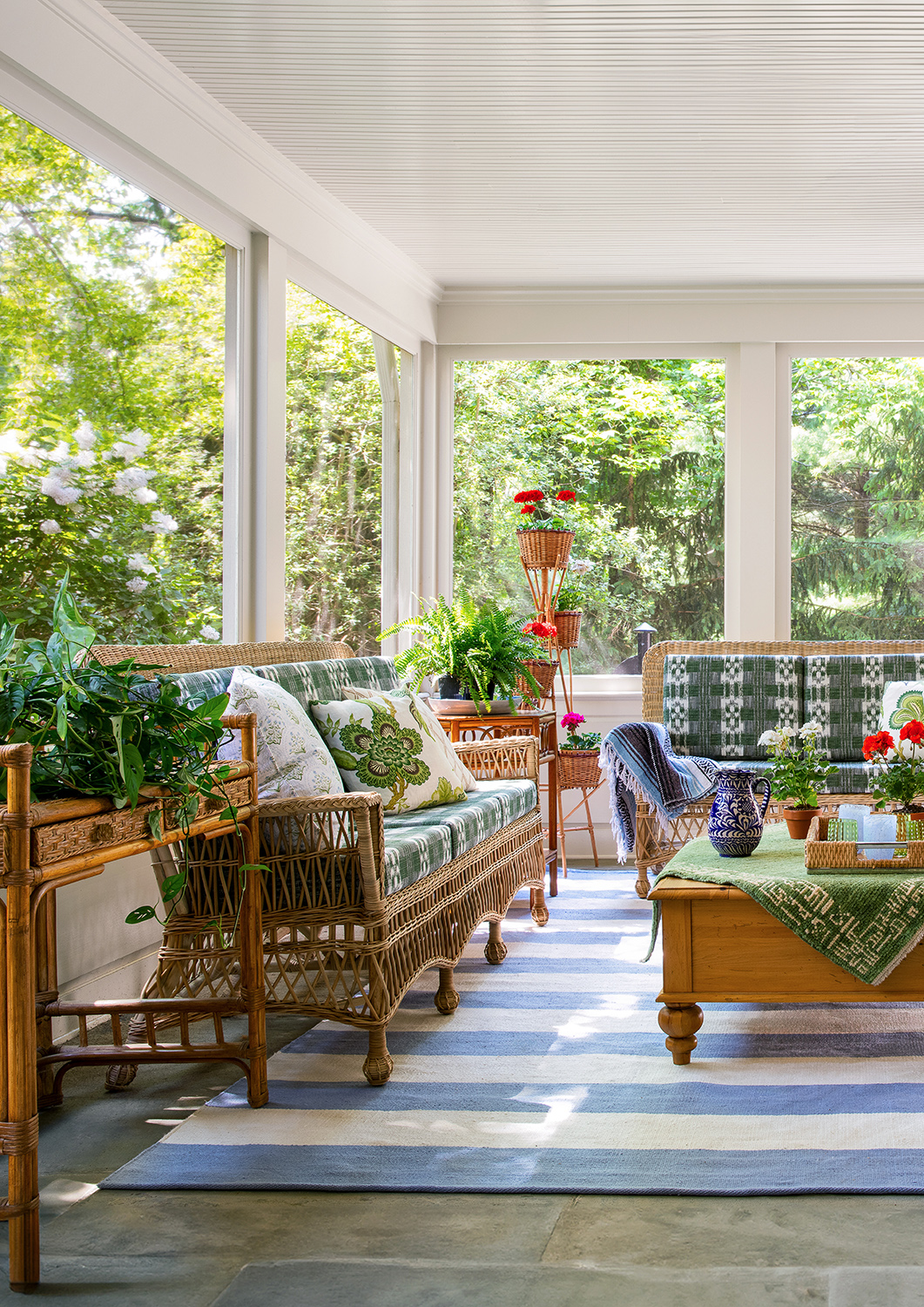
Small sunrooms can be decorated as if you were away, filled with cheerful motifs like deckchair stripes (which, if used cleverly, can also make them feel a little bigger). 'Decorating with stripes is the perfect summer signifier,' says interior designer Ariel Okin, who designed this small sunroom complete with its blue and white rug. 'Tailored and crisp, they can also be fun and cheeky when done in a playful color. They anchor this sunroom in a carefree spirit, yet provide a solid foundation for the rest of the layering to bounce off of.'
7. Use Color to Visually Expand the Room
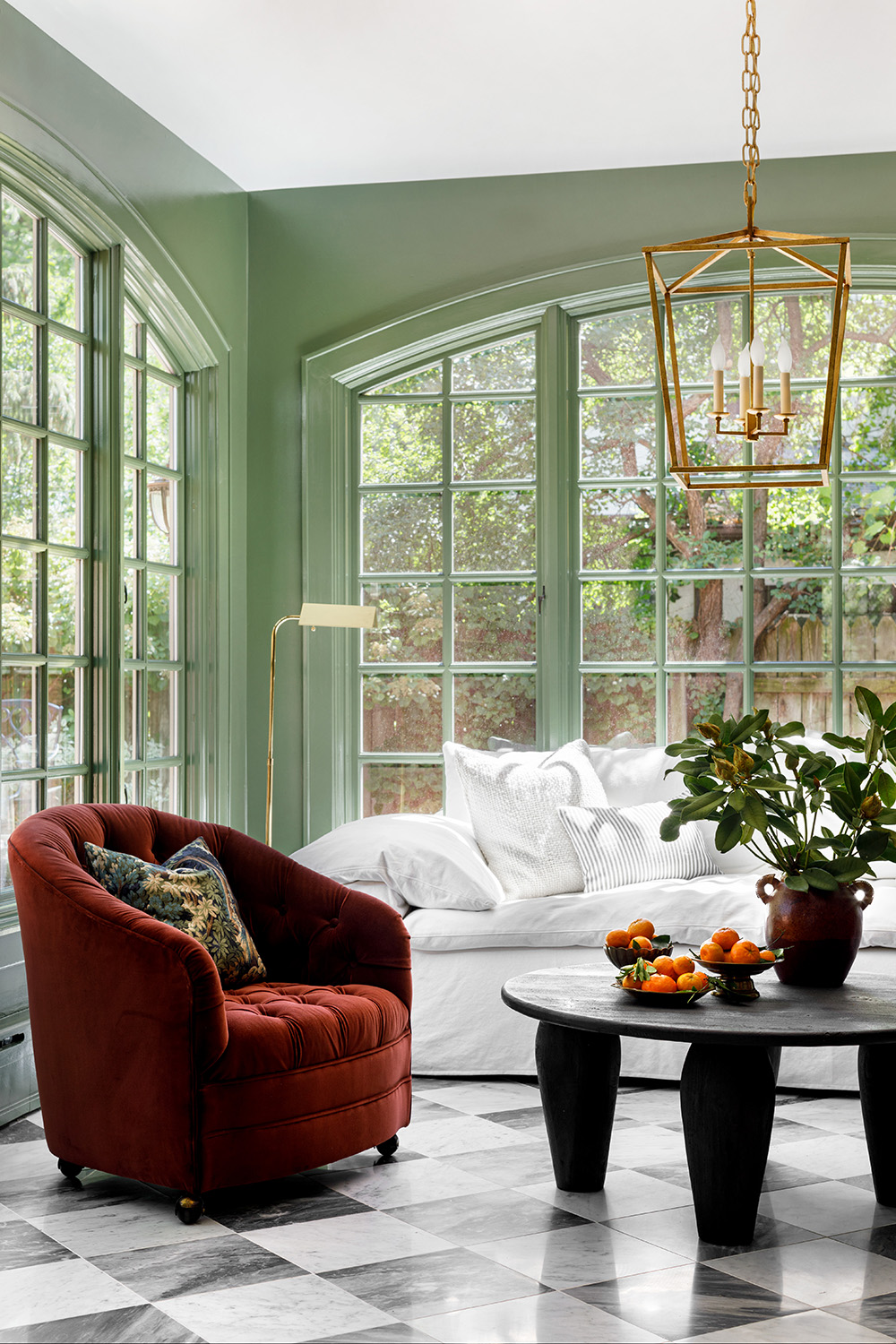
Natural light changes dramatically throughout the day, making color choices particularly important in a small sunroom. Rather than automatically reaching for bright white, consider how your palette interacts with the landscape outside.
‘I love using colors inspired by nature,’ says Dorothee Junkin. ‘Soft greens, warm neutrals, muted browns and earthy tones work beautifully with changing daylight and reinforce the connection to the landscape outside. Because the quality of light shifts throughout the day, nuanced colors reveal different layers and character over time.’
Chicago-based designer Caroline Turner agrees, 'I chose high gloss to mimic the sun hitting a patch of grass and drenched the space to feel fully enveloped,’ for the sunroom pictured above. Greens remain one of designers' favorite choices because they visually extend the garden into the room. Hattie Hansard, designer at Joanna Wood Interiors, often begins by looking outside. ‘I tend to choose color palettes that take their cue from the landscape. Greens work particularly beautifully because they blur the boundary between indoors and out, while warm neutrals provide a calm backdrop and make the space feel timeless.’
Whatever palette you choose, keeping it relatively restrained helps maintain visual flow, allowing the eye to move effortlessly between the room and the garden beyond. That's ultimately what makes a compact sunroom feel larger than it really is.
8. Choose Flooring that Creates a Sense of Flow
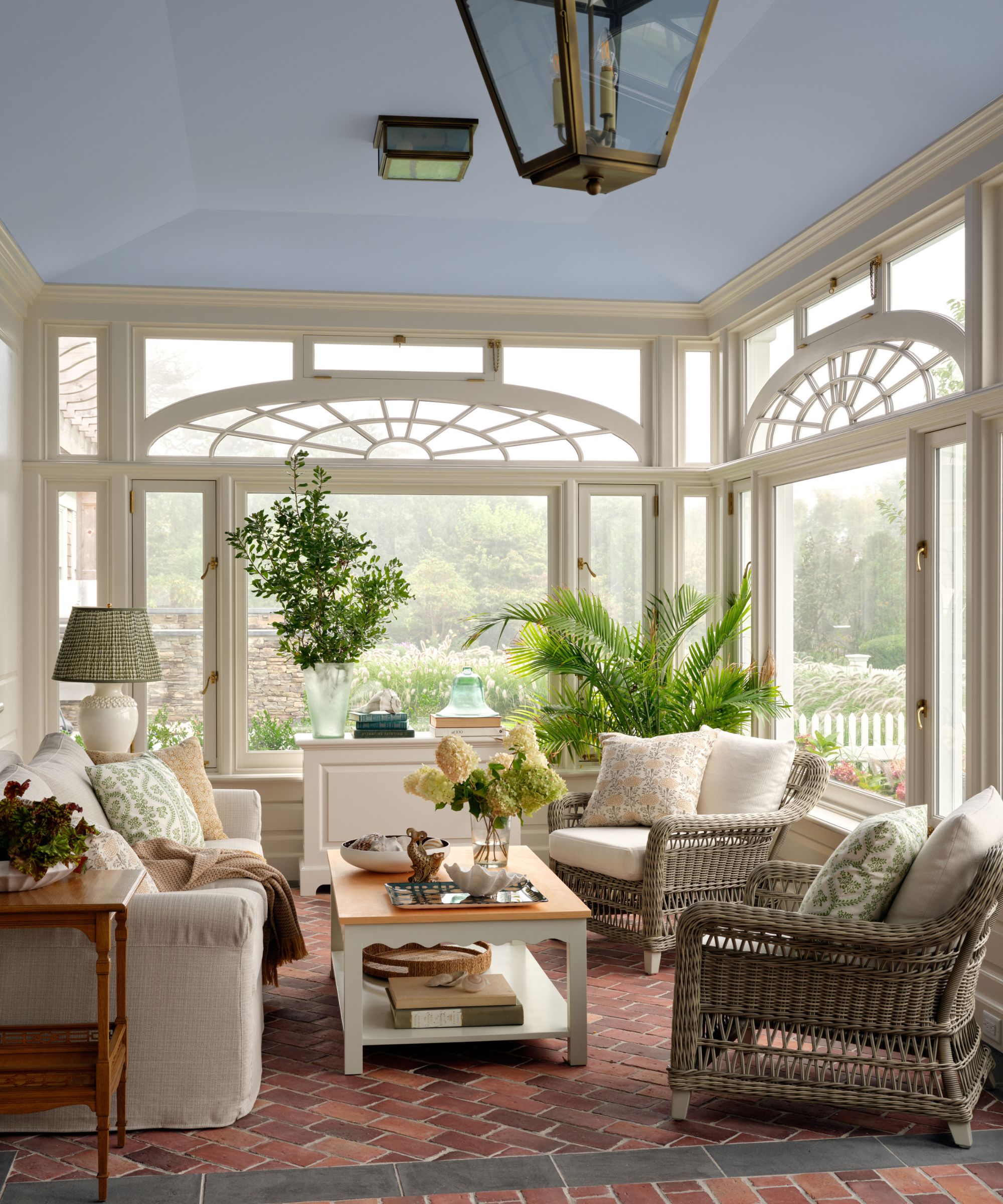
Flooring occupies a surprisingly large visual area in a compact sunroom, making it one of the most effective ways to influence how spacious the room feels. Rather than introducing abrupt changes in material, look for finishes that visually connect the sunroom to adjoining spaces while still responding to its practical needs.
Natural stone, brick and timber all work beautifully, grounding the room while reinforcing its connection to the outdoors. If your sunroom serves as a high-traffic entrance to the garden, durable materials that improve with age are often the most forgiving.
For Meg McSherry, natural texture is just as important as color. ‘It's all about being thoughtful with materials and textures,’ she says. ‘Use a textured floor like brick or stone that leans toward the outdoors, but include finishes found throughout the rest of the home. You should feel as though you are on the verge of stepping outside, yet remain completely comfortable and cozy.’
If you prefer a softer finish underfoot, a generous natural fiber or wool rug can help define the seating area while adding warmth and absorbing sound without interrupting the overall flow.
9. Don't Overlook Lighting, Blinds and Temperature Control
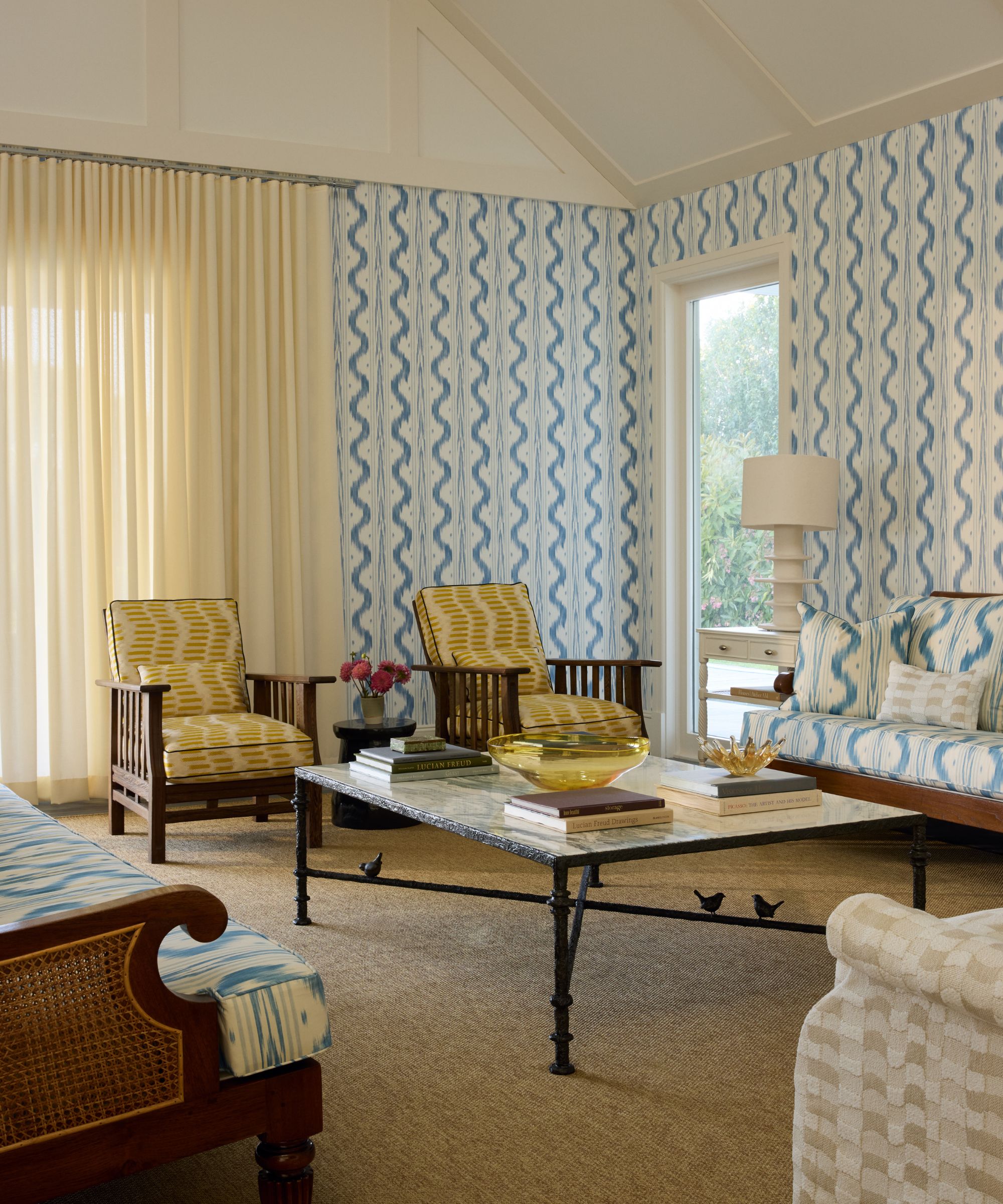
One of the biggest challenges in a small sunroom isn't finding space for more furniture – it's making the room comfortable enough that you'll actually use it all day long. Compact glazed spaces can heat up quickly in direct sunshine, while a lack of layered lighting often means they're abandoned as soon as daylight fades.
‘One of the biggest practical considerations is sunlight,’ says Hattie Hansard. ‘Direct sun can bleach upholstery, rugs, artwork and photographs surprisingly quickly. I always recommend incorporating electric or automated blinds, particularly for glazed roofs, so you can control the light throughout the day without losing the connection to the garden.’
Good sunroom window treatments also make a small room feel more adaptable. Roman blinds, woven shades or discreet solar blinds allow you to soften harsh afternoon light without closing the room off completely, while UV-protective glazing or films help preserve fabrics in spaces that receive prolonged sunshine.
Lighting deserves just as much attention. Because compact sunrooms often become reading nooks or cozy sitting rooms, relying solely on daylight limits when the room can be enjoyed. ‘A sunroom shouldn't only work during the day,’ Hattie continues. ‘Table lamps, wall lights and candles completely change the atmosphere in the evening and make it somewhere you still want to spend time during the winter months.’
Combined with ceiling fans or opening windows for cross ventilation, these small interventions ensure a compact sunroom feels comfortable from the first coffee of the morning to the last drink of the evening.
Ultimately, designing a small sunroom isn't about fitting more into the space – it's about making every element earn its place. When every choice has a purpose, from the furniture you invest in to the way natural light moves through the room, the result is a space that feels effortlessly balanced rather than overworked.
Rather than chasing square footage, focus on creating somewhere you'll genuinely want to spend time. Done well, a compact sunroom proves that it's thoughtful design, not generous dimensions, that makes a room truly liveble.
Love beautiful design ideas, expert advice, and inspiring decor trends? Sign up for our newsletter and get the latest features delivered straight to your inbox.