If your kitchen knives have gotten to a point where they’re so dull you have to practically saw your way through a tomato, then it’s time to show them some tender, loving care. Keeping kitchen knives sharp is an important, but often ignored part of cooking at home. While it’s tempting to simply toss out cheap, dull knives (in a safe manner, of course) and buy new ones, learning how to sharpen your knives is a valuable skill that will save you money in the long run.
There are several ways to keep your favourite knives sharp. For best results, you can send them to a knife-sharpening service where an expert can restore the blade to almost new condition. You can send your knives by post or drop them off in person, or even book a mobile knife sharpening service that will come to your home.
However, this isn’t always ideal if you don’t have the budget for it or can’t be without your knives for a period of time – which is especially inconvenient if you cook most days of the week. So having a knife sharpening tool at home is really useful, as it also allows you to sharpen your knives on a regular basis. Sharp knives mean fewer kitchen accidents; dull knives lead you to put more downwards pressure onto the ingredient you are trying to slice, raising the risk of the blade slipping and therefore injuring yourself.
Read more: Best kitchen knife sets, tried and tested
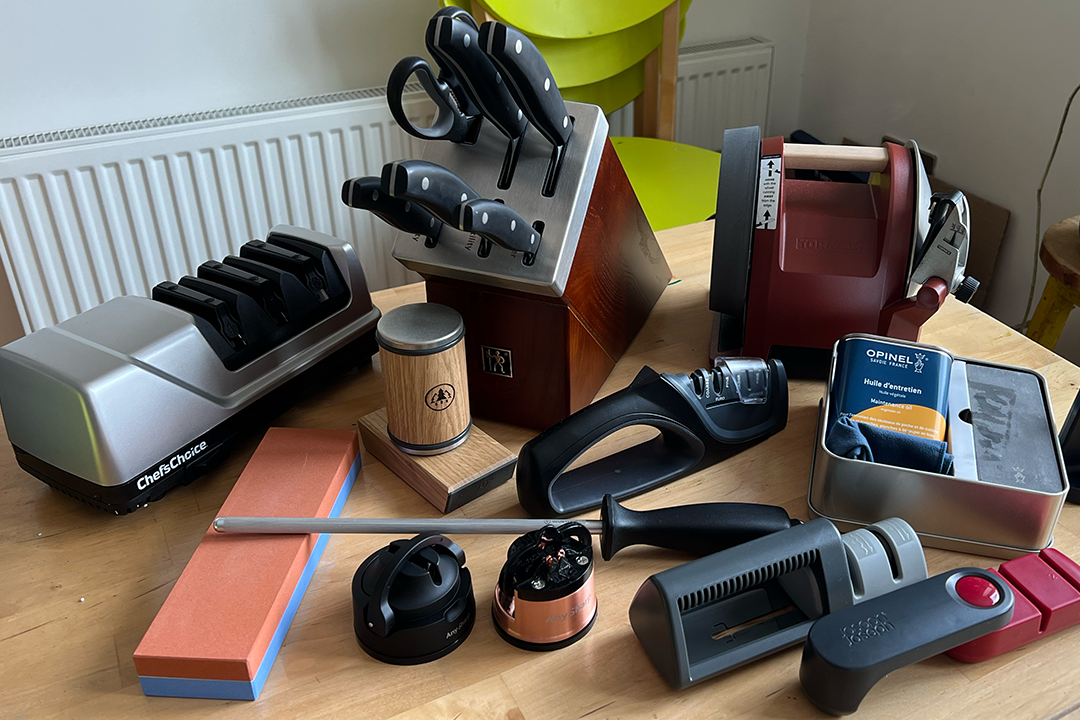
The best knife sharpeners for 2026 are:
- Best overall – AnySharp classic pro kitchen knife sharpener: £20, Johnlewis.com
- Best budget buy – Lakeland international knife sharpener: £14.99, Lakeland.co.uk
- Best compact design – Joseph Joseph rota red folding knife sharpener: £20, Josephjoseph.com
- Best premium option – HORL 3 rolling knife sharpener: £169, Boroughkitchen.com
Read more: Best meat thermometers, tried and tested
AnySharp classic pro kitchen knife sharpener
Rating: 5/5
Best: knife sharpener overall
Why we love it
- Fastens securely to smooth countertops
- Very easy to use
- Doesn’t require multiple steps
Take note
- Does not fasten to counters with even the slightest texture
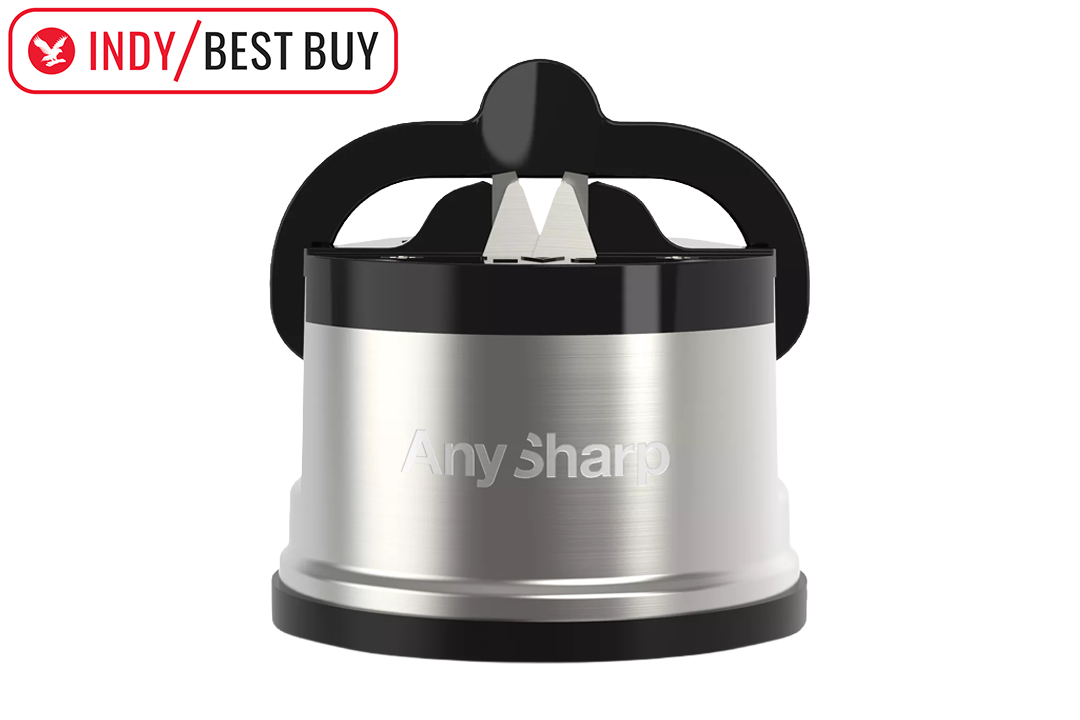
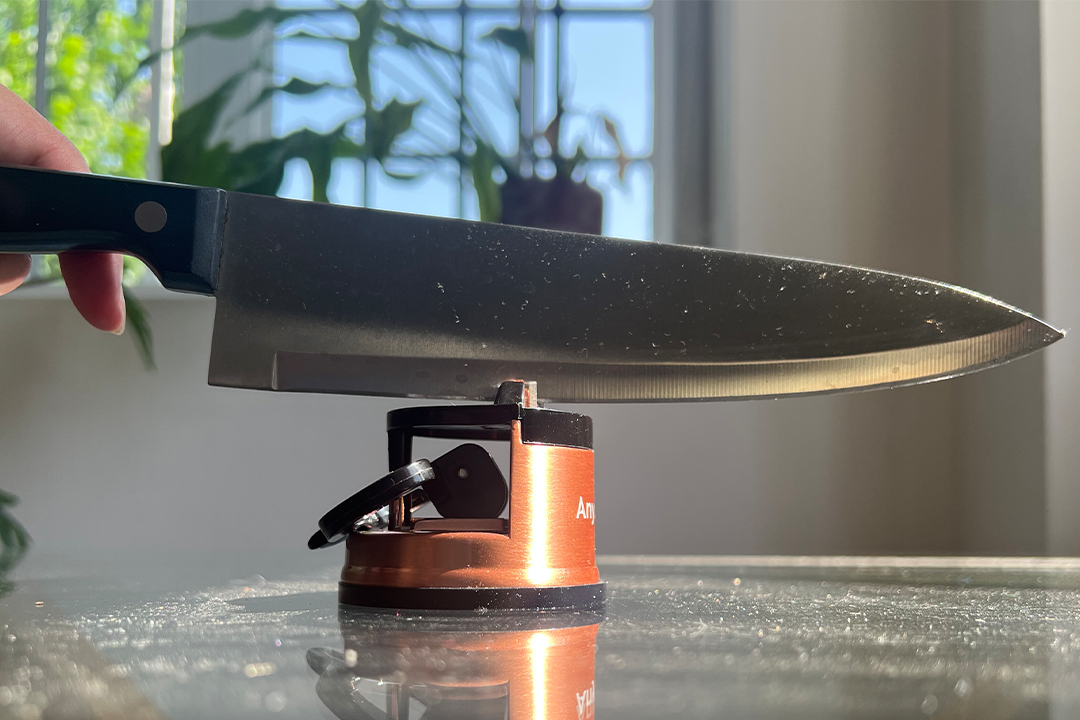
This unfussy and uncomplicated knife sharpener by AnySharp is a treat to use. It is small and compact, so doesn’t take up any space at all, and no skill is required to learn how to use it – I simply pulled my knives through the V-shaped mechanism and Bob’s your uncle. I especially liked the suction base, which fastens securely to your worktop and does not budge at all. However, I found that it sticks especially well to very, very smooth surfaces, such as smooth stone or steel countertops, but less well to anything with even a little bit of texture – so wooden dining tables or textured countertops will not work with this tool.
The ease of use and small size of this sharpener aren’t the only appealing things about it. At just £20, it’s a really affordable tool that performs exceptionally well with most knife types, even serrated knives. It sharpened my European knives to a fine point, leaving only a small amount of fine steel dust afterwards, and I was really pleased with the results. But Japanese knife owners should stay clear of this particular model of AnySharp knife sharpeners as it does not have the right angle for Japanese knives – instead, seek out the brand’s adjustable angle model if you’re keen.
Key specifications
Buy now £20, Johnlewis.com
Lakeland international knife sharpener
Rating: 4/5
Best: budget knife sharpener
Why we love it
- Sharpens both Japanese and European knives
- Rubber grip on handle and bottom are secure
Take note
- Requires gentle use or it could cause blade damage
- Removes more steel than gentler sharpening methods
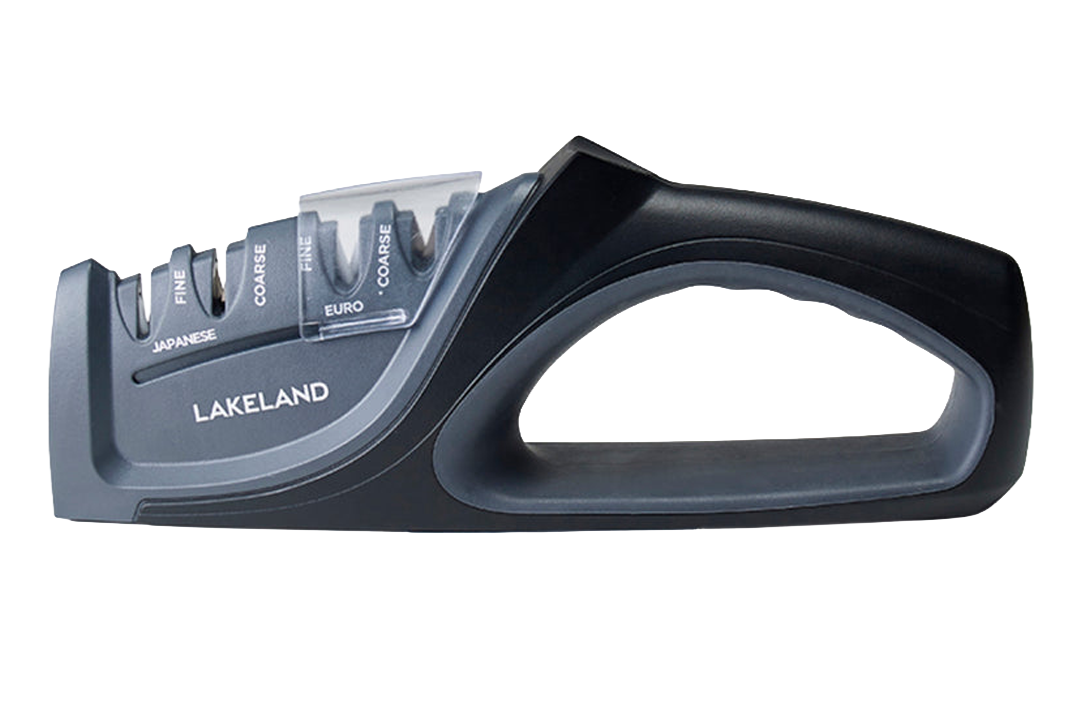
If you have both Japanese and European knives in your rotation, then this Lakeland sharpener is ideal for your household. European knives tend to be heavier and thicker, made with a softer steel, whilst Japanese knives are made from harder carbon steel with a much thinner blade. This means you can’t use the same sharpening method for both types, given the edge of the blades are cut at different angles using different materials.
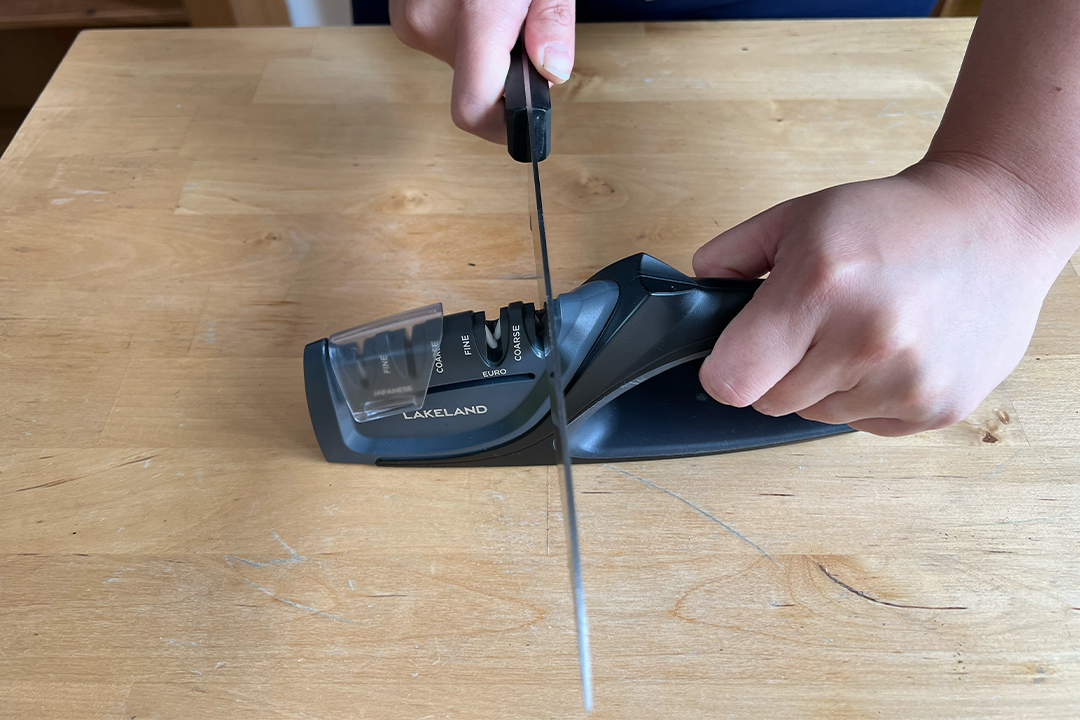
This sharpener features one side for sharpening European knives, which typically have a blade angled at 20 degrees, as well as a side for Japanese knives, for knives with a 15 degree angle. I found both sides to work really well, sharpening moderately dull knives into much better shape and honing sharper knives to be used on a regular basis. It is fairly lightweight but not so light that it won’t stay on a counter while sharpening our knives. I also liked the non-slip grip on both the handle and the bottom of the tool, which works especially well on smooth stone or tile counters.
Key specifications
Buy now £14.99, Lakeland.co.uk
Joseph Joseph rota red folding knife sharpener
Rating: 4/5
Best: compact knife sharpener
Why we love it
- Folds up neatly
- Easy to use regularly
Take note
- Harsh use can lead to blade damage
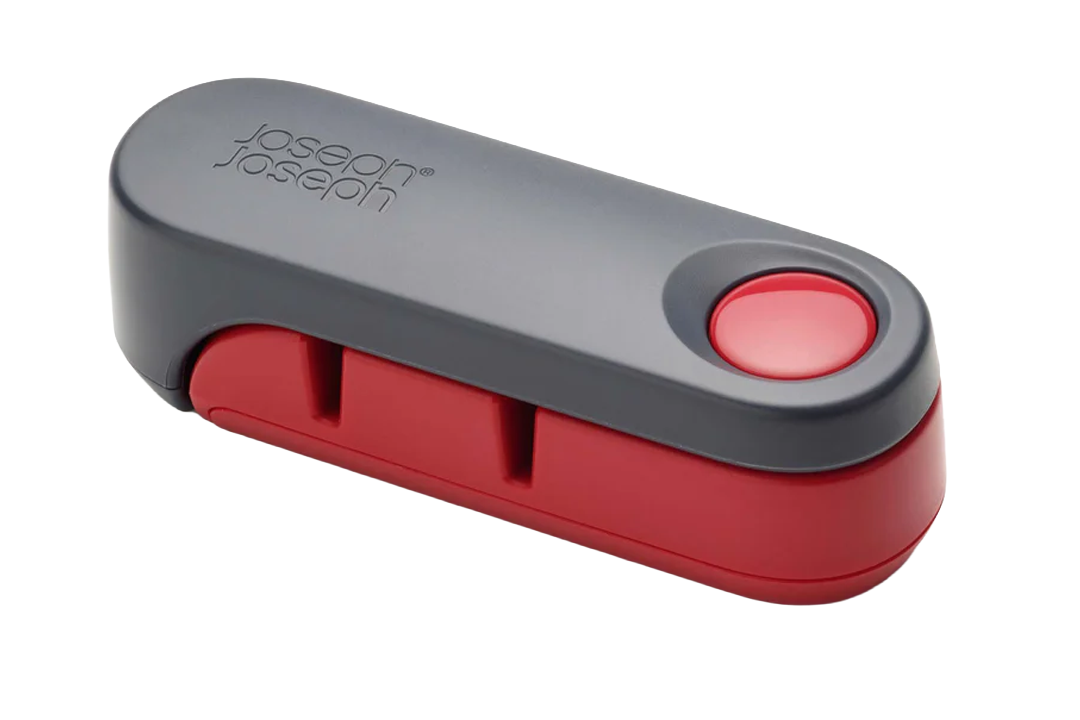
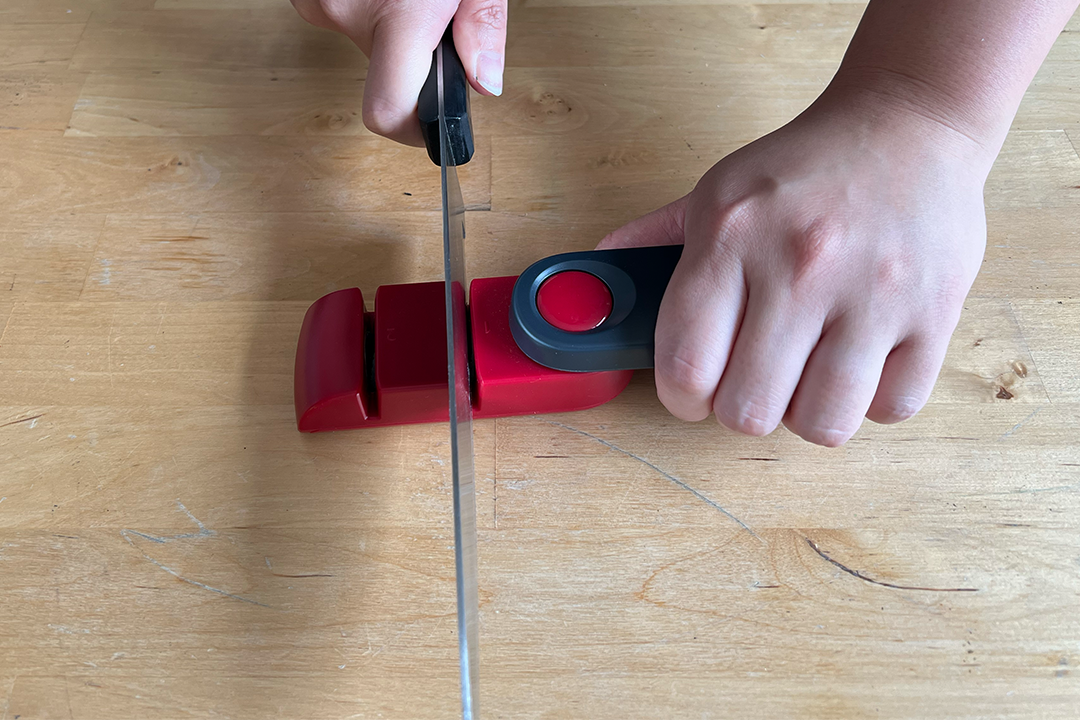
I really liked how small this nifty tool is when folded, as it is really neat and easy to tuck away into any kitchen drawer, out of sight. It then unfolds with the press of a button and is ready to use. I liked the handle to hold and stabilise it while pulling a knife through. There are two sharpening mechanisms, both of which feature ceramic sharpening wheels. The first is for sharpening knives that are more dull, while the second is for honing, which maintains and realigns the edge of a sharpened knife.
This is handy and simple to use, but I must caution against a heavy hand when pulling your knives through, as this could lead to chipping and damage to your blade. It also will not do much for a very dull blade, but I think it does a good job at maintaining everyday knives.
Key specifications
Buy now £20, Josephjoseph.com
HORL 3 rolling knife sharpener
Rating: 4.5/5
Best: premium knife sharpener
Why we love it
- Aesthetically pleasing
- Gentle sharpening method
- Simple to use
Take note
- Discs tend to come off if held upright
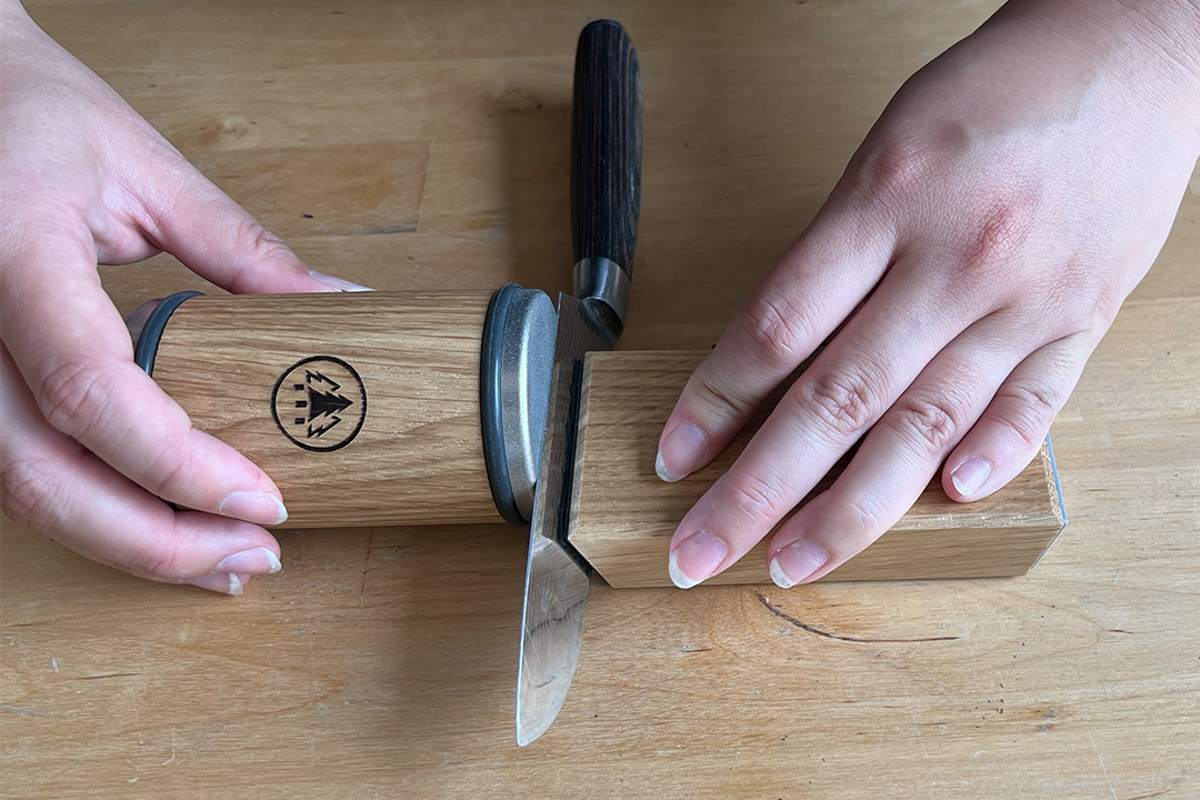
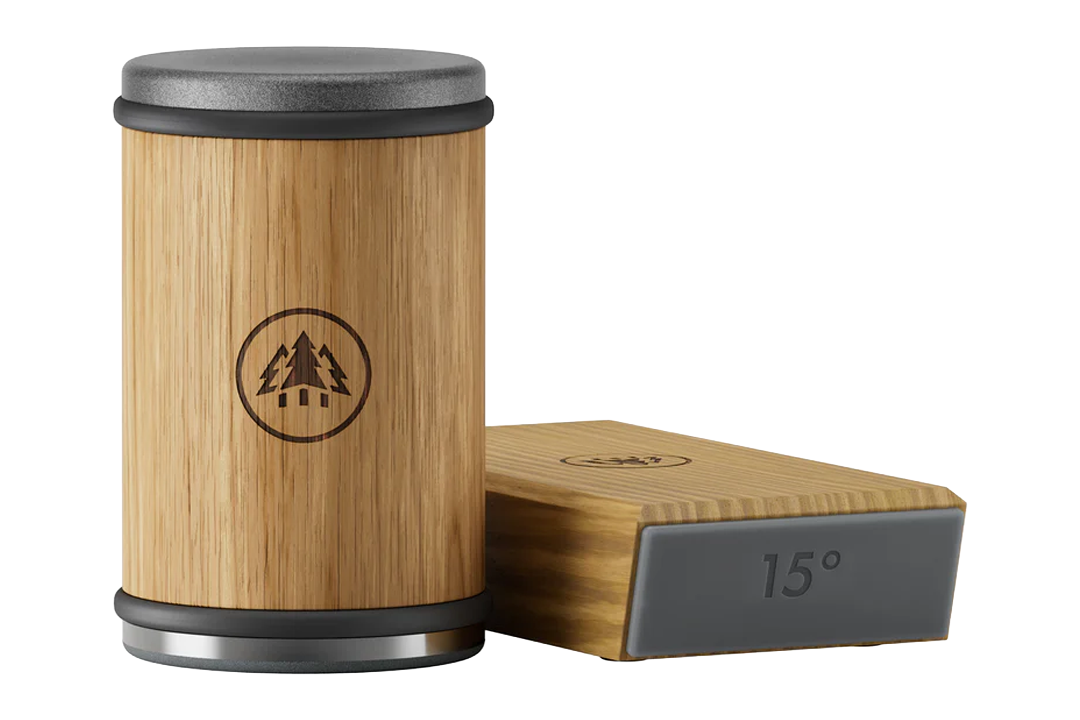
A rolling knife sharpener is as fancy as it sounds. There are only a few on the market, so I found myself in really unfamiliar territory upon unboxing the HORL 3 sharpener. It comes in two parts – a barrel-shaped wooden block with interchangeable whetstone discs on either side, and a flat wood block with angled magnets on either end. One side or the rolling sharpener features a diamond sharpening whetstone while the other is a ceramic honing whetstone.
Despite looking a bit complicated, the sharpener is actually really simple to use. Depending on the angle of our knife (which depends on whether it is of European or Japanese origin), we simply attached it blade-up to the magnetic side. Then, I simply rolled either the sharpening side or the honing side of the round block against and along the length of the blade. It worked with knives of all lengths, however it will not work on knives wider than 57mm – such as a cleaver.
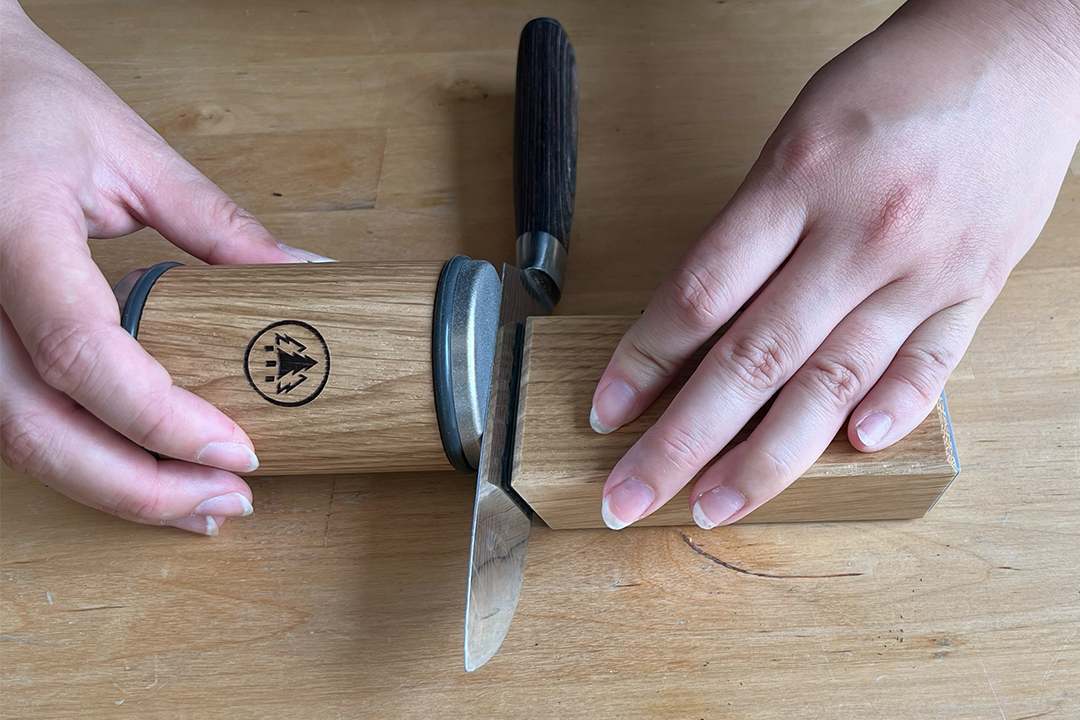
Overall, I was really impressed by how well this sharpener works. It is gentler than a pull-through sharpener, taking off much less steel from the blade, whilst being easier to use than a traditional whetstone. Both pieces are also quite compact and fit neatly into most drawers, but it also looks quite chic on the counter top.
Key specifications
Buy now £169, Boroughkitchen.com
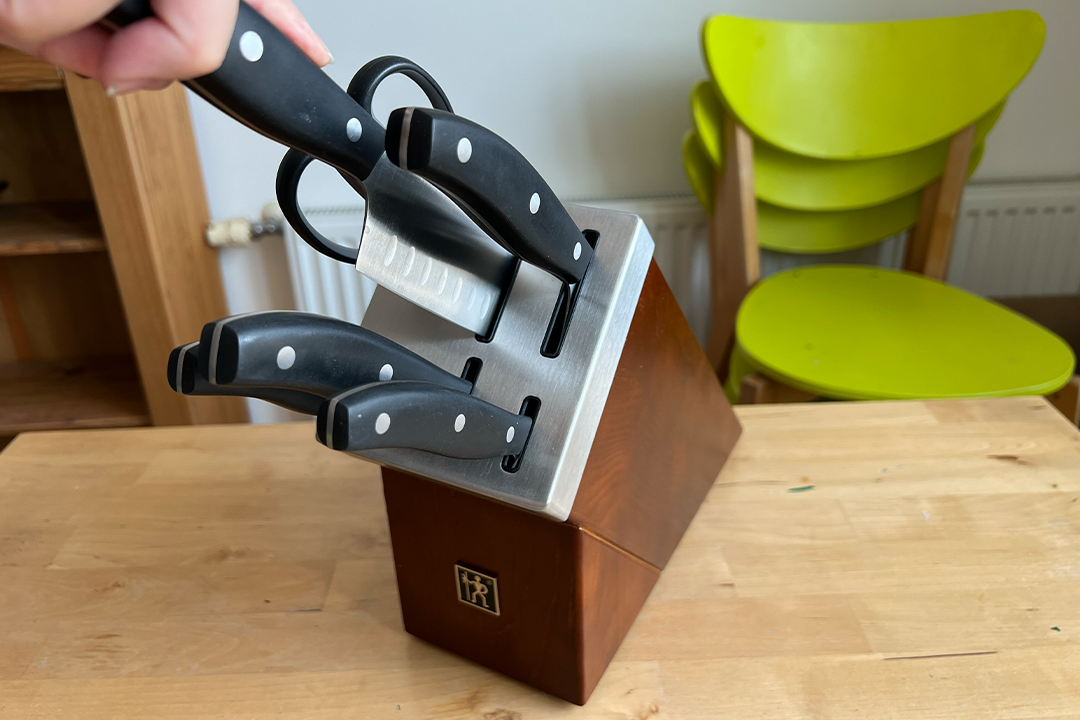
Henckels international self sharpening definition knife block
Rating: 5/5
Best: knife sharpening block
Why we love it
- Convenient
- Keeps knives sharp without having to think about it
Take note
- Expensive
- Very heavy knife block
- Only compatible with Henckels knives
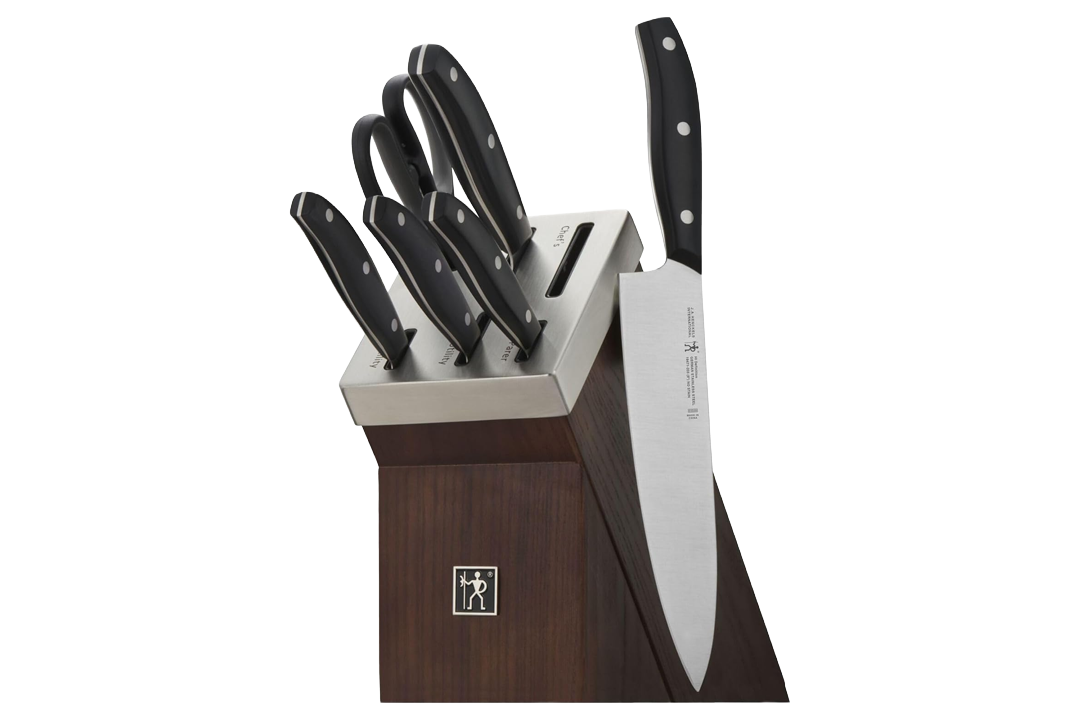
I featured this set of German-made knives in my review of the best knife sets but it also deserves a place here. The self-sharpening knife block is innovative and extremely useful, particularly in small kitchens where space is a premium and having yet another tool just takes up precious room on the counter or in the drawers. Henckels has been forging knives for nearly 300 years so we had high expectations for this block, and it really delivered.
Each knife slot (except the serrated knife slot) features built-in ceramic honing wheels so that the knife edge gets realigned every time you put it back and take it out. This removes the need for sharpening dull knives, as they never really get dull, and I always had really sharp knives on hand. It is quite an investment and the block is very heavy thanks to all the inner mechanisms, but I think it’s worth it to save yourself the hassle.
Key specifications
Buy now £199, Amazon.co.uk
Tormek T-1 kitchen knife sharpener
Rating: 5/5
Best: knife sharpener for heavy-duty sharpening
Why we love it
- Expert sharpening
- Gentle but highly effective
- Surprisingly quiet
Take note
- Large, bulky and heavy
- Takes quite a bit of practice
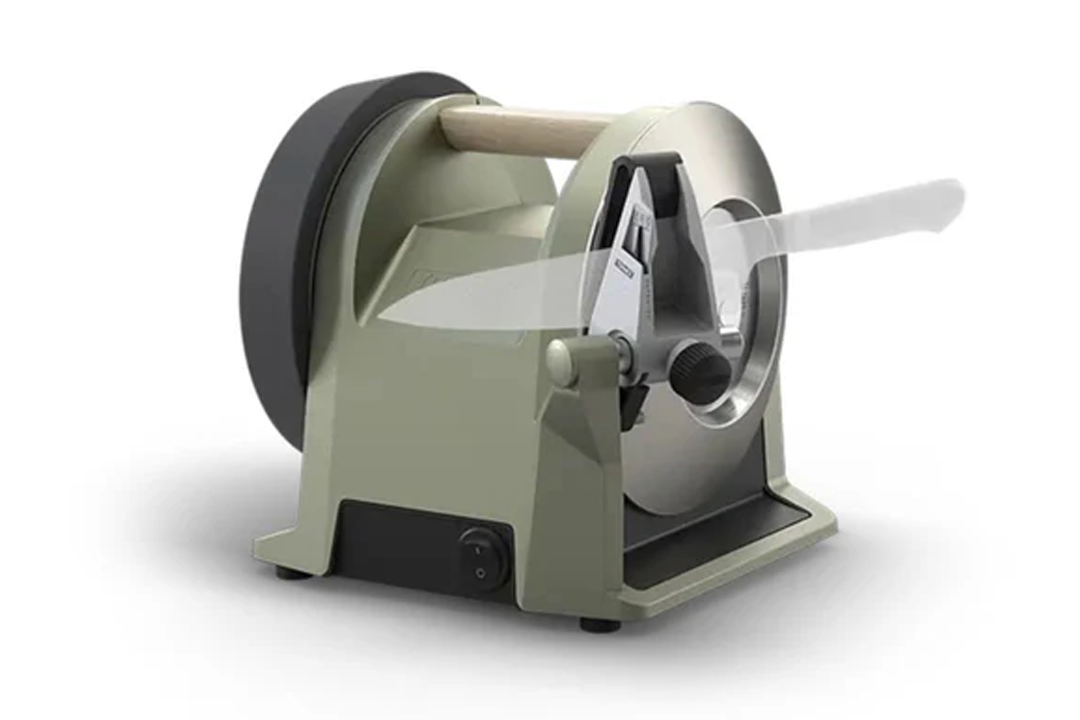
Now, this is some serious-looking kit. Swedish brand Tormek is typically known for making sharpening industrial and commercial use, so you’d be more likely to find their machines in a professional kitchen than a home one. However, they launched their first sharpener for home cooks in 2022 and have carved out a space for themselves in the hearts of true knife nerds.
The kitchen knife sharpener has two sides, one with a diamond grinding wheel and the other with a honing wheel. It takes some practice, but after obsessively watching how-to videos and booking in a session with a Tormek expert, I felt confident enough to try the machine out on one of our dullest knives. The machine is shockingly quiet, which I was not expecting at all, and the low rotation speed makes it much less intimidating. I ended up having quite a lot of fun grinding away and the end results were really impressive, improving my most blunt knife by leaps and bounds and sharpening my better knives to their former glories.
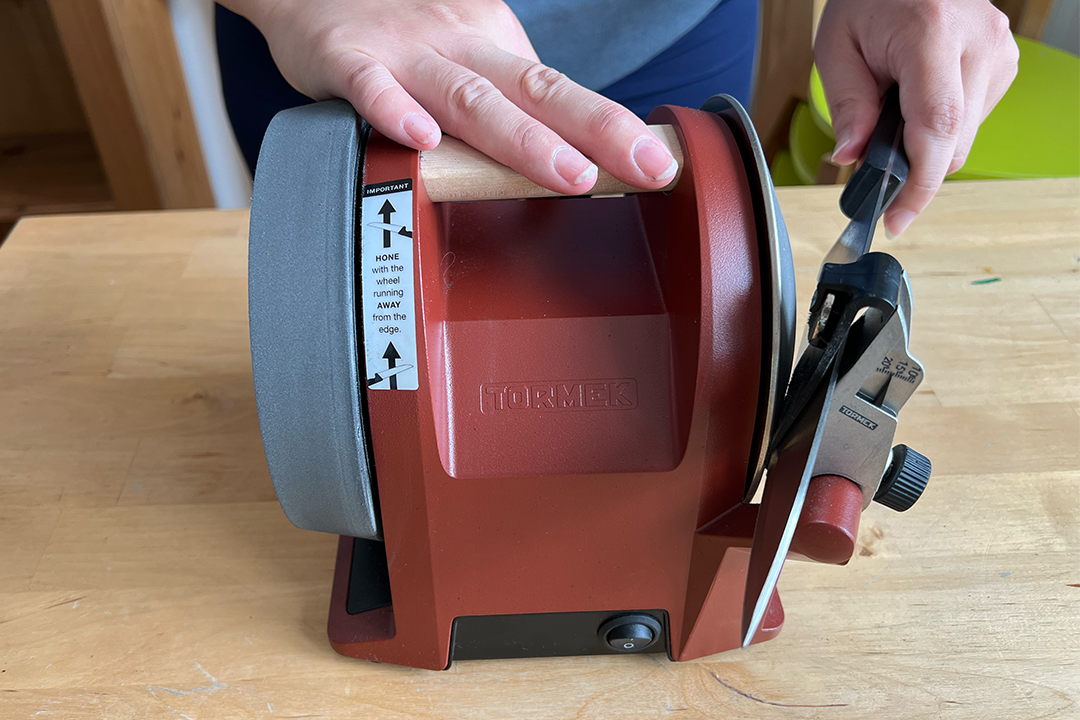
It’s a huge investment at well over £300 and while it is extremely satisfying to use, it does take up a fair bit of counter space. If your cupboards are full, it would also prove a problem storing it. However, if you do have the space and are extremely serious about keeping your knives in the best condition possible, the Tormek is a very impressive machine indeed.
Key specifications
Buy now £335, Divertimenti.co.uk
Wüsthof whetstone J1000 / J3000
Rating: 5/5
Best: whetstone knife sharpener
Why we love it
- Traditional, gentle way to sharpen knives
- Sharpens very effectively
- Can be stored away neatly
Take note
- Takes a lot of practice
- Messy, as it needs to be constantly wet
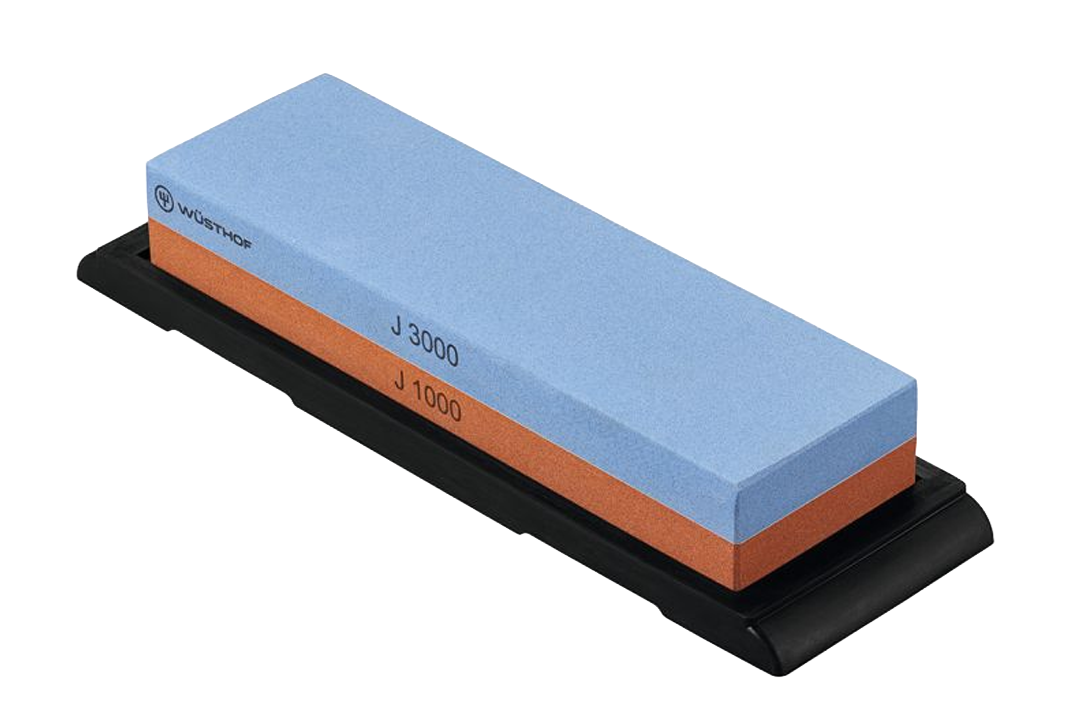
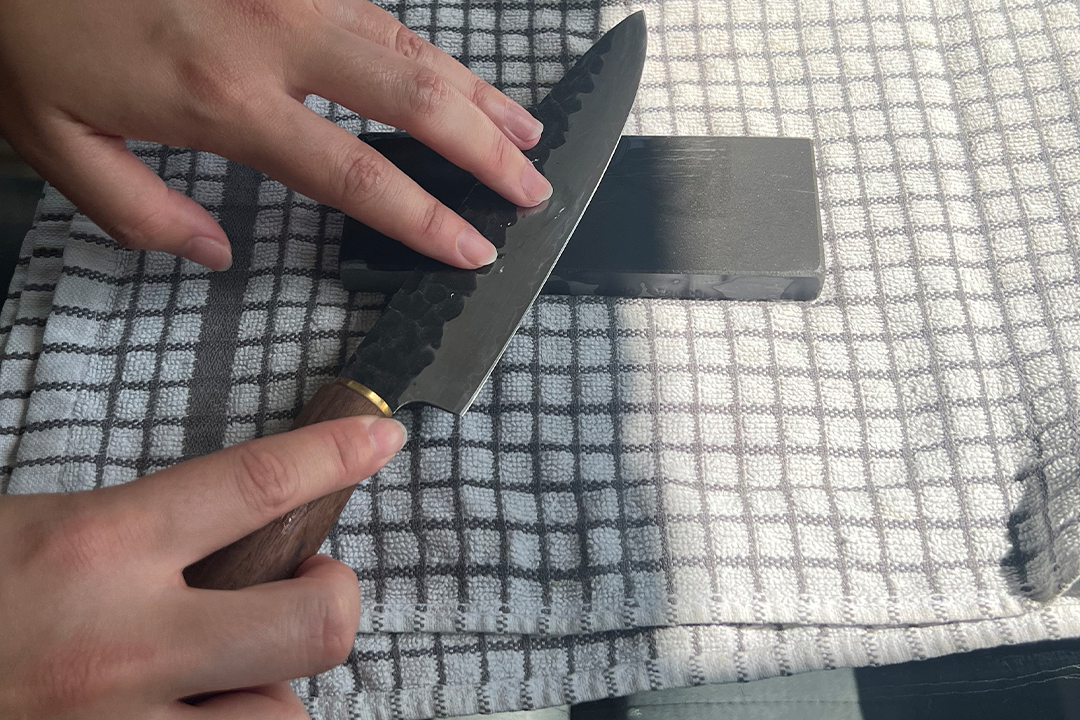
Whetstones are a traditional method for sharpening knives, having been around for thousands of years. These days, many whetstones come in the form of a rectangular block that needs to be soaked in water before you can start using it. German knife makers Wüsthof have several versions of whetstones that feature two sides, one with a coarse grit and the other with a fine grit. Each version has different grit levels and different functions, from heavy duty resharpening to fine-tuning.
The 1000/3000 grit version is my pick for everyday knife maintenance. Whetstones are a very gentle way of maintaining knives as they tend to shave off less steel compared to other tools, but they also require you to learn the right technique in order to get the best result. I would recommend looking up tutorials before starting, as I did. Once I got the hang of the angle at which to hold the knife and how to pull it over the stones, I found it produced a fine, sharp edge – but it does take quite a bit of time and practice.
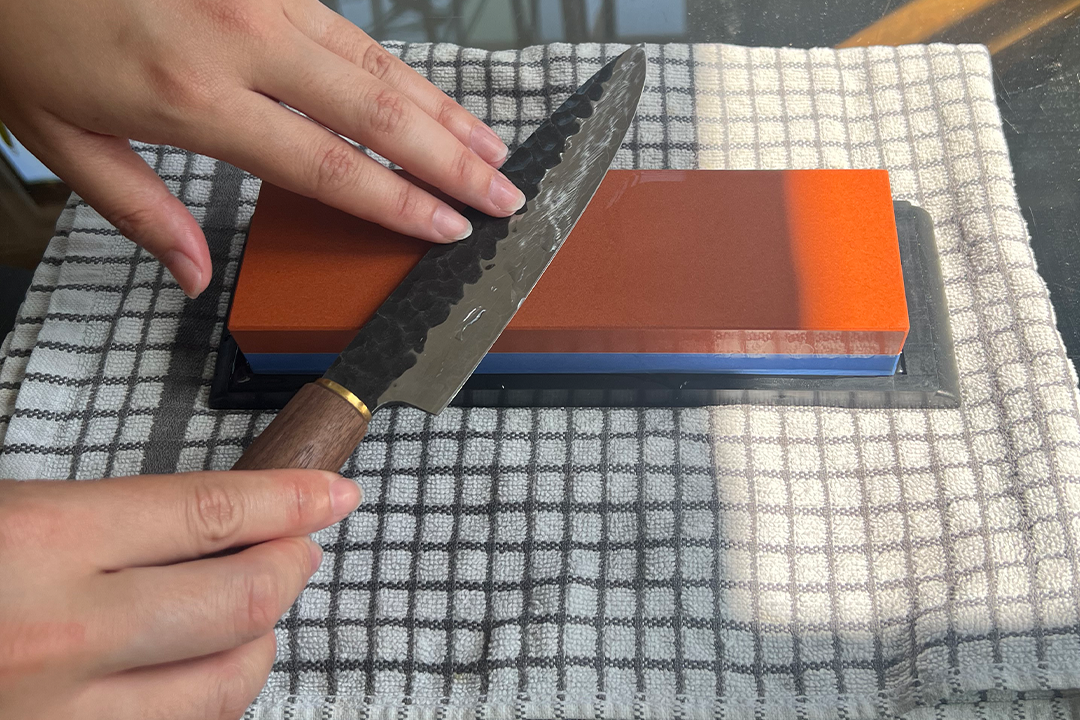
Learning how to use a whetstone is perhaps one of the ultimate slow-living skills to learn. It can also get messy, as I needed to keep the stone wet at all times and the resulting liquid after sharpening became murky with steel, so a fair bit of clean-up is required afterwards. However, whetstones are a great way to keep knives sharp and in good shape for longer, and are friendlier for most types of knives, even finer Japanese knives.
Key specifications
Buy now £94, Kitchenknives.co.uk
Opinel knife maintenance kit
Rating: 3.5/5
Best: knife sharpening kit
Why we love it
- Convenient to travel with
- Neatly packed
- Wood oil for handle provides extra maintenance
Take note
- Only one type of grit on whetstone
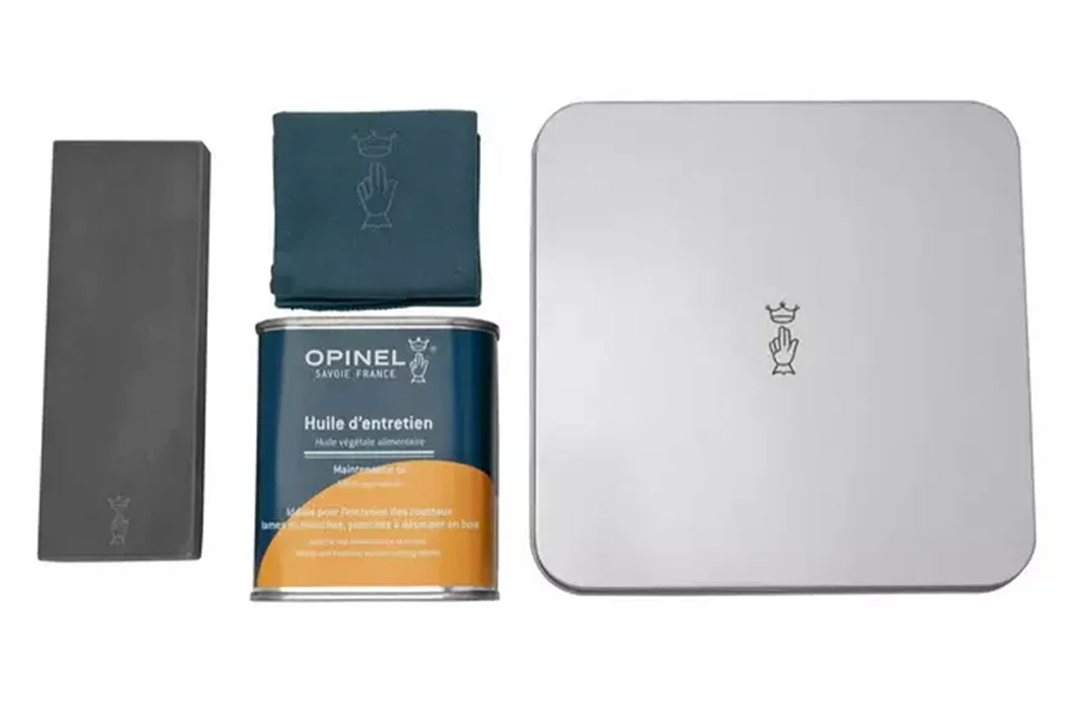
This would make a great gift for chefs and knife nerds (often, the two come hand-in-hand). Inside the little steel box is a holistic knife maintenance kit, including a natural sharpening stone, an oil for seasoning wooden knife handles, and a microfibre cloth to wipe down any knives post-maintenance. Opinel, which has been making knives for over 130 years, is especially known for its wooden-handled pocket knives, many of which fold away neatly and are beloved by chefs, hunters, campers, and generally handy people. So this kit is a reflection of the brand’s commitment to practical on-the-go readiness and it works really well.
I like how simple the sharpening stone is. It’s all made from one type of grit, so there’s no question over which side to use – I simply used it to maintain knives that are regularly sharpened anyway rather than attempting to bring a dull blade back to life with it. The seasoning oil also gave our wooden handle knives a lovely new sheen, making them feel brand new again. It’s a nice, nifty kit to have around, particularly if you go camping often.
Key specifications
Buy now £43.99, Souschef.co.uk
Chef’s Choice electric knife sharpener 15XV
Rating: 4/5
Best: electric knife sharpener
Why we love it
- Very sharp results
- Works on straight and serrated blades
- Quick to sharpen
Take note
- Large and bulky
- Loud during sharpening
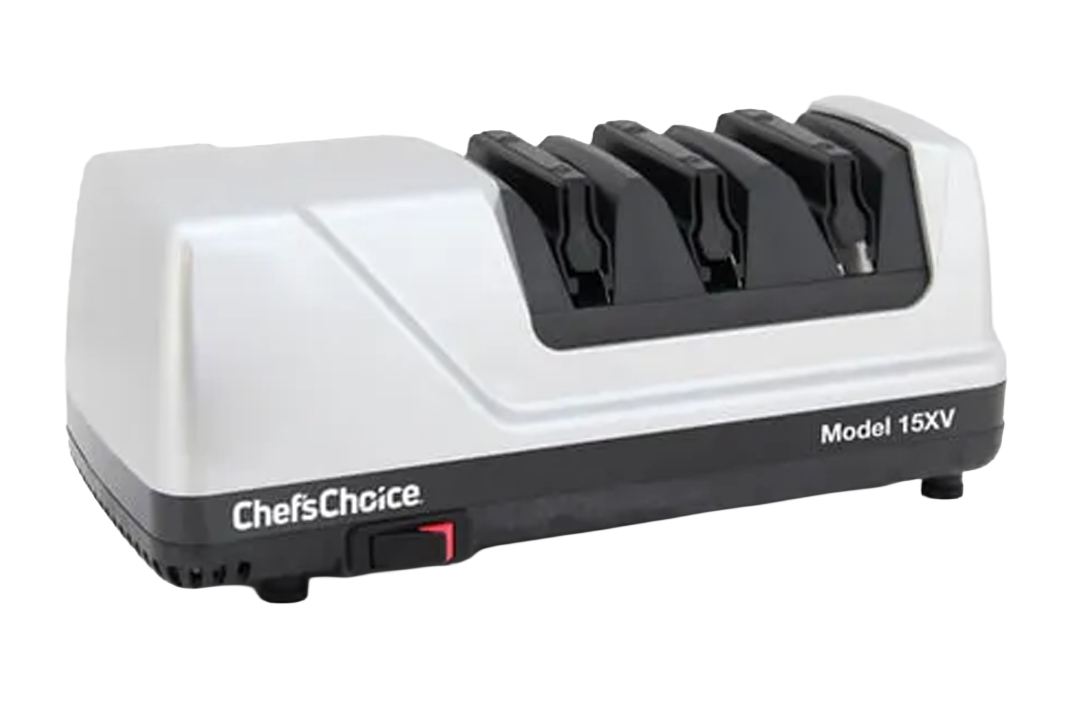
Another serious-looking bit of kit, this. It features, not one, not two, but six slots, two for three stages of sharpening. It looks slightly intimidating and, let’s be honest, looks like it would be much more at home in a commercial or restaurant kitchen than in our personal ones. However, for anyone planning to do some serious kitchen knife overhauls, this electric sharpener will do the job without you having the schlep your knives to an expert.
I found it quite intuitive to use once I got going. Working with a particularly dull knife, I pulled it through the first two slots, alternating between both sides a few times until a burr developed on the edge. A burr refers to a sliver of metal that forms along the edge of a blade during sharpening, which you can feel with your finger if you were to gently swipe against the flat side of the blade away from the edge. Make sure you watch a tutorial on how to do this before trying it for yourself.
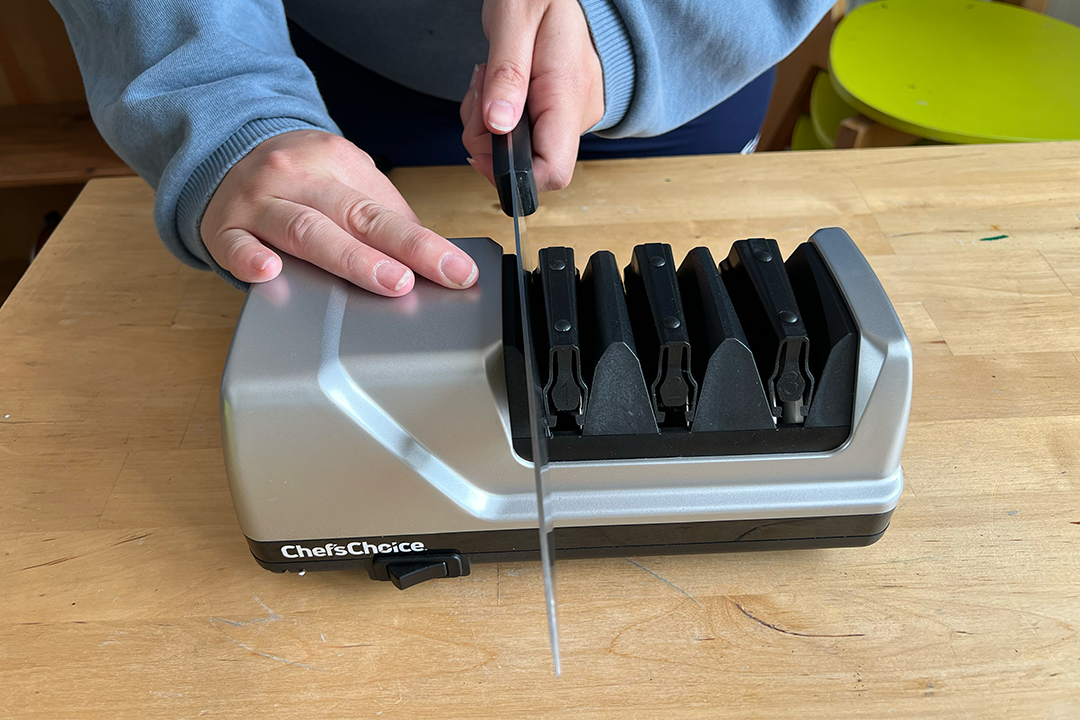
Once the knife has been sharpened to a satisfying point, I honed it in stage two – this gets rid of the bur and realigns the edge – before polishing it in the final stage. The resulting knife was significantly improved from its previously blunt state, with minimal steel removed. But while it did a good job at sharpening, it isn’t very practical for everyday use and, let’s face it, takes up precious counter real estate.
Key specifications
Buy now £199.95, Hartsofstur.com
Your questions about knife sharpeners answered
What is the best knife sharpener?
Being able to sharpen your own knives at home is an empowering kitchen skill. It means you’d never have to consider throwing out a perfectly good set of knives because they’ve gone dull or have to go without any knives for a period of time while you wait for them to be sharpened by a professional. For foolproof sharpening, I was especially impressed by the AnySharp classic pro kitchen knife sharpener, as well as the Lakeland knife sharpener and the HORL 3 rolling knife sharpener.
In terms of space-saving, which is very important in a small kitchen, Joseph Joseph’s rota red folding knife sharpener is a great option. If you are interested in learning how to sharpen knives traditionally, the Wüsthof whetstone J1000 / J3000 is an excellent place to start; and if you’re really serious about your kit, then the Tormek T-1 kitchen knife sharpener green or Chef’s Choice electric knife sharpener 15XV are as close to professional as you can get.
How I tested knife sharpeners
Pull-through sharpeners and whetstones are one of the most popular knife sharpening tools on the market. However, there are also several products that were traditionally used in commercial and industrial kitchens that have now been adapted for home use, such as electric knife sharpeners and sharpening machines. I put each tool to the test with the most dull set of knives I could think of: my mother-in-law’s knives, which have not been sharpened since she purchased them 20-odd years ago.
How often should I sharpen my kitchen knives?
As a rule, you should consider sharpening your kitchen knives every three to six months, but some experts think you should do it more frequently. Sushi master Endo Kazutoshi advises: “It depends on the knife and how it is used, but for someone cooking most days, I would recommend checking the edge every few weeks and sharpening whenever you notice a decline in performance.
“Many people wait until a knife becomes completely blunt. I think this is a mistake. Small, regular maintenance is much better than waiting for the knife to become very dull. Professional chefs often touch up their knives almost daily. At home, sharpening every one to three months is usually sufficient if done correctly, with regular care in between.”
Chef and supperclub host Sohini Banerjee agrees and adds: “For someone cooking almost every day a proper sharpen every four to five weeks keeps things in good shape. Think of it the way my grandmother thought about seasoning her tawa (a type of cast iron pan) - small, regular attention means you never have to do a dramatic rescue job.”
What is the difference between sharpening European vs Japanese knives?
Kazutoshi, founder and head chef at Endo at the Rotunda, explains: “Japanese knives are generally made from harder steel and are designed for more precise cutting. They often require a lower sharpening angle and benefit from being sharpened carefully on whetstones.
“European knives are usually softer and more forgiving. They are designed to withstand heavier use and can often tolerate slightly steeper sharpening angles.”
It would be a mistake to treat every knife in the same way, including the method with which you sharpen them, he adds. “Each knife has a purpose, a geometry and a character. Understanding that is part of respecting the craftsmanship behind it. As chefs, we do not sharpen a sushi knife the same way we sharpen a heavy kitchen knife. The same principle applies at home.”
Standard European knives have a 20 degree angle, whilst most Japanese knives have a 15 degree bevel. You should choose the correct knife sharpening method accordingly, or send your knives to a professional if you’re unsure.
Which knife sharpening method is the best?
This depends on what suits your own lifestyle and home kitchen needs, as well as the type of knives you own. Chefs like Banerjee and Kazutoshi prefer the traditional method of using a whetstone or a rolling kitchen sharpener for ease. Banerjee explains that a whetstone “gives you full control over the angle and lets you develop a real feel for your blade over time”.
Kazutoshi also warns against using pull-through sharpeners for high-quality Japanese knives, as these types of sharpeners tend to “remove steel very quickly and often create an edge that is convenient in the short term but damaging in the long term”.
“A knife should last for many years, sometimes generations. Every time you sharpen it, you are removing part of that knife. Therefore sharpening should be thoughtful and controlled,” he said, singing the praises of learning how to use a whetstone.
However, chef Adam Handling begs to differ. “There are so many tools out there. You don't have to use a steel like you see Gordon Ramsay using on Hell's Kitchen. You can get sharpeners where you simply pull the knife through. It keeps the angle right and is so easy to use. All my team use that type to sharpen our steak knives.”
Why you can trust IndyBest reviews
Kate Ng is a food writer. She has previously tested a range of kitchen accessories for IndyBest, including saucepans, Tom Kerridge’s cookware range, the best woks and the best knife sets, so she is well placed to put knife sharpeners through their paces. As with all IndyBest reviews, the products were tested in real-world settings to bring you practical recommendations.
For more kitchen accessories, read our reviews of the best slow cookers