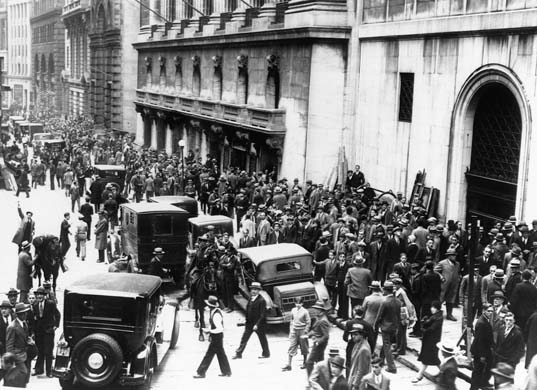
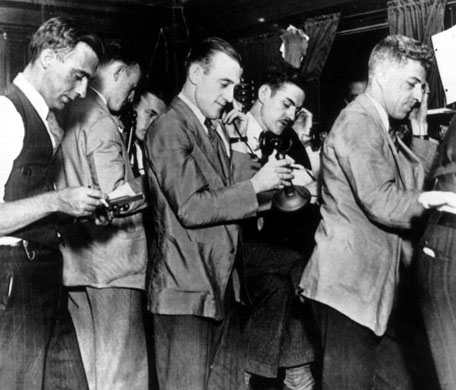
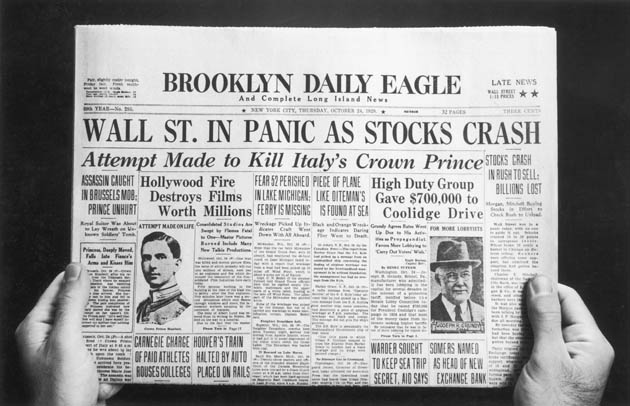
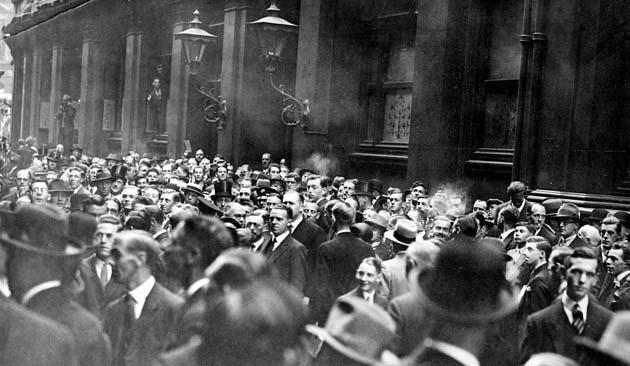
The crisis began on Thursday 24 October 1929. After a bull market that had lasted most of the decade, shares began to fluctuate dramatically. On Black Thursday, panic set in. Nearly 13m shares changed hands — then a record — as investors tried to get out of the marketPhotograph: Bettmann/CorbisFearing the worst, some of Wall Street’s top bankers tried to prevent a rout by investing heavily in the biggest companies. Richard Whitney, vice-president of the New York Stock Exchange, walked on to the floor of the exchange and bought 10,000 shares in US Steel at well above the current price The move appeared to work, with the Dow Jones index closing just 2% down.Photograph: APBut the relief was short-lived. After a nervous weekend for much of America, there was a rush of selling on Monday 28 October. It went down in history as Black Monday, with the Dow ending the day 13% lower The following day the drama continued and the colour remained the same. The Dow shed another 12% on Black Tuesday when 16m shares were sold — a record that stood for 40 years. It closed at 230.07 points – having been as high as 381.17 at the start of the previous month.Photograph: Hulton archive/Getty
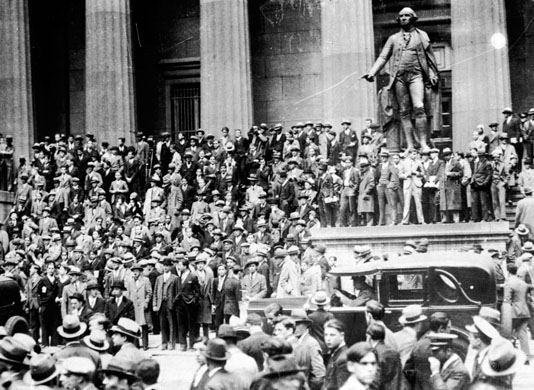
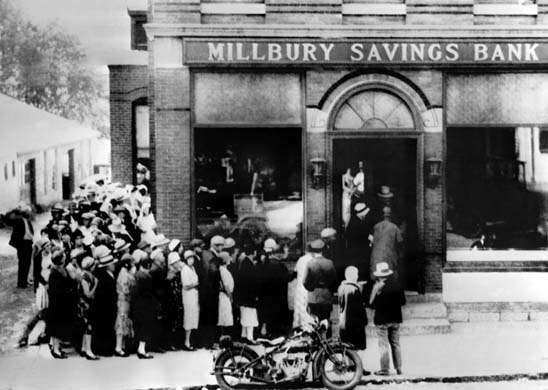
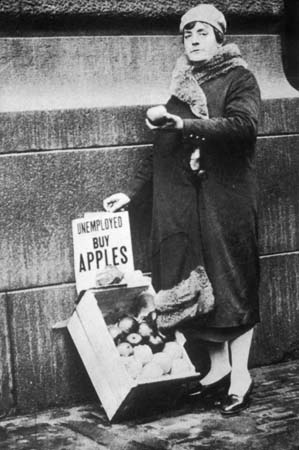
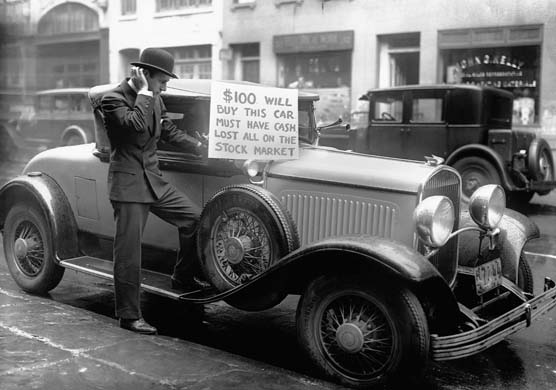
Millions of Americans had put money into the stockmarket during the boom years, in the belief that shares would keep rising. Here crowds are shown gathered outside the Sub Treasury Building (now Federal Hall National Memorial) next to the statue of George Washington, which faces the New York Stock ExchangePhotograph: Keystone/GettyDespite the crisis, those gathered outside the exchange apparently behaved in an orderly wayPhotograph: Roger-Viollet/Rex FeaturesThe crisis sparked a run on America’s banks, as panic-stricken savers tried to withdraw their money — as shown here in Millbury, MassachusettsPhotograph: AFPMany formerly wealthy people struggled to make ends meet ....Photograph: Hulton Archive/Getty ... and were forced to sell treasured possessions. Here bankrupt investor Walter Thornton tries to find a taker for his luxury roadster carPhotograph: Bettmann/CorbisThe Crash was a major cause of the Great Depression of the 1930s. Historians blame America’s central bankers for not doing more to protect smaller lenders. Thousands went bankrupt, which led to credit drying up for years and had a devastating effect on large companies, small firms and familiesPhotograph: Bettmann/Corbis
Sign up to read this article
Read news from 100’s of titles, curated specifically for you.