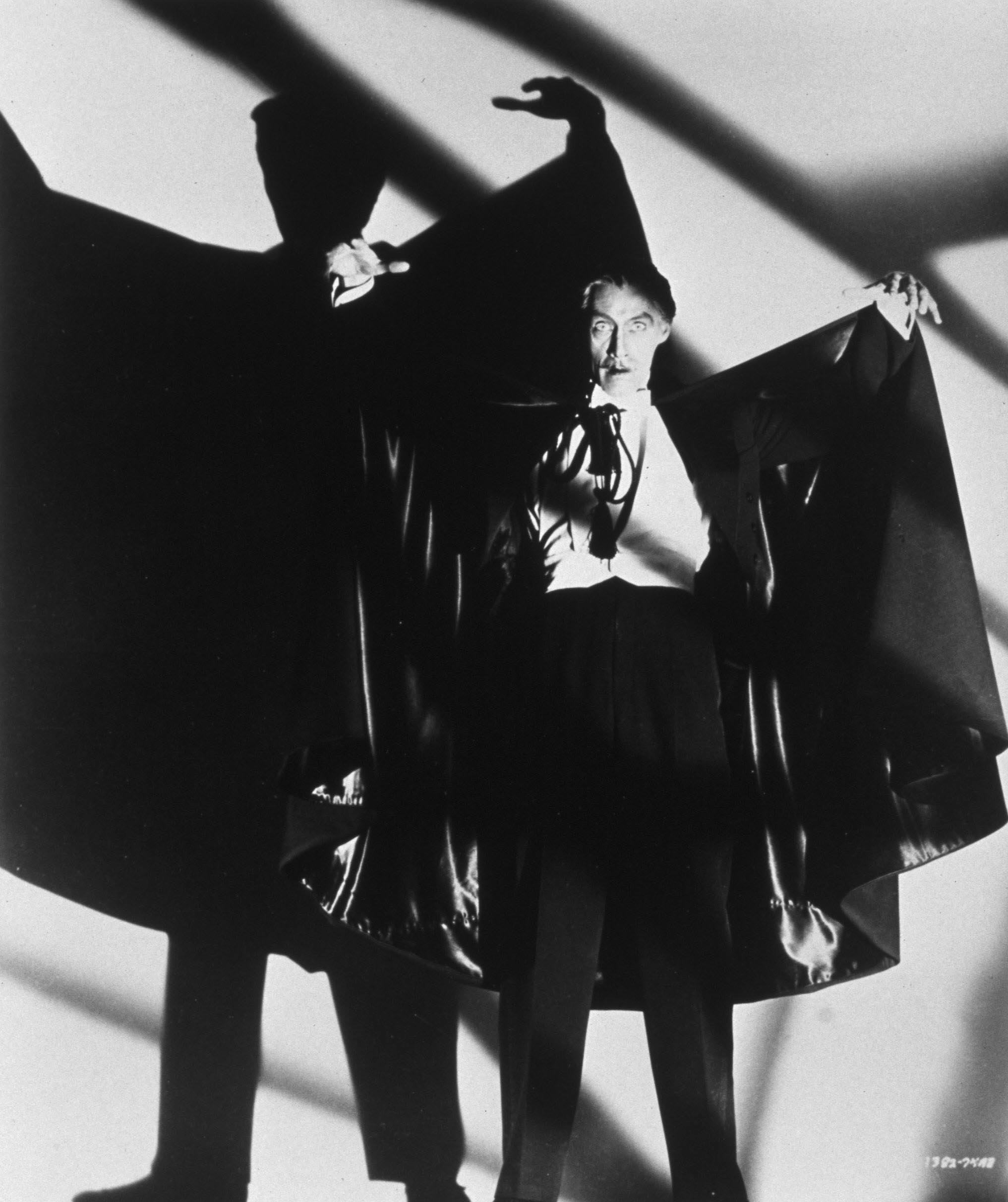
From 1923 until the 1940s, Universal Pictures was home to the first durable horror franchise in cinema history. The most famous era of the Universal Classic Monsters, as we call them now, arguably kicked off in ‘23 with The Hunchback of Notre Dame, followed two years later by The Phantom of the Opera. But it came into its own in 1931 with the double whammy of Dracula and Frankenstein, unleashing a flood of like-minded titles that either introduced new monsters (The Mummy, The Wolf Man), sequelized the original hits (The Bride of Frankenstein), or offered up fresh genre tales in much of the same style (The Black Cat).
By the mid-‘40s, however, as World War II gripped the world, the Universal Classic Monsters began to wear out their welcome. In a bid to spruce up the franchise, Universal turned it into a shared universe, starting with 1943’s Frankenstein Meets the Wolf Man, a seminal pairing of two of its most recognizable creatures. That was followed in short order by House of Frankenstein (1944) and, finally, House of Dracula (1945), a film that marked the end of the studio’s roster of monsters as a (relatively) serious filmmaking franchise.
Following the precedent (and some of the storyline) of its predecessor, House of Dracula once again brings together Dracula, the Wolf Man, and Frankenstein's monster. By this time, neither Bela Lugosi nor Boris Karloff were involved in the series, despite rumors that this film would mark Lugosi’s return as the Count. Out of the original monsters, only Lon Chaney Jr. returns as Lawrence Talbot, aka the Wolf Man, while second-stringers John Carradine and Glenn Strange encore from House of Frankenstein as Dracula and Frankenstein’s monster, respectively. The latter’s director, Erle C. Kenton, is back behind the camera as well.
The main protagonist in House of Dracula, like House of Frankenstein before it, is a scientist, although the doctor here is much more benevolent at first than the latter’s evil Dr. Niemann (played by Karloff). Dr. Franz Edelmann (Onslow Stevens) is genuinely interested in freeing people from their afflictions, which attracts both Dracula, who wants to be cured of his vampirism, and Talbot, who yearns to be released from the curse of lycanthropy (how both are back after perishing in House of Frankenstein, to which this is a direct sequel, is never explained). Edelmann is at first skeptical, until he witnesses Dracula returning to his coffin and watches Talbot turn into a werewolf before his eyes.
Even with the series starting to feel like the studio was trying to wring a few last bucks out of it, House of Dracula (initially titled The Wolf Man vs. Dracula, which makes nominally more sense than the name it got) rises a bit above the formula by germinating a few interesting ideas under the surface. For example, the science may be hokum, but Edelmann does actually suggest and explain scientific causes and potential cures for both Dracula’s vampirism and Talbot’s condition. This pre-dates Richard Matheson’s groundbreaking 1954 novel I Am Legend — which also explored a scientific rationale for the myth of vampires — by nearly a decade.
The film also suggests that evil can’t help itself: even though Dracula is supposedly interested in becoming human again, he simply cannot restrain himself from seducing Martha O’Driscoll as one of Edelmann’s assistants (in a striking scene scored by Beethoven’s “Moonlight Sonata”). He also reverses a transfusion, sending his blood into Edelmann’s body and turning the latter into a raging murderer by night. After Frankenstein’s monster is rather perfunctorily discovered in the caves underneath Edelmann’s castle, whether or not to revive him is fiercely debated, as is whether he is incapable of anything but destruction. Almost everyone’s worst nature emerges by the climax, although ol’ Larry Talbot gets a surprisingly happy ending for once.
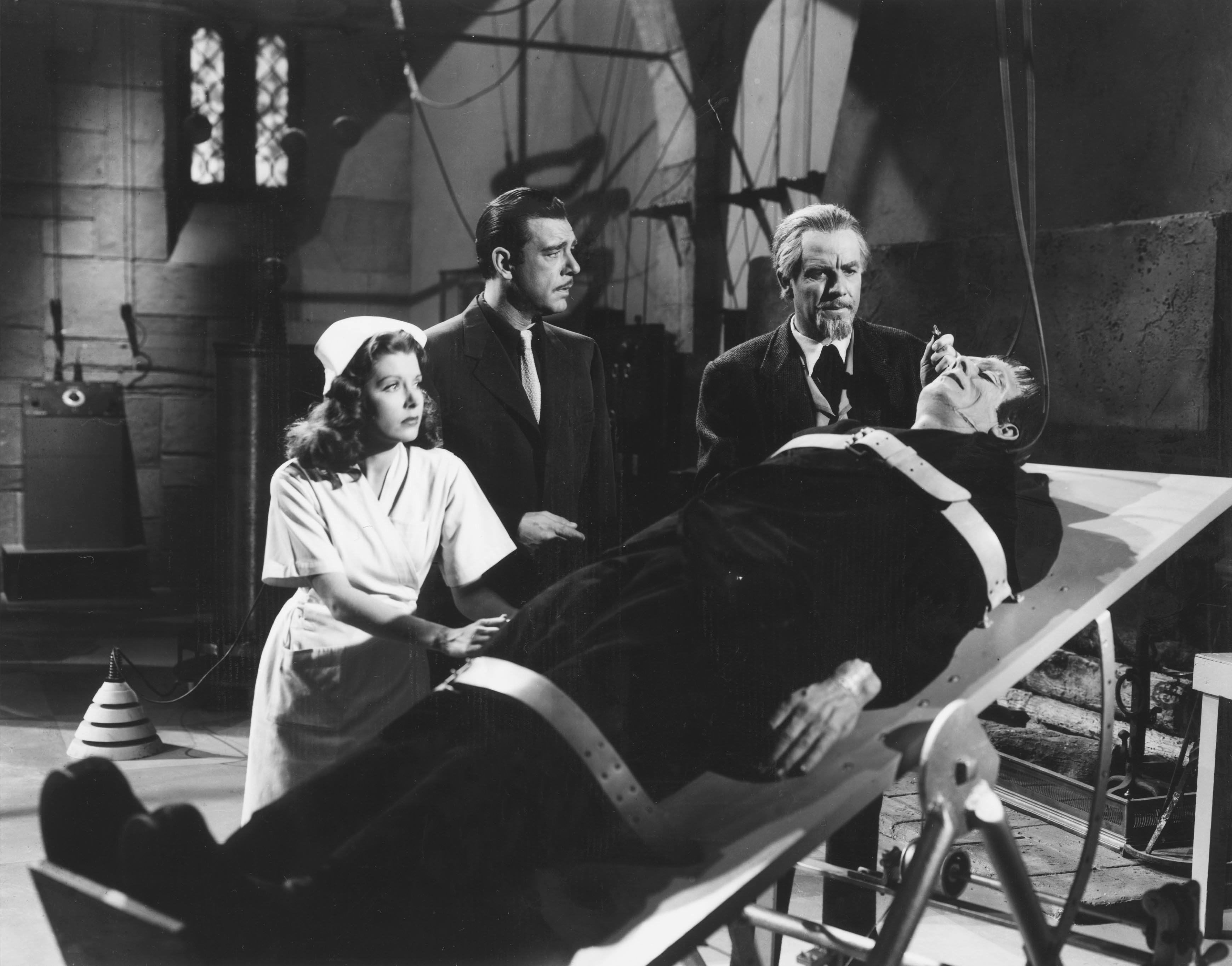
Stevens is reasonably effective as Edelmann — especially in his final stages as a sort of Jekyll-and-Hyde homicidal maniac — although Carradine’s piercing eyes do the heavy lifting for him as Dracula, and Chaney, while earnest, seems bored with playing Talbot. Jane Adams is notable as Nina, Edelmann’s beautiful yet hunchbacked other assistant, whose introduction is not only memorable but who is the film’s conscience and (pardon the expression) most morally upright character. Kenton directs a number of scenes with flair, including a strangulation done in silhouette, and some of the franchise’s initial Expressionist aesthetic still seeps through.
The Gothic atmosphere, the massive sets, the lean if often contrived script (the film clocks in at 66 minutes), the pileup of monsters — they’re all here, if getting creatively tired, but they couldn’t do much to revive either the series’ fortunes or that of the studio. Universal went through financial and ownership turmoil after this, leading to an overhaul of its business that saw many of its contract players and even legendary makeup artist Jack Pierce (the man who invented the look of the Universal Monsters) dropped from the payroll.
Meanwhile, Dracula, the Wolf Man, Frankenstein’s creature, the Mummy, etc. all became fodder for a series of successful Abbott and Costello comedies. Those certainly have their following, but despite occasional forays like a Phantom of the Opera remake or The Creature from the Black Lagoon and its sequels (plus, in recent years, a few ill-fated attempted reboots), House of Dracula all but marked the end of Universal Studios as the home of the monsters.