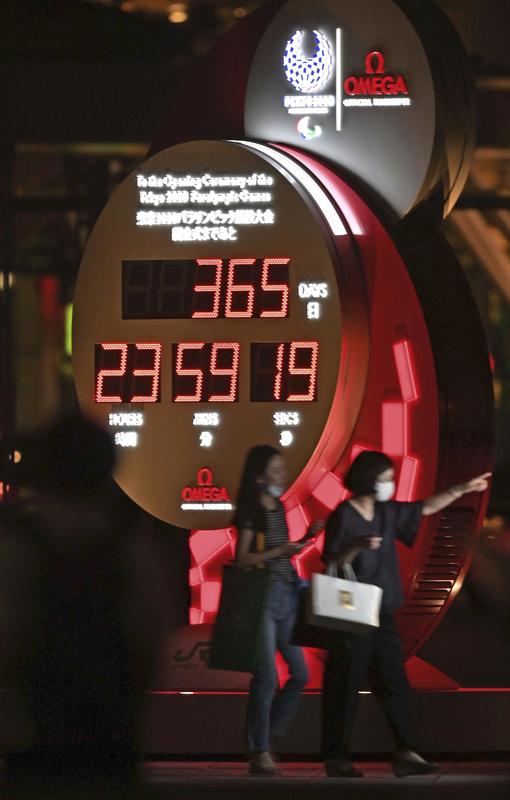
About 80% of para-athletic organizations are concerned about the future training of their athletes and the qualifying process of the Tokyo Paralympic Games, which will start in a year from Monday, according to a survey of 26 such organizations by The Yomiuri Shimbun.
Some 70 percent said they were unsure about whether the Games should be held, in the survey regarding the novel coronavirus and the impact of one-year postponement. Several organizations asked for support from the government for infection control and athlete training.
The survey was conducted from late July to early August with a total of 26 organizations from 22 sports to be held at the Tokyo Paralympics, and responses were received from all the organizations. One organization chose "no answer" to all questions.
In the survey, all but one of the organizations that did not answer the questions responded they had not been able to implement the training plan that was formulated before the spread of the virus. With no sign of an end to the pandemic, 77% of the respondents were concerned about the future training of athletes and the qualifying process.
For example, 58% of the respondents were concerned about hosting the Games, 54% were concerned about the overseas tour, 35% were concerned about the qualifying process, and 31% were concerned about the classifications for degrees of disability.
Of the more than 200 athletes who are expected to represent Japan, only 51 have been selected, and some of the most promising athletes have not yet been confirmed as to their classifications for Paralympic qualifications, making the qualifying process an issue.
When asked if they thought Japan could host the Paralympics, 69% said they did not know. The reason for this is the timing of the establishment of vaccines and therapeutic drugs cannot be foreseen. Only 23% said they think Japan could host the Games.
With regard to whether the Games should be held next year, 58% of respondents agreed the Games should be held, while 42% did not answer, and no respondents agreed the Games should be rescheduled. One respondent said rescheduling the event would not keep athletes motivated.
Regarding whether para-athletes are at a higher risk of becoming severely ill with the coronavirus compared to Olympic athletes, 35% agreed, 11% disagreed, and 46% said they didn't know. The risk awareness was higher in wheelchair races with athletes who have respiratory diseases. About 73 percent of the organizations had their own income affected by the coronavirus pandemic and the postponement of the Paralympics.
--Higher risk for heavy symptoms
People with disabilities are generally considered to be at a higher risk of developing severe symptoms from infection caused by the coronavirus. In the survey, 35%, or nine governing bodies, believe para-athletes have such a risk compared with Olympic athletes.
The wheelchair rugby governing body said some players have a history of respiratory paralysis due to cervical cord injuries. The para archery body also said some athletes had become disabled from unknown causes or respiratory problems. It also raised doubts about whether adopting new lifestyles alone is sufficient in the current situation.
Twelve responding organizations, or about half of the total, said they do not know whether para-athletes have a higher risk. The para triathlon body cited the reason for their response as "Athletes have been impacted differently and hold different views depending on their disabilities," while the wheelchair tennis body said athletes' conditions "vary depending on their underlying diseases."
In the survey, 11%, or three organizations, said they do not think para-athletes are at a higher risk.
Ahead of the Tokyo Games, the responding organizations also addressed issues of vaccine developments and drugs for the virus, and they called for improved testing systems. Regarding equipment such as wheelchairs and prosthetic legs, the sitting volleyball body raised issues about the disinfection of the equipment, many of which are not used in Olympic events, and the handling of devices that will come into contact with various objects during transportation.
Canoeist Monika Seryu said after a competition this month, "As I heard members of the governing body diligently studied the coronavirus to hold this event, I could participate in it with peace of mind."
Results of the survey suggest measures to be taken are different depending on athletes' disabilities and the characteristics of each para sport.
Read more from The Japan News at https://japannews.yomiuri.co.jp/