Nearly 80% of coronavirus patients aged under 10 were infected at home, The Yomiuri Shimbun has learned.
The Yomiuri Shimbun conducted an analysis of data on 175 children confirmed to have the virus, and found that nearly 80% of them were infected by immediate family members, relatives or other people living with them. There have been clusters of infections in which a number of people in a single family caught the virus. With children spending more time at home due to school closures, an increasing number of municipalities are looking after children whose parents have been infected.
Of the 260 children nationwide confirmed to have tested positive for the virus by May 17, infection routes and other information on 175 of them have been disclosed by the relevant municipalities. Of them, the Yomiuri Shimbun analysis found that 138 children, or 78.9%, had infected their family members or had lived with infected people.
In Shinjo, Yamagata Prefecture, seven people from two families who were related tested positive for the coronavirus in April, including an elementary school age child under 10 and a baby. "An infection cluster occurred within these families," a prefectural government official said.
In Fujinomiya, Shizuoka Prefecture, five immediate and extended members of a family including at least one preschool child developed fevers and all tested positive for the coronavirus. In Izumo, Shimane Prefecture, seven people living together were infected with the virus, including a baby and an infant. In each case, the adults were confirmed to be infected earlier than the children.
On the other hand, 19 children of the 175, or 10.9%, are suspected to have been infected outside the home, such as at day care facilities where several people have been infected, while the infection routes are unknown for 18 children, or 10.3%.
"I was shocked by my daughter's infection, but I think it would have been difficult to prevent it," a 25-year-old housewife in Saitama Prefecture said. She lives in a house with five family members, and tested positive in April. At that time, the Health, Labor and Welfare Ministry allowed infected people with mild symptoms to stay at home. The woman was told by a public health center official to stay at home until hospital beds became available because she had mild symptoms.
To prevent infecting her family, she locked herself in her room and asked her older sister, who lived with them, to look after her eight-month-old daughter. However, she had to put her daughter to sleep herself. Afterward, her sister and daughter were found to have been infected.
In consideration of the risks of infecting family members and a sudden change in the patient's condition, the health ministry now asks patients with mild symptoms to stay at hotels and other dedicated facilities, in principle. The housewife in Saitama Prefecture has since recovered. "Because I stayed home, it was difficult to prevent infecting my family, so I think it would have been better if I had been able to stay at an accommodation facility. But I still need to keep an eye on my baby, and I would be worried if I were not able to see her," she said.
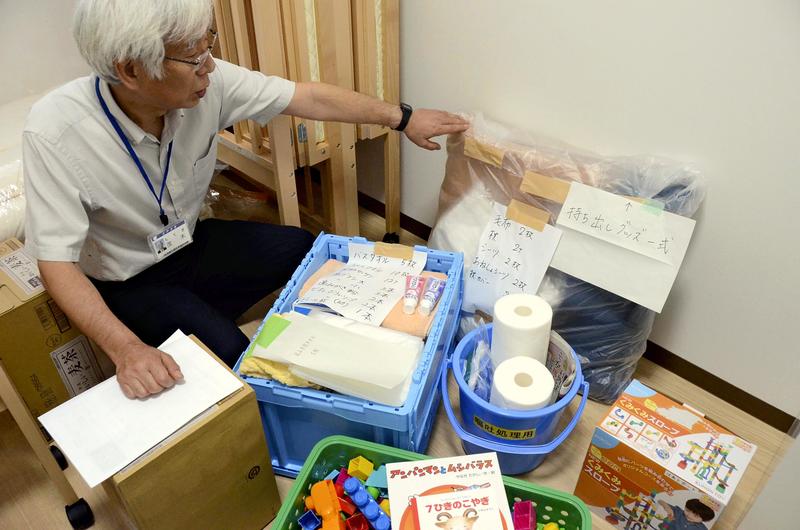
Given the situation, an increasing number of municipalities are preparing facilities to accept the children of infected parents.
The Minato Ward Office in Tokyo has been putting up children whose parents are found to be infected in a hotel since April 30. They accept children under 18 who test negative for the coronavirus. The ward office booked up to 20 rooms and offers meals. Staff such as childcare workers and nurses look after the children around the clock, and they can leave the hotel to go shopping or exercise with staff when necessary.
Until May 18, three children stayed at the hotel. "We hope parents can receive treatment with a sense of security."
Edogawa Ward, Tokyo, booked out a hotel as a dedicated facility for mild cases and is using part of it as a branch of a child consultation center to take care of children whose parents have the virus.
In Osaka Prefecture, child consultation centers have temporarily taken such children into protective custody and had them stay at hotels. In Fukuoka and Aichi prefectures, child consultation centers are temporarily looking after such children.
Read more from The Japan News at https://japannews.yomiuri.co.jp/