
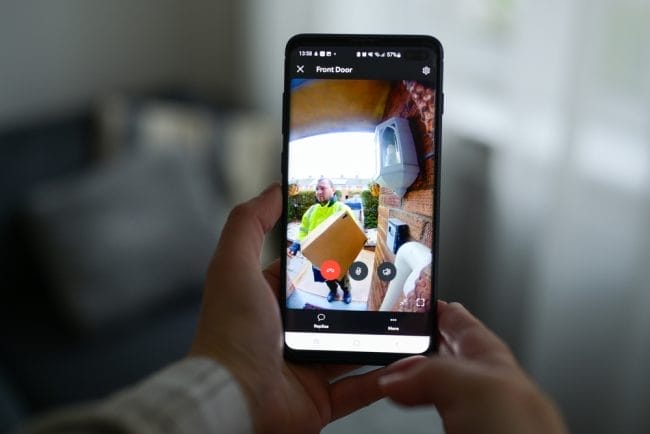
We slap a video doorbell on our front porch and instantly feel safer. It serves as a modern-day moat for many homeowners. We assume that because we can monitor our property from a phone, intruders will stay away. However, criminology experts warn that sophisticated burglars read the same tech manuals we do.
Security professionals and law enforcement agencies have identified specific ways criminals bypass smart home security. These individuals understand blind spots, lag times, and technical weaknesses. If you rely solely on a camera to protect your family, you might be vulnerable. Here are eight ways thieves disable video doorbells according to security researchers.
1. Wi-Fi Jamming Devices
Cybersecurity firms have raised alarms regarding “de-auth” devices. While illegal to use, these gadgets are easily purchasable online. They flood wireless frequencies with noise. Consequently, every smart device in a home disconnects from the router.
Your camera maintains power, but it cannot upload video to the cloud. Security analysts note that homeowners receive no notification until it is too late. The camera is blinded without the burglar ever touching it.
2. The Laser Pointer Trick
You have seen kids play with laser pointers, but police reports indicate burglars use them as blinding tools. By shining a high-intensity laser directly into the lens, they create an overexposure effect known as “dazzling.”
Optical experts explain that the sensor gets overwhelmed by concentrated light. The video feed turns completely white or black. It essentially puts a digital bag over the camera’s head from a distance.
3. Spray Paint or Tape
Law enforcement officials often find that low-tech methods remain the most effective. A thief approaches the door from a blind spot and quickly sprays the lens or applies duct tape.
Tech reviewers note that many cameras have a slight delay before recording starts. Therefore, criminals might cover the lens before the camera wakes up enough to capture a clear face. Once the view is obstructed, they have ample time to break in.
4. Cutting the Power
Electricians and security installers warn that wired doorbell cameras rely on the home’s electrical grid. Experienced thieves know the transformer is often exposed. Alternatively, they can flip the main breaker if the meter box is accessible outside.
Battery-powered units are not immune either. If a criminal rips the unit off the wall, the power source goes with it. Unless you have a backup power source for your Wi-Fi and camera, the system fails.
5. Exploiting “Motion Zones”
We often adjust “motion zones” to stop phones from buzzing every time a car drives past. Ethical hackers point out that burglars exploit this convenience. They test the perimeter to see where the camera triggers.
By hugging walls or crawling low, intruders can often stay outside the active zone. They move until they are right next to the camera. Then, they disable it manually without ever triggering a recording.
6. Hacking Your Account
Sometimes attackers target the password rather than the hardware. Cybersecurity organizations like the Electronic Frontier Foundation frequently warn about “credential stuffing.” If you reuse a password involved in a data breach, hackers can log in remotely.
They can turn cameras off without stepping foot on your property. This makes two-factor authentication essential. It stands as the primary barrier between a hacker and your live feed.
7. The “Fast Approach” (Latency Lag)
Consumer technology testers have documented lag time in almost all Wi-Fi cameras. It takes a second or two for the motion sensor to wake up and connect to the internet. If a thief runs to the door quickly, the video might start too late.
You end up with footage of an empty porch or the back of a head. Police struggle to identify suspects with such limited evidence.
8. Infrared Blinding at Night
At night, cameras use infrared (IR) LEDs to see. Security researchers demonstrate that thieves can use powerful IR flashlights to blind the system. To the human eye, the light is invisible. However, the camera registers a massive spotlight.
This washes out the image completely. The intruder remains hidden behind a wall of white light, rendering the footage useless.
What Ring Says About These Threats
Ring, owned by Amazon, has addressed many of these security concerns over the years. In response to hacking reports, the company made two-factor authentication mandatory for all users in 2020. They emphasize that most account compromises result from reused passwords rather than system breaches.
Regarding Wi-Fi jamming and connectivity issues, Ring recommends that users with spotty connections utilize their “Chime Pro” to extend Wi-Fi range. Furthermore, for maximum security, the company suggests their elite lines of cameras. These allow for Power over Ethernet (PoE) connections, which are harder to jam than wireless signals. They maintain that the device is a deterrent and monitoring tool, meant to work alongside other security measures.
Layer Your Security
A video doorbell is a tool, not a guard. Do not let it be your only line of defense. Reinforce entry points, improve lighting, and consider a wired security system.
Do you trust your video doorbell implicitly, or do you have backup security measures? Tell us in the comments!
What to Read Next…
- Stop Clicking Unsubscribe: 5 Email Habits That Invite Hackers In
- 10 Legendary Scams That Fooled the World and Made Millions
- The 12 Harmless Online Habits That Actually Expose Your Identity
- 8 Hidden Costs of Owning Your Dream Home No One Warned You About
- 7 Online Scams Targeting Women Who Think They’re Too Smart to Fall for Them
The post 8 Ways Burglars Disable Your “Safe” Ring Camera in Seconds appeared first on Budget and the Bees.